1756-L83E
1756-L83E
1756-L83E
1756-L83E
1756-L83E
1756-L83E
Ask our team:
  • Phone: +86 181 0690 9650
  • E-Mail sales1@apterpower.com
  • Lifecycle status

    Active / Available from OEM
    Apter Power reviews exact identity, software boundaries, documentation, condition, and quotation availability.

1756-L83E

/ 4.9
1001 reviews | Need a Specific Revision?
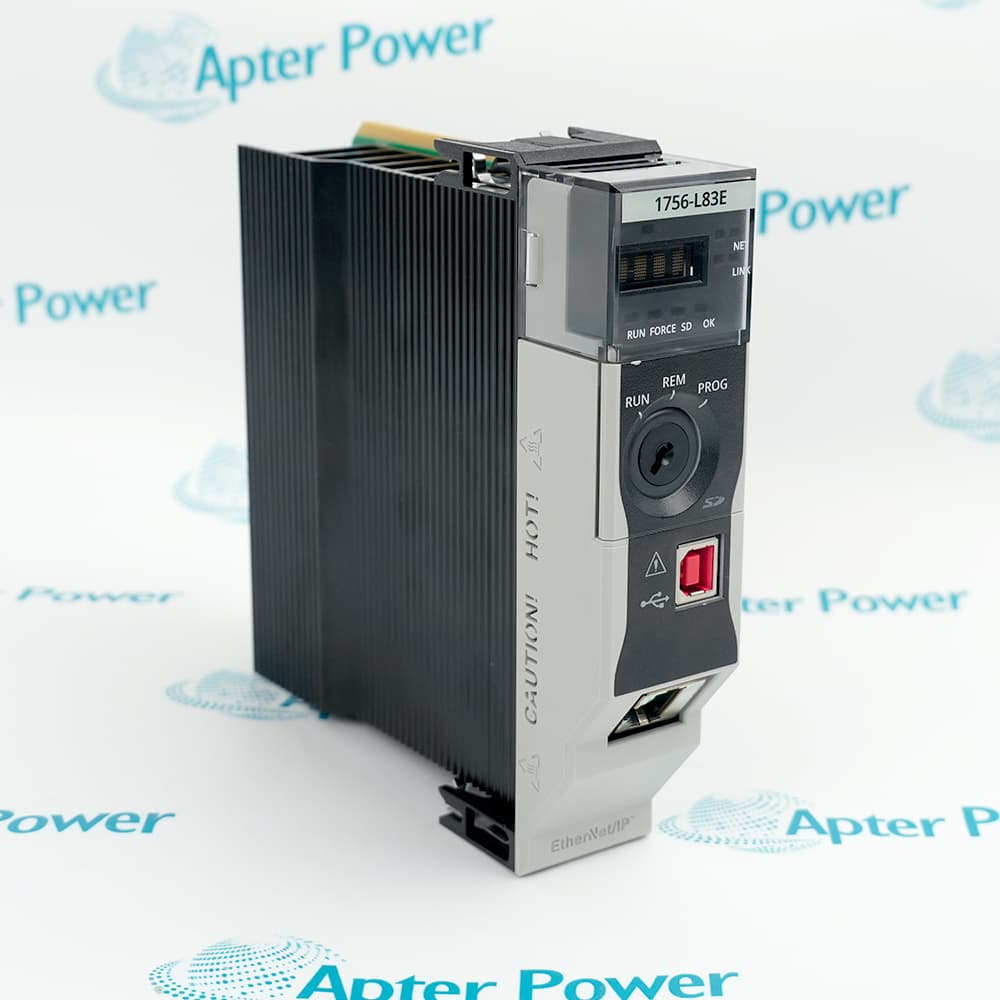
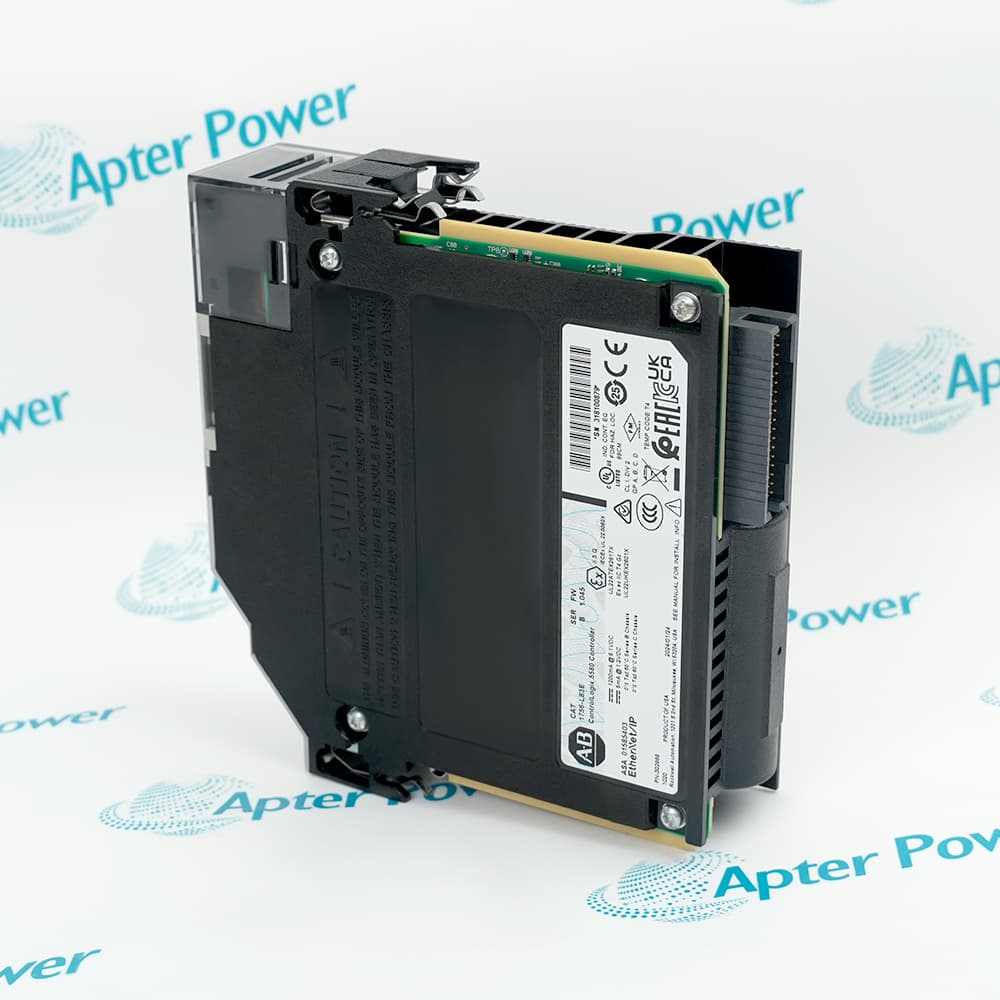
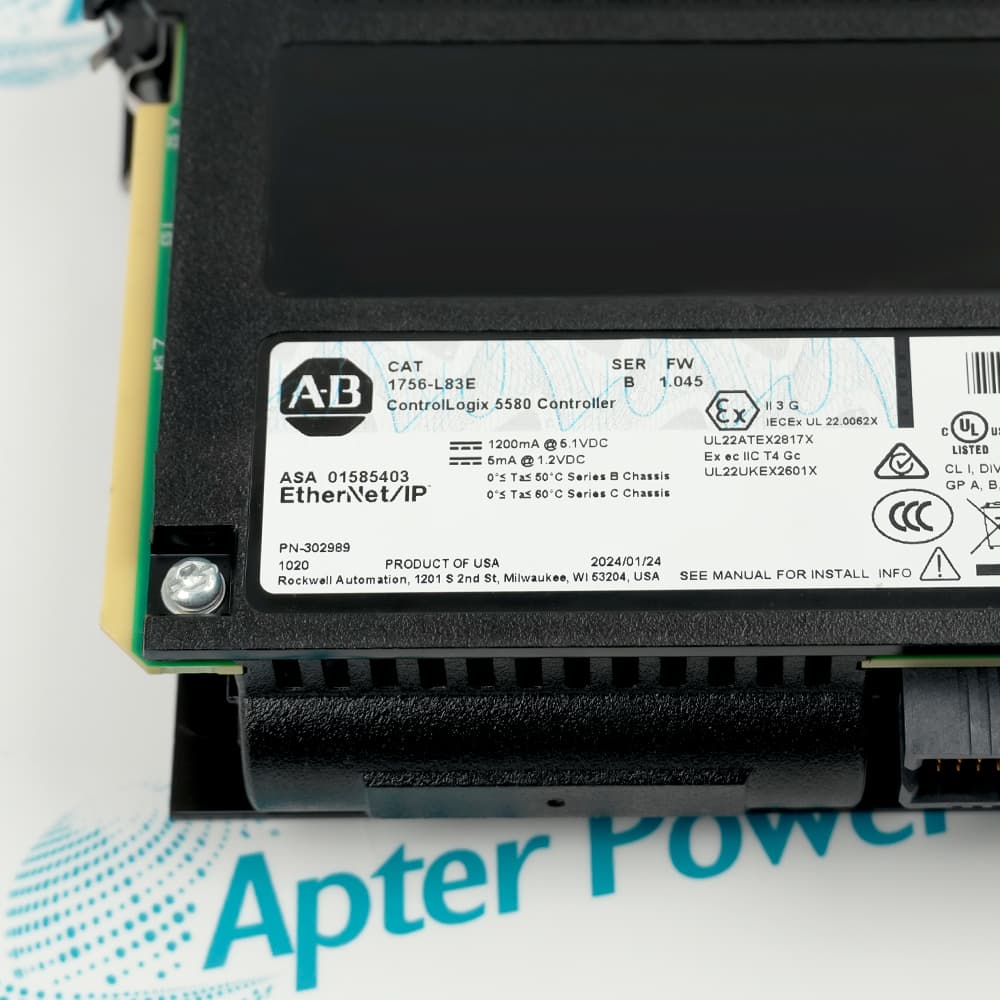
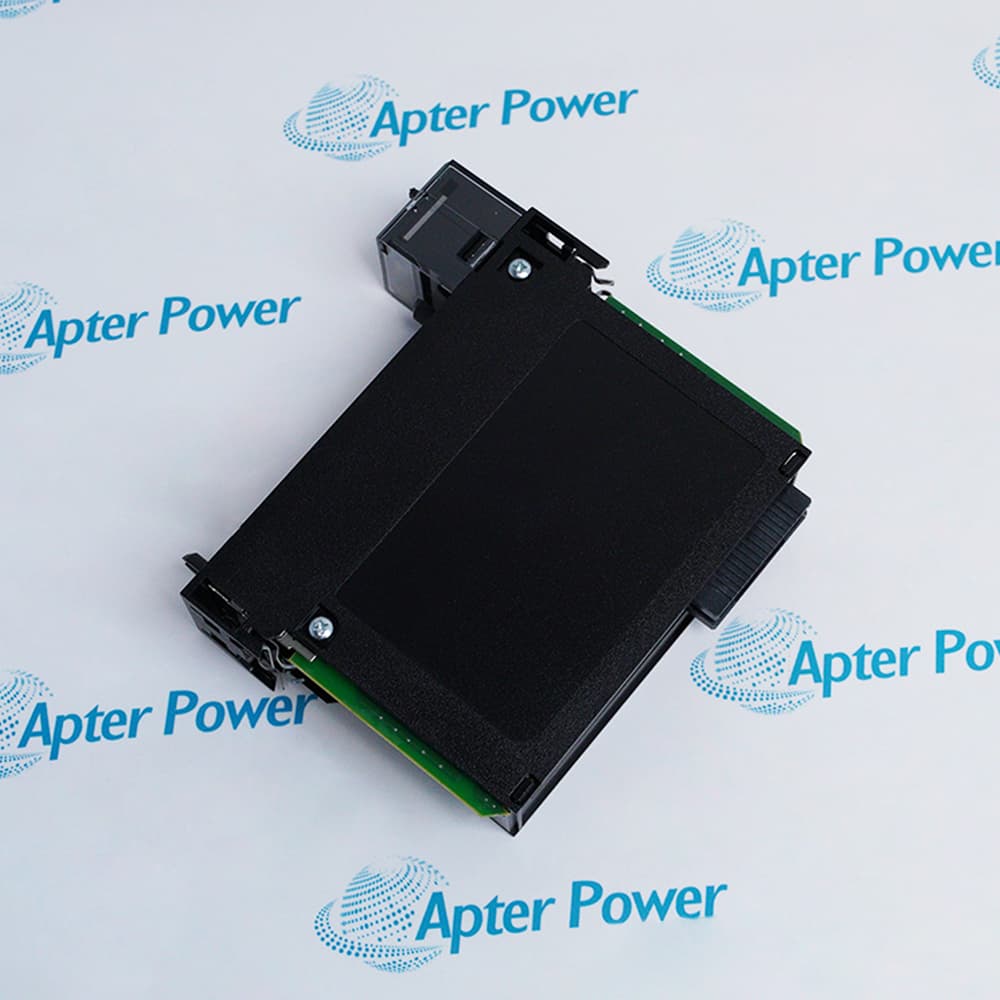
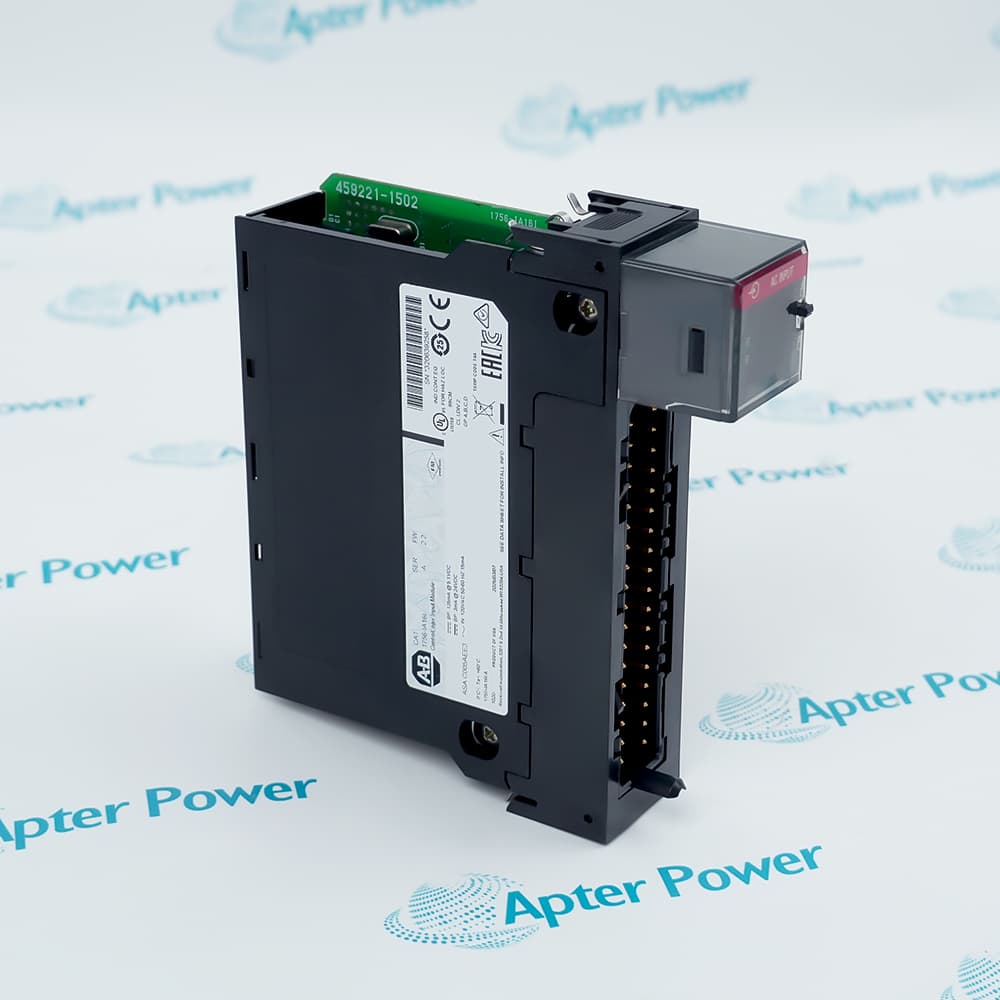
Allen-Bradley 1756-L83E is a 10 MB ControlLogix 5580 controller with integrated gigabit EtherNet/IP, 250-node capacity under the documented software condition, and SD storage.
In Stock
Ships by Wednesday, October 28
Fast Shipping Available
Get a quick price for 1756-L83E
Quantity
*E-mail
Company
*Mobile
*Content
Upload (gif, jpg, jpeg, png, bmp, doc, docx, xls, xlsx, ppt, pdf, csv)

Technical specifications for 1756-L83E

  • Manufacturer:
    Allen-Bradley
  • Part Number:
    1756-L83E
  • Product Family:
    ControlLogix
  • Product Type:
    ControlLogix 5580 Controller
  • Stock:
    1
  • Product series:
    ControlLogix 5580
  • User memory:
    10 MB
  • Controller tasks:
    32 total
  • Embedded Ethernet:
    10/100/1000 Mbps EtherNet/IP
  • EtherNet/IP nodes:
    250 maximum with Logix Designer v30 or later
  • OPC UA nodes:
    1,200 maximum with Logix Designer v36 or later
  • Nonvolatile storage:
    4 GB 1784-SD4 card preinstalled
  • Maximum digital I/O:
    128,000 points
  • Maximum analog I/O:
    4,000 points
  • Power dissipation:
    6.2 W
  • Slot width:
    1
  • Weight:
    0.394 kg
  • Estimated shipping dimensions:
    3.455x14.52x13.96cm
  • Tariff Code:
    Please confirm the destination before shipping
  • Country of origin:
    Multiple
  • Place of shipment:
    Xiamen,Fujian,China
By purchasing this item, you agree to the Terms & Conditions, ApterPower is not an authorized distributor for listed manufacturers or tradenames and therefore the manufacturer's warranty does not apply. All our products come with ApterPower's 1-year warranty.

More Information

Overview Manuals Information Model Network Migration Recovery Baseline Product Applications

Features:

  • Ten-megabyte controller tier: the standard 5580 platform supports substantial application and data scope
  • Embedded gigabit EtherNet/IP: the front port provides direct industrial network access
  • Software-dependent scale: node and information-model capacity must be read with the documented Logix Designer release
Allen-Bradley 1756-L83E serves standard ControlLogix projects that need more memory and communication capacity than entry 5580 controllers.

Its embedded Ethernet, temporary USB service port, SD recovery media, and optional chassis communication modules have distinct operational roles.

Selection must preserve the complete catalog number, series, firmware, software release, chassis and power design, network inventory, project image, and acceptance evidence.

Apter Power supports document review, quotation, and procurement for the Allen-Bradley 1756-L83E ControlLogix 5580 Controller while the model remains Active / Available from OEM.
Allen-Bradley 1756-L83E ControlLogix 5580 Controller Manuals,Datasheets,Link
Important Notice: Other accessories, manuals, cables, calibration data, software, etc. are not included with this equipment unless listed in the above stock item description. All prices are shown in USD.
  • Software gate: Logix Designer version 36 or later is required for the published OPC UA capacity.
  • Node allowance: the documented ceiling is 1,200 OPC UA nodes for this controller tier.
  • Client load: subscriptions, update rates, and namespace design share controller communication resources.
  • Acceptance test: prove representative client demand together with task execution and I/O traffic.
  • Version 28–29: the published EtherNet/IP allowance is 100 nodes.
  • Version 30 onward: the documented maximum increases to 250 directly configured nodes.
  • Tree recount: recount devices after changing controller type, project release, or network architecture.
  • Traffic margin: include I/O packets, HMI, messages, produced data, and security overhead.
  • SD medium: the current hardware ships with a 4 GB 1784-SD4 card.
  • Firmware match: the stored image and controller firmware must agree with the approved recovery plan.
  • Load behavior: retain load mode, project revision, slot, and network settings with the image.
  • Controlled proof: test restoration and restart behavior before the spare becomes outage-critical.
  • Distributed ControlLogix systems: execute standard logic with a substantial EtherNet/IP device population.
  • Plant data access: expose approved controller information through a qualified OPC UA architecture.
  • Multi-network chassis: add supported communication or motion modules where the project requires them.
  • Lifecycle spare strategy: stage an exact controller with verified firmware, project, media, and acceptance records.
Description
For distributed control projects that need a larger standard 5580 tier, Allen-Bradley 1756-L83E provides 10 MB of user memory, one-slot chassis installation, and an embedded 10/100/1000 Mbps EtherNet/IP port. The controller can also use supported communication modules in its local ControlLogix chassis.

Network scale for 1756-L83E depends on the software baseline and security configuration. Rockwell publishes up to 250 EtherNet/IP nodes with Logix Designer version 30 or later, while packet, message, OPC UA, I/O, and execution demand still share controller resources and require project-specific review.

Recovery planning for 1756-L83E includes the preinstalled 4 GB 1784-SD4 card, firmware, project revision, load mode, controller series, and chassis environment. Restoring only the logic without those records can reproduce neither the approved communication envelope nor the accepted startup behavior.
Revisions

Revision Part #

Also known as

Series
Series B
Alternative Names
Allen-Bradley 1756-L83E controller Rockwell Automation 1756-L83E Allen Bradley 1756 L83E AB 1756 L83E 1756L83E ControlLogix processor ControlLogix 5580 L83E 1756 L83E 10 MB controller 1756-L83E Series B Rockwell 1756L83E CPU
Technical notes
When replacing 1756-L83E, verify the 10 MB project fit, controller series, firmware, Logix Designer version, chassis and power supply, 250-node condition, Ethernet security load, OPC UA scope, 1784-SD4 recovery image, load mode, slot, network settings, and temperature boundary. Never treat the temporary USB programming port as a production link.
Exceptional Service

Our Mission

  • 100% Satisfaction

    We believe expertise is priceless. With over 20 years of experience, and top engineers on staff, we can help you solve or avoid problems that threaten your business.
  • Trust Guaranteed

    Not only do we have a vast inventory, our team makes sure every piece of equipment is in working condition. Your purchases are also backed by our Warranty.
  • Expertise

    Time is money, especially when your equipment is down. We work quickly to get your equipment on its way so you can get it back up and running.

FAQS

The following is a list of questions commonly asked by our customers. Please contact us if you have a question about our process that is not answered below.
Why can a converted project show fewer EtherNet/IP nodes than expected on 1756-L83E?
Check the Logix Designer release and recount directly configured I/O-tree devices. The documented node allowance changes between versions 28–29 and version 30 or later.
What should be reviewed before loading an older SD image into 1756-L83E?
Compare card catalog, firmware, controller series, project revision, chassis context, load mode, and network settings with the approved recovery record before restoration.
Can the USB connector remain attached as a production communication path on 1756-L83E?
No. Rockwell designates USB for temporary local programming; use the supported EtherNet/IP port or an approved chassis communication module for operational traffic.
How should an OPC UA performance issue be investigated on 1756-L83E?
Verify the version 36-or-later prerequisite, namespace size, client subscriptions, update rates, task execution, I/O traffic, and communication diagnostics under representative load.
What changes when moving 1756-L83E between Series B and Series C chassis?
Requalify the complete chassis, modules, power supply, firmware support, slot plan, enclosure, and temperature boundary before approving the hardware move.
Which records make a replacement 1756-L83E traceable at site acceptance?
Capture the catalog and series, firmware, chassis slot, MAC and network settings, approved SD image, project checksum, lifecycle evidence, and incoming inspection results.