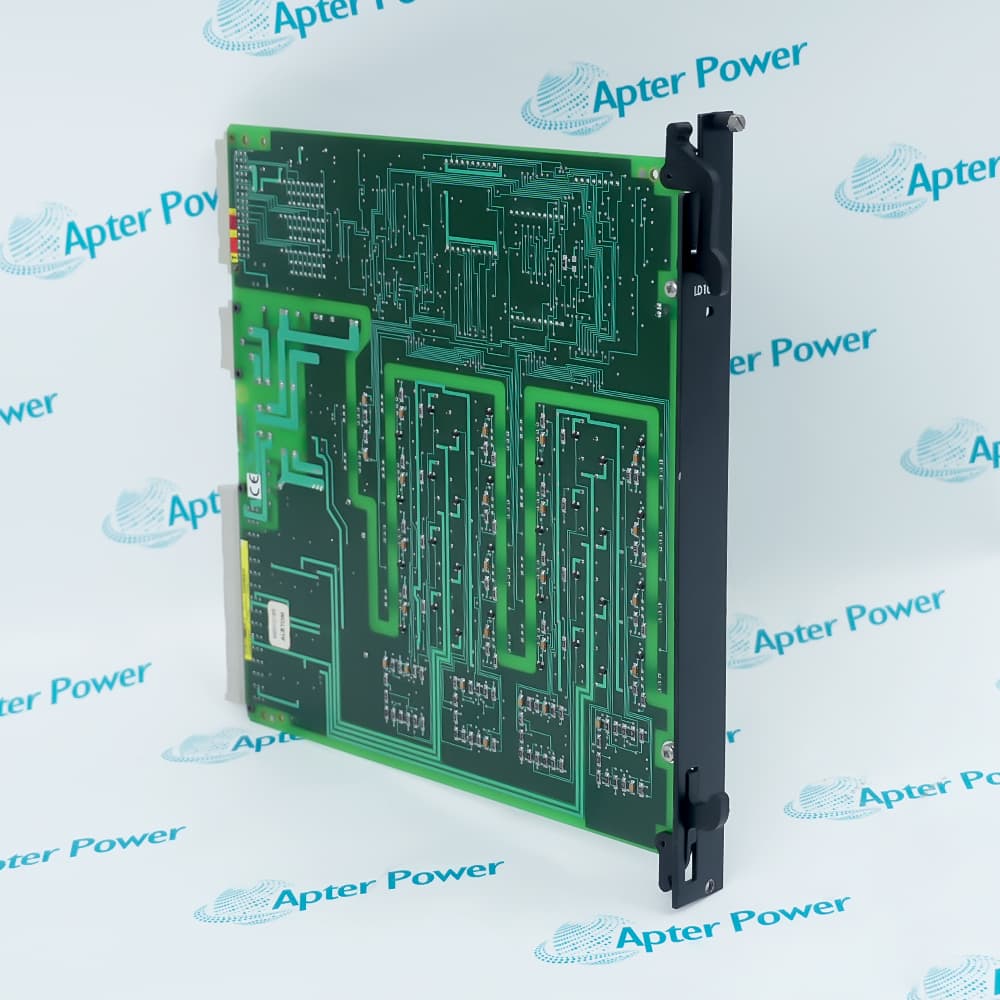
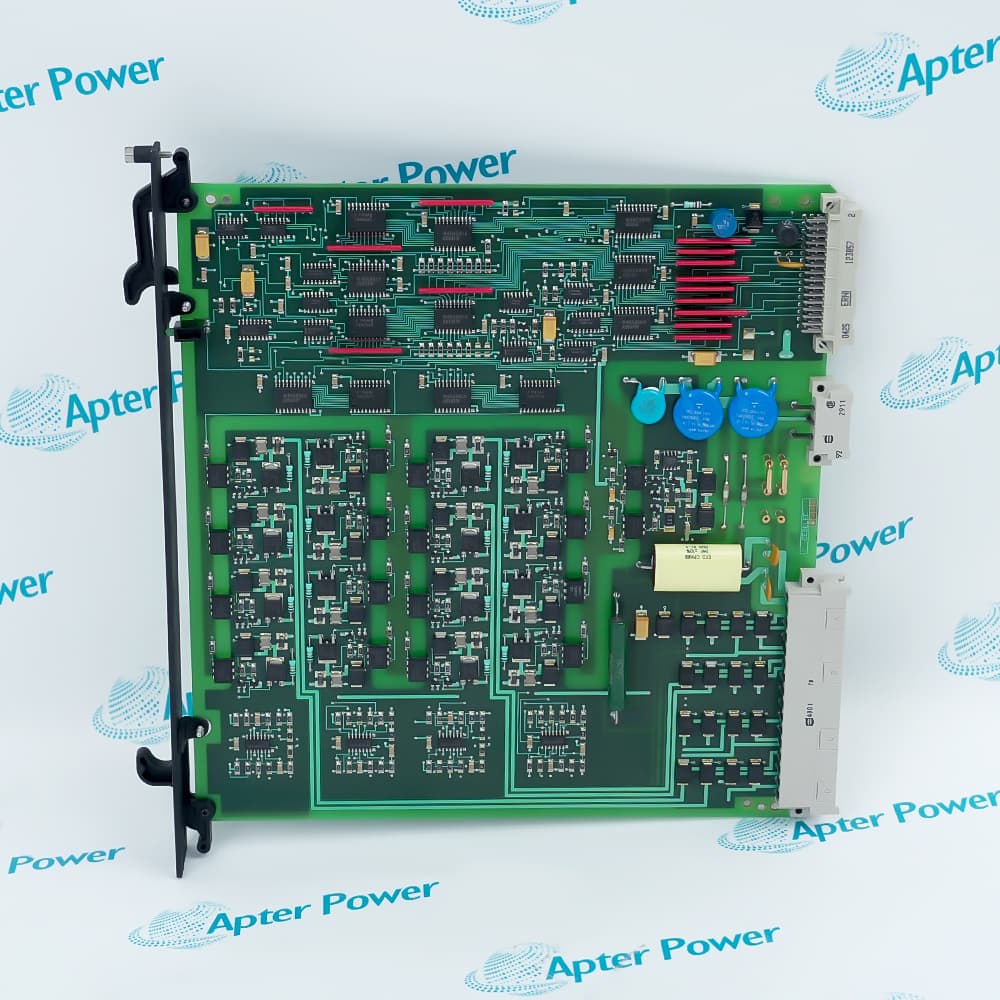
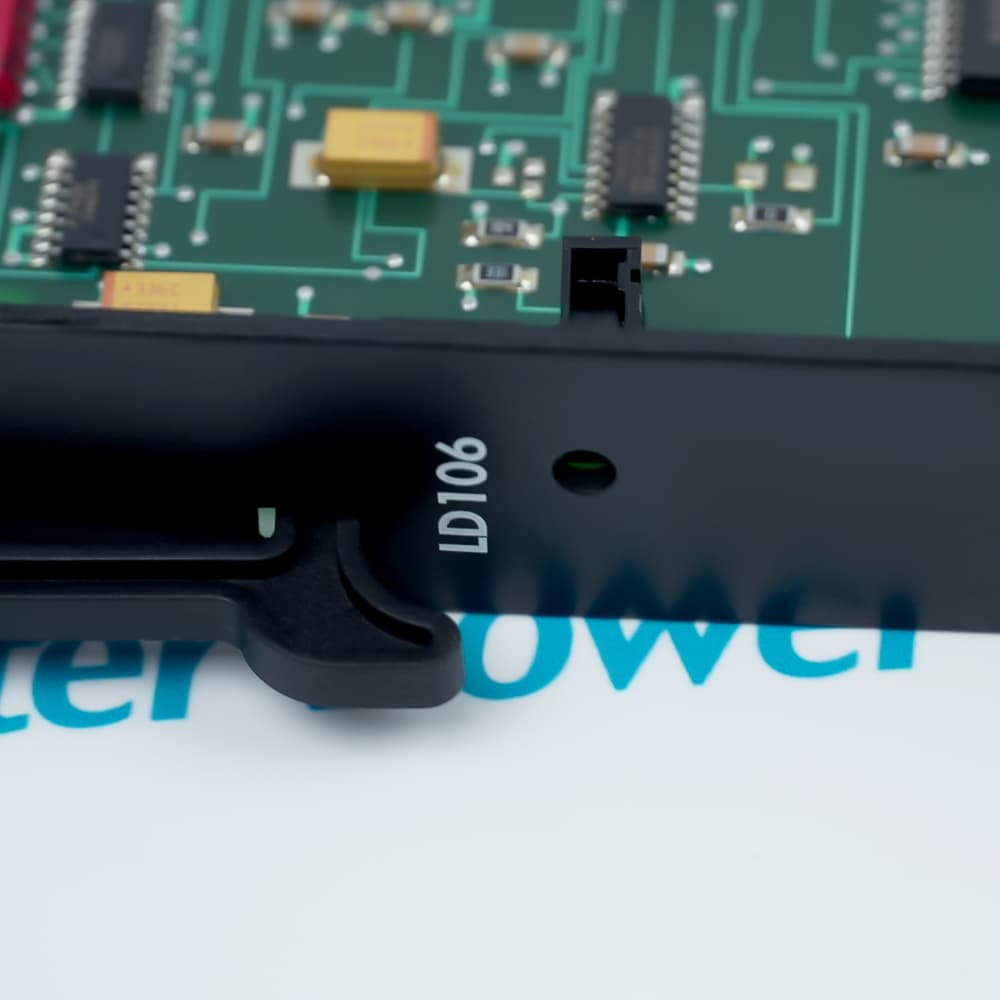
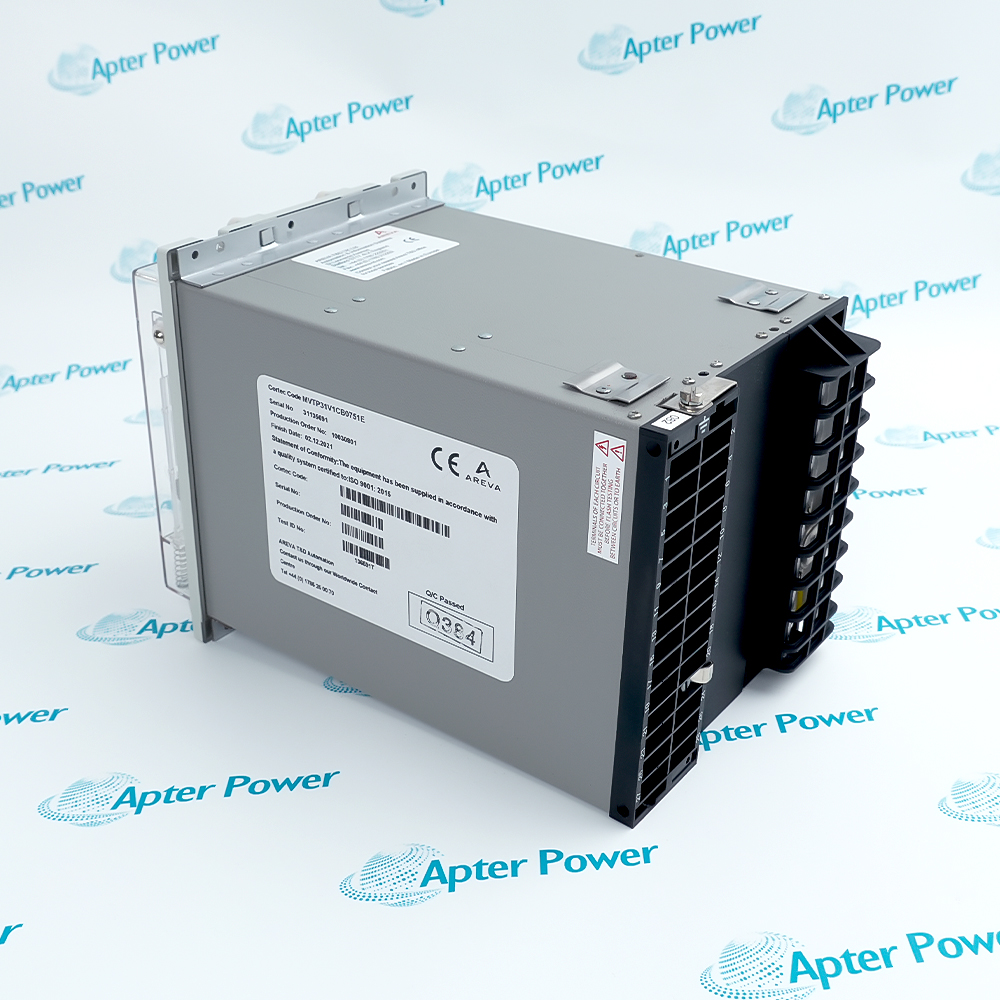
Features:
- Alstom LD106 provides sixteen discrete output channels in one CE2000 interface module.
- Its electronic output stage switches 48 V DC process circuits without relay contacts.
- The powered-negative arrangement makes each output a sink-current path.
The LD106 position belongs to the CE2000 I/O layer of the ALSPA P320 control architecture.
Controller commands pass through the rack interface before the module presents them to sixteen field-side outputs.
Static switching and current direction separate LD106 from neighboring contact-output and logic-input modules.
The Alstom LD106 CE2000 Static Digital Output Module may still be available for purchase and support from Apter Power beyond End-Of-Life (EOL) by the manufacturer (OEM).
Alstom LD106 CE2000 Static Digital Output Module Manuals,Datasheets,Link
Important Notice: Other accessories, manuals, cables, calibration data, software, etc. are not included with this equipment unless listed in the above stock item description. All prices are shown in USD.
How controller commands reach the field side
- Controller side: The CE2000 rack supplies commanded output states to the module.
- Module boundary: LD106 converts those states into sixteen electronic switching paths.
- Field side: Each path controls a 48 V DC process circuit.
- Current direction: The powered-negative output sinks current through the selected load.
What static switching changes
- Electronic operation: Semiconductor switching replaces the contact action used by LC-series outputs.
- Channel group: Sixteen switching circuits share one CE2000 module position.
- Process power: The field circuits operate from the documented 48 V DC level.
- Polarity: Powered-negative operation defines the load-current path.
Position inside the ALSPA P320 architecture
- Platform layer: LD106 belongs to the CE2000 field-controller interface group.
- Rack route: Output commands arrive from controller processing through the CE2000 I/O interface.
- Signal conversion: Logic states become switched field-circuit paths at the module boundary.
- Process connection: Sixteen outputs form the discrete command interface to the field side.
How LD106 differs from neighboring modules
- LC comparison: LD106 uses static switching instead of powered or non-powered contacts.
- LE comparison: LD106 sends output commands instead of collecting discrete input states.
- AB comparison: LD106 does not acquire thermocouple or low-level analog signals.
- Model identity: Sixteen outputs, 48 V DC and sink-current direction identify the module.