Features:
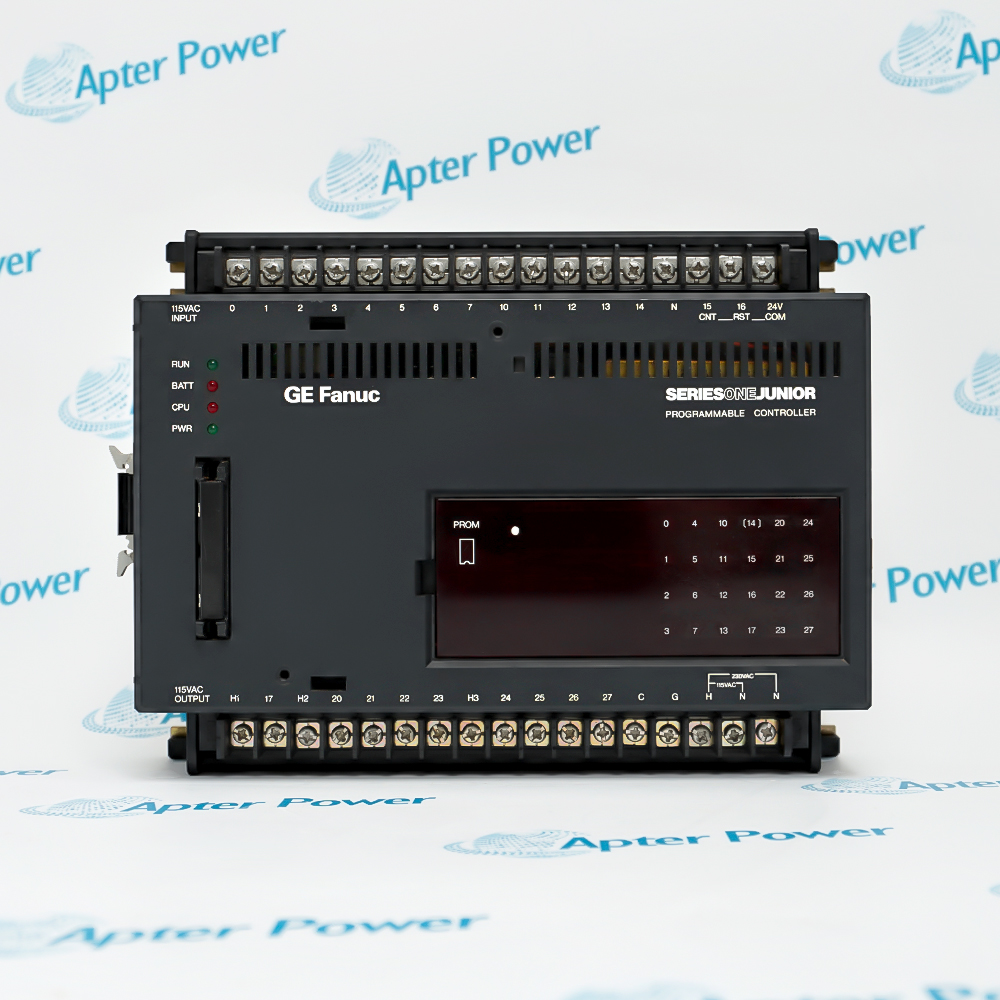
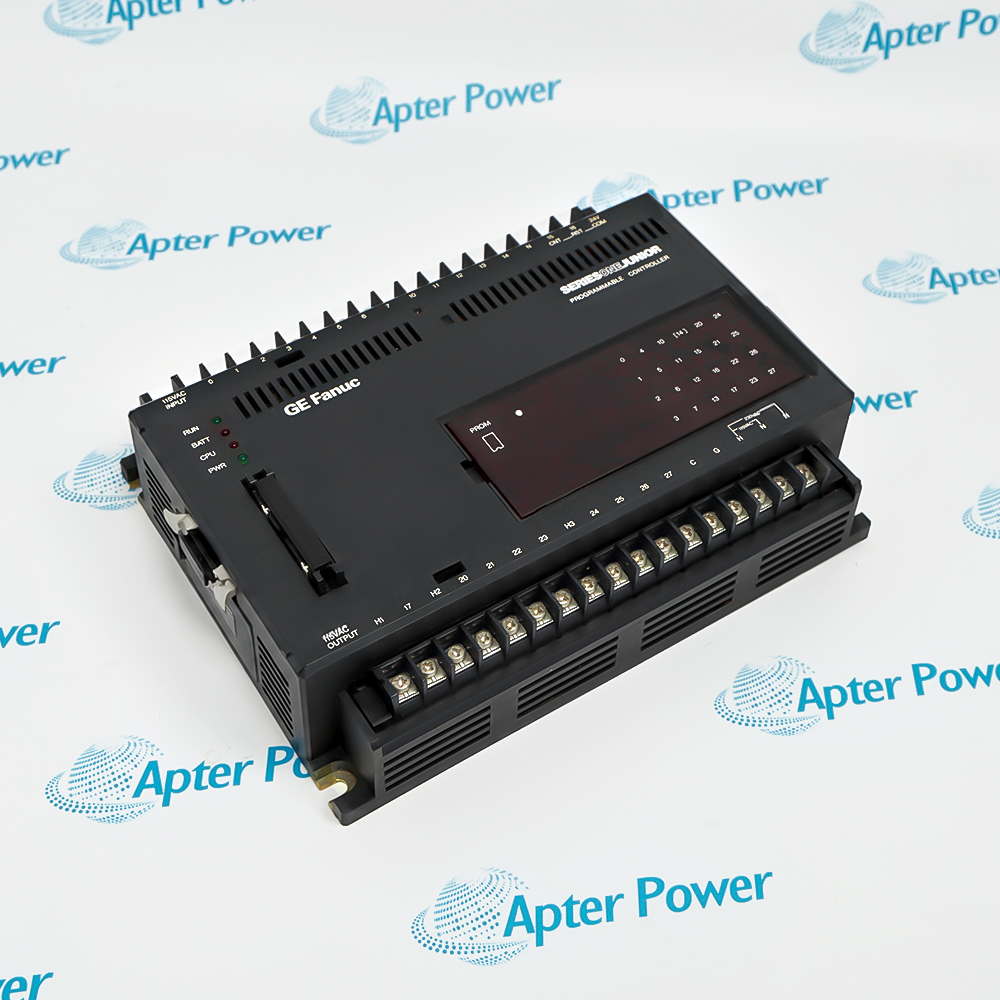
- Integrates processor, power supply, inputs, and relay outputs in one 24-point base.
- Provides thirteen 115 VAC inputs plus two DC inputs for compact field acquisition.
- Uses nine relay outputs arranged for supported AC or DC load switching.
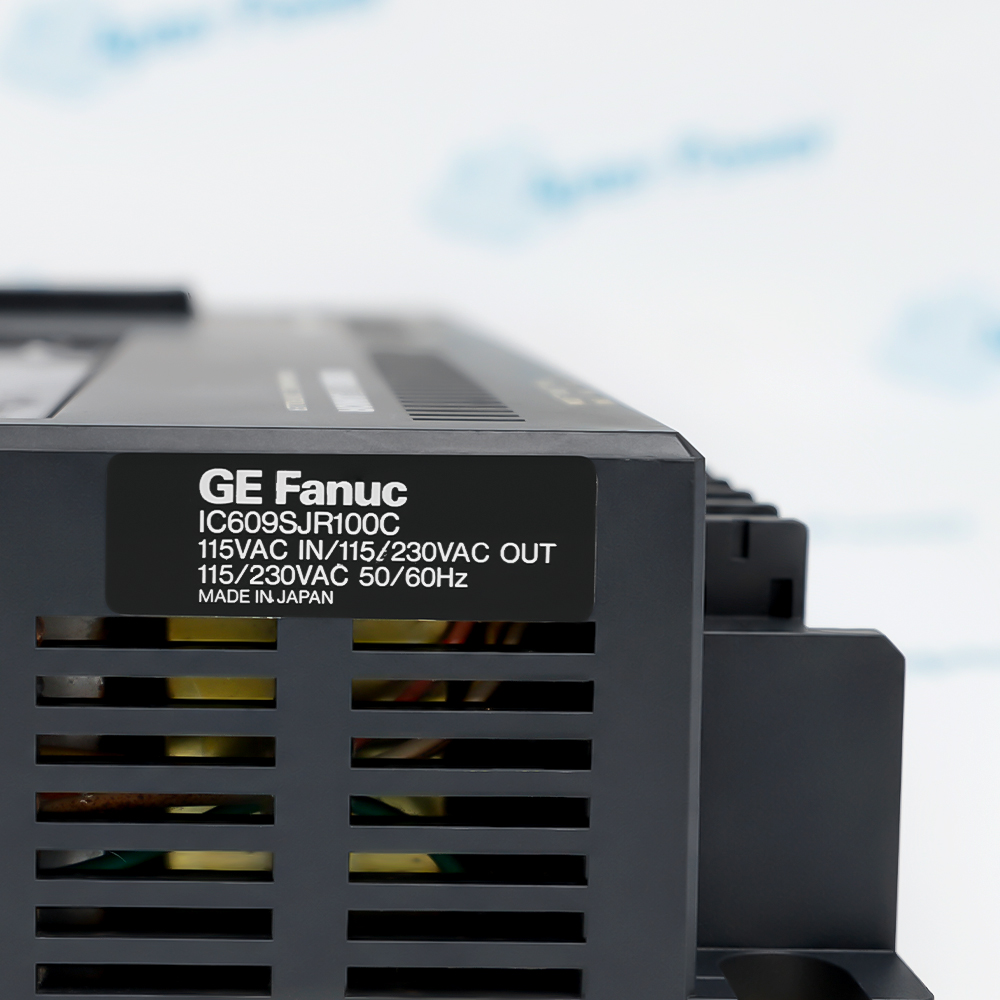
The ordered unit is the IC609SJR100 Series One Junior base, not the similarly named C-suffix version.
It serves as a compact standalone controller for discrete sequence and interlock logic in established Series One installations.
Record the program, terminal map, commons, load ratings, and mounting arrangement before exchanging the controller.
Availability is subject to Apter Power inventory and sourcing confirmation.
Verified resources for GE Fanuc IC609SJR100:
Important Notice: Other accessories, manuals, cables, calibration data, software, etc. are not included with this equipment unless listed in the above stock item description. All prices are shown in USD.
- Maintain compact machines already engineered around a Series One Junior 24-point controller.
- Operate discrete interlocks, timers, counters, and relay-controlled auxiliary loads.
- Restore a legacy panel after the original program and every field terminal have been documented.
- The full IC609SJR100 basic-unit identity must match the installed Series One Junior program.
- Confirm the 115 VAC input arrangement and relay-output grouping against the existing terminal plan.
- Any later controller suffix requires documented migration validation before substitution.
- Keep the two input common groups separated exactly as shown in the approved field drawing.
- Check each relay group against its connected AC or DC source before energizing the controller.
- Apply suitable suppression to inductive loads to limit relay-contact transients.
- Use input and output status indications to distinguish field-wiring faults from program conditions.
- Test relay contacts with connected loads isolated before returning the panel to automatic operation.
- Check power-supply, short-circuit, and external-voltage causes before replacing a failed base.