Features:
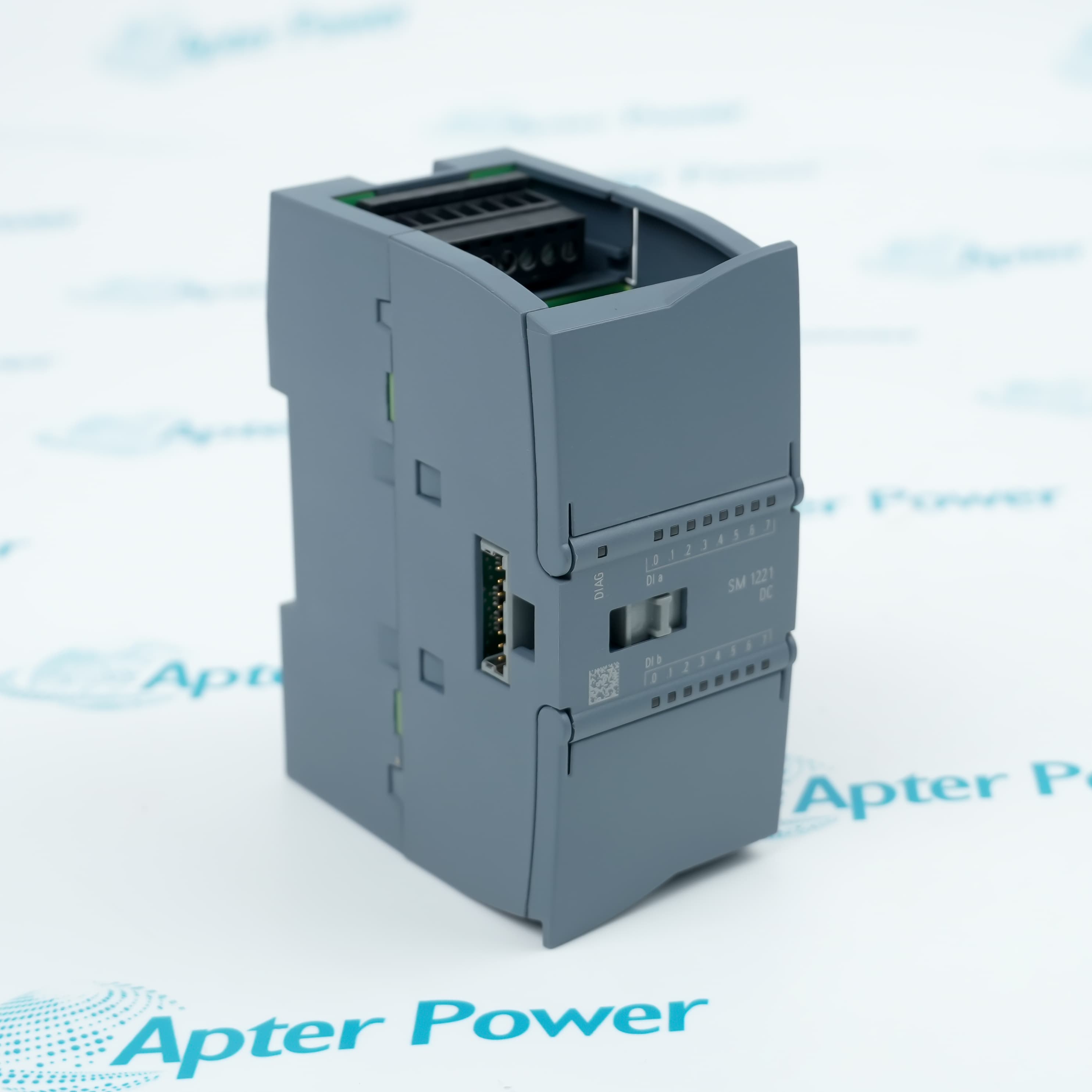
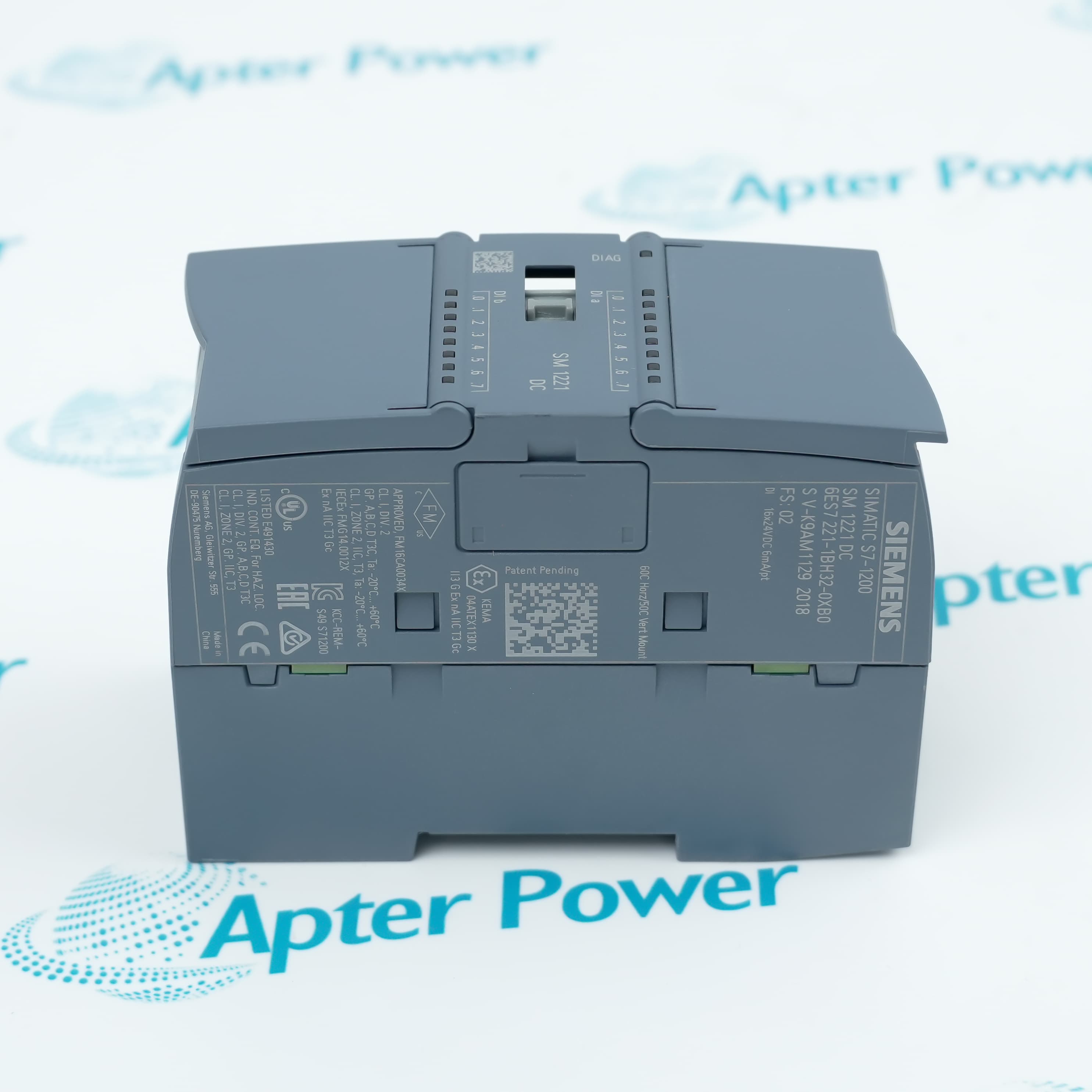
- Dense input expansion: Sixteen field states occupy one S7-1200 signal-module position.
- Visible point activity: Local channel indication helps separate a wiring event from a PLC tag issue.
- Diagnostic support: Module alarms add a second service signal beyond ordinary input status.
6ES7221-1BH32-0XB0 serves machines whose controller needs a substantial group of discrete sensor and contact states.
It reports incoming field conditions; it does not switch loads, and it is not a functional-safety input module merely because some connected contacts are used in operating logic.
Siemens lists the exact article active today, with phase-out scheduled for November 2026.
Apter Power can help confirm the Siemens 6ES7221-1BH32-0XB0 SIMATIC S7-1200 SM 1221 Digital Input Module, channel map and lifecycle timing before quotation.
Siemens 6ES7221-1BH32-0XB0 SIMATIC S7-1200 SM 1221 Digital Input Module Manuals,Datasheets,Link
Important Notice: Other accessories, manuals, cables, calibration data, software, etc. are not included with this equipment unless listed in the above stock item description. All prices are shown in USD.
- One rack position: A full bank of field contacts is represented without assigning two separate eight-point modules.
- Address block: Sixteen individual PLC tags must stay aligned with their physical terminal positions.
- Signal mix: Contacts and suitable electronic sensors can share the bank when each field circuit meets the input characteristic.
- Spare choice: A lower-count module cannot preserve every installed point merely by fitting the rail.
- Sink/source arrangement: The sensor and input circuit need a matching current path.
- Supply reference: Sensor power and return must follow the selected wiring scheme; an input terminal is not a sensor-supply terminal.
- Long runs: Cable routing and shielding become important in a populated cabinet with remote sensors.
- Conductor identity: The larger connector map benefits from labels that tie each terminal to a field device.
- Field state: The actual contact or sensor condition is the starting observation.
- Module indication: The channel LED shows the local electrical interpretation, not the final machine state.
- Diagnostic alarm: An alarm requires its own interpretation rather than being inferred from the input LEDs.
- PLC tag: Hardware configuration and program use determine where the field transition appears to the controller.
- Machine sensor banks: Collects multiple proximity and photoelectric sensor states.
- Operating permissives: Reports ordinary equipment-ready contacts to the PLC sequence without implying a safety rating.
- Process auxiliaries: Reports valve, switch and equipment status contacts.
- I/O consolidation: Groups sixteen inputs in one expansion module where density is useful.

 6ES7221-1BH32-0XB0 Datasheet

