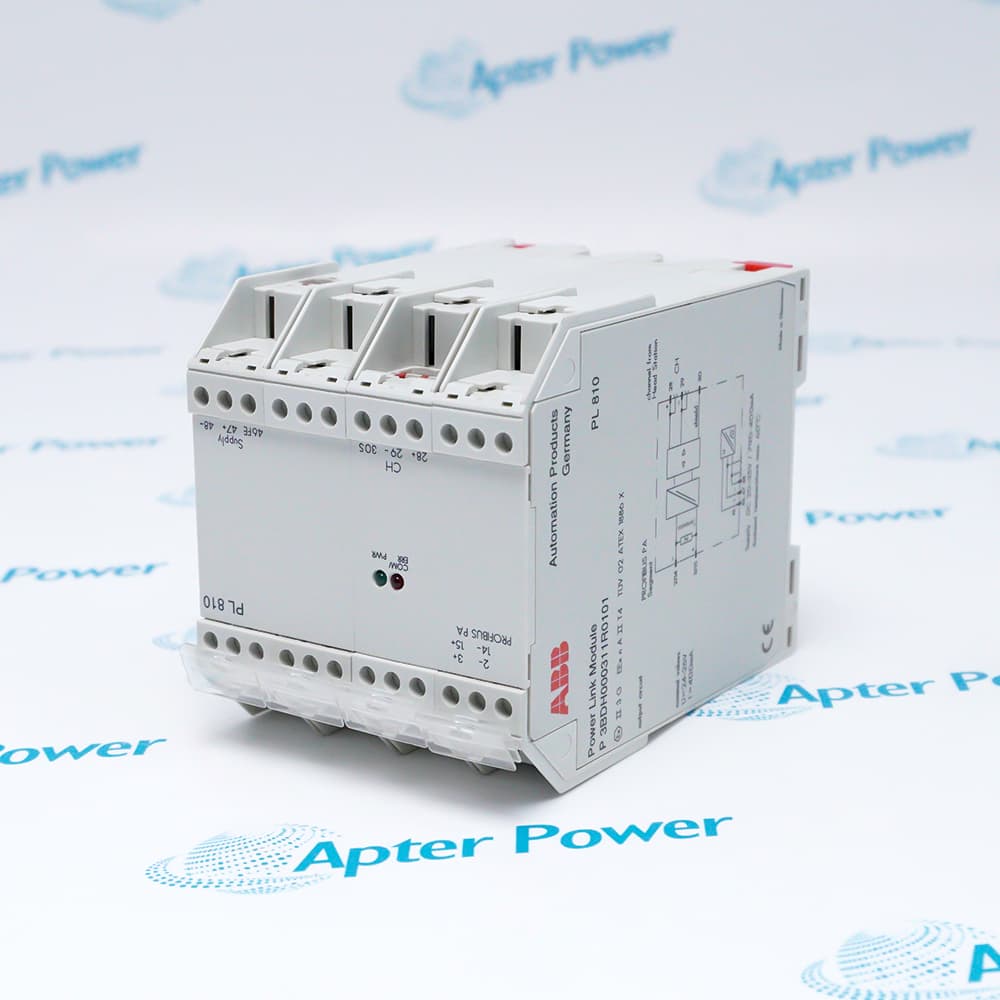
Features:
- Interface Between 48 VDC Field Signals and ABB Advant Master Control System Backplane
- Integrates High-Density Digital Input Acquisition with Opto-Isolated Channel Grouping
- Functions in Conjunction with ABB Advant OCS and Master Series Controllers
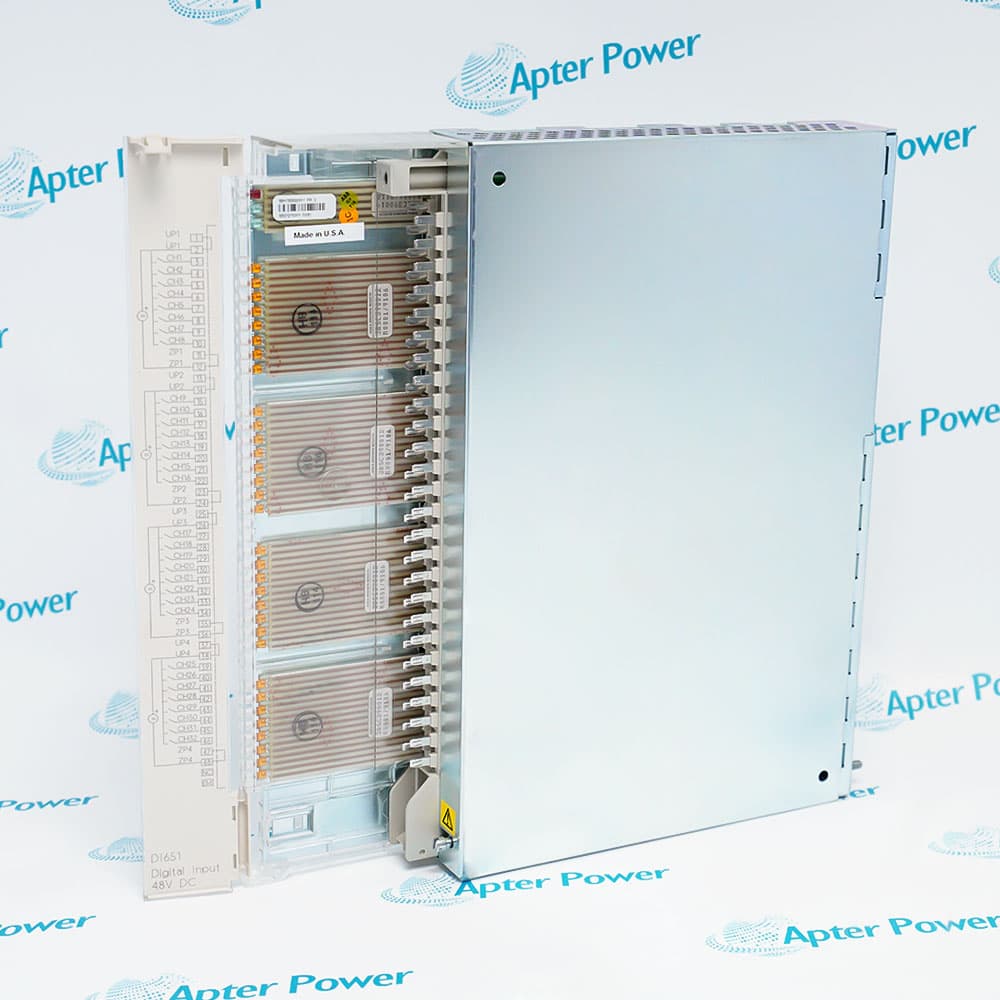
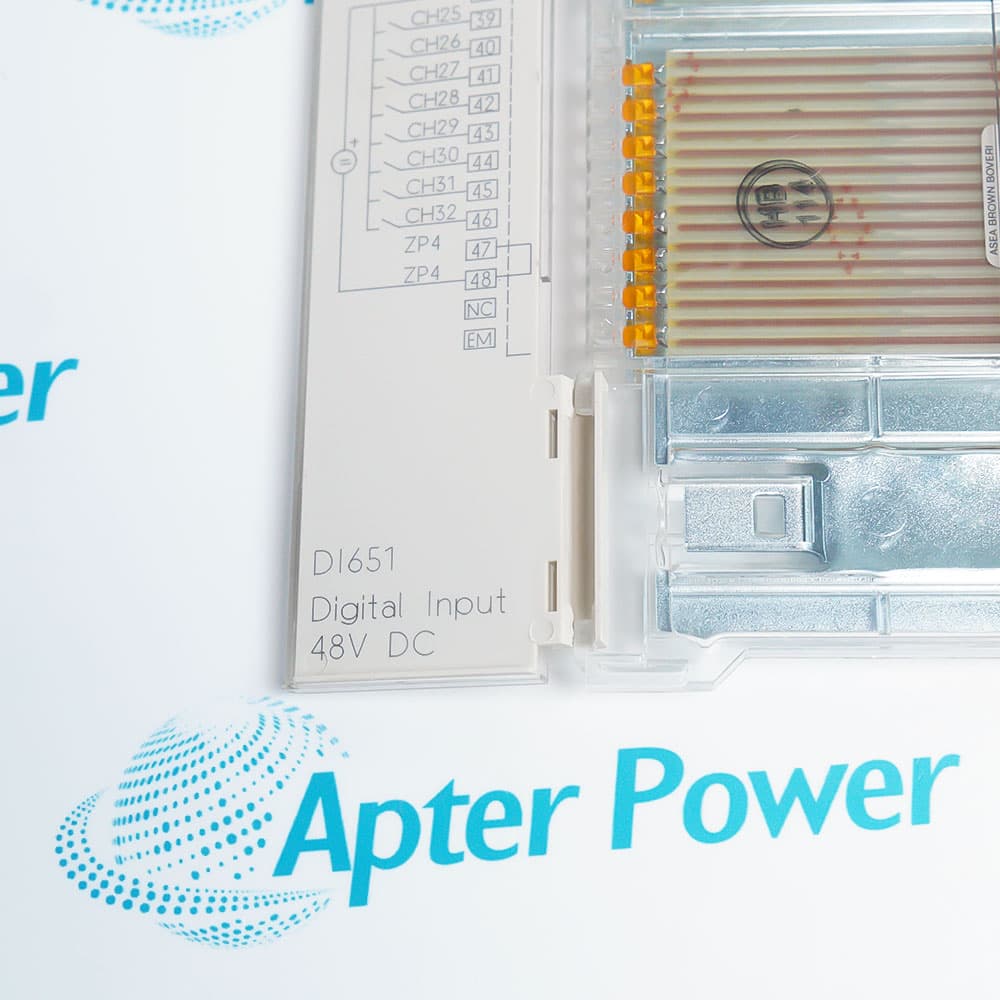
The ABB DI651 3BHT300026R1 Digital Input Module serves as the primary 48 VDC digital input interface in an ABB Advant control rack, providing reliable discrete signal acquisition for all connected field devices. It continuously receives incoming 48 VDC digital signals across 32 opto-isolated channels and processes these inputs through four independent isolation groups to support steady state monitoring of all field devices and control logic.
The DI651 3BHT300026R1 provides essential digital input functions common to the entire control rack, and is a critical component of the signal acquisition path, directly affecting the proper, normal operation of the overall monitoring and control system. One or multiple DI651 3BHT300026R1 modules may be installed per rack depending on the required channel density.
For applications requiring sequence of event recording, the ABB Advant System utilizes the DI651 3BHT300026R1 Digital Input Module to capture and timestamp state changes with high precision. The DI651 3BHT300026R1 event capture system continually monitors the status of all 32 channels.
The DI651 3BHT300026R1 ABB Digital Input Module may still be available for purchase and support from Apter Power beyond End-Of-Life (EOL) by the manufacturer (OEM).
ABB DI651 3BHT300026R1 Digital Input Module Manuals,Datasheets,Link
Important Notice: Other accessories, manuals, cables, calibration data, software, etc. are not included with this equipment unless listed in the above stock item description. All prices are shown in USD.
ABB DI651 3BHT300026R1 Digital Input Module Specs
General
- Manufacturer ABB
- Model DI651 3BHT300026R1
- Condition New Original ready stock
- Product Family DO620 3BHT300009R1,DO630 3BHT300007R1
Important Notice: Other accessories, manuals, cables, calibration data, software, etc. are not included with this equipment unless listed in the above stock item description. All prices are shown in USD.
- Sequence of Events (SOE) Tracking: It captures precise, time-stamped status transitions from critical process equipment, which is vital for post-incident root-cause analysis.
- Pulse Catching Functions: The hardware can detect short-duration pulse signals from high-speed sensors, ensuring brief inputs are not missed during a standard controller scan cycle.
- Process and Plant Automation: It acts as the primary digital interface for machinery sensors, field limit switches, pushbuttons, and relay contacts across chemical, power, and manufacturing plants.
- Distributed Control System (DCS) Integration: It functions as a robust binary data aggregator, feeding real-time field statuses back to central processing units.
- Database Mapping: All 32 input channels must be mapped to distinct binary system variables or database elements within the controller software.
- Signal Filtering and Debouncing: Software delay and filter parameters are configurable per channel to suppress electromagnetic noise and mechanical contact bounce.
- Operational Mode Selection: Advanced capabilities, such as dedicating specific channels to high-speed pulse catching or SOE logging, must be explicitly enabled during system setup.
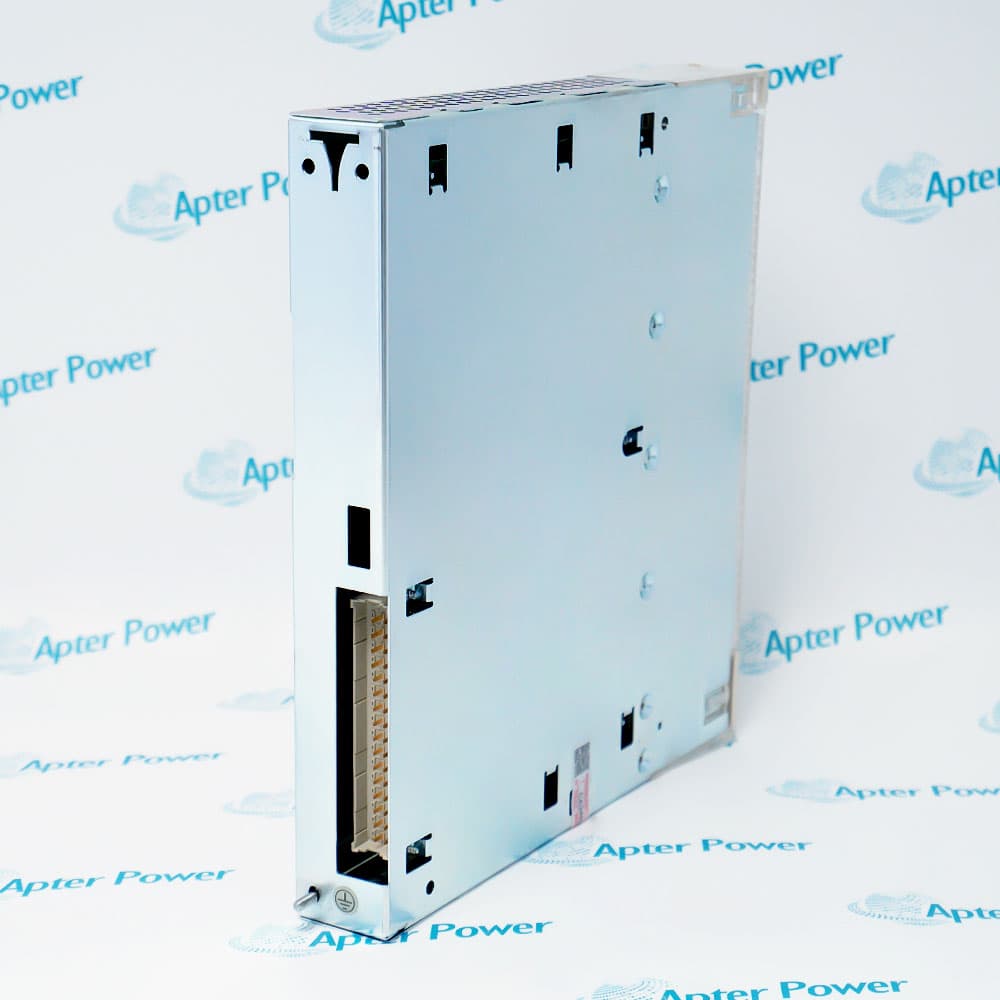
- Backplane Bus Communication: The module communicates via its dedicated horizontal expansion bus, ensuring high-speed data transfer directly to the host controller.
- Group Opto-Isolation: The 32 input channels are isolated into four separate groups. This galvanic isolation prevents electrical surges or ground loops from bridging across groups or reaching the backplane.
- Voltage Tolerance: Designed for a 48V DC nominal input, it utilizes defined voltage thresholds to distinguish between valid signals and electrical interference.
- Visual Status Indicators: Individual front-panel LEDs correspond to each input channel, allowing maintenance teams to instantly verify the state of field signals during troubleshooting.
- Hot-Swapping Capabilities: The module architecture supports online replacement, enabling technicians to swap a faulty unit without interrupting system power or disrupting ongoing processes.