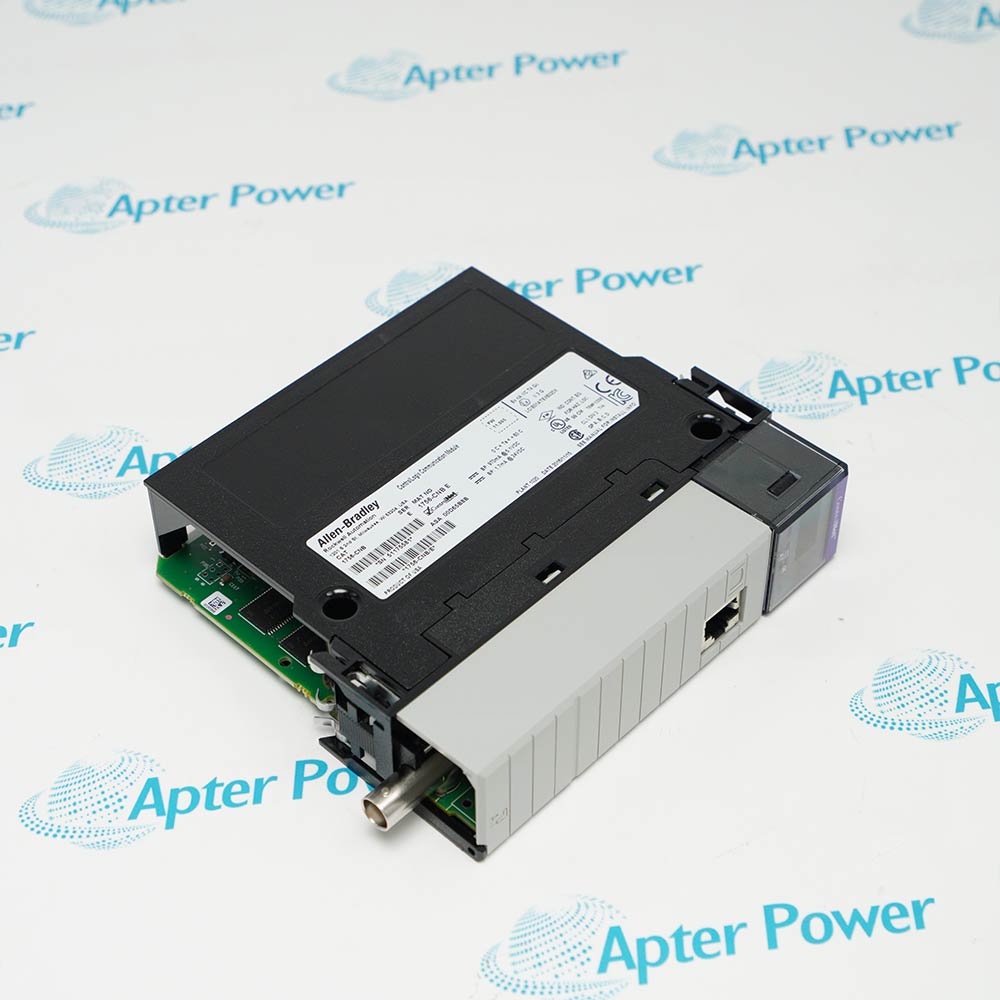
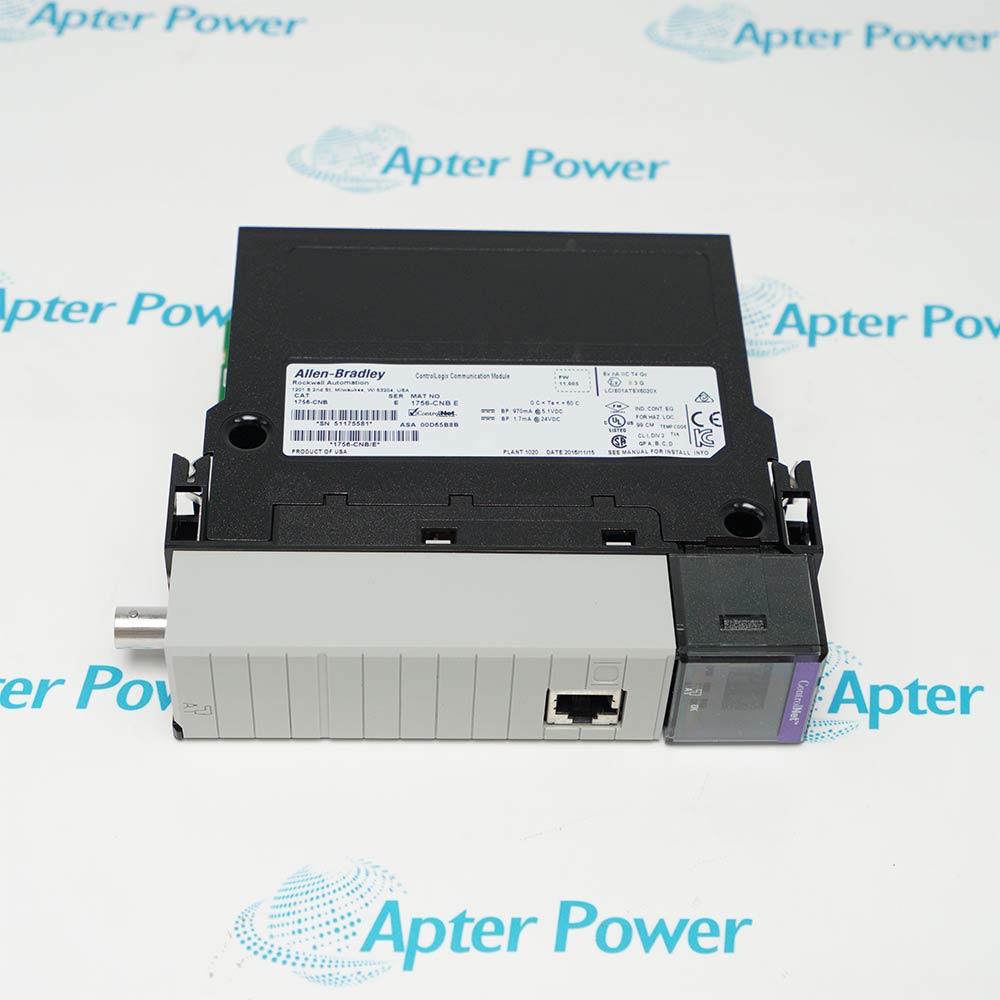
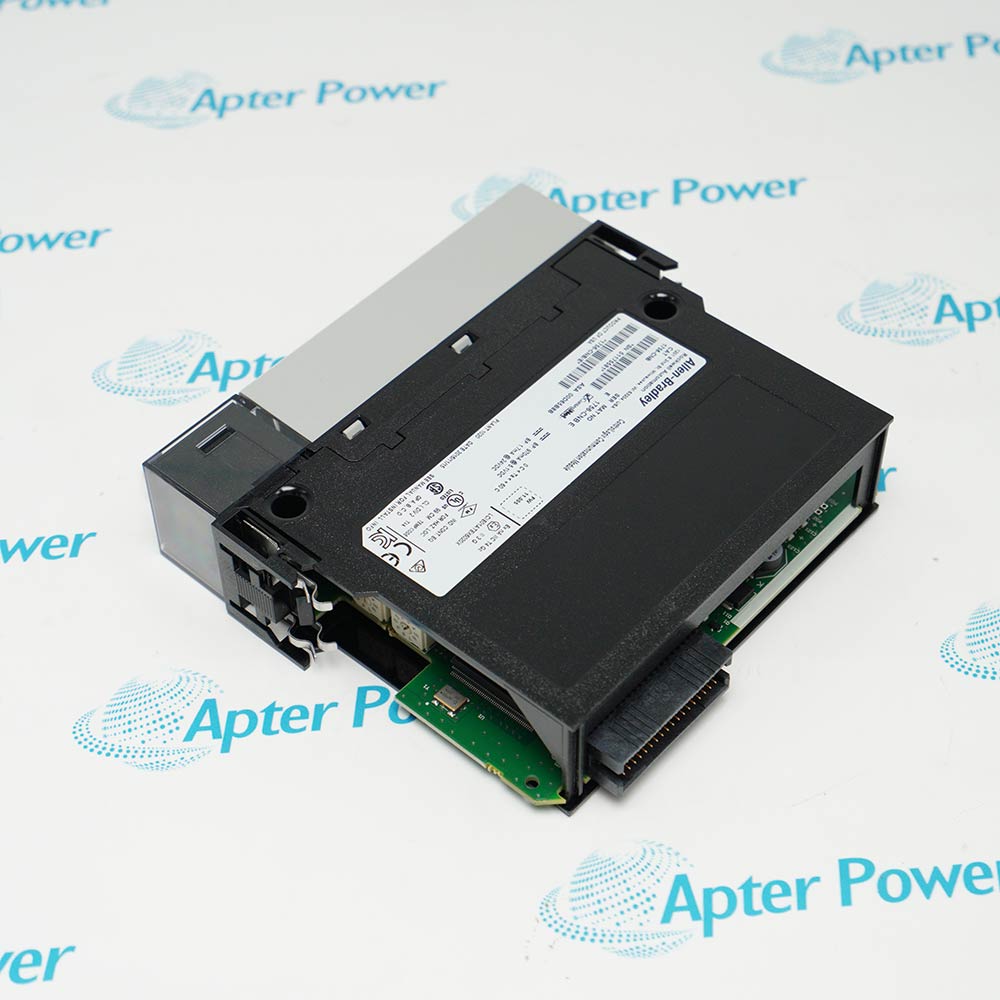
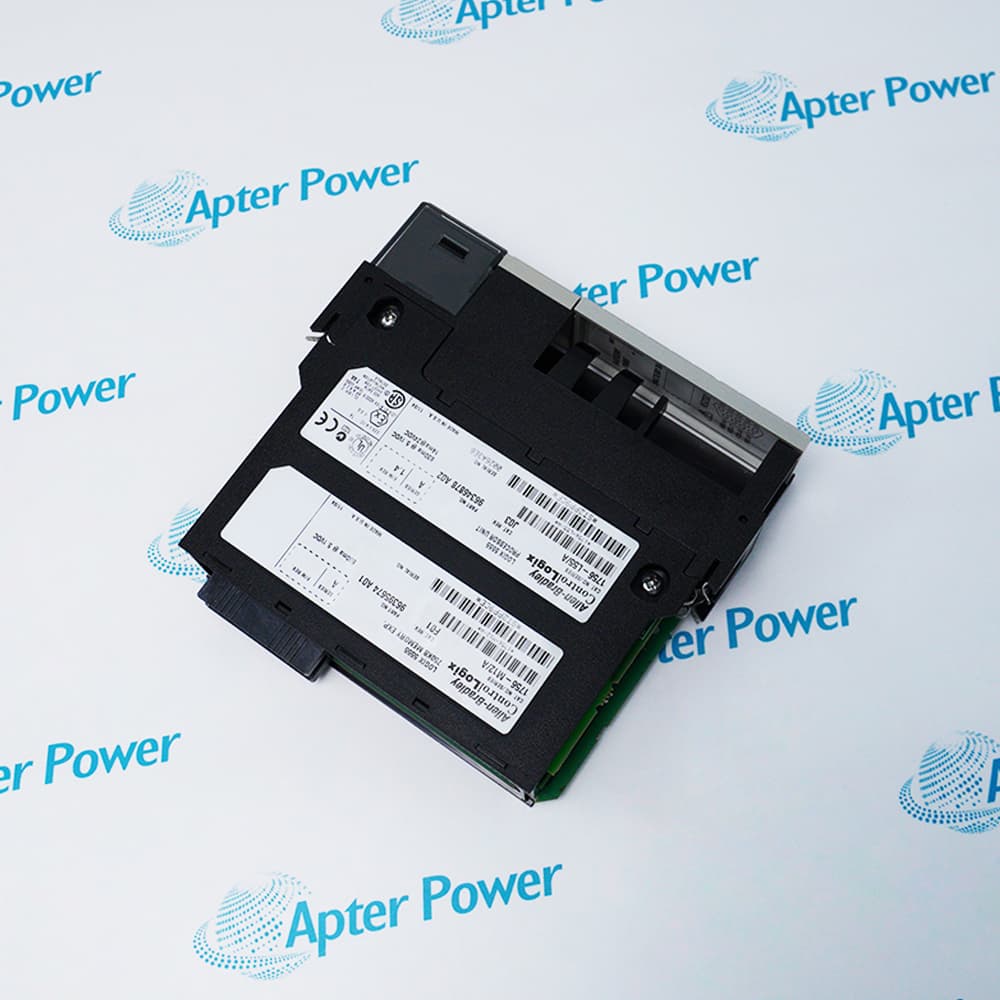
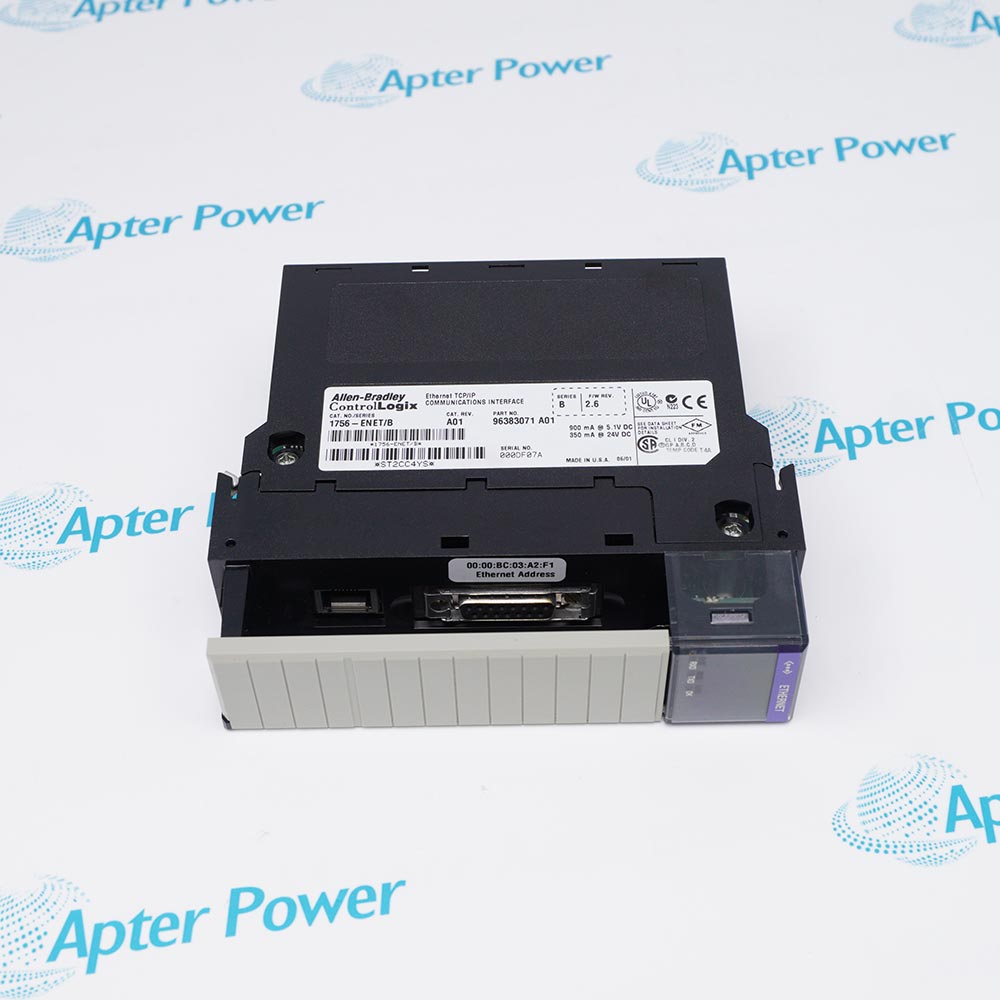
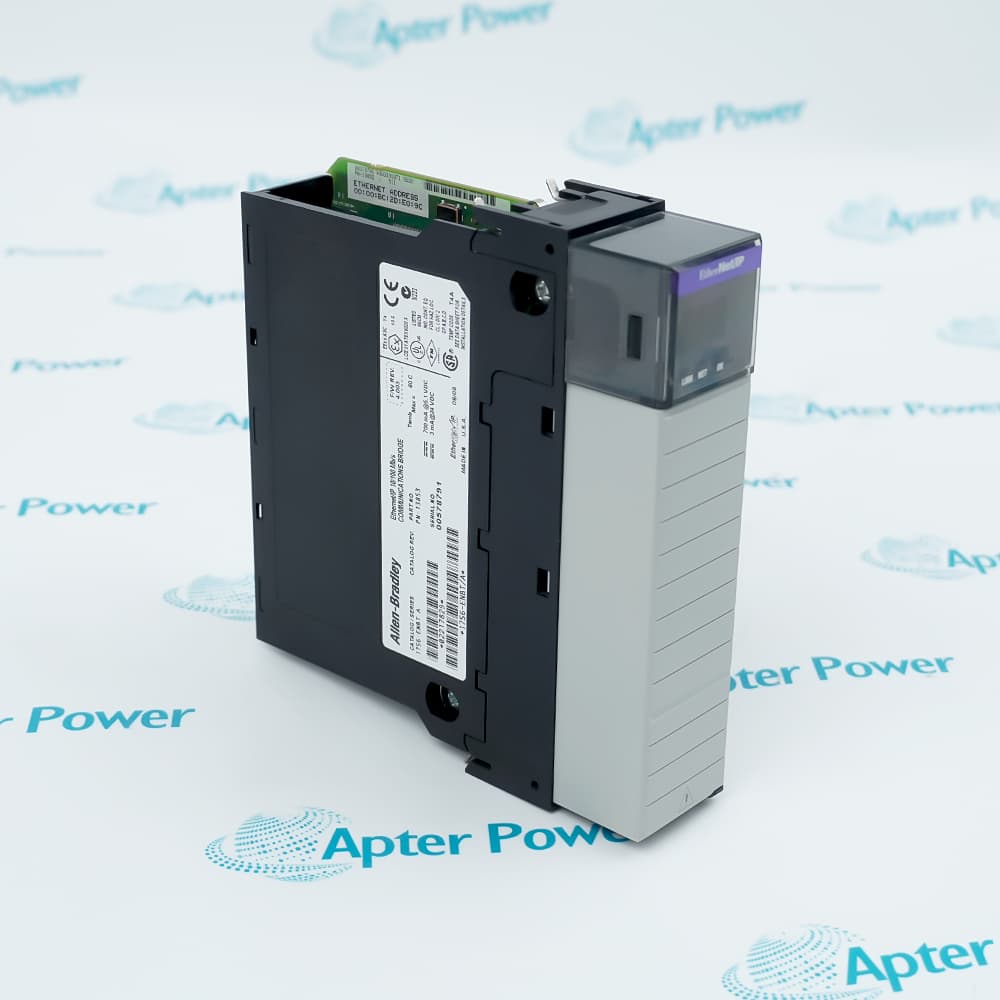
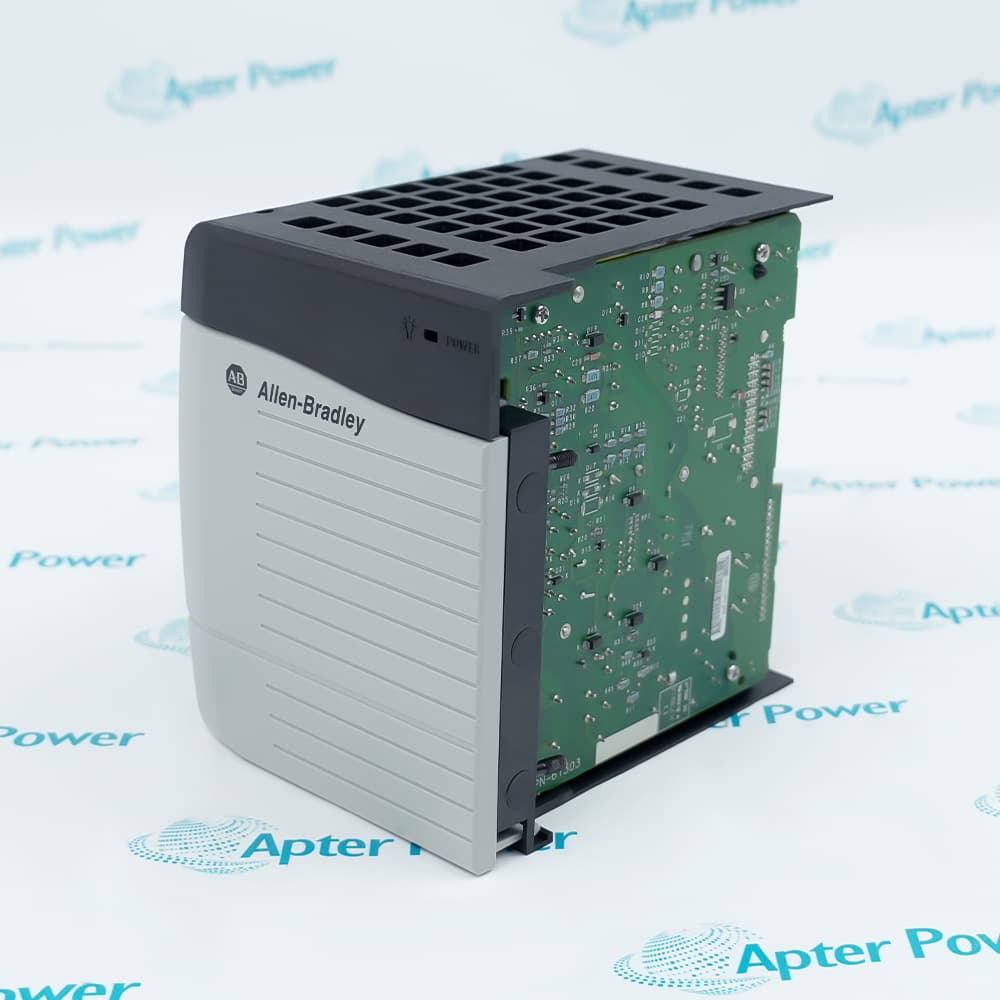
Allen-Bradley 1756-CNB
Ask our team:
  • Phone: +86 181 0690 9650
  • E-Mail sales1@apterpower.com
  • Lifecycle status

     Discontinued / Obsolete by OEM
    Apter Power specializes in sourcing obsolete Allen-Bradley hardware, delivering certified replacement communication modules to keep your legacy ControlLogix networks operating smoothly.

1756-CNB

/ 4.9
1001 reviews | Need a Specific Revision?
1756-CNB is a ControlLogix ControlNet communication module designed for high-speed, deterministic industrial data exchange over a single-channel network. It supports real-time I/O and peer-to-peer communication with reliable CIP-based performance in ControlLogix systems.
In Stock
Ships by Thursday, October 29
Fast Shipping Available
Get a quick price for 1756-CNB
Quantity
*E-mail
Company
*Mobile
*Content
Upload (gif, jpg, jpeg, png, bmp, doc, docx, xls, xlsx, ppt, pdf, csv)

Technical specifications for 1756-CNB

  • Manufacturer:
    Allen-Bradley
  • Part Number:
    1756-CNB
  • Product Family:
    ControlLogix
  • Product Type:
    ControlLogix Communication Module
  • Stock:
    1
  • Communication:
    ControlNet
  • Interface:
    1 ControlNet BNC
  • Number Of Channels:
    1
  • Transmission rate:
    5000 kbps
  • Power dissipation:
    5.1 W
  • Thermal dissipation:
    17.4 btu/h
  • ControlNet port:
    1 ControlNet BNC
  • Enclosure type rating:
    None (open-style)
  • Number of nodes, max:
    99 nodes
  • Current draw:
    970mA @ 5.1V DC, 1.7mA @ 24V DC
  • ControlNet cable:
    1786-RG6 quad shield RG6 coaxial cable
  • Wiring category:
    1 - on ControlNet ports, 3 - on NAP ports
  • Connections supported, max:
    64 maximum
  • Logix communication connections range:
    40...48
  • NAP cable:
    1786-CP
  • NAP port:
    1 NAP RJ45
  • Surrounding air temperature, max:
    60 °C
  • Storage temperature:
    -40 to 85 °C
  • Emissions:
    CISPR 11: Class A
  • Vibration:
    2 G @ 10...500 Hz
  • ESD immunity:
    6 kV contact discharges, 8 kV air discharges
  • EFT/B immunity:
    ±3kV @ 5kHz on ControlNet ports
  • Relative humidity:
    5...95% noncondensing
  • Shock:
    Operating: 30 G, Non operating: 50 G
  • Conducted RF immunity:
    10V rms with 1 kHz sine-wave 80% AM from 150 kHz...80 MHz
  • Surge transient immunity:
    ±2 kV line-earth (CM) on ControlNet ports
  • Operating temperature:
    0 to 60 °C
  • Module location:
    Chassis based, any slot
  • Weight:
    0.26 kg
  • Estimated shipping dimensions:
    3.5x14x17.1cm
  • Tariff Code:
    8708709900
  • Country of origin:
    USA
  • Place of shipment:
    Xiamen, Fujian, China
By purchasing this item, you agree to the Terms & Conditions, ApterPower is not an authorized distributor for listed manufacturers or tradenames and therefore the manufacturer's warranty does not apply. All our products come with ApterPower's 1-year warranty.

More Information

Overview Manuals Specifications Protection Use Cases Configuration

Features:

  • Supports deterministic CIP-based ControlNet communication for real-time industrial control
  • Handles up to 99 network nodes with structured high-speed data exchange at 5000 kbps
  • Built for industrial environments with strong electrical immunity and chassis-based flexibility
1756-CNB is widely deployed in industrial automation systems where deterministic communication between controllers and distributed I/O is required. In production lines and process control environments, the module ensures synchronized data transfer between ControlLogix controllers and remote devices. The single-channel ControlNet interface enables stable communication in structured automation networks. Its design supports both real-time I/O and peer-to-peer messaging under a unified protocol framework. This makes 1756-CNB suitable for legacy ControlNet-based infrastructures still operating in critical industries.

In operation, 1756-CNB prioritizes time-sensitive control tasks such as I/O updates and controller interlocking. Non-critical tasks like program uploads and downloads are deprioritized to maintain deterministic performance. The module also supports diagnostic buffer monitoring, including client and server buffer usage indicators (U c x x and U s x x). These diagnostic tools help engineers monitor network load and optimize communication performance. As a result, 1756-CNB provides predictable and stable network behavior under industrial workloads.

From a deployment perspective, 1756-CNB integrates into any ControlLogix chassis slot and works with RG6 quad-shield coaxial cabling (1786-RG6) and NAP connections via 1786-CP. However, system design must consider connection limitations, as rack optimization supports up to five controllers per remote module. Exceeding this limit may result in connection faults and communication errors. The module is optimized for redundancy systems when used with compatible CNBR configurations. These considerations make 1756-CNB a structured yet legacy-focused communication solution.

The 1756-CNB Allen-Bradley ControlLogix Communication Module may still be available for purchase and support from Apter Power beyond End-Of-Life (EOL) by the manufacturer (OEM).
Allen-Bradley 1756-CNB ControlLogix Communication Module Manuals,Datasheets,Link Important Notice: Other accessories, manuals, cables, calibration data, software, etc. are not included with this equipment unless listed in the above stock item description. All prices are shown in USD.
Allen-Bradley 1756-CNB ControlLogix Communication Module Specs

General

  • Manufacturer Allen-Bradley
  • Model 1756-CNB
  • Condition New Original ready stock
  • Product Family 1756-CNBR,1756-CNBK,1756-CNBRK
Important Notice: Other accessories, manuals, cables, calibration data, software, etc. are not included with this equipment unless listed in the above stock item description. All prices are shown in USD.
  • Coaxial cable redundancy backup: Supports synchronous transmission of A/B dual control network channels, enabling seamless and safe switching when a single physical link is damaged.
  • Rack ESD and surge protection: Built-in industrial-grade anti-interference electronic circuitry withstands high-voltage ESD surges from the backplane bus or external networks.
  • Node logic isolation protection: When a remote I/O station experiences a hardware short circuit, the module automatically isolates the node, ensuring the main network remains unaffected.
  • Control key lock synchronization: The module's communication status is deeply linked to the controller's physical key switch, locking unauthorized remote modification commands from the underlying layer.
  • Remote I/O Station Control: Connects the central ControlLogix controller to multiple remote 1756 or 1794 Flex I/O racks via ControlNet network.
  • Inter-Controller Interlocking: Enables highly deterministic production line data interlocking between multiple ControlLogix, CompactLogix, and PLC-5C controllers.
  • Redundant Hot Standby System Bridging: Serves as a network communication switching bridge between master and slave racks in a dual-rack redundant control system (1756-RM2).
  • SCADA and HMI Data Acquisition: Acts as a high-speed deterministic data transmission channel between the underlying workshop control network and the upper-level RSLinx communication server.
  • Fully automatic network parameter bridging: Automatically acquires I/O attributes via the backplane, eliminating the need to manually write complex communication mapping code for each channel.
  • RSNetWorx configuration support: Quickly plan network nodes, set refresh times, and generate scheduling files using graphical industrial software.
  • Intelligent node address addressing: Directly set network node station numbers using hardware knobs on the module surface or software; the configuration process is intuitive and easy to maintain.
  • Integrated Dynamic Tag Synchronization: Production/consumption tags can be created directly within the Studio 5000 environment, enabling automatic data alignment across controllers.
Description
In ControlLogix architectures, 1756-CNB serves as a dedicated ControlNet communication interface, enabling integration of distributed control and I/O systems through a single ControlNet BNC port. The module operates at a transmission rate of 5000 kbps and supports up to 99 nodes on the network, making it suitable for medium-scale deterministic control applications. With support for CIP-based communication, 1756-CNB ensures synchronized data exchange between controllers and remote I/O systems.

The module is engineered to prioritize mission-critical control traffic, where I/O updates and controller interlocking take precedence over program downloads and non-time-sensitive messaging. It supports a maximum of 64 connections, with Logix communication connection ranges between 40 and 48, enabling structured allocation of control and data links within a system. The inclusion of a NAP RJ45 port provides additional diagnostic and configuration access through 1786-CP cabling.

From a performance and electrical standpoint, 1756-CNB consumes 970 mA at 5.1V DC and 1.7 mA at 24V DC, with total power dissipation of 5.1 W and thermal dissipation of 17.4 BTU/h. It is designed for chassis-based installation in any slot, offering flexibility in ControlLogix rack configuration. The module operates reliably in environments ranging from 0 to 60°C, with storage capability from -40 to 85°C, and supports 5–95% noncondensing humidity conditions.

Environmental resilience is reinforced through industrial-grade immunity, including 6 kV contact and 8 kV air ESD protection, ±3 kV EFT/B immunity on ControlNet ports, and ±2 kV surge protection line-to-earth. Vibration tolerance reaches 2 g across 10–500 Hz, while shock resistance supports up to 30 g during operation and 50 g in non-operating conditions. These specifications make 1756-CNB suitable for harsh industrial environments with high electrical noise.

It is important to note that 1756-CNB operates within a legacy ControlNet architecture, which is considered an older industrial network technology. Migration guidance is available through ControlNet to EtherNet/IP transition documentation, as modern systems increasingly adopt Ethernet-based architectures for scalability and performance improvements.
Revisions

Revision Part #

Also known as

1756-CNB Ser A
1756-CNB/A, Series A, Rev A
1756-CNB Ser B
1756-CNB/B, Series B, Rev B
1756-CNB Ser C
1756-CNB/C, Series C, Rev C
1756-CNB Ser D
1756-CNB/D, Series D, Rev D
1756-CNB Ser E
1756-CNB/E, Series E, Rev E
Alternative Names
1756-CN8 1756CN8 I756-CNB 1756-CNBR 1756-DNB 1756-CN2 1756-CN2R 1756-CNBK 1756-CNBRK 1756-DHRIO 1756-EN2F 1756-EN2T
Technical notes
The Allen-Bradley 1756-CNB is a ControlLogix ControlNet bridge module supporting up to 64 nodes and 5 Mbps deterministic communication for time-critical remote I/O and peer-to-peer data interlocking.
Exceptional Service

Our Mission

  • 100% Satisfaction

    We believe expertise is priceless. With over 20 years of experience, and top engineers on staff, we can help you solve or avoid problems that threaten your business.
  • Trust Guaranteed

    Not only do we have a vast inventory, our team makes sure every piece of equipment is in working condition. Your purchases are also backed by our Warranty.
  • Expertise

    Time is money, especially when your equipment is down. We work quickly to get your equipment on its way so you can get it back up and running.

FAQS

The following is a list of questions commonly asked by our customers. Please contact us if you have a question about our process that is not answered below.
What communication role does 1756-CNB play in a ControlLogix system?
1756-CNB provides ControlNet network connectivity for deterministic CIP-based communication between controllers and distributed I/O devices.
Why does 1756-CNB support only a single ControlNet channel?
1756-CNB uses one ControlNet BNC interface to maintain structured deterministic communication within legacy ControlNet architecture.
How many nodes can 1756-CNB handle on a ControlNet network?
1756-CNB supports up to 99 nodes on a single ControlNet network segment operating at 5000 kbps.
What causes connection limitations in 1756-CNB rack optimization setups?
1756-CNB limits rack optimization connections to five controllers per remote module, and exceeding this limit results in communication failures.