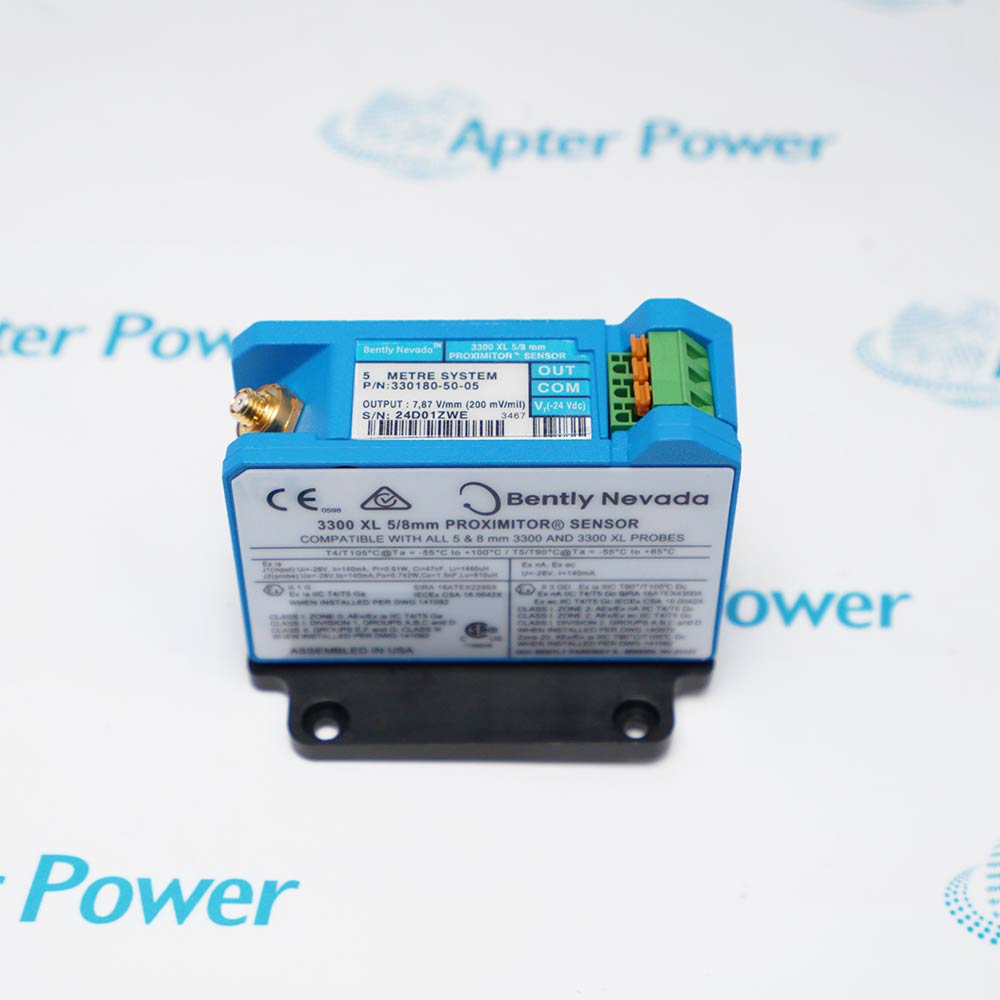
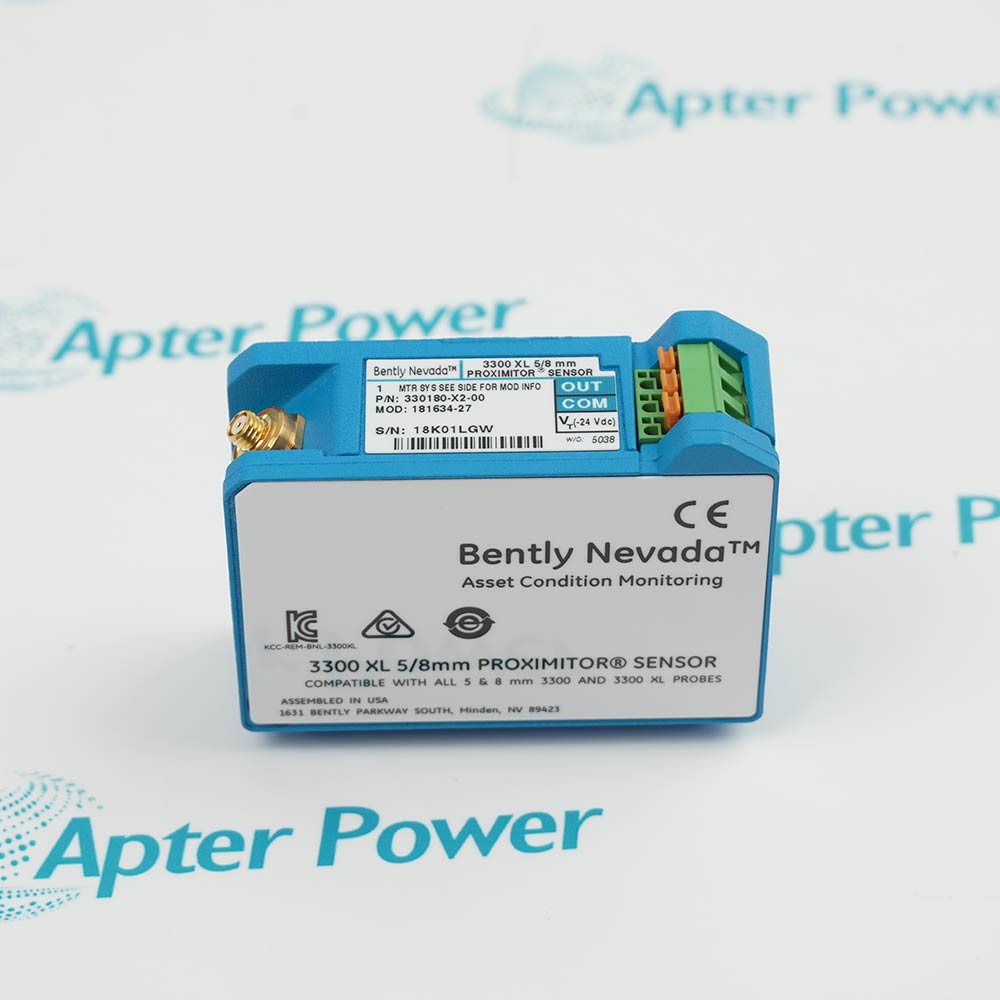
Features:
- Defined intrinsic safety electrical parameters for controlled operation
- Stable signal interface behavior under specified voltage and current limits
- Wide operating temperature range from -25°C to +85°C for industrial conditions
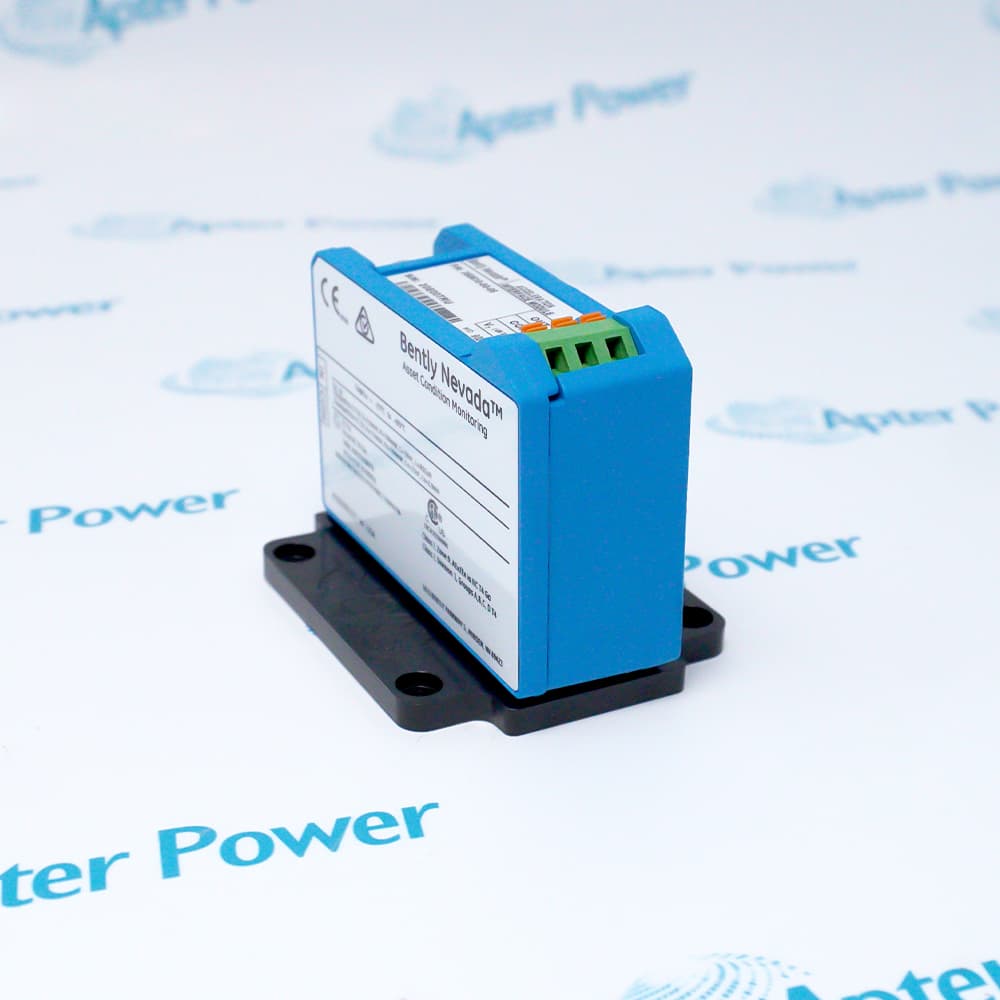
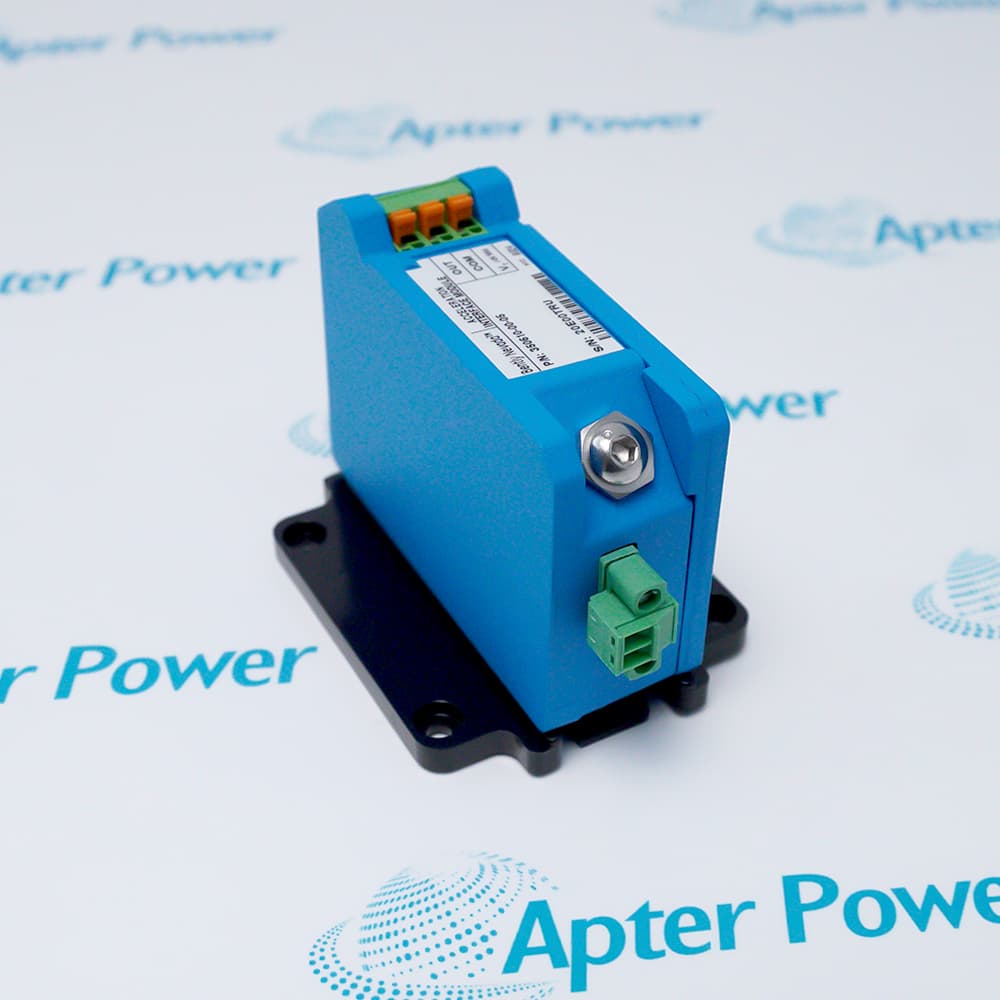
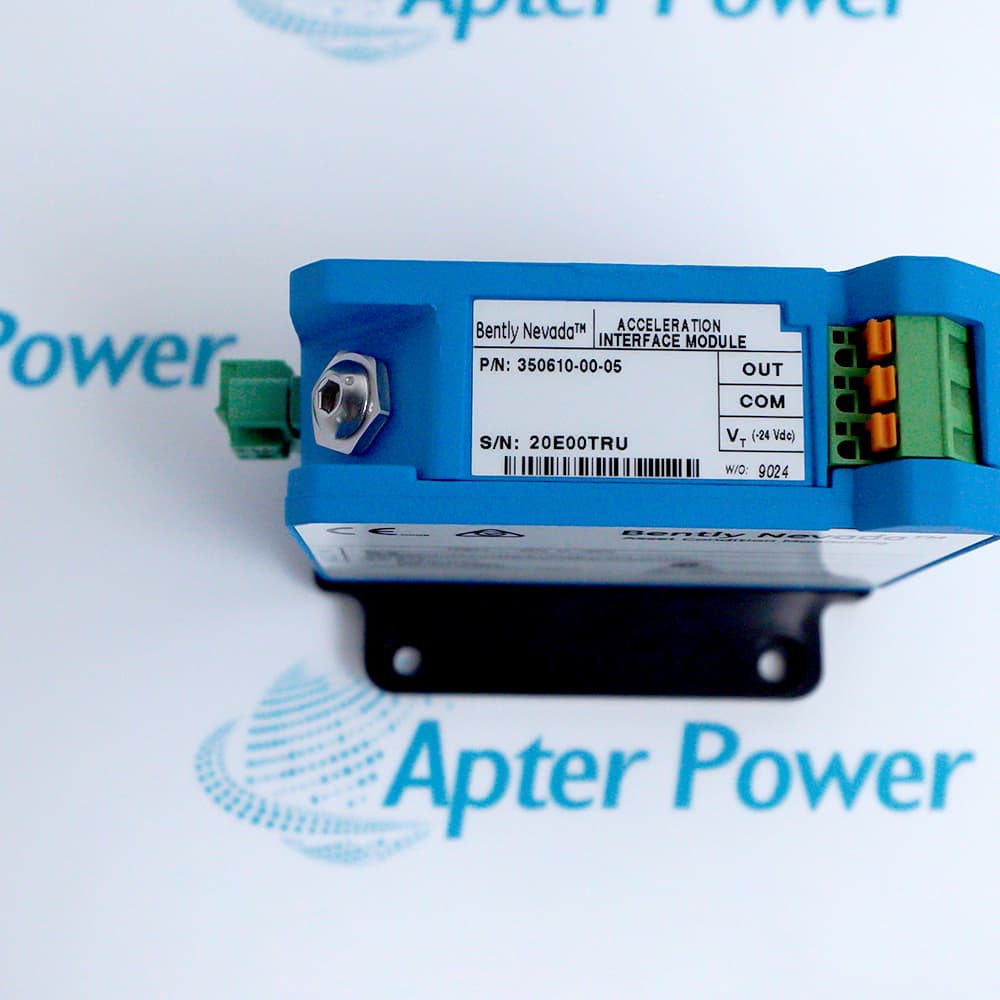
The Bently Nevada 350610-00-05 Acceleration Interface Module is used in environments where precise electrical signal handling is required under strict safety limits. It supports industrial monitoring systems by ensuring acceleration-related signals are processed within defined electrical boundaries. This makes it suitable for integration into vibration and condition monitoring setups where stability is critical.
In industrial control systems, this module helps maintain consistent signal integrity through controlled input and output parameters. The defined capacitance and inductance values ensure predictable electrical response during operation. As a result, it is often applied in systems requiring reliable signal conversion and safe energy transfer characteristics.
For demanding operational environments, the module's wide temperature range allows it to function reliably under varying conditions. Its structured electrical design supports long-term stability in monitoring applications. The Bently Nevada 350610-00-05 Acceleration Interface Module therefore plays a key role in maintaining consistent performance in industrial measurement systems.
The 350610-00-05 Bently Nevada Acceleration Interface Module may still be available for purchase and support from Apter Power beyond End-Of-Life (EOL) by the manufacturer (OEM).
Bently Nevada 350610-00-05 Acceleration Interface Module Manuals,Datasheets,Link
Important Notice: Other accessories, manuals, cables, calibration data, software, etc. are not included with this equipment unless listed in the above stock item description. All prices are shown in USD.
Bently Nevada 350610-00-05 Acceleration Interface Module Specs
General
- Manufacturer GE / Bently Nevada
- Model 350610-00-05
- Condition New Original ready stock
- Product Family 350610-01-00
Important Notice: Other accessories, manuals, cables, calibration data, software, etc. are not included with this equipment unless listed in the above stock item description. All prices are shown in USD.
- The module is mounted using a DIN rail or backplate. Ensure the mounting surface is flat, clean, and dry to reduce mechanical stress.
- The installation location should be as close to the sensor as possible or within the junction box to shorten the transmission distance of the high-impedance raw signal.
- Good electrical isolation between the module housing and the mounting base must be ensured to prevent grounding loop interference.
- When installing in flammable or explosive hazardous areas, specific explosion-proof wiring standards and physical protection requirements must be followed.
- The input terminal connects to the charge output type accelerometer via a dedicated low-noise coaxial cable to ensure signal purity.
- The output terminal connects to the I/O module of the 3500 monitoring rack using a standard three-wire connection (signal, power, common ground).
- Power must be supplied by an external DC regulated power supply at -24 Vdc. Reverse polarity connection is strictly prohibited to avoid damaging the internal conditioning circuitry.
- The shielding layer must be single-point grounded at the rack end to effectively suppress electromagnetic interference (EMI) in the industrial environment.
- Widely used for high-temperature vibration monitoring in aerospace derivative gas turbines (such as LM2500, LM6000), in conjunction with charge accelerometers.
- Used for real-time vibration monitoring of bearing housings in high-speed rotating machinery such as industrial compressors and steam turbines.
- Used in nuclear power plants or high-radiation environments to extract and condition sensor signals from sensors where electronic components cannot be integrated.
- Deployed in mechanical protection systems (MPS) requiring high-reliability continuous monitoring to ensure timely triggering of warnings or tripping in case of equipment anomalies.