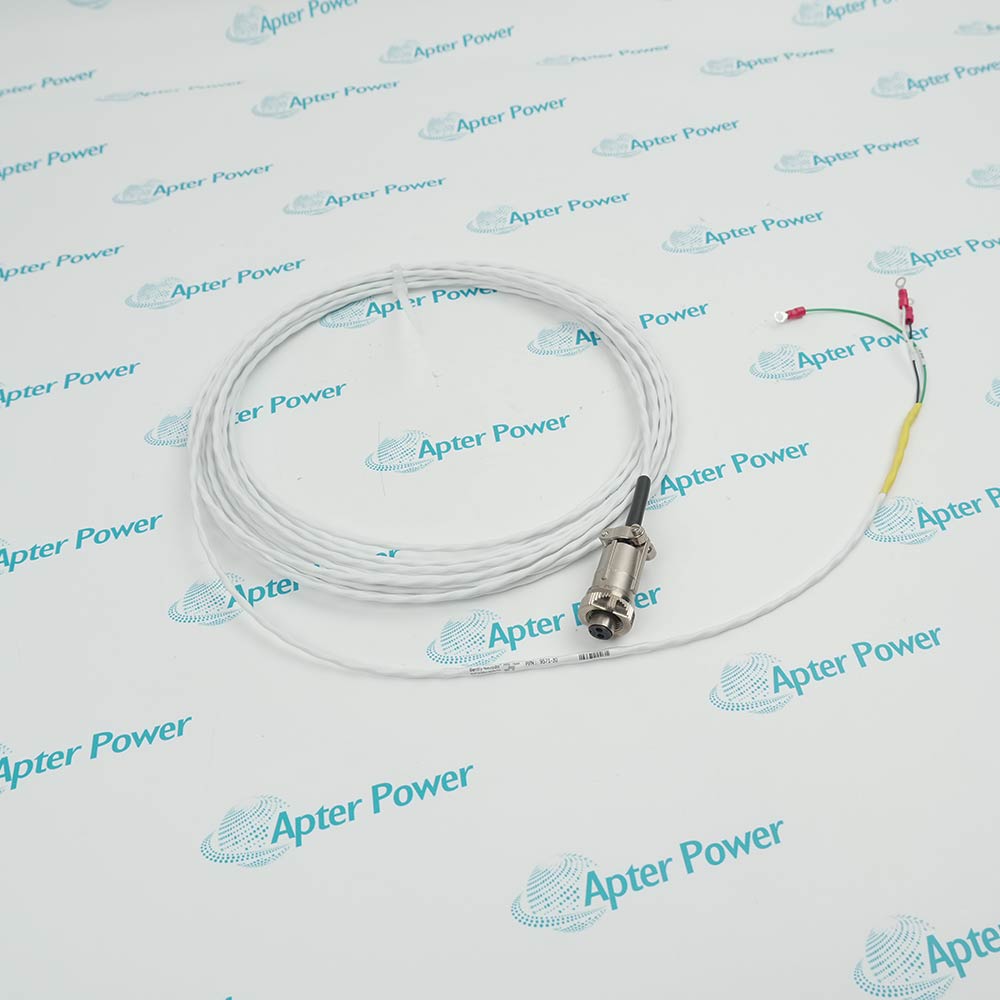
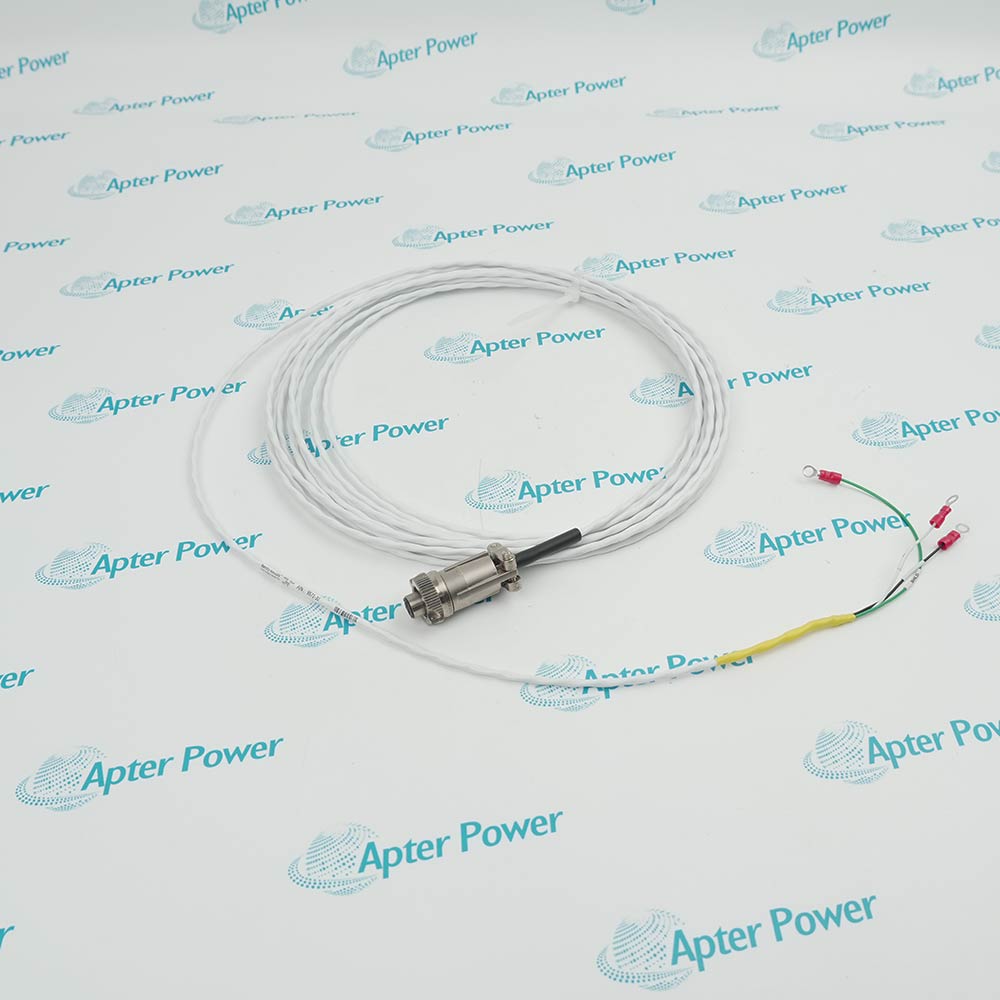
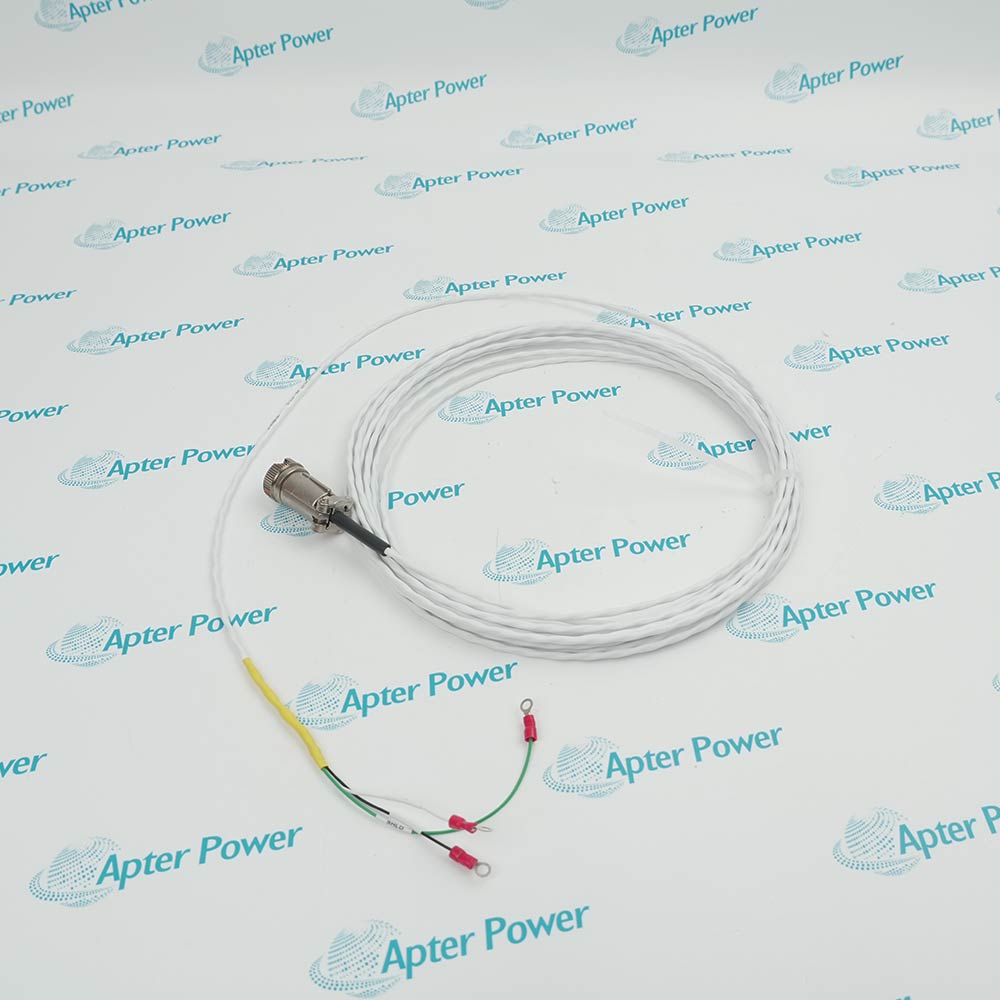
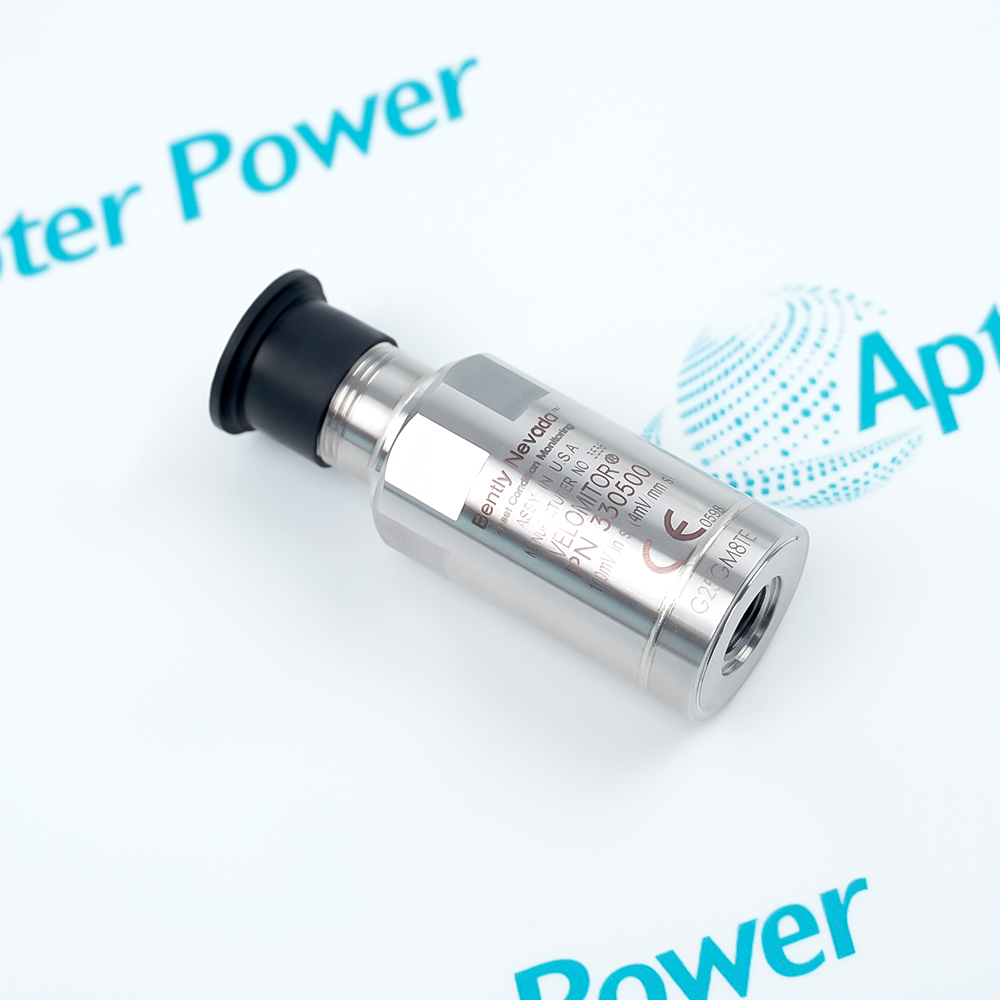
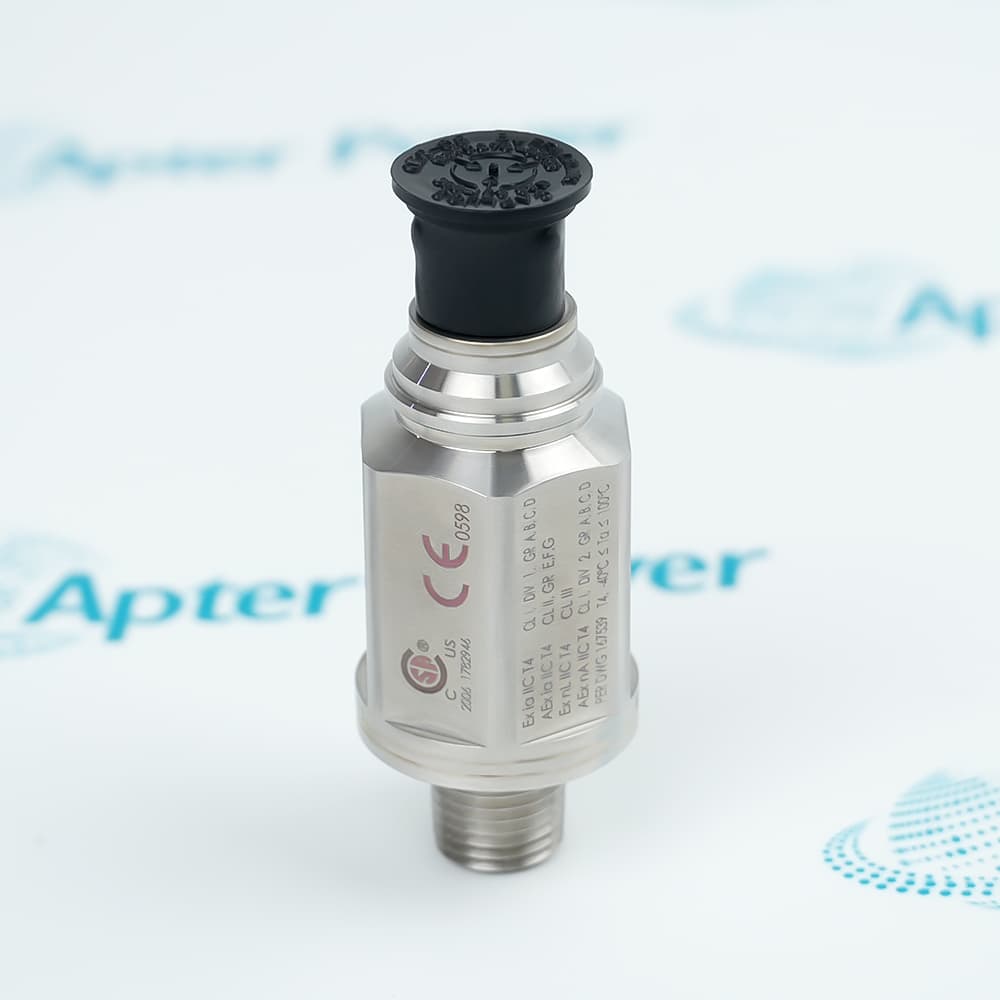
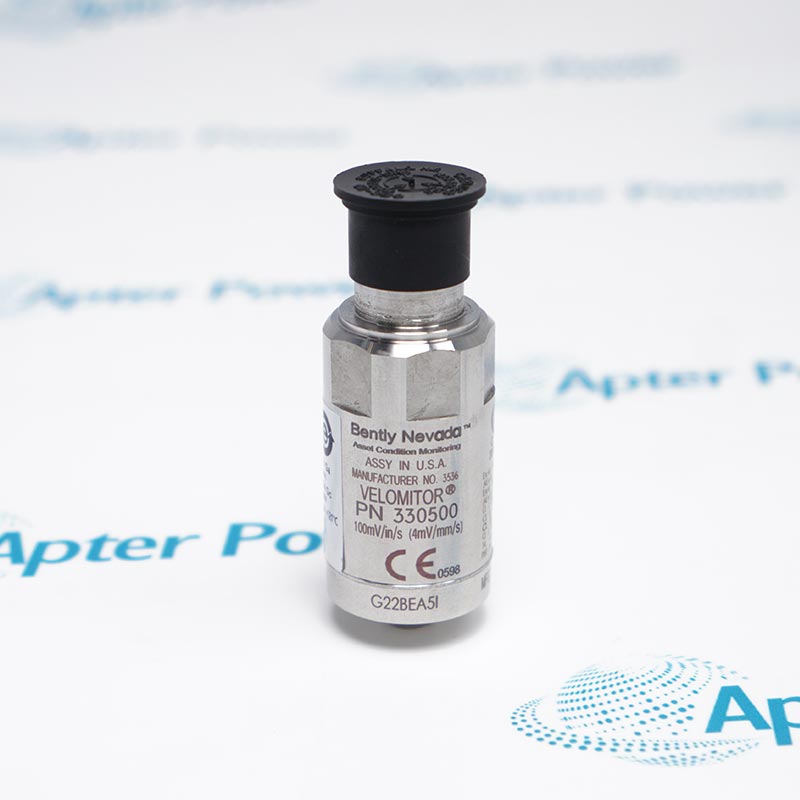
Features:
- 2‑conductor 22 AWG with overall shield; rejects common‑mode noise and blocks electrostatic interference for clean sensor signals.
- 2‑socket female connector mates directly with Velomitor sensors; sealing prevents moisture ingress in humid industrial environments.
- Suitable for outdoor and high‑temperature turbine applications; compatible with Bently Nevada 3500 and 1900 monitors.
The 9571-66 is a 2‑conductor twisted, shielded cable specifically designed for low‑level piezoelectric signals from Velomitor velocity sensors. The twisted pair construction ensures that any electromagnetic interference (EMI) picked up along the cable length is common to both conductors and is rejected by the differential input of the monitor. The overall shield (typically a foil or braid) provides an additional layer of protection against electrostatic noise from nearby variable frequency drives, contactors, and power cables. Without proper shielding, the sensor’s millivolt‑level output can be overwhelmed by noise, causing false alarms or missed vibration data.
The 9571-66 features a MIL‑C‑5015 style connector at the sensor end – a 2‑socket female connector that mates with the 2‑pin receptacle on Bently Nevada Velomitor sensors. This connector type is widely used in industrial and military applications because of its rugged construction and environmental sealing. The connector shell is typically made of anodized aluminum or stainless steel, with a neoprene or silicone insert that seals around the pins/sockets. When mated and tightened, the connector provides a moisture‑resistant seal, protecting the electrical contacts from humidity, condensation, and splashing water.
The 9571-66 is rated for continuous operation from -50°C to +120°C. This wide temperature range matches the operating limits of Bently Nevada Velomitor sensors, allowing the entire sensor‑cable system to be deployed in extreme environments. In a typical gas turbine installation, the sensor may be mounted on the bearing housing where temperatures reach 100°C. In a steam turbine, the casing may be hot during operation, but the cable must also survive freezing conditions during plant shutdowns in winter climates. The cable’s insulation and jacket are selected from materials (e.g., Teflon, PFA, or cross‑linked polyethylene) that remain flexible at low temperatures and do not melt or degrade at high temperatures.
The 9571-66 Bently Nevada Interconnect Cable may still be available for purchase and support from Apter Power beyond
End-Of-Life (EOL)by the manufacturer (OEM).
Bently Nevada 9571-66 Interconnect Cable Manuals,
Datasheets,Drivers,Link
Important Notice:Other accessories,manuals,cables,calibration data,software,etc.are not
included with this equipment unless listed in the above stock item description.All prices are
shown in USD.
Bently Nevada 9571-66 Interconnect Cable Specs
General
- Manufacturer GE /Bently Nevada
- Model 9571-66
- Condition New Original ready stock
- Product Family
84661-66,89477-66
Important Notice:Other accessories,manuals,cables,calibration data,software,etc.are not
included with this equipment unless listed in the above stock item description.All prices are
shown in USD.
- Power Generation: Monitoring casing vibration on steam turbines, gas turbines, and generators.
- Oil & Gas: Critical for centrifugal/reciprocating compressors and large pump sets.
- Petrochemical: Monitoring fans, blowers, and motors in harsh chemical environments.
- Signal Integrity: Features 2-conductor twisted shielded wire (22 AWG) to minimize Electromagnetic Interference (EMI), ensuring precise vibration data is transmitted.
- System "OK" Monitoring: The 3500 system monitors the continuity of this cable. If the cable is cut or shorted, the system triggers a "NOT OK" status, preventing false trips and alerting maintenance.
- Condition Monitoring: It supports the transmission of dynamic waveforms required by System 1 software for diagnosing machine faults like imbalance, misalignment, or bearing wear.
- Connector Orientation: Typically features a 2-socket moisture-resistant connector at the sensor end and terminal lugs at the monitor end.
- Mechanical Protection: It is highly recommended to run the cable through rigid or flexible conduit to prevent physical damage from foot traffic or moving machinery.
- Grounding: To avoid ground loops, the shield should be grounded at the monitor end only (usually at the 3500 I/O module terminal strip).