Features:
- Integrated Intel Atom E6600 processor with 1GB RAM and 4GB SSD for control and data handling.
- Multiple communication interfaces including Ethernet, RS-485, USB, and RS-232 for flexible connectivity.
- Conformal coated PCB design providing enhanced protection against industrial environmental factors.
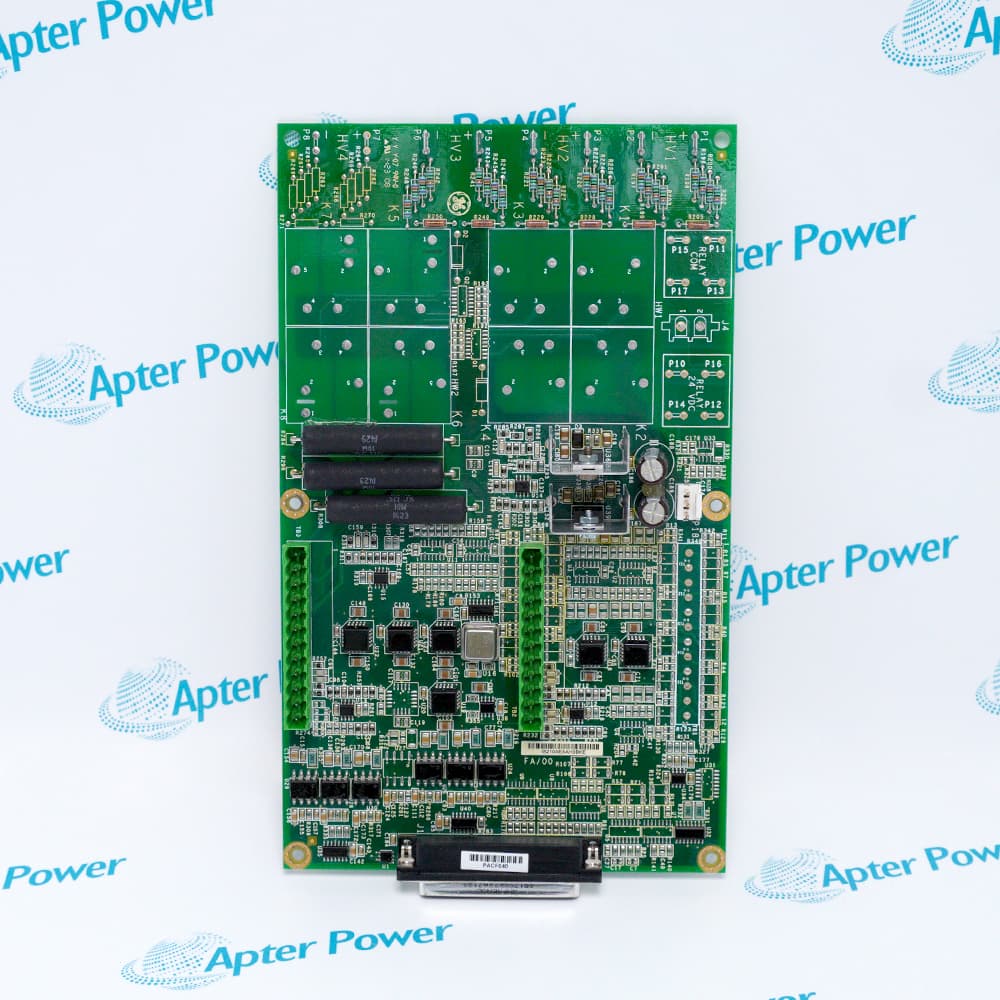
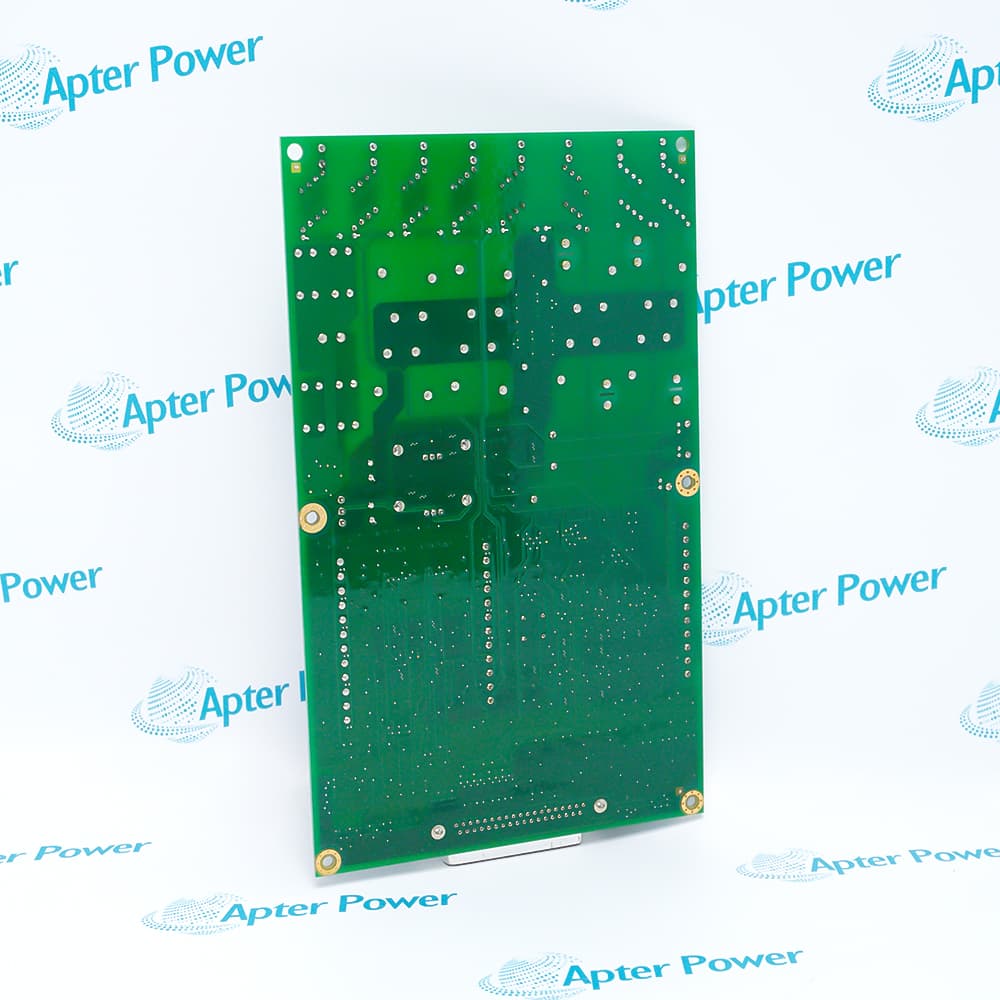
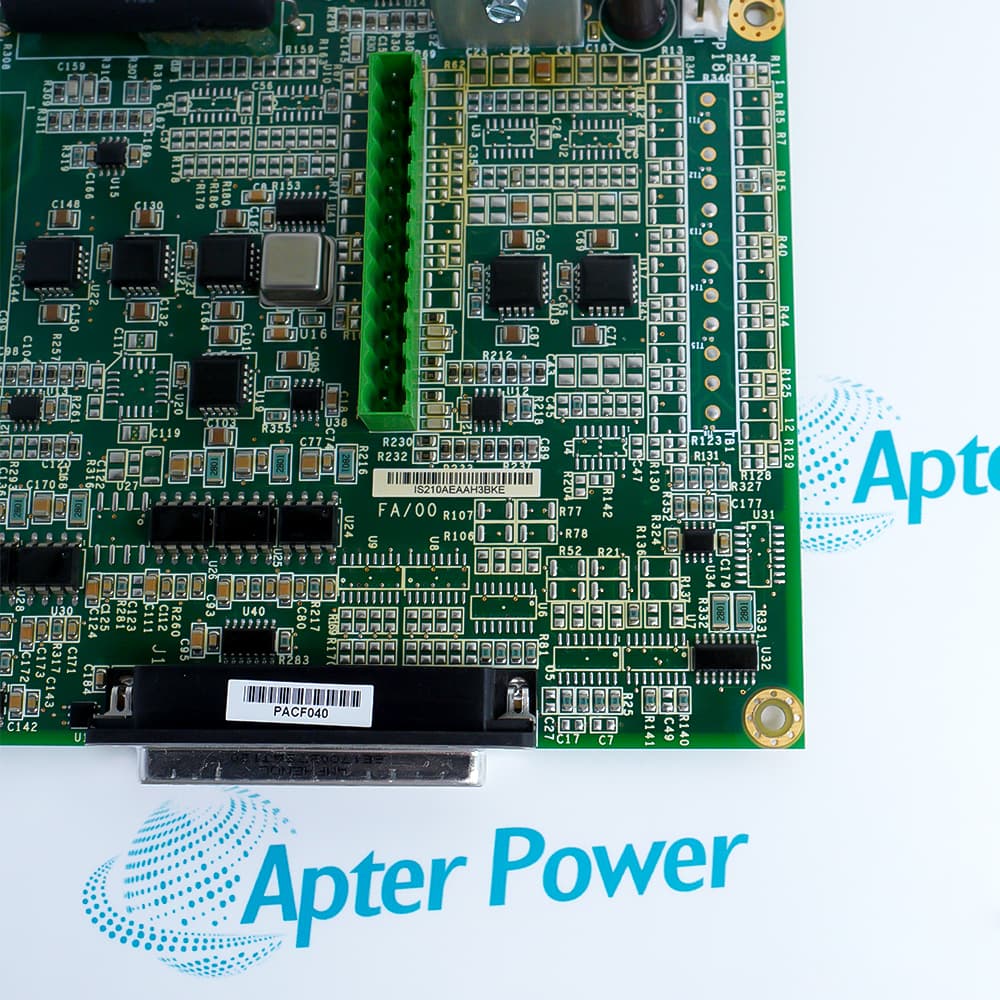
The General Electric IS210AEAAH3BKE is a Mark VIe conformal coated I/O board used in wind turbine control systems. The IS210AEAAH3BKE functions as a printed circuit board with integrated processing and communication capabilities. It is designed to support stable operation in industrial control environments.
The IS210AEAAH3BKE includes an Intel Atom E6600 processor with 1GB RAM and 4GB SSD. This allows the IS210AEAAH3BKE to handle system data and communication efficiently. Its multiple interfaces enable flexible integration with control system components.
The IS210AEAAH3BKE operates on 24V DC and supports temperatures from -20°C to +60°C. Its conformal coating enhances durability in industrial conditions. The IS210AEAAH3BKE is a practical component within the Mark VIe wind turbine control system.
The IS210AEAAH3BKE General Electric Printed Circuit Board may still be available for purchase and support from Apter Power beyond End-Of-Life (EOL) by the manufacturer (OEM).
General Electric IS210AEAAH3BKE Printed Circuit Board Manuals,Datasheets,Link
Important Notice: Other accessories, manuals, cables, calibration data, software, etc. are not included with this equipment unless listed in the above stock item description. All prices are shown in USD.
General Electric IS210AEAAH3BKE Printed Circuit Board Specs
General
- Manufacturer General Electric
- Model IS210AEAAH3BKE
- Condition New Original ready stock
- Product Family IS210AEAAH3B,IS210AEAAH2B,IS210AEAAH1B
Important Notice: Other accessories, manuals, cables, calibration data, software, etc. are not included with this equipment unless listed in the above stock item description. All prices are shown in USD.
- Static Electricity Protection: Wear an anti-static wrist strap before operation to prevent electrostatic discharge from damaging the precision components on the circuit board.
- Power-Off Operation: Before inserting or removing the circuit board, ensure the control cabinet power is completely disconnected. Hot-swapping while the circuit is powered on is strictly prohibited.
- Slot Alignment: During installation, align the board with the guide rail and push it in smoothly, ensuring precise alignment of the back panel connector pins. Avoid forcibly pressing to prevent physical damage.
- Security Fixing: After the circuit board is in place, tighten the fixing screws on the panel to enhance vibration resistance and ensure proper grounding.
- Humidity Control: Although equipped with a three-proof coating, ensure the storage and operating environment is free of condensation droplets to prevent long-term moisture penetration.
- Corrosion Protection: In areas containing salt spray or chemical gases, use with a well-sealed control cabinet to extend the circuit board's lifespan.
- Foreign Object Prevention: Regularly check the internal filter to prevent conductive dust accumulation at the interfaces, which could cause short circuits.
- Storage away from light: Spare parts should be stored in anti-static shielded bags in a cool, dry place, avoiding direct sunlight to prevent coating aging.
- Wind Turbine Control: Deployed at the base of the wind turbine tower or in the nacelle control cabinet, responsible for handling complex operational logic.
- Grid Regulation: Used for signal monitoring at the grid connection point to ensure that the wind farm's power output meets grid frequency and voltage requirements.
- Fault Diagnosis: As the core of data acquisition, it captures abnormal equipment signals in real time and triggers system protection programs.
- Remote Operation and Maintenance: In remote or unattended wind farms, it enables remote control of field equipment from the central control room through its communication interface.