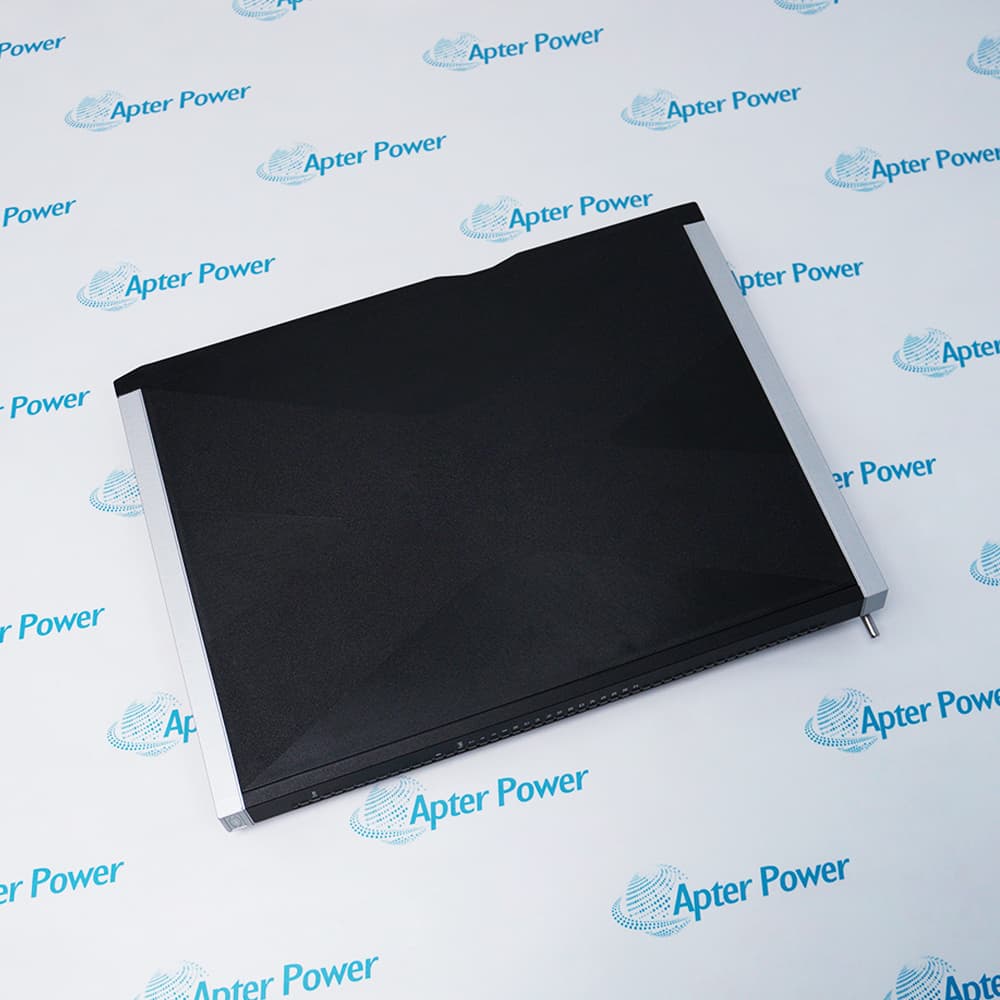
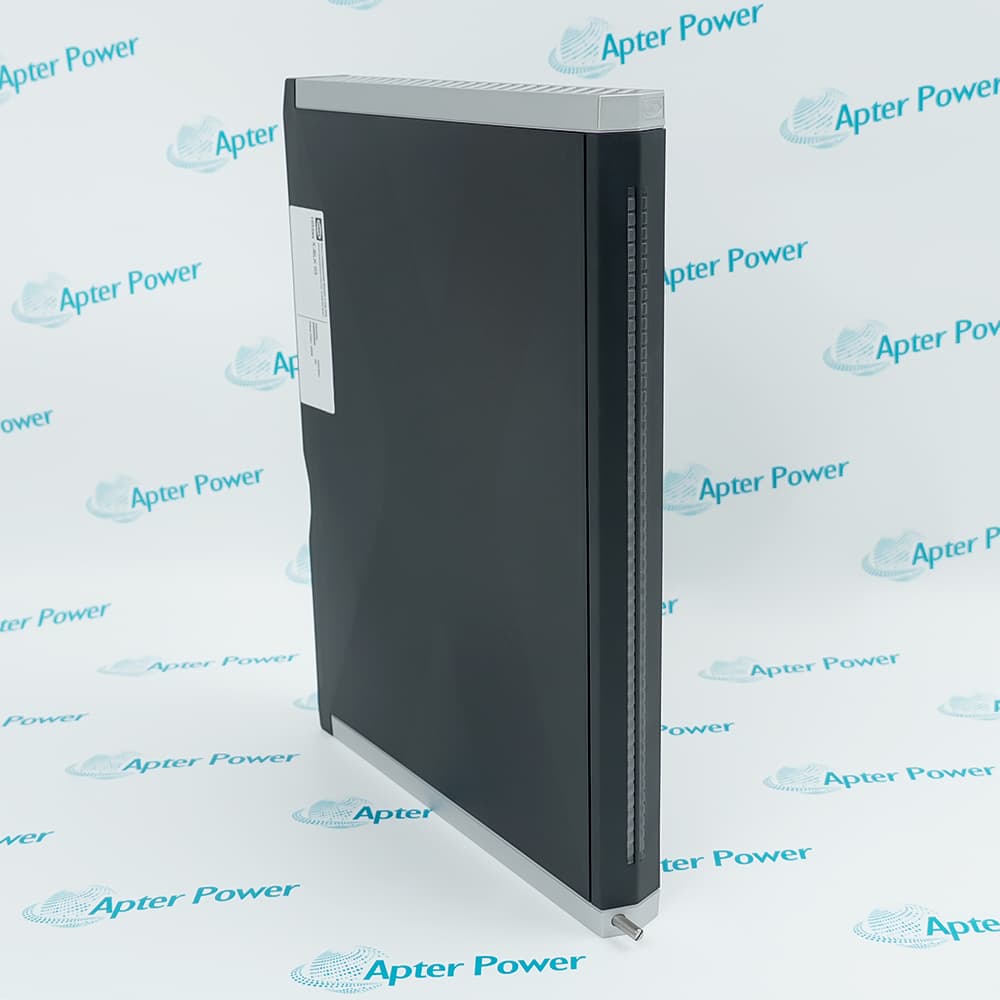
Features:
- Combines processor, Flash-EPROM memory, SRAM, watchdog, hardware clock, and I/O bus logic into one integrated central control module.
- Provides two galvanically isolated RS 485 communication interfaces with configurable transmission rates up to 57,600 bps.
- Supports IEC 61508 SIL 3 safety requirements while offering battery-backed SRAM, power supply monitoring, and comprehensive diagnostic indication.
HIMA F8651E performs the primary processing tasks within the PES H51q-M safety controller, coordinating communication, program execution, and system supervision. The integrated architecture reduces hardware complexity by combining multiple essential controller resources into one module. Diagnostic indicators and monitoring functions help maintenance teams identify operating conditions efficiently. Such capabilities make the module suitable for industrial environments where stable controller performance is required throughout continuous production.
The module provides dedicated Flash-EPROM areas for both the operating system and the user application, allowing reliable program storage together with battery-backed SRAM for dynamic process data. Communication with connected equipment is achieved through two isolated RS 485 interfaces, while configurable transmission rates offer flexibility for different automation networks. Hardware clock functionality and the fail-safe watchdog further strengthen operational reliability during demanding process applications.
HIMA F8651E is well suited for safety-oriented automation systems that require dependable processing, communication, and diagnostic capabilities. Compliance with IEC 61508 SIL 3 supports installation in applications where functional safety is a critical requirement. Compact rack installation, moderate power consumption, and industrial operating temperature specifications allow the module to integrate easily into existing H51q-M systems. The combination of processing performance and built-in supervision functions contributes to long-term system stability.
The F8651E HIMA Central Module may still be available for purchase and support from Apter Power beyond End-Of-Life (EOL) by the manufacturer (OEM).
HIMA F8651E Central Module Manuals,Datasheets,Link
Important Notice: Other accessories, manuals, cables, calibration data, software, etc. are not included with this equipment unless listed in the above stock item description. All prices are shown in USD.
HIMA F8651E Central Module Specs
General
- Manufacturer HIMA
- Model F8651E
- Condition New Original ready stock
- Product Family F8651,F8652,F8653
Important Notice: Other accessories, manuals, cables, calibration data, software, etc. are not included with this equipment unless listed in the above stock item description. All prices are shown in USD.
- Emergency Shutdown System (ESD): Deployed at critical shutdown nodes in oil and gas and refinery plants, it rapidly and unconditionally shuts off the production chain when pressure or temperature exceeds limits.
- Combustion Management System (BMS): Widely used for furnace safety monitoring in large industrial boilers and heating furnaces, precisely controlling ignition, explosion venting, and fuel valve locking.
- Toxic and Hazardous Gas Monitoring (F&G): In conjunction with fire and gas detection sensors, it automatically triggers audible and visual alarms and activates sprinkler containment facilities in the event of a leak in a chemical plant.
- Critical Process Control (PRC): Applied to the interlocking protection of nuclear power plants, rail transportation, and high-risk high-pressure vessels, serving as the core safety barrier of the entire DCS system.
- Architecture: The module operates uninterruptedly through dual-core redundancy (1002D structure), with two 32-bit Intel 386EX processors maintaining strict clock synchronization.
- Firmware: Upon system power-up, the bootloader directly reads the dedicated secure operating system from the 1 MB Flash-EPROM to complete logic initialization.
- Logic: Dynamically executes a 1 MB user program with a stable logic scan cycle, fully supporting complex logic judgments and related controls.
- Data: Process variables and real-time data are read and written at high speed in 1 MB SRAM with battery power-off protection, ensuring that critical states are not lost during power outages.
- Communication: Two electrically isolated RS 485 serial interfaces operate independently, supporting high-interference-resistant fieldbus communication with other safety or central control systems.
- Safety: An onboard safety control watchdog constantly monitors the CPU status, directly triggering a 24V, maximum 500mA short-circuit protected output to guide safety in case of an anomaly.
- Diagnostics: The built-in 4-dot matrix display shows the system status in a loop, allowing operators to perform initial troubleshooting via on-site fault codes without a host computer.
- Fault Tolerance: With the 1002D's dual-core diagnostic architecture, the system can respond to internal hardware faults in milliseconds, significantly improving the speed of safety degradation and shutdown.
- Logic Execution: Relying on the close cooperation between the 25 MHz processor clock speed and the underlying embedded system, the control logic is highly responsive, shortening the overall system shutdown delay.
- Data Access: The SRAM hardware bus direct connection architecture eliminates the cumbersome flash memory erase/write waiting time, resulting in extremely high throughput and archiving speeds for dynamic process data.
- Communication Transmission: Employing a high-efficiency isolated serial communication protocol significantly reduces packet loss and retransmission rates during large data volume transmissions, ensuring secure real-time data upload.
- Energy Utilization: While maintaining a high safety level, the improved module's overall power consumption is strictly controlled to ≤ 5W, significantly reducing heat generation and power distribution requirements within the control cabinet.
- Space Occupancy: The compact 8 SU rack width design frees up more slots within a standard safety enclosure, facilitating the placement of more I/O expansion modules.