Features:
- LONWORKS Interoperability and Autobinding
- Advanced Data Security and Buffer Technology
- Flexible Communication Gateway
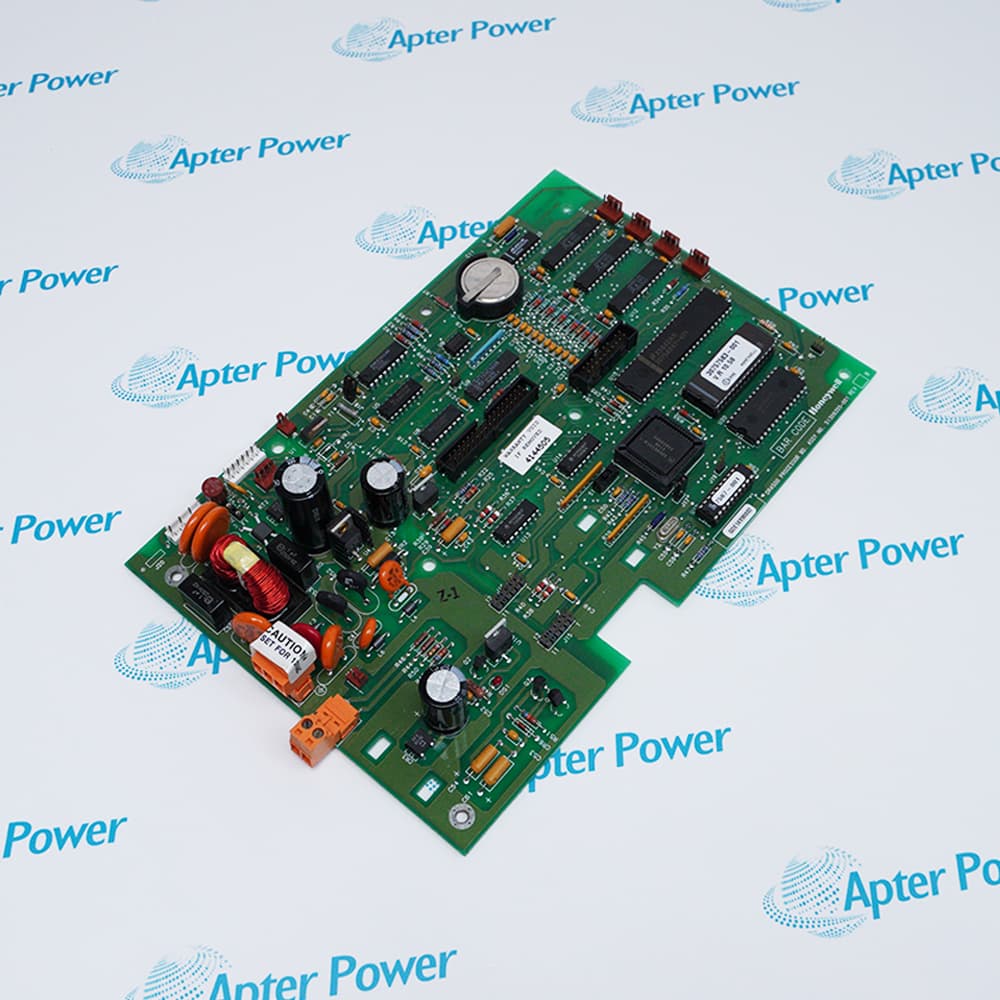
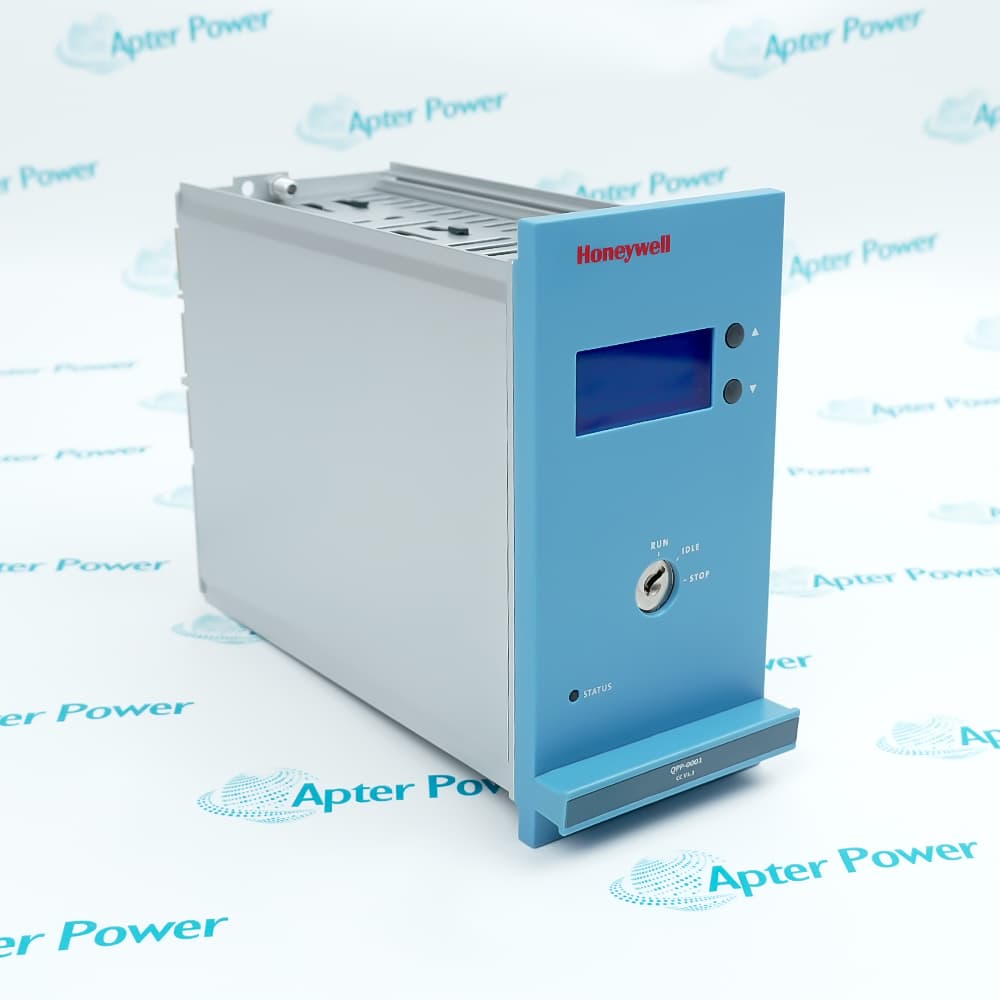
The HONEYWELL XC5010C supports 512 network variables (NVs) for open system integration. Its autobinding capability between the CPU and Honeywell Distributed I/O modules eliminates manual NV binding, drastically reducing onsite engineering hours and preventing configuration errors during controller replacement.
Featuring a reliable gold capacitor, the HONEYWELL XC5010C provides a 72-hour memory buffer to safeguard critical setpoints and control logic during power failures. This ensures that the system maintains its last known good state without requiring immediate battery replacement or extensive re-commissioning.
The HONEYWELL XC5010C serves as a versatile communication hub, equipped with an RS232 port for local MMI or remote dial-up access and an RS485 port for C-bus networking. This enables the HONEYWELL XC5010C to act as a robust link between facility supervisory stations and field-level controllers across diverse network topologies.
The XC5010C HONEYWELL CPU Computer Module for Excel 500 Controller may still be available for purchase and support from Apter Power beyond End-Of-Life (EOL) by the manufacturer (OEM).
HONEYWELL XC5010C CPU Computer Module for Excel 500 Controller Manuals,Datasheets,Link
Important Notice: Other accessories, manuals, cables, calibration data, software, etc. are not included with this equipment unless listed in the above stock item description. All prices are shown in USD.
HONEYWELL XC5010C CPU Computer Module for Excel 500 Controller
General
- Manufacturer HONEYWELL
- Model XC5010C
- Condition New Original ready stock
- Product Family TC-IXR061,TK-PRS021,K2LCN-8
Important Notice: Other accessories, manuals, cables, calibration data, software, etc. are not included with this equipment unless listed in the above stock item description. All prices are shown in USD.
- Commercial HVAC Management: Acts as the primary controller for large Air Handling Units (AHUs), managing VAV box coordination, discharge air temperature setpoints, and economizer sequences to ensure energy-efficient climate control.
- Central Plant Optimization: Manages complex sequencing for chillers and boilers, including pump rotation and stage-switching logic, ensuring that central utility equipment operates within its most efficient range while maintaining building comfort.
- Distributed Network Hub: Functions as a critical node in a larger building management architecture, where it aggregates data from remote sensors and field devices and relays state information to centralized operator workstations via the Excel C-Bus communication protocol.
- Life Safety and Lighting Interfacing: Frequently deployed in integrated building environments where it handles secondary logic for occupancy-based lighting schedules and simple smoke-control interlocks, providing a reliable automation layer for safety-sensitive facility zones.
- Real-time Loop Execution: Executes PID (Proportional-Integral-Derivative) control algorithms with high precision, constantly polling analog/digital inputs to adjust actuator outputs, such as chilled water valves or damper positions, in real-time.
- Diagnostic Reporting: Continuously monitors its own hardware health and the integrity of the communication bus; it flags bus errors, memory checksum mismatches, or peripheral communication faults, allowing technicians to pinpoint system anomalies before they result in a loss of control.
- Point-Level Oversight: Provides comprehensive monitoring of facility infrastructure by tracking setpoint deviations and alarm states, enabling the BAS to trigger predefined corrective actions—such as initiating fail-safe modes—if a process variable drifts outside of programmed thresholds.
- Time-Scheduled Automation: Governs complex operational schedules, managing facility-wide start/stop sequences based on time-of-day, occupancy status, or calendar-based events, ensuring that utility consumption is minimized during non-operational hours.
- Industrial-Grade Enclosure Compatibility: Specifically designed to be housed within standard NEMA-1 rated control cabinets, the module requires an installation environment that shields it from direct moisture ingress, debris, and conductive dust that could cause internal short circuits.
- Operational Temperature Thresholds: Engineered to maintain stable operation within typical mechanical room conditions (generally ranging from 0°C to 50°C). It requires adequate convective airflow within the cabinet to prevent thermal accumulation, which could otherwise accelerate component aging and memory degradation.
- Humidity Resilience: Rated for non-condensing humidity environments (usually up to 90% RH). It is crucial that the unit is not subjected to rapid temperature fluctuations that could cause dew-point condensation, as moisture on the legacy circuitry can lead to signal noise or terminal corrosion.
- Electrostatic and Electrical Noise Tolerance: Includes standard internal filtering to resist typical electromagnetic interference (EMI) generated by nearby power electronics; however, it requires clean, regulated power and proper grounding to maintain signal integrity in environments where high-voltage motor starters are present.