Features:
- High-Speed Real-Time Signal Preprocessing
- Dual-Board Modular System Compatibility
- Heavy-Duty Industrial Noise Immunity
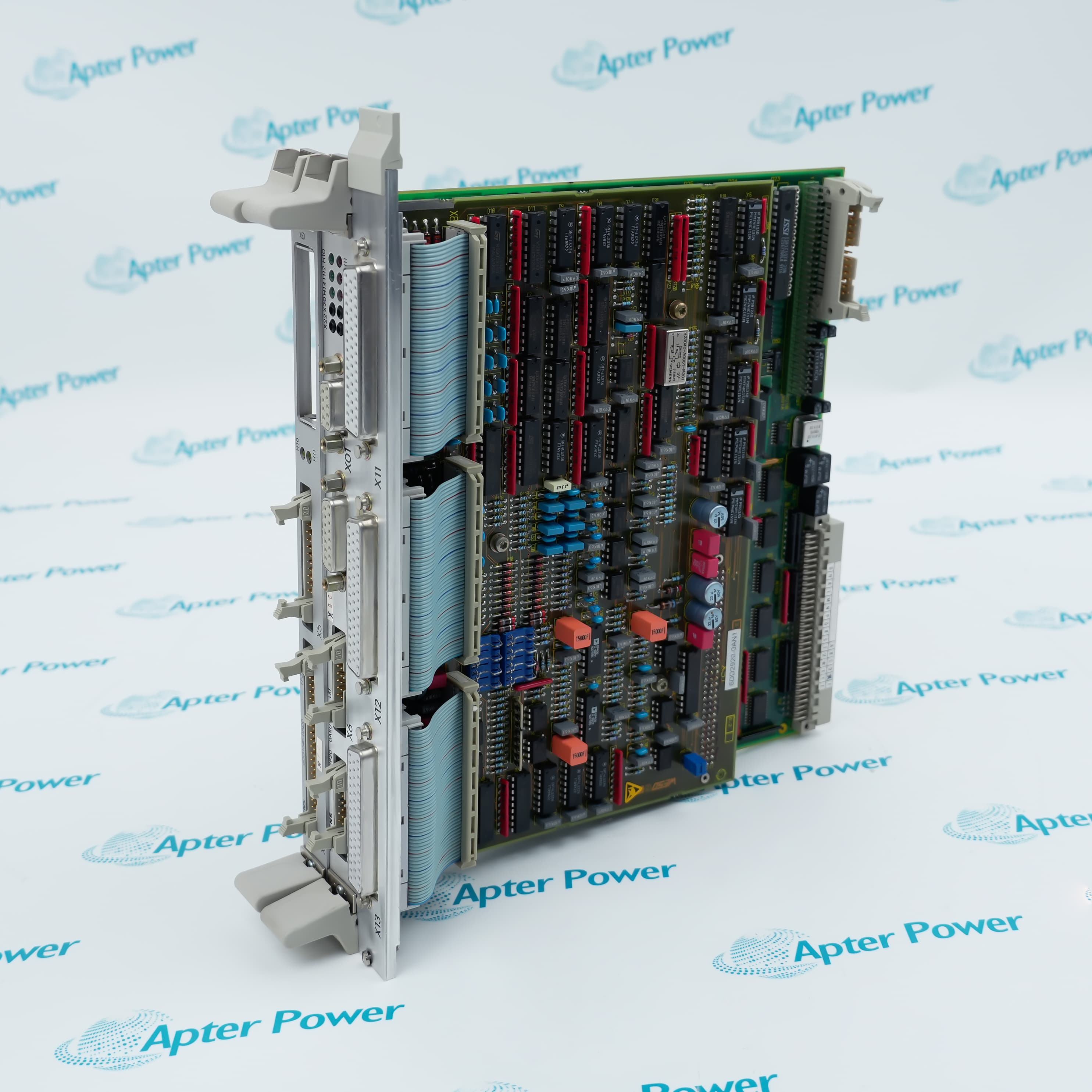
The Siemens 6DD2920-0AN1 features an optimized microsecond-level processing architecture designed to convert and condition complex analog and digital field inputs near-instantaneously. By translating raw telemetry data prior to sending it to the main controller, it minimizes overall system control-loop latency and drastically increases multi-loop feedback stability.
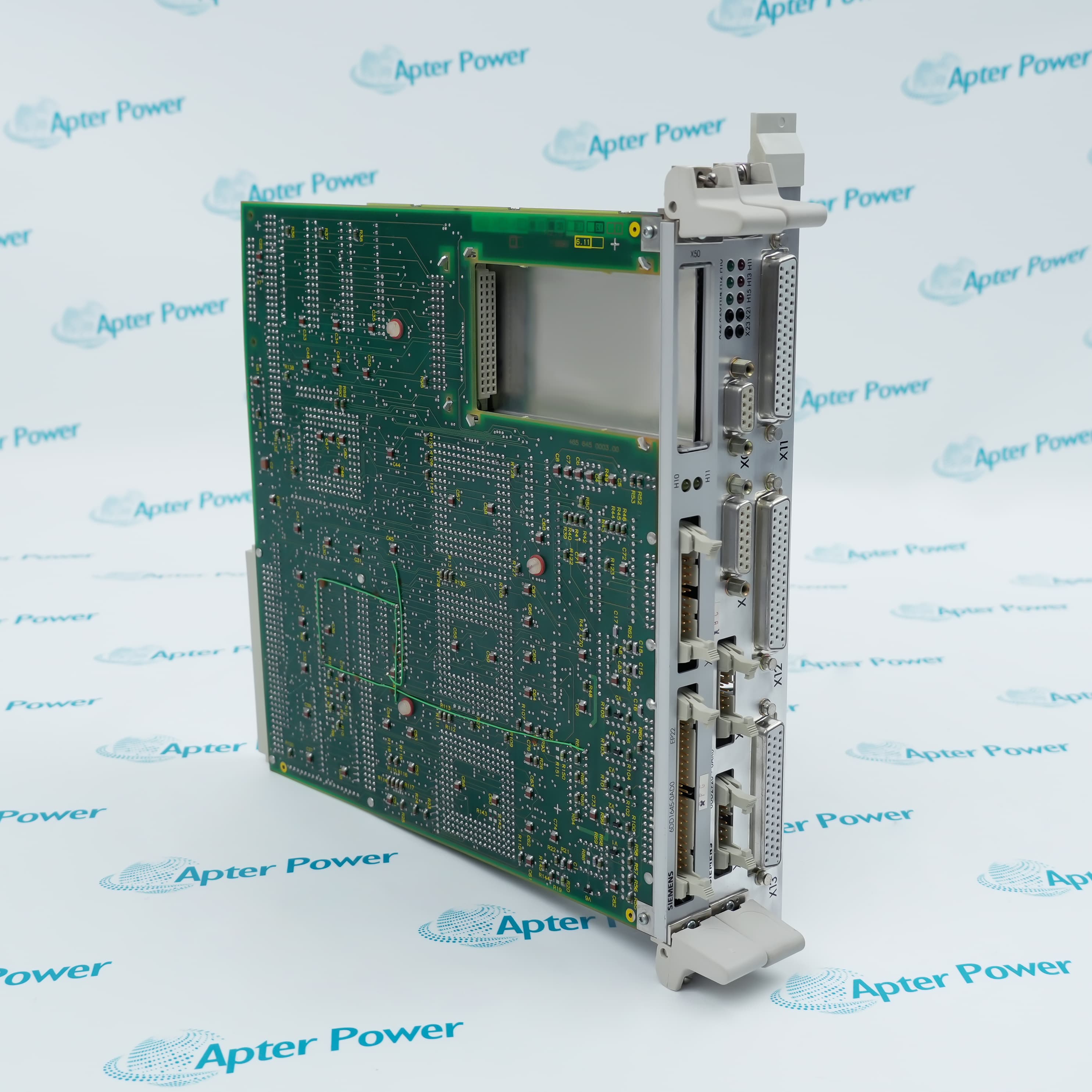
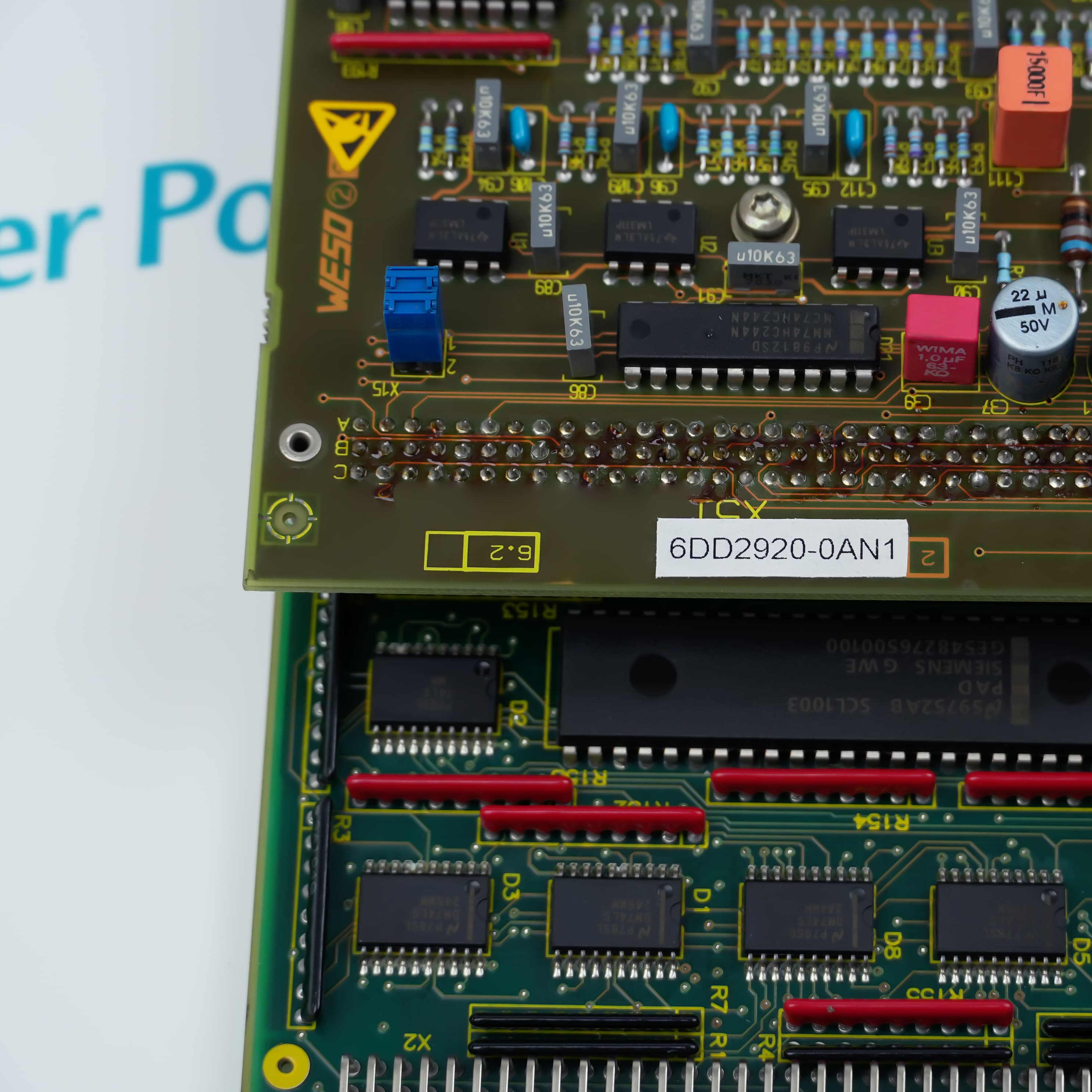
Specifically engineered for rapid insertion into SIMADYN D subracks, the Siemens 6DD2920-0AN1 kit comprises an EP22 motherboard combined with an IS1 processing daughtercard. This modular structure streamlines inventory overhead and accelerates on-site maintenance tasks, as the unit mounts firmly onto standardized backplanes with robust ribbon-cable routing interfaces.
Built to endure severe industrial environments, the internal circuitry of the Siemens 6DD2920-0AN1 includes hardened galvanic isolation and enhanced EMI shielding. This prevents signal distortion and data corruption caused by massive magnetic fields, high switching frequencies from nearby large motor drives, or intense ambient operational heat.
The 6DD2920-0AN1 Siemens Signal Processor Module may still be available for purchase and support from Apter Power beyond End-Of-Life (EOL) by the manufacturer (OEM).
Siemens 6DD2920-0AN1 Signal Processor Module Manuals,Datasheets,Link
Important Notice: Other accessories, manuals, cables, calibration data, software, etc. are not included with this equipment unless listed in the above stock item description. All prices are shown in USD.
Siemens 6DD2920-0AN1 Signal Processor Module
General
- Manufacturer Siemens
- Model 6DD2920-0AN1
- Condition New Original ready stock
- Product Family 6DD2920-0AQ0,6DD2920-0AR6,6DD1681-0AE2
Important Notice: Other accessories, manuals, cables, calibration data, software, etc. are not included with this equipment unless listed in the above stock item description. All prices are shown in USD.
- Large-Scale Industrial Rolling Mills: Deployed extensively within the metals industry to manage high-precision gauge control (AGC) and rapid tension adjustment loops in hot and cold rolling mills, where raw response time is paramount.
- High-Voltage Direct Current (HVDC) Transmission: Acts as a high-speed peripheral bridge in utility-scale power transmission converter stations, providing instantaneous grid-state signal preprocessing for real-time firing-angle computations.
- Power Plant Steam/Gas Turbine Controls: Integrated into large power plant automation systems to process critical thermodynamic telemetry, enabling synchronous turbine speed regulation and emergency trip loops.
- Heavy-Duty Sectional Drives for Papermaking: Utilized in massive multi-sectional paper machines to maintain precise tension control across web handling sections, preventing material tearing through instantaneous speed adaptation.
- Microsecond-Level Control Loop Execution: Delivers deterministic signal handling that bypasses traditional PLC scan-cycle overhead, ensuring real-time control efficiency for dynamic, high-speed closed loops.
- Hardware-Level Computational Offloading: The onboard IS1 processing architecture handles mathematical transformations directly on the peripheral level, drastically reducing the computing burden on the rack's primary CPU.
- Minimized System Jitter and Latency: Engineered with ultra-stable clock crystals and discrete high-speed converters that guarantee near-zero signal jitter, keeping highly sensitive multi-variable loops finely tuned.
- High Thermal and Power Efficiency: Uses specialized industrial semiconductor components that maintain ultra-low power consumption and low heat dissipation even when running 24/7 at maximum processing throughput.
- Static EPROM/EEPROM Firmware Preservation: Leverages robust, non-volatile memory architectures to store board-level microcode, ensuring the module completely retains its core operational instructions through unexpected power losses.
- Software-Driven Jumper and Address Mapping: System engineers can adjust parameter routing directly through the STEP 7 configuration matrix, eliminating the need for manual, physical modifications on the PCB board.
- Backward-Compatible Revision Tracking: Successive manufacturing series of this model maintain a strict legacy pin-out and signal matrix logic, allowing newer replacement units to seamlessly drop into older subrack slots.
- Comprehensive Diagnostic Firmware Interrogation: Supports specialized engineering software monitoring tools, enabling maintenance teams to upload current board runtime logs and cross-examine hardware health against historical baselines.