Ask our team:
  • Phone: +86 181 0690 9650
  • E-Mail sales1@apterpower.com
  • Lifecycle status

    Discontinued / Obsolete by OEM
    Apter Power supports RTD wiring review, documentation, quotation, and replacement planning.

AAR181-S50 S2

/ 4.9
1001 reviews | Need a Specific Revision?
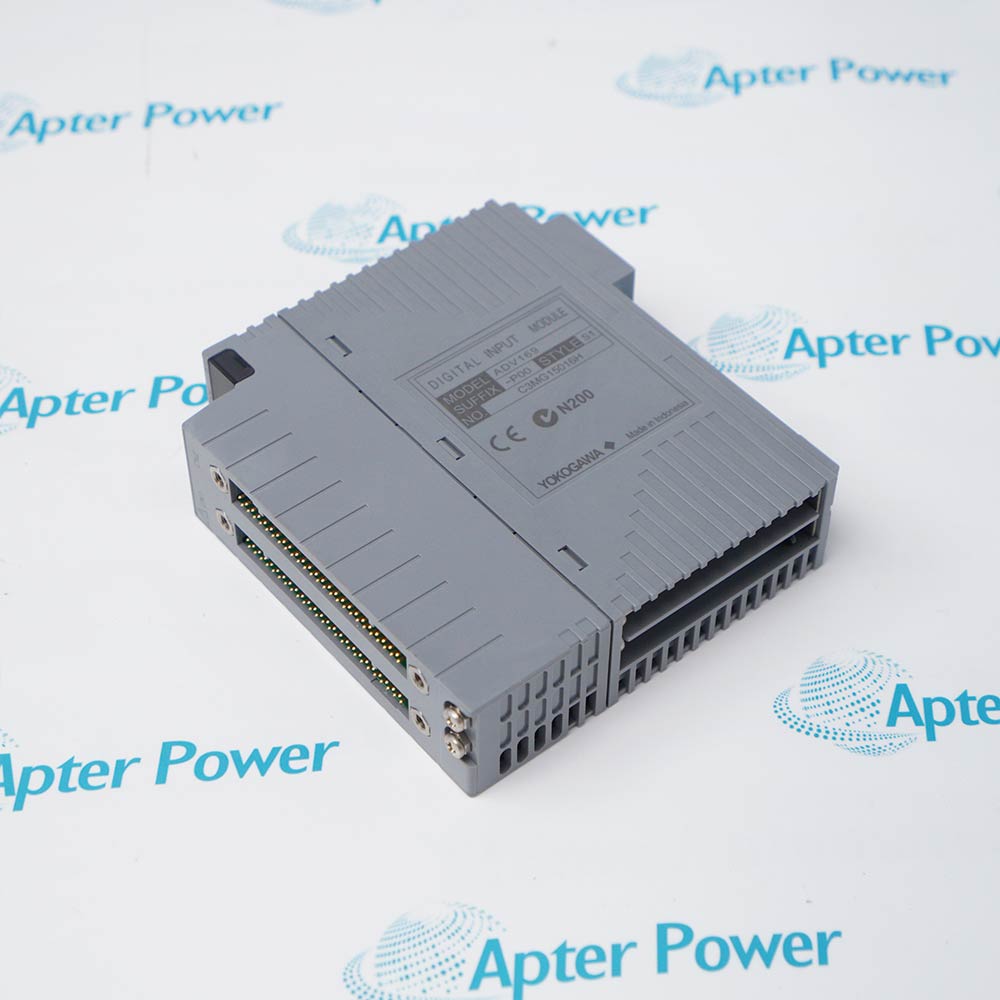
Yokogawa AAR181-S50 S2 is a CENTUM VP FIO module with 12 isolated three-wire RTD inputs for Pt100 and JPt100 sensors. It provides one-second updates and per-channel burnout detection.
In Stock
Ships by Thursday, October 29
Fast Shipping Available
Get a quick price for AAR181-S50 S2
Quantity
*E-mail
Company
*Mobile
*Content
Upload (gif, jpg, jpeg, png, bmp, doc, docx, xls, xlsx, ppt, pdf, csv)

Technical specifications for AAR181-S50 S2

  • Manufacturer:
    Yokogawa
  • Part Number:
    AAR181-S50 S2
  • Product Family:
    Centum CS-Centum VP
  • Product Type:
    12-Channel Isolated RTD Input Module
  • Stock:
    1
  • RTD sensor standards:
    Pt100 and JPt100
  • Input wiring:
    3-wire
  • Input channels:
    12 isolated
  • Allowable input voltage:
    ±5 V
  • Input resistance:
    2 MΩ or more
  • Accuracy:
    ±120 mΩ
  • Measurement current:
    1 mA
  • Lead-wire resistance:
    40 Ω or less per wire
  • Temperature drift:
    ±120 mΩ per 10 °C
  • Input update period:
    1 s
  • Burnout detection:
    Upscale or downscale; 60 s
  • Isolation withstand voltage:
    1500 V AC for 1 minute
  • Current consumption:
    450 mA maximum at 5 V DC
  • Weight:
    0.4409 lbs (0.2 kg)
  • Estimated shipping dimensions:
    3.28 x 13 x 10.75 cm
  • Tariff Code:
    8537101190
  • Country of origin:
    Japan
  • Place of shipment:
    Xiamen,Fujian,China
By purchasing this item, you agree to the Terms & Conditions, ApterPower is not an authorized distributor for listed manufacturers or tradenames and therefore the manufacturer's warranty does not apply. All our products come with ApterPower's 1-year warranty.

More Information

Overview Manuals Applications Temperature & Humidity Environmental Ratings Installation

Features:

  • Twelve isolated channels accept three-wire Pt100 or JPt100 sensors.
  • One-second input updates deliver steady plant-temperature data.
  • Selectable burnout direction defines the open-sensor response.
AAR181-S50 S2 is the requested CENTUM VP FIO isolated RTD input module.

Its measurement circuits compensate three-wire leads and keep individual sensor channels separated.

Confirm suffix, RTD standard, lead resistance, terminal board and burnout action before installation.

AAR181-S50 S2 condition and delivery are confirmed for the requested FIO node.
Verified resources for Yokogawa AAR181-S50 S2:

Important Notice: Other accessories, manuals, cables, calibration data, software, etc. are not included with this equipment unless listed in the above stock item description. All prices are shown in USD.
  • Measuring process temperature with isolated three-wire RTD circuits.
  • Adding twelve resistance-input channels to a CENTUM VP FIO node.
  • Replacing an installed module while retaining the validated terminal board.
  • Temperature limits follow the Yokogawa module and node-unit specification.
  • Storage conditions must protect connectors and circuitry from condensation.
  • Cabinet humidity is controlled so RTD measurements remain stable and insulation is preserved.
  • The module is installed inside the specified CENTUM enclosure and node hardware.
  • Channel isolation limits interaction between separate field sensor circuits.
  • No explosion-protection option is implied by the -S50 basic ordering code.
  • Three-wire polarity and paired lead routing are checked at every RTD channel.
  • The selected terminal board must be the documented AAR181-compatible type.
  • Commissioning confirms burnout direction and sensor indication before control use.
Description
Yokogawa AAR181-S50 S2 is a twelve-channel isolated RTD input module for CENTUM VP field I/O. It measures three-wire Pt100 and JPt100 sensors, giving each temperature channel an isolated input path for process monitoring and control.

A 1 mA measurement current is applied to the connected RTD, and the module updates the control system once per second. Channel-level burnout detection can be configured upscale or downscale so an open sensor produces the response defined by the plant's control strategy.

Accurate temperature measurement depends on the correct terminal board, sensor standard, and equal resistance across the three lead wires. Before replacement, record channel assignments and burnout direction, then validate resistance, wiring continuity, and displayed temperature during commissioning.
Alternative Names
AAR181-S50 S2 AAR181-S50 AAR181 S50 S2 AAR181S50S2 Yokogawa AAR181-S50 S2 Yokogawa AAR181 RTD input module CENTUM VP AAR181-S50 FIO AAR181 twelve-channel RTD module
Technical notes
AAR181-S50 S2 channels require matched three-wire RTD leads and the correct terminal board. Configure burnout direction deliberately so an open sensor drives the intended control response.
Exceptional Service

Our Mission

  • 100% Satisfaction

    We believe expertise is priceless. With over 20 years of experience, and top engineers on staff, we can help you solve or avoid problems that threaten your business.
  • Trust Guaranteed

    Not only do we have a vast inventory, our team makes sure every piece of equipment is in working condition. Your purchases are also backed by our Warranty.
  • Expertise

    Time is money, especially when your equipment is down. We work quickly to get your equipment on its way so you can get it back up and running.

FAQS

The following is a list of questions commonly asked by our customers. Please contact us if you have a question about our process that is not answered below.
How should lead-wire resistance be managed on Yokogawa AAR181-S50 S2?
Use matched three-wire conductors and keep each lead within the documented resistance limit so compensation works as intended.
What determines the burnout direction for Yokogawa AAR181-S50 S2?
The channel configuration selects upscale or downscale behavior; choose the direction that produces the approved control response for an open RTD.
Which terminal boards can be considered for Yokogawa AAR181-S50 S2?
Use the AAR181-compatible FIO terminal arrangement, including the documented single or dual RTD terminal-board option for the cabinet design.
Why is channel isolation important when Yokogawa AAR181-S50 S2 serves distributed temperature sensors?
It limits interaction between separate field circuits and helps keep faults or potential differences on one sensor path from affecting the others.
How should Yokogawa AAR181-S50 S2 availability be interpreted for a shutdown spare?
The lifecycle field records the supported page status; Apter Power confirms the exact S2 unit, condition and shipment schedule for the planned outage.
What plant details should accompany a Yokogawa AAR181-S50 S2 datasheet and RFQ request?
State the RTD standard, terminal-board model, channel count in use, required burnout action, quantity, destination and outage date.

Product Browsing History