Ask our team:
  • Phone: +86 181 0690 9650
  • E-Mail sales1@apterpower.com
  • Lifecycle status

    Discontinued / Obsolete by OEM
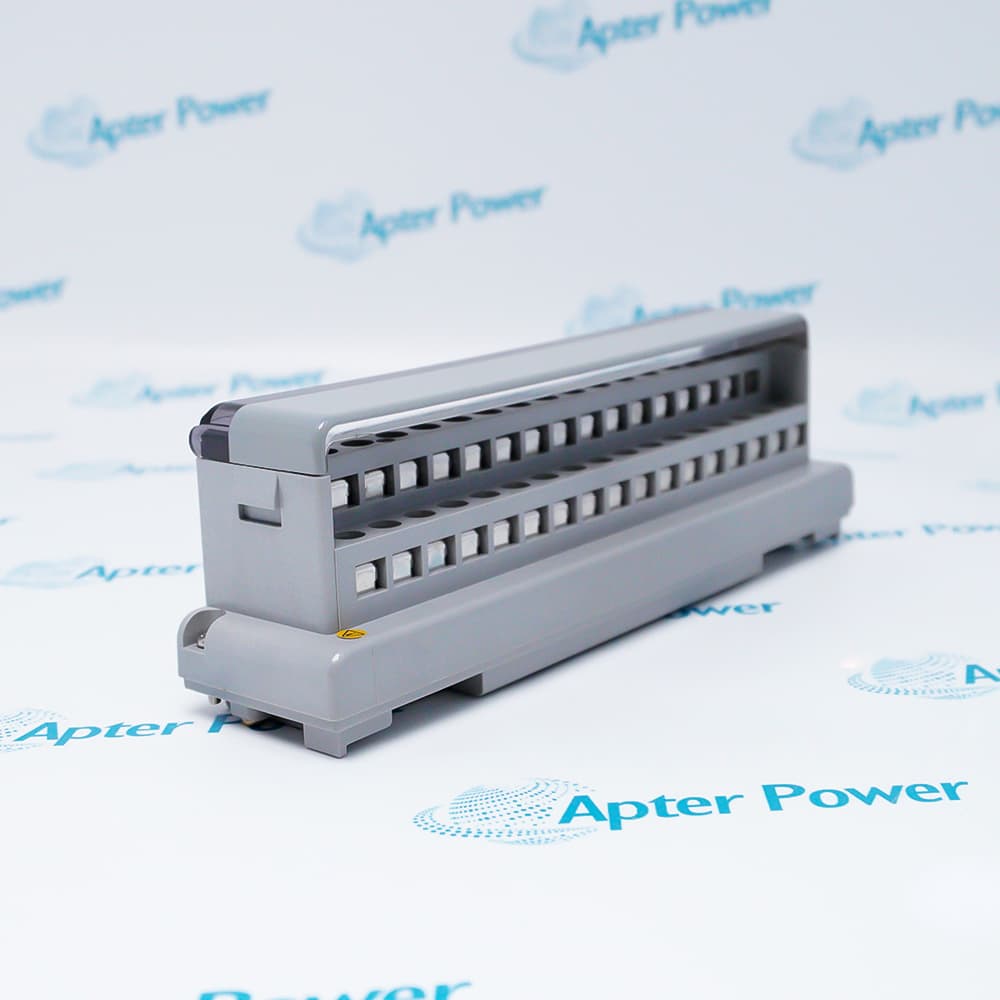
    Apter Power guarantees premium quality YOKOGAWA ADV551-P10 S2 Digital Output Module, offering a highly reliable source for critical control system replacement parts.

ADV551-P10 S2

/ 4.9
1001 reviews | Need a Specific Revision?
The YOKOGAWA ADV551-P10 S2 is a 32-channel isolated digital output module tailored for CENTUM VP and CS 3000 field control units, delivering precise transistor contact signaling to critical process field devices.
In Stock
Ships by Thursday, October 29
Fast Shipping Available
Get a quick price for ADV551-P10 S2
Quantity
*E-mail
Company
*Mobile
*Content
Upload (gif, jpg, jpeg, png, bmp, doc, docx, xls, xlsx, ppt, pdf, csv)

Technical specifications for ADV551-P10 S2

  • Manufacturer:
    Yokogawa
  • Part Number:
    ADV551-P10 S2
  • Product Family:
    Centum CS-Centum VP
  • Product Type:
    Digital Output Module
  • Stock:
    1
  • Number of Channels:
    32 channels, current sink format
  • Rated Applied Voltage:
    24 V DC
  • External Power Supply:
    24 V DC, Voltage Range: 20.4 V to 26.4 V DC
  • Maximum Load Current:
    100 mA per channel
  • Output ON Voltage:
    Max 2.0 V DC
  • Leakage Current (OFF State):
    Max 0.1 mA
  • Pulse Width Range & Resolution:
    8 ms to 7200 seconds; Resolution: 8 ms
  • Ambient Operating Temp:
    0 °C to 60 °C
  • Storage Temperature:
    -20 °C to 85 °C
  • Ambient Humidity Range:
    10% to 90% RH (Non-condensing)
  • Weight:
    0.2 kg
  • Estimated shipping dimensions:
    3.2x10.6x13cm
  • Tariff Code:
    8537101190
  • Country of origin:
    Japan
  • Place of shipment:
    Xiamen, Fujian, China
By purchasing this item, you agree to the Terms & Conditions, ApterPower is not an authorized distributor for listed manufacturers or tradenames and therefore the manufacturer's warranty does not apply. All our products come with ApterPower's 1-year warranty.

More Information

Overview Manuals Specifications Applications Performance & Efficiency Operating Environment

Features:

  • Dual-Redundant Configuration Capability
  • Galvanic Noise Isolation Architecture
  • Flexible Point-Mode Function Mapping
The YOKOGAWA ADV551-P10 S2 supports seamless dual-redundancy mapping within the ESB bus node framework, meaning two modules can work in a parallel active-standby state to guarantee that field signal control remains fully uninterrupted during a single module hardware fault.

Equipped with an advanced 2 kV AC isolation layer between its field wiring and system control logic, the YOKOGAWA ADV551-P10 S2 serves as an electrical barrier, ensuring localized field electrical ground loops or high-energy spikes do not cross into the control network.

The YOKOGAWA ADV551-P10 S2 provides comprehensive configuration adaptability via its software patterns, empowering engineers to easily combine standard ON/OFF status signaling, precise pulse width outputs, or time-proportional cycles across its 32 physical terminals.

The ADV551-P10 S2 YOKOGAWA Digital Output Module may still be available for purchase and support from Apter Power beyond End-Of-Life (EOL) by the manufacturer (OEM).
YOKOGAWA ADV551-P10 S2 Digital Output Module Manuals,Datasheets,Link Important Notice: Other accessories, manuals, cables, calibration data, software, etc. are not included with this equipment unless listed in the above stock item description. All prices are shown in USD.
YOKOGAWA ADV551-P10 S2 Digital Output Module

General

  • Manufacturer YOKOGAWA
  • Model ADV551-P10 S2
  • Condition New Original ready stock
  • Product Family ADV151-P50 S2,ADV151-P53 S2,ADV551-P53 S2
Important Notice: Other accessories, manuals, cables, calibration data, software, etc. are not included with this equipment unless listed in the above stock item description. All prices are shown in USD.
  • Oil & Gas Emergency Shutdown (ESD) Systems: Used to activate safety-critical field solenoids and trip valves instantly when process parameters breach safety thresholds in upstream or downstream pipelines.
  • Petrochemical and Chemical Process Control: Ideal for managing high-frequency batching operations, cycling dosing pumps, and maintaining control loops on chemical reactors requiring highly reliable discrete signaling.
  • Power Plant Auxiliary Loop Management: Deployed extensively in turbine utility networks and cooling water systems to coordinate state feedback indicators and motor starter relays.
  • Water and Wastewater Facilities: Applied to drive heavy-duty mechanical valve actuators and distribution network switches across large-scale municipal filtration and treatment facilities.
  • High-Speed Execution Matrix: Featuring a rapid 3 ms response time for pure status execution, the module guarantees almost real-time discrete logic transposition from the FCS core directly to field devices.
  • Optimized Current Density: Supports a continuous 100 mA current draw per channel across all 32 channels simultaneously, reducing the need for intermediate interposing relays on low-power devices.
  • Microsecond-Scale Pulse Precision: The 8 ms pulse-width resolution allows precise time-proportional control for specialized process heaters or chemical injection valves.
  • Reduced Engineering Downtime: Dual-redundant structural tracking minimizes sudden plant shutdowns, effectively saving thousands of dollars per hour in unexpected process failures.
  • Rigid Thermal Envelope: Operates flawlessly across an ambient temperature spread from 0 °C up to 60 °C, ensuring compatibility with standard industrial control room climate parameters.
  • Corrosive Gas Protection Options: Designed to tolerate harsh humidity levels up to 90% RH without condensation, with select suffix models offering ISA G3 protection against airborne hydrogen sulfide and chlorine.
  • Vibration and Mechanical Resistance: Engineered to withstand the natural physical harmonics found in industrial environments, ensuring internal components do not dislodge from the backplane.
  • Cabinet Thermal Dissipation Stability: Draws low internal power (max 700 mA at 5V DC), which significantly lessens the thermal load build-up inside tightly sealed marshalling enclosures.
Description
The YOKOGAWA ADV551-P10 S2 stands as a cornerstone for high-availability process automation, allowing dual-redundant configurations that secure continuous plant operation and eliminate points of failure in severe industrial environments.

Engineered for flexible logic orchestration, the YOKOGAWA ADV551-P10 S2 supports standard status output, high-resolution one-shot pulse width output, and time-proportioning output patterns to masterfully control everything from simple indicators to complex valve positioners.

Featuring robust 2 kV AC electrical isolation between internal system logic and external field signaling, the YOKOGAWA ADV551-P10 S2 effectively prevents field-side electrical surges and high-frequency noise from destabilizing core distributed control system (DCS) architectures.

Built to meet rigorous explosive atmosphere criteria and harsh environmental standards, the YOKOGAWA ADV551-P10 S2 is optimized with special protective coating variants to ensure extended lifecycle deployment in chemical processing and oil and gas networks.
Alternative Names
ADV551 P10 S2 ADV551-P10 ADV55I-PI0 S2 ADV551-P1O S2 ADV551-P50 S2 ADV551-P53 S2 ADV161-P50 S2
Technical notes
The YOKOGAWA ADV551-P10 S2 requires an external 24 V DC power supply to drive its current sink transistor contacts, and a dedicated spark killer diode must be installed externally whenever the module is interfacing with inductive DC relays. Proper assignment of point modes via the system builder software is mandatory, ensuring that any adjacent pulse-width or time-proportioning output pairings utilize an odd-numbered terminal for the primary channel on the YOKOGAWA ADV551-P10 S2.
Exceptional Service

Our Mission

  • 100% Satisfaction

    We believe expertise is priceless. With over 20 years of experience, and top engineers on staff, we can help you solve or avoid problems that threaten your business.
  • Trust Guaranteed

    Not only do we have a vast inventory, our team makes sure every piece of equipment is in working condition. Your purchases are also backed by our Warranty.
  • Expertise

    Time is money, especially when your equipment is down. We work quickly to get your equipment on its way so you can get it back up and running.

FAQS

The following is a list of questions commonly asked by our customers. Please contact us if you have a question about our process that is not answered below.
What firmware or software compatibility rules govern the integration of the YOKOGAWA ADV551-P10 S2 into an existing system?
The YOKOGAWA ADV551-P10 S2 is natively supported by CENTUM VP (Release 5 and Release 6) as well as legacy CENTUM CS 3000 builders. When engineering your system, ensure the module's I/O database point definition matches the physical Style 2 attributes assigned during system generation to prevent I/O configuration mismatch alerts.
Which field connection protocols and terminal blocks are recommended for wiring the YOKOGAWA ADV551-P10 S2?
The YOKOGAWA ADV551-P10 S2 utilizes standard FIO terminal interfaces. It integrates perfectly with the ATD5S (Single Pressure Clamp) or ATD5D (Dual Pressure Clamp) terminal blocks, or it can be linked directly to marshalling panels via a dedicated AKB331 signal cable or MIL-connector interface.
How does the internal diagnostic system of the YOKOGAWA ADV551-P10 S2 log hardware and loop anomalies?
The YOKOGAWA ADV551-P10 S2 communicates directly with the Field Control Station (FCS) processor to report diagnostics. It monitors internal 5V logic power drops, external 24V supply presence, and communication timeout errors, triggering a systematic "I/O Terminal Status Error" on the operator’s Human Interface Station (HIS).
Can the YOKOGAWA ADV551-P10 S2 be integrated into third-party control systems via Modbus or Profibus gateways?
No, the YOKOGAWA ADV551-P10 S2 is a proprietary FIO bus module designed exclusively for Yokogawa's internal node buses (such as ESB or ER bus). To interface these 32 digital outputs with a third-party PLC, the YOKOGAWA ADV551-P10 S2 must first pass its data to a Yokogawa FCS, which then communicates through an ALR111 or ALR121 communication module.
What are the strict environmental and temperature limitations when mounting the YOKOGAWA ADV551-P10 S2?
The standard YOKOGAWA ADV551-P10 S2 must operate within an ambient temperature range of 0 °C to 60 °C with a non-condensing relative humidity between 10% and 90%. If your facility experiences highly corrosive atmospheres or expanded temperatures, ensure you source the G3-compliant conformal coating variant of this FIO module series.
What is the step-by-step hot-swapping installation procedure for replacing a faulty YOKOGAWA ADV551-P10 S2?
If configured in a dual-redundant pair, the YOKOGAWA ADV551-P10 S2 can be hot-swapped without shutting down the process. Loosen the module's top and bottom retaining fasteners, carefully pull the module straight out from the FIO baseplate, ensure the new module matches the same physical coding keys, slide it firmly into the slot, and secure the screws to allow the system to auto-flash the parameters.

Product Browsing History