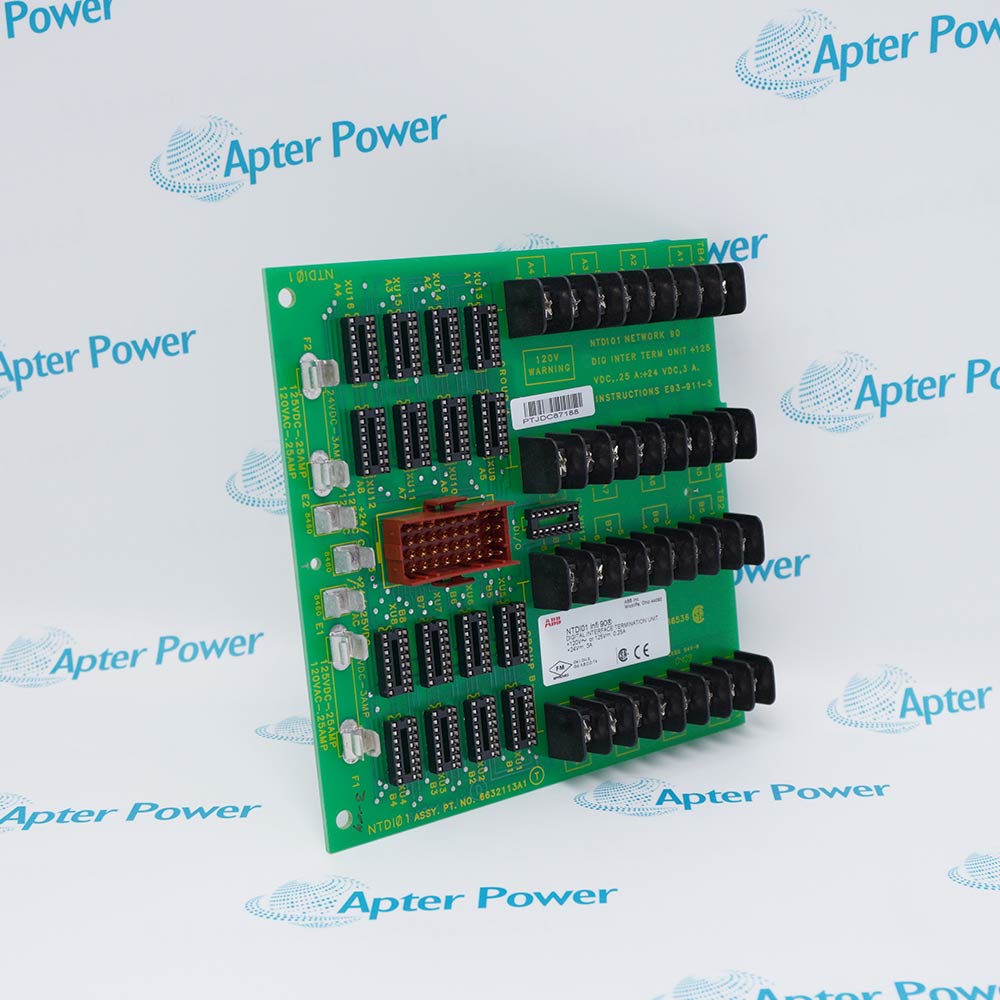
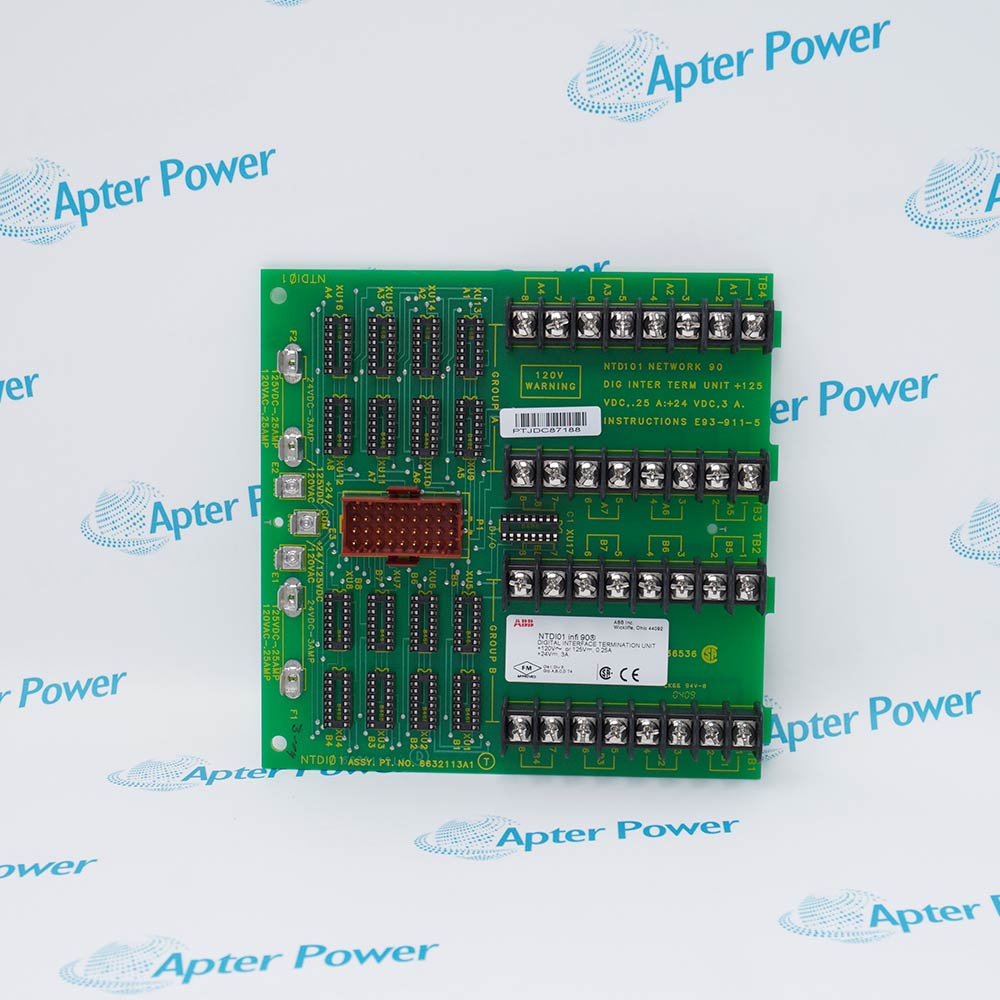
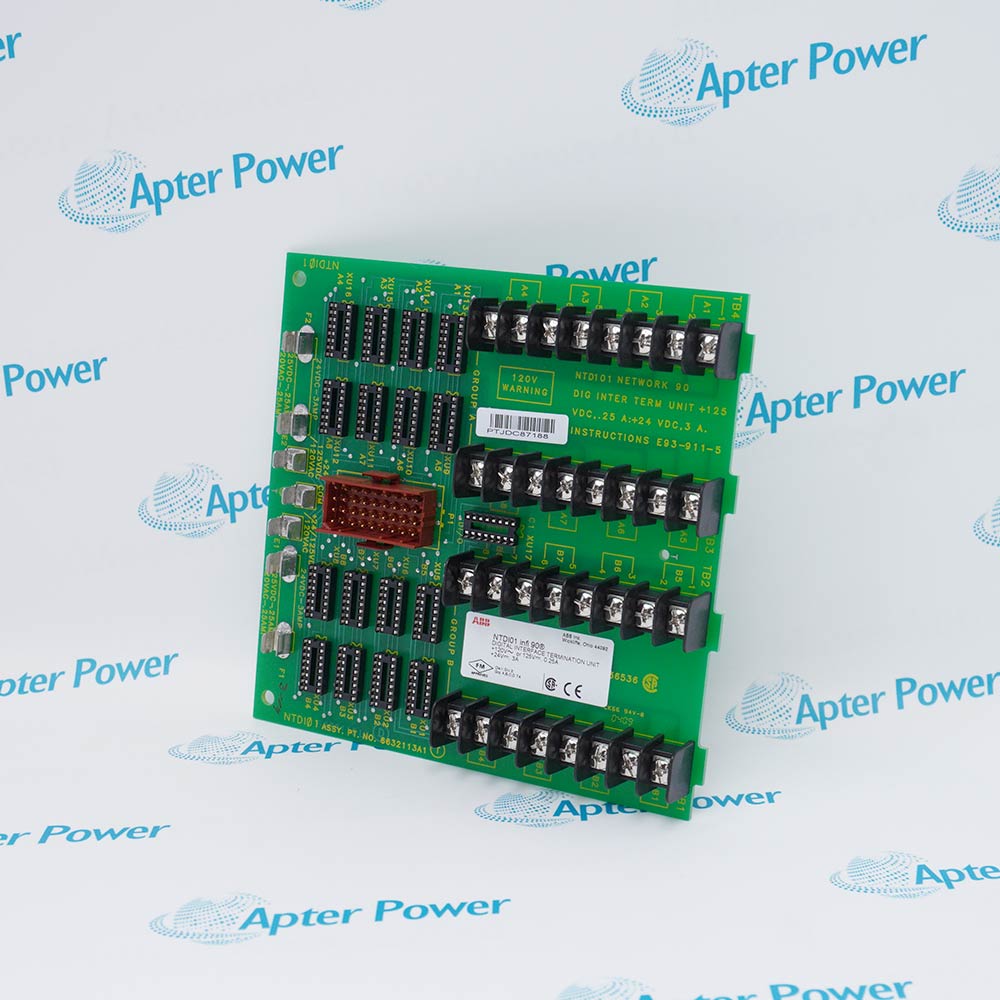
Features:
- Termination path for 16 digital field signals
- Documented association with SPDSI, SPDSO, and SPDSM modules
- Cabinet interface that preserves field-to-module signal routing
NTDI01 organizes sixteen field signal paths at the Symphony Plus cabinet termination layer.
Its role is physical routing between terminal wiring and the compatible I/O module, rather than signal processing.
Replacement planning should center on terminal maps, cable identity, and the actual module installed at the other end.
Availability of NTDI01 is subject to Apter Power's current inventory and sourcing confirmation.
NTDI01 Digital Input Termination Unit Manuals, Datasheets, Links
Important Notice: Other accessories, manuals, cables, calibration data, software, etc. are not included with this equipment unless listed in the above stock item description. All prices are shown in USD.
NTDI01 Digital Input Termination Unit Specs
General
- ManufacturerABB
- ModelNTDI01
- ConditionNew Original ready stock
- Product FamilySymphony Plus HR Series Termination Units
Important Notice: Other accessories, manuals, cables, calibration data, software, etc. are not included with this equipment unless listed in the above stock item description. All prices are shown in USD.
Termination path
- Field side: retain the terminal-to-device identification.
- Module side: trace the cable to the installed I/O module.
- Channel count: reconcile all 16 signal positions.
- Continuity: test each route before controller release.
Compatible module review
- SPDSI: confirm the digital-input application and field voltage.
- SPDSO: verify the documented output termination arrangement.
- SPDSM: check the pulse or mixed-signal project documentation.
- No assumption: do not substitute another termination family by connector appearance alone.
Replacement preparation
- Terminal map: photograph and label conductors before removal.
- Cable identity: retain both-end tags and destination records.
- Power state: follow the approved isolation procedure.
- Handover: document continuity and point-state results.