Features:
- Connects Field Devices to the ABB Advant Master Control System via Masterbus 300 Network
- Handles Multiple I/O Signal Types Including Analog and Digital Inputs/Outputs
- Supports Hot-Swap Replacement Without System Shutdown for Continuous Operation
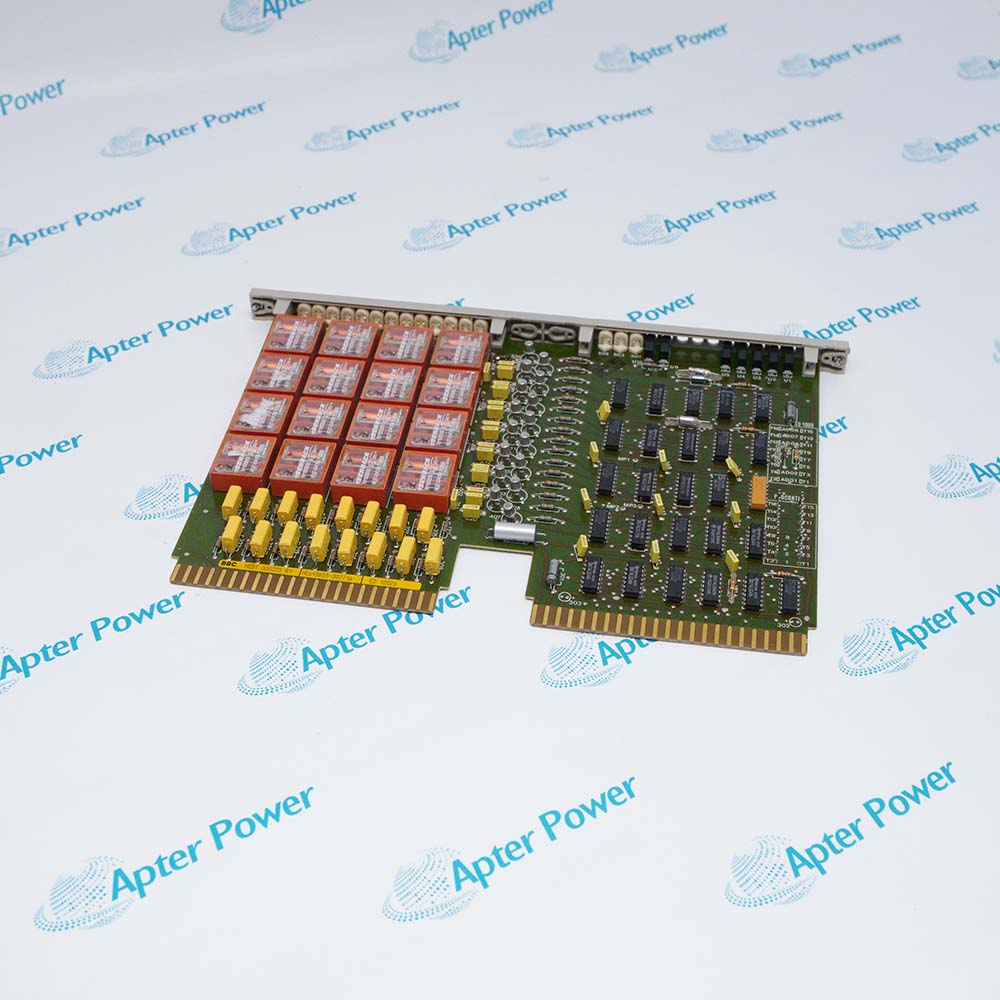
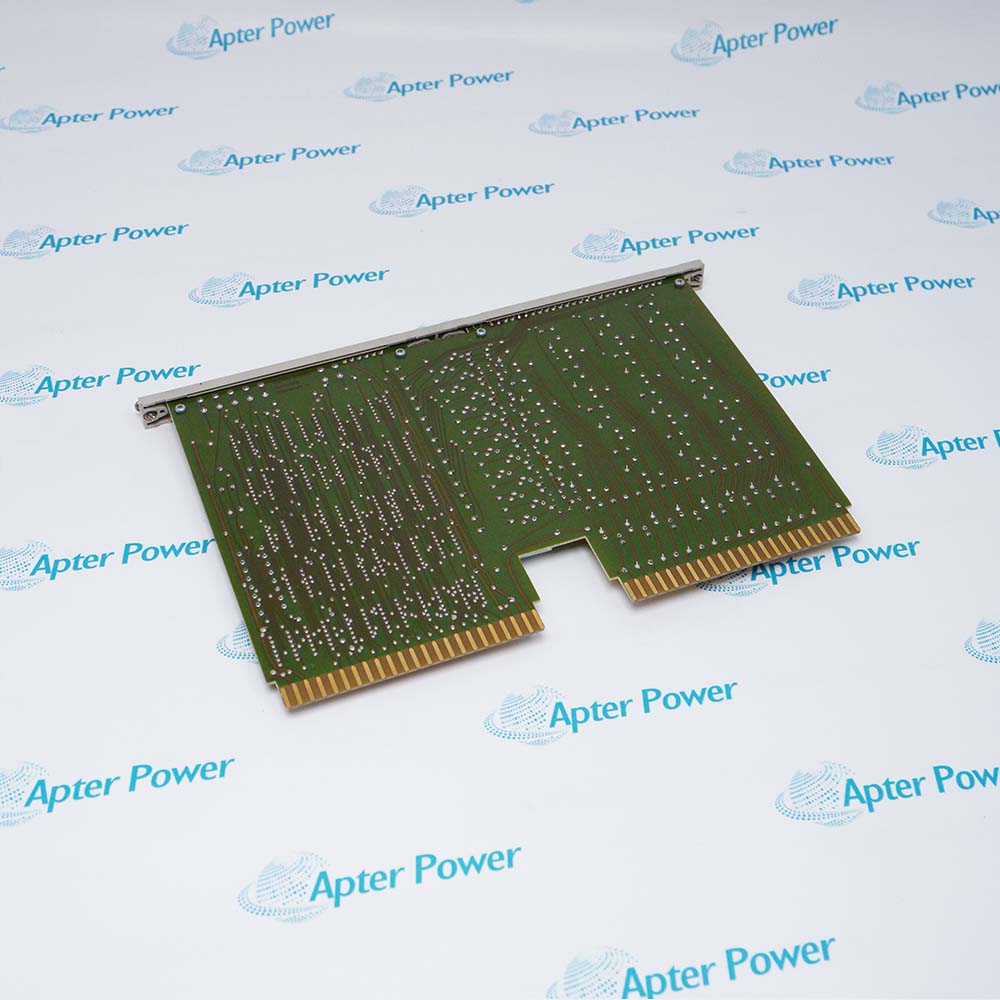
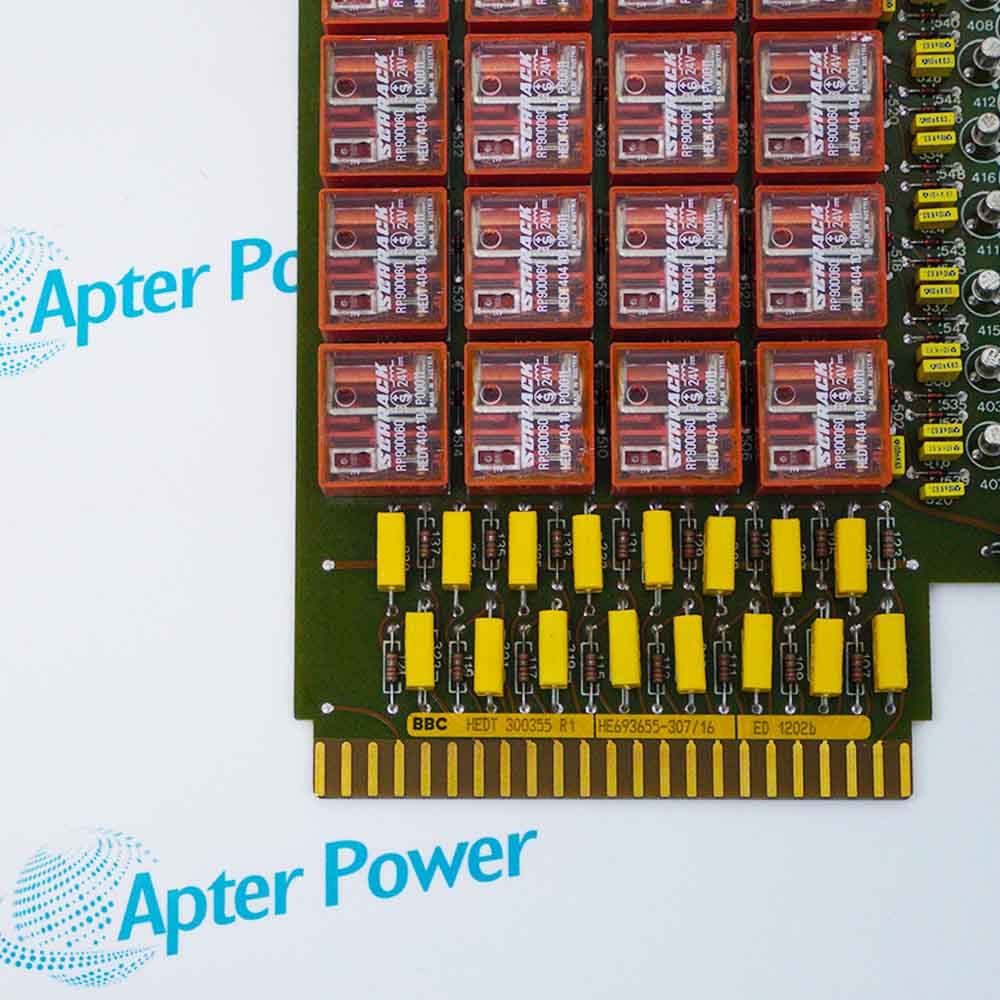
The ED1202B HEDT300355R1 HE693655-307/16 operates as a Process Control Board within the ABB Advant Master architecture, providing reliable signal conversion and data processing for all connected I/O modules within the system. It continuously manages incoming analog and digital signals from field devices and distributes processed data through the Masterbus 300 network to support steady-state operation of all controllers and monitors. Seamless signal processing is standard with the ED1202B HEDT300355R1 HE693655-307/16; however, using an optional redundant configuration will allow seamless switchover to a backup module in the event of a primary board failure. The ED1202B HEDT300355R1 HE693655-307/16 has made improvements in several areas over previous I/O interface designs in addition to incorporating universal signal compatibility within the Advant Master rack.
The ED1202B HEDT300355R1 HE693655-307/16 provides essential I/O interfacing functions common to the entire control system, and is a critical component of the monitoring path, directly affecting the proper, normal operation of the overall process control system. One or two ED1202B HEDT300355R1 HE693655-307/16 boards are required per rack depending on the desired redundancy level. The ED1202B HEDT300355R1 HE693655-307/16 occupies only a single slot in the rack and is always located in the designated I/O interface position.
For dual redundant I/O applications, the Advant Master system requires a second ED1202B HEDT300355R1 HE693655-307/16 board installed in the redundant slot. In addition to standard single-board operation, the redundant configuration also performs automatic switchover. The dual-board configuration executes failover using the internal circuitry specified in the I/O interface options. Using this method, the redundant I/O system continually monitors the health of both boards. If the system detects that the primary ED1202B HEDT300355R1 HE693655-307/16 is no longer providing stable output (outside configured signal/tolerance levels), it will automatically transfer the load to the secondary board and place an event in the System Event List.
The ED1202B HEDT300355R1 HE693655-307/16 ABB Process Control Board may still be available for purchase and support from Apter Power beyond End-Of-Life (EOL) by the manufacturer (OEM).
ABB ED1202B HEDT300355R1 HE693655-307/16 Process Control Board Manuals,Datasheets,Link
Important Notice: Other accessories, manuals, cables, calibration data, software, etc. are not included with this equipment unless listed in the above stock item description. All prices are shown in USD.
ABB ED1202B HEDT300355R1 HE693655-307/16 Process Control Board Specs
General
- Manufacturer ABB
- Model ED1202B HEDT300355R1 HE693655-307/16
- Condition New Original ready stock
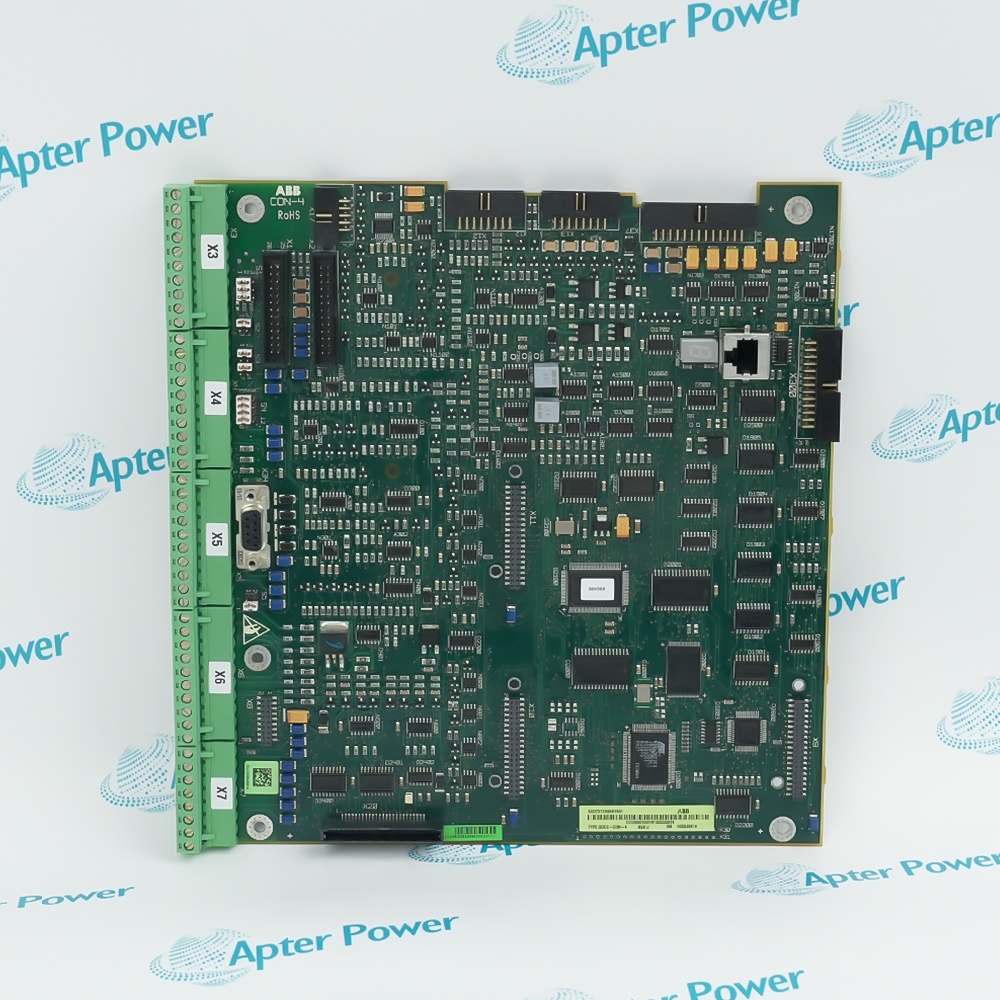
- Product Family 3BHE028959R0101 PPC902 CE101,3BHE010751R0101 PPC902 AE101
Important Notice: Other accessories, manuals, cables, calibration data, software, etc. are not included with this equipment unless listed in the above stock item description. All prices are shown in USD.
- Distributed Control Systems (DCS): Primarily serves as a processing or interface module within ABB’s automation framework (e.g., Symphony or System 800xA).
- Power Generation & Utilities: Employed in power plants for regulating turbine control and monitoring grid stability.
- Heavy Industry: Used in oil, gas, and chemical processing to manage high-risk environments requiring high-speed logic execution.
- Legacy System Maintenance: Frequently used as a critical replacement part for maintaining established industrial control infrastructures.
- Real-Time Data Acquisition: Monitors field variables such as temperature, pressure, and flow rates with high precision.
- Logic Execution: Executes complex control algorithms to maintain process setpoints and ensure operational stability.
- Fault Diagnostics: Features onboard diagnostic capabilities to detect hardware inconsistencies, reducing downtime through rapid troubleshooting.
- Signal Conditioning: Converts raw field signals into digital data for upper-level supervisory control.
- Mounting: Designed for standard subrack or cabinet mounting within industrial enclosures.
- System Integration: Fully compatible with ABB proprietary communication protocols, ensuring seamless data exchange with Human Machine Interfaces (HMI) and other I/O modules.
- Hot-Swapping (Model Dependent): In many configurations, these boards support hot-swap functionality for maintenance without shutting down the entire system.
- Configuration: Typically requires setup via ABB-specific software (such as Composer or Engineering Studio) to map I/O and define control logic.