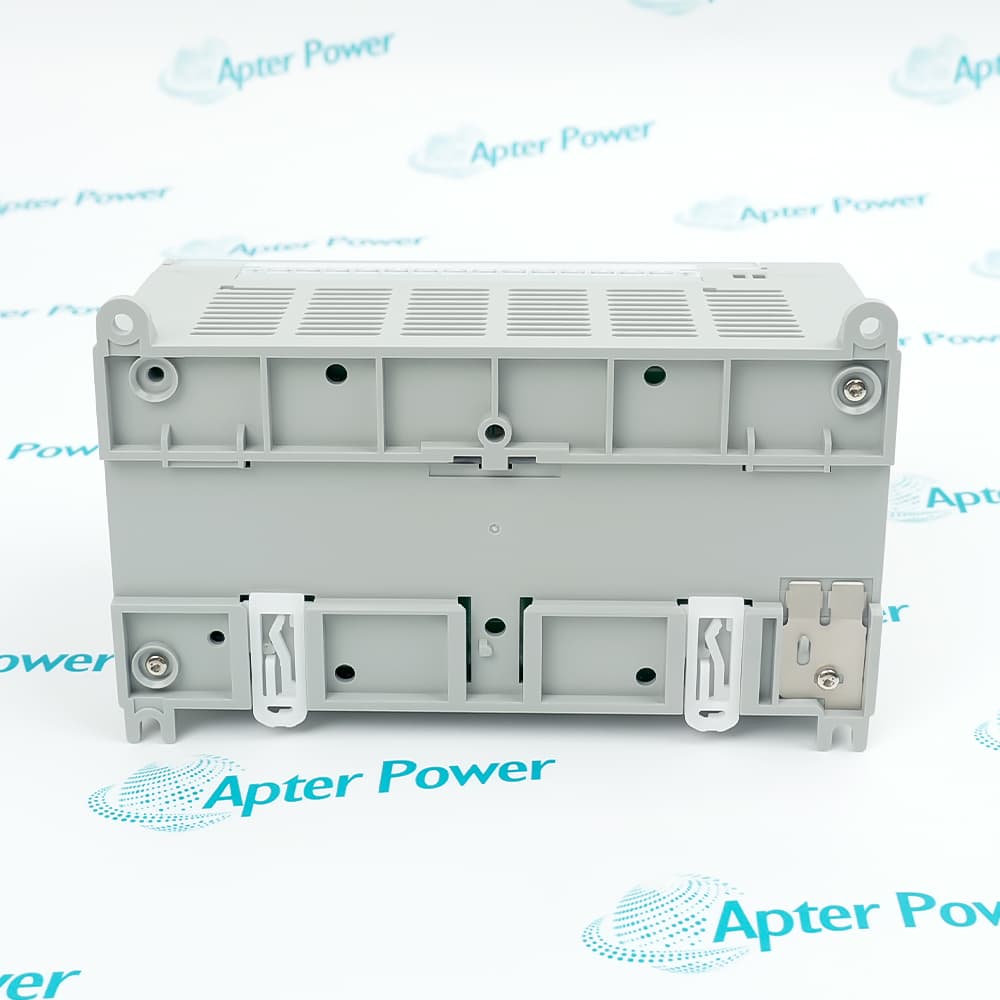
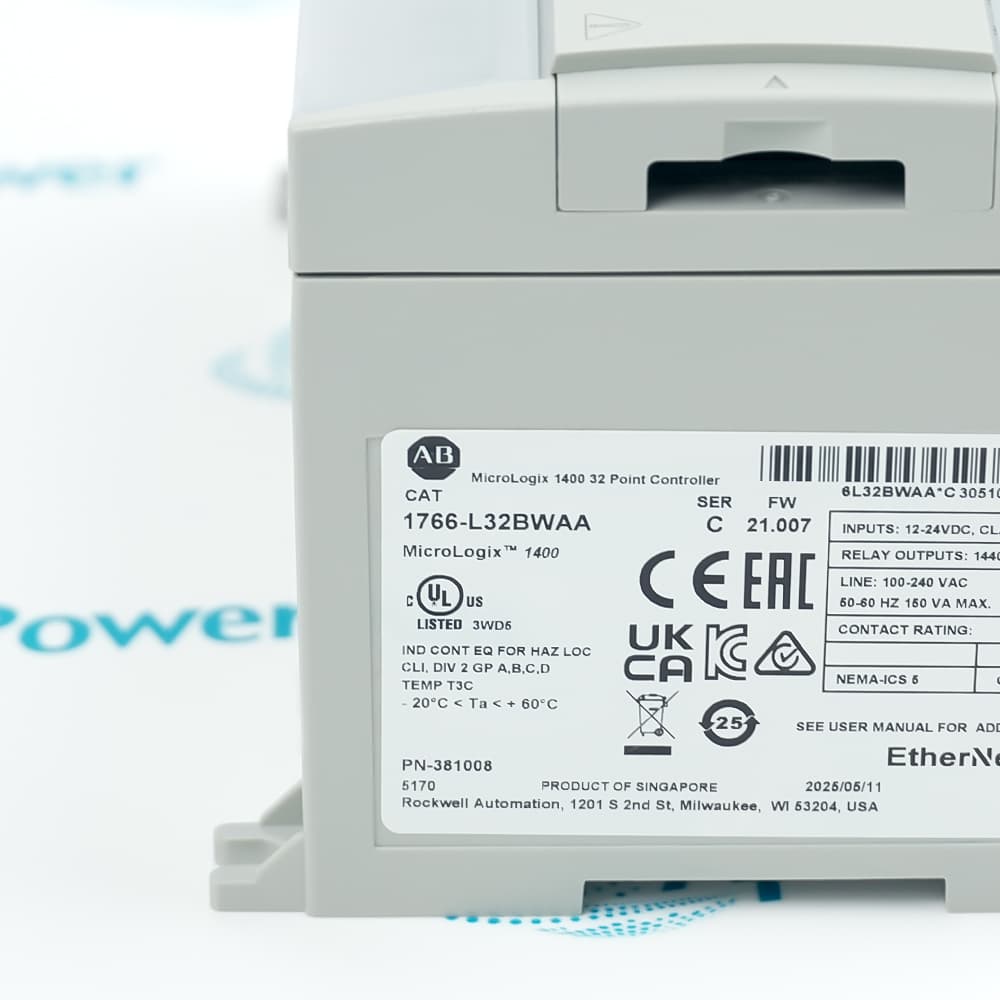
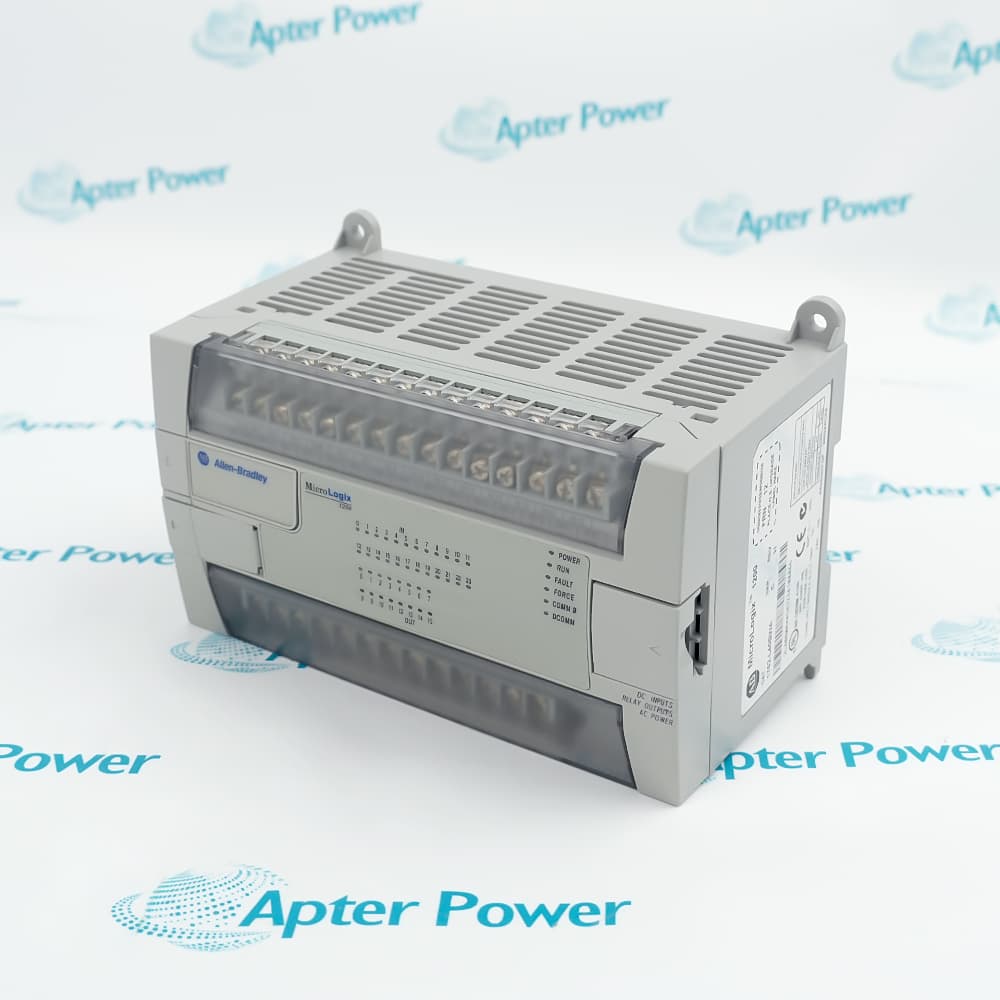
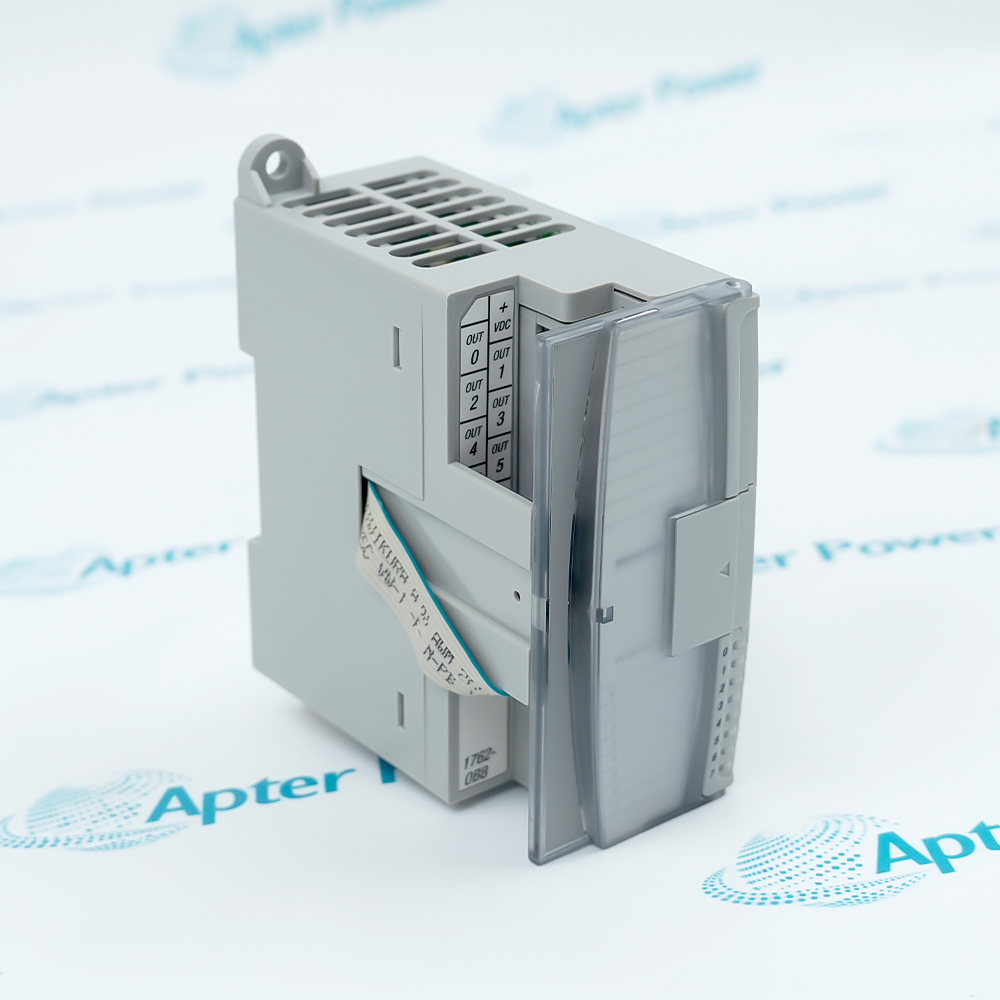
1766-L32BWAA
1766-L32BWAA
1766-L32BWAA
1766-L32BWAA
1766-L32BWAA
1766-L32BWAA
Ask our team:
  • Phone: +86 181 0690 9650
  • E-Mail sales1@apterpower.com
  • Lifecycle status

    Active / Available from OEM
    Apter Power reviews analog channel use and scaling records before quotation and delivery coordination.

1766-L32BWAA

/ 4.9
1001 reviews | Need a Specific Revision?
Embedded analog conversion defines Allen-Bradley 1766-L32BWAA: four measurement channels and two command channels supplement its relay-based MicroLogix 1400 architecture.
In Stock
Ships by Thursday, October 29
Fast Shipping Available
Get a quick price for 1766-L32BWAA
Quantity
*E-mail
Company
*Mobile
*Content
Upload (gif, jpg, jpeg, png, bmp, doc, docx, xls, xlsx, ppt, pdf, csv)

Technical specifications for 1766-L32BWAA

  • Manufacturer:
    Allen-Bradley
  • Part Number:
    1766-L32BWAA
  • Product Family:
    MicroLogix
  • Product Type:
    MicroLogix 1400 Programmable Controller with Analog I/O
  • Stock:
    1
  • User memory:
    20 KB
  • Digital inputs:
    12 high-speed and 8 standard, 24 V DC sinking/sourcing
  • Digital outputs:
    12 relay
  • Analog inputs:
    4 single-ended, 0…10 V DC
  • Analog outputs:
    2 single-ended, 0…10 V DC
  • Analog data format:
    12-bit unsigned integer
  • Analog input coding:
    0…4,095 for 0…10 V DC - 1 LSB
  • Analog input impedance:
    Greater than 199 kΩ
  • Analog non-linearity:
    ±1.0% full scale
  • Analog overall accuracy:
    ±1.0% from -20…60 °C
  • Analog output response:
    2.5 ms to 95%
  • Controller supply:
    100…240 V AC, 47…63 Hz
  • Power consumption:
    120 VA
  • User sensor supply:
    24 V DC at 250 mA
  • Ethernet interface:
    Isolated
  • Expansion bus:
    Up to 7 Bulletin 1762 modules
  • Operating temperature:
    -20…60 °C
  • Weight:
    0.9 kg
  • Estimated shipping dimensions:
    9 x 18 x 8.7 cm
  • Tariff Code:
    8537101190
  • Country of origin:
    Singapore
  • Place of shipment:
    Xiamen,Fujian,China
By purchasing this item, you agree to the Terms & Conditions, ApterPower is not an authorized distributor for listed manufacturers or tradenames and therefore the manufacturer's warranty does not apply. All our products come with ApterPower's 1-year warranty.

More Information

Overview Manuals Voltage Loop Proof Relay Bank Duties Analog Data Trace Product Applications

Features:

  • Mixed-signal controller: digital control plus embedded voltage input and output channels
  • Field interface: high-speed DC inputs and grouped relay outputs
  • Communication scope: isolated Ethernet, serial messaging, and local expansion
1766-L32BWAA brings voltage measurement and command signals into the AC-powered MicroLogix 1400 platform.

The analog suffix changes terminal use, scaling, shielding, and commissioning work even though the enclosure resembles the non-analog BWA model.

A suitable spare must match the complete project I/O map, digital common arrangement, analog references, relay grouping, and communication configuration.
Apter Power can coordinate official-document checks, quotation, and sourcing support for 1766-L32BWAA.
Allen-Bradley 1766-L32BWAA MicroLogix 1400 Programmable Controller with Analog I/O Manuals, Datasheets, Links
Important Notice: Other accessories, manuals, cables, calibration data, software, etc. are not included with this equipment unless listed in the above stock item description. All prices are shown in USD.
  • Input baseline: inject known voltages into each IV channel and correlate twelve-bit raw data with the intended engineering range.
  • Output response: step both OV commands through their installed loads and compare commanded data with measured terminal voltage.
  • Fault separation: distinguish field-source, conversion, logic, and load-path errors before adjusting application scaling.
  • Common schedule: assign all twelve relay points to their documented field-supply groups before reconnecting actuators.
  • Load protection: select suppression for each qualified coil or inductive load so contact switching does not disturb neighboring circuits.
  • State proof: test energized, released, program, and fault behavior under representative load rather than relying on status indication alone.
  • Local reference: record injected signal, raw controller value, and scaled project value as the acceptance baseline.
  • Message mapping: bind the selected Ethernet or serial protocol to explicit channel addresses, data types, and peer roles.
  • End-to-end check: compare the same controlled voltage at the terminal, controller data table, and supervisory destination before releasing production tags.
  • Mixed discrete and analog control: combine 24 V DC sensors, relay actuators, and voltage process signals in one controller.
  • Local variable monitoring: acquire qualified 0…10 V transmitters for compact machine or equipment supervision.
  • Networked compact automation: exchange controller values through supported Ethernet or serial messaging.
Description
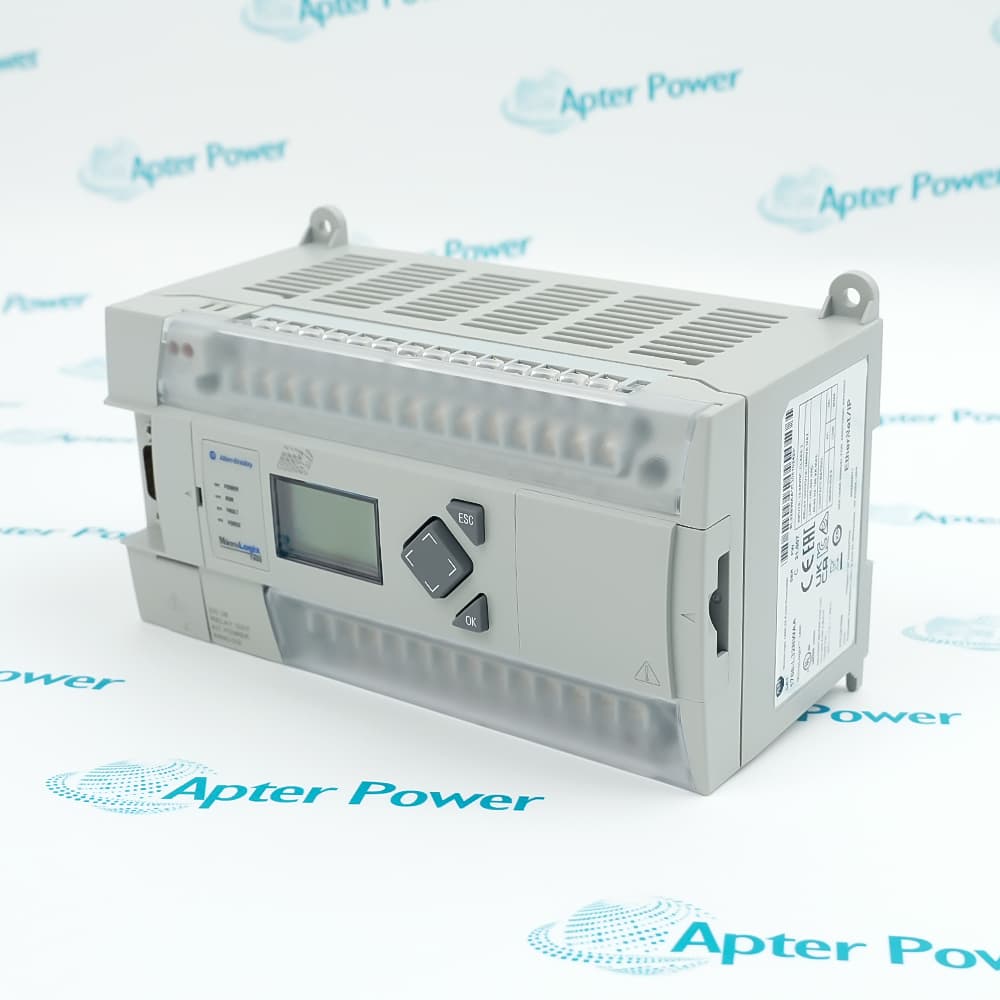
1766-L32BWAA extends the AC-powered BWA architecture with four embedded voltage inputs and two voltage outputs. Its twenty 24 V DC digital inputs and twelve relay outputs remain available for discrete control, while the onboard analog channels support monitoring and command signals without a separate local analog module.

The analog channels on 1766-L32BWAA use twelve-bit unsigned data and share a non-isolated relationship with controller logic. Correct shield termination, cable separation, analog common routing, and field-device reference are therefore part of commissioning rather than optional cleanup after noisy readings appear.

When replacing or expanding 1766-L32BWAA, preserve the I/O address map, scaling logic, relay group wiring, network protocol, expansion-bus load, and project archive. Acceptance should include live analog source tests, output-response checks, and comparison of the full catalog suffix against the physical terminal legend.
Revisions

Revision Part #

Also known as

1766-L32BWAA Series A
1766-L32BWAA/A, Series A
1766-L32BWAA Series B
1766-L32BWAA/B, Series B
1766-L32BWAA Series C
1766-L32BWAA/C, Series C
Alternative Names
Allen-Bradley 1766-L32BWAA Rockwell Automation 1766-L32BWAA AB 1766-L32BWAA 1766L32BWAA 1766 L32BWAA MicroLogix 1400 1766-L32BWAA
Technical notes
Unstable analog readings on 1766-L32BWAA should be treated first as a reference and shielding problem because its onboard voltage channels are non-isolated. Route shielded cable away from AC conductors, bond the shield at one end, confirm COM ANA potential, and pause commissioning until dual-ended grounds or field-reference differences are eliminated.
Exceptional Service

Our Mission

  • 100% Satisfaction

    We believe expertise is priceless. With over 20 years of experience, and top engineers on staff, we can help you solve or avoid problems that threaten your business.
  • Trust Guaranteed

    Not only do we have a vast inventory, our team makes sure every piece of equipment is in working condition. Your purchases are also backed by our Warranty.
  • Expertise

    Time is money, especially when your equipment is down. We work quickly to get your equipment on its way so you can get it back up and running.

FAQS

The following is a list of questions commonly asked by our customers. Please contact us if you have a question about our process that is not answered below.
Why can an analog value on 1766-L32BWAA drift even when the transmitter is stable?
Inspect single-end shield grounding, analog common reference, cable separation from AC conductors, field-device power, and raw counts before altering scaling logic.
How should a project prove that 1766-L32BWAA can replace a non-analog BWA controller?
Compare the exact terminal legend, project I/O map, analog scaling, relay groups, sensor-power loading, and enclosure wiring; do not assume the added channels are electrically unused.
What should be tested when one voltage output on 1766-L32BWAA reaches the command value but the field device does not respond?
Measure the output against COM ANA, check load impedance and cable continuity, verify raw command data, and separate field-reference problems from controller output behavior.
Why might a high-speed sensor work on one terminal of 1766-L32BWAA but fail after being moved to another?
Confirm whether the new point belongs to the high-speed group, compare its filter and counter assignment, and verify the common polarity and pulse level at the destination terminal.
How can a supervisor validate Modbus TCP data exchange from 1766-L32BWAA before connecting production tags?
Use a controlled test map, confirm client and server roles, addresses, data types, byte order, polling rate, and timeout response, then compare raw values with the local controller display.
What evidence should accompany procurement of 1766-L32BWAA for an installed machine?
Provide full nameplate images, controller series and firmware, project archive, analog channel use, network settings, expansion inventory, condition requirement, and destination for a model-specific review.