Ask our team:
  • Phone: +86 181 0690 9650
  • E-Mail sales1@apterpower.com
  • Lifecycle status

    Active / Available from OEM
    Apter Power checks AC input groups and relay schedules, then supports quotation and shipment planning.

1766-L32AWA

/ 4.9
1001 reviews | Need a Specific Revision?
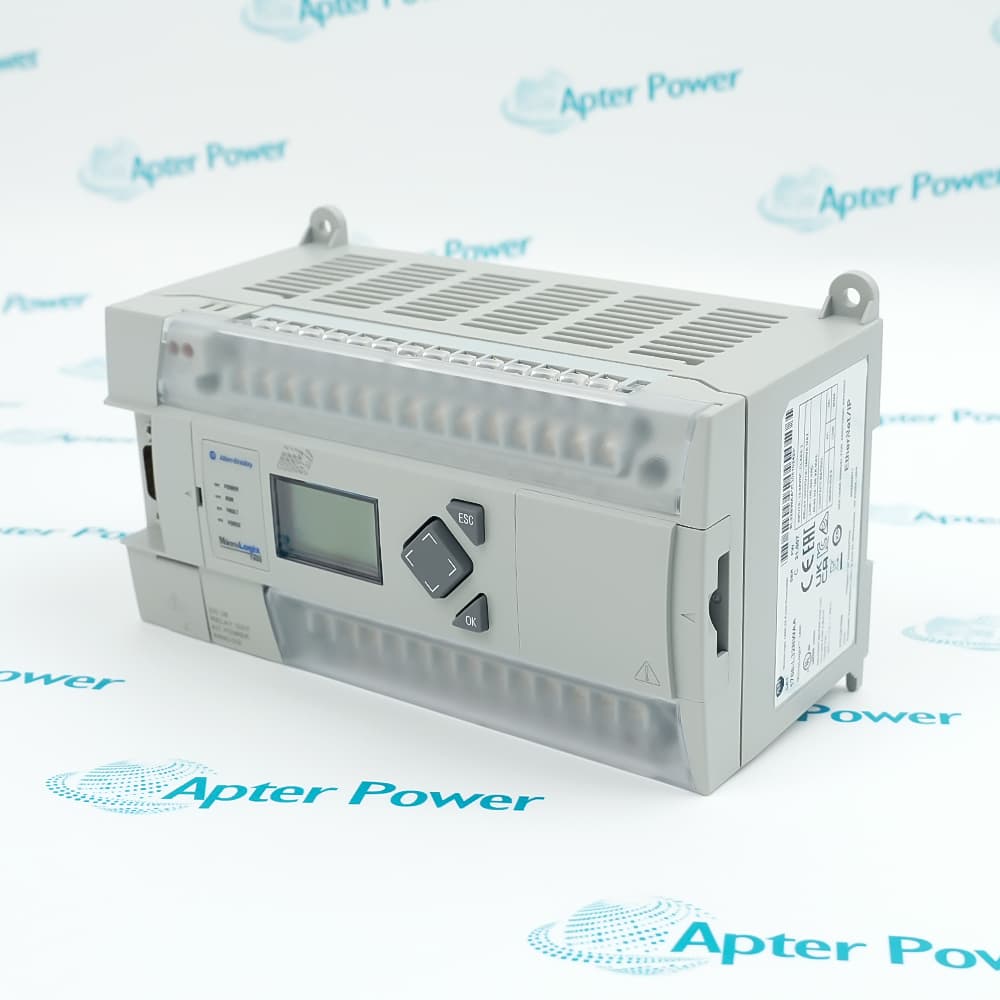
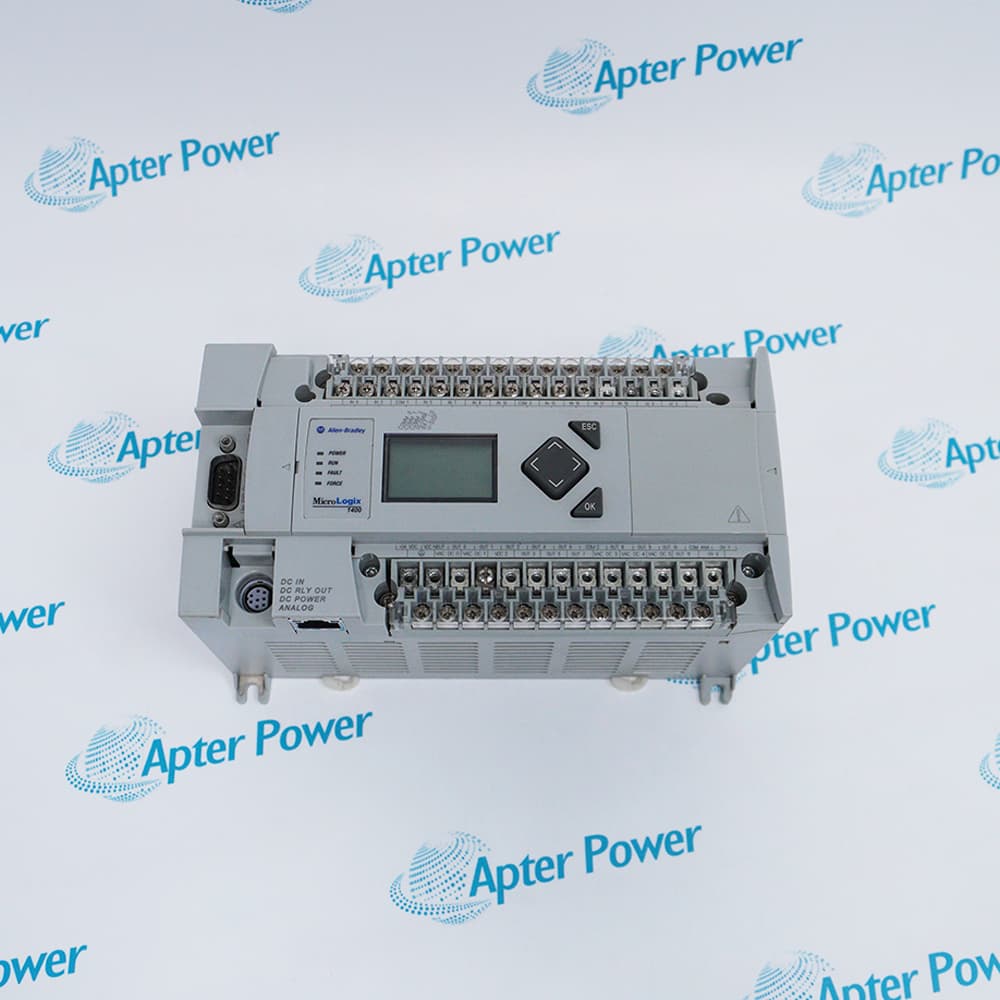
For equipment using 120 V AC field signals, Allen-Bradley 1766-L32AWA pairs twenty AC inputs with twelve relay outputs in an AC-powered MicroLogix 1400 without onboard analog I/O.
In Stock
Ships by Thursday, October 29
Fast Shipping Available
Get a quick price for 1766-L32AWA
Quantity
*E-mail
Company
*Mobile
*Content
Upload (gif, jpg, jpeg, png, bmp, doc, docx, xls, xlsx, ppt, pdf, csv)

Technical specifications for 1766-L32AWA

  • Manufacturer:
    Allen-Bradley
  • Part Number:
    1766-L32AWA
  • Product Family:
    MicroLogix
  • Product Type:
    MicroLogix 1400 Programmable Controller
  • Stock:
    1
  • User memory:
    20 KB
  • Digital inputs:
    20 at 120 V AC
  • Digital outputs:
    12 relay
  • Controller supply:
    100…240 V AC, 47…63 Hz
  • Power consumption:
    100 VA
  • Input frequency:
    47…63 Hz
  • On-state input current:
    5…15 mA
  • Off-state leakage current:
    Maximum 2.5 mA
  • Relay output current:
    2.5 A per channel, maximum 8 A per common
  • Relay operating time:
    Maximum 10 ms on or off
  • Relay mechanical life:
    20,000,000 cycles
  • Relay electrical life:
    Minimum 50,000 operations
  • Pilot duty:
    C300, R150
  • Ethernet interface:
    Isolated
  • Supported protocols:
    DF1, DH-485, Modbus RTU, ASCII, DNP3, EtherNet/IP messaging, DNP3 over IP, Modbus TCP/IP
  • Expansion bus:
    Up to 7 Bulletin 1762 modules
  • Wire size:
    2.5 mm² maximum
  • Terminal screw torque:
    0.56 N·m
  • Enclosure rating:
    Open-style
  • Operating temperature:
    -20…60 °C
  • Storage temperature:
    -40…85 °C
  • Relative humidity:
    5…95% noncondensing
  • Weight:
    0.9 kg
  • Estimated shipping dimensions:
    9 x 18 x 8.7 cm
  • Tariff Code:
    8537101190
  • Country of origin:
    Singapore
  • Place of shipment:
    Xiamen,Fujian,China
By purchasing this item, you agree to the Terms & Conditions, ApterPower is not an authorized distributor for listed manufacturers or tradenames and therefore the manufacturer's warranty does not apply. All our products come with ApterPower's 1-year warranty.

More Information

Overview Manuals AC Inputs Relay Setup Comms Restore Product Applications

Features:

  • AC sensing: twenty 120 V AC embedded input circuits
  • Relay control: twelve grouped contact outputs for qualified field loads
  • Controller integration: isolated Ethernet, serial messaging, and local expansion
1766-L32AWA fits MicroLogix 1400 panels built around AC field sensors and relay-driven actuators.

Its input wiring cannot be derived from the visually similar DC variants because voltage class, commons, leakage, and safety boundaries differ.

Selection should preserve the exact AWA suffix together with the terminal schedule, load grouping, communication settings, expansion inventory, and project archive.
Apter Power can coordinate official-document checks, quotation, and sourcing support for 1766-L32AWA.
Allen-Bradley 1766-L32AWA MicroLogix 1400 Programmable Controller Manuals, Datasheets, Links
Important Notice: Other accessories, manuals, cables, calibration data, software, etc. are not included with this equipment unless listed in the above stock item description. All prices are shown in USD.
  • Voltage class: use qualified 120 V AC input devices and keep low-voltage DC sensor wiring outside these groups.
  • Common mapping: rebuild the input schedule from the official group terminals rather than a neighboring DC catalog.
  • Leakage check: confirm off-state field voltage with the connected device so small AC leakage does not create a false on-state.
  • Supply groups: document every relay common and field voltage before transferring the output schedule.
  • Coil suppression: fit the manufacturer-recommended suppression for relays, contactors, or starters connected to outputs.
  • Functional proof: challenge each output group and verify safe-state behavior during mode changes and fault handling.
  • Network role: retain the chosen Ethernet protocol, addressing, peer map, and timeout behavior with the project.
  • Serial role: preserve channel mode, cabling, node settings, and message timing before replacing hardware.
  • Expansion bank: confirm Bulletin 1762 module support, order, and bus-current budget before reconnecting local I/O.
  • AC discrete control: monitor qualified 120 V AC field contacts and switches in compact equipment.
  • Relay-actuated machinery: command contactors, valves, and other approved loads through grouped relay outputs.
  • Connected controller cells: integrate supported Ethernet or serial messaging with local Bulletin 1762 expansion.
Description
Panels that use line-voltage status devices rely on 1766-L32AWA for twenty 120 V AC inputs and twelve relay outputs. The AC-powered MicroLogix 1400 retains its LCD, isolated Ethernet port, serial communication, and Bulletin 1762 expansion while deliberately excluding onboard analog channels.

Unlike the DC-input catalogs, field acceptance for 1766-L32AWA begins with device voltage class, AC common grouping, and connected off-state leakage. Relay circuits then require their own common map, load protection, and safe-state proof before networked logic is allowed to command equipment.

Migration work should start from the installed terminal schedule before loading a project into 1766-L32AWA. Match the AWA suffix to the physical legend, segregate line-voltage wiring, preserve the validated communication settings, and reject the hardware if the application expects the analog terminals supplied by AWAA.
Revisions

Revision Part #

Also known as

1766-L32AWA Series A
1766-L32AWA/A, Series A
1766-L32AWA Series B
1766-L32AWA/B, Series B
1766-L32AWA Series C
1766-L32AWA/C, Series C
Alternative Names
Allen-Bradley 1766-L32AWA Rockwell Automation 1766-L32AWA AB 1766-L32AWA 1766L32AWA 1766 L32AWA MicroLogix 1400 1766-L32AWA
Technical notes
For 1766-L32AWA, the decisive wiring boundary is its 120 V AC input architecture, not a DC sinking or sourcing diagram. Confirm device voltage class, group commons, leakage behavior, and the official terminal map; disconnect power immediately if a low-voltage sensor reaches any AC input circuit.
Exceptional Service

Our Mission

  • 100% Satisfaction

    We believe expertise is priceless. With over 20 years of experience, and top engineers on staff, we can help you solve or avoid problems that threaten your business.
  • Trust Guaranteed

    Not only do we have a vast inventory, our team makes sure every piece of equipment is in working condition. Your purchases are also backed by our Warranty.
  • Expertise

    Time is money, especially when your equipment is down. We work quickly to get your equipment on its way so you can get it back up and running.

FAQS

The following is a list of questions commonly asked by our customers. Please contact us if you have a question about our process that is not answered below.
Why can an AC proximity switch leave an input on 1766-L32AWA active after the target is removed?
Measure off-state voltage and leakage with the device connected, confirm the correct input common, and compare the sensor output behavior with the official AC input limits before adding interface hardware.
What must change when a machine is converted from a DC-input controller to 1766-L32AWA?
Redesign the field-voltage source, commons, device ratings, segregation, protection, terminal schedule, and electrical safety documentation; a software-only I/O remap is not sufficient.
How should relay chatter on 1766-L32AWA be isolated from an AC input disturbance?
Monitor commanded output state, relay group supply, coil suppression, AC input transitions, and controller fault records simultaneously, then test the suspected load on a stable branch.
Can 1766-L32AWA exchange data with a DNP3 over IP peer merely because both devices have Ethernet ports?
No. Confirm each device role, supported DNP3 profile, point map, addressing, unsolicited behavior, timing, security controls, and a controlled test exchange before operational use.
Which records should be captured before replacing an operating 1766-L32AWA?
Archive the project, controller series and firmware, AC input and relay terminal schedules, Ethernet and serial settings, expansion inventory, fault history, and representative functional-test results.
How can procurement prevent 1766-L32AWA from being confused with the analog AWAA catalog?
Require the full catalog number, terminal-label photographs, project analog usage, series, condition, and destination, then verify that the purchase record does not silently add or omit analog channels.