Features:
- Executes complex math algorithms, custom application logic, and protocol conversion directly on the coprocessor without burdening the main PLC processor.
- Supports TAG_DEFINE, TAG_READ, TAG_WRITE, and TAG_LOCK/UNLOCK functions for efficient shared memory access between the coprocessor and PLC.
- Optional 1771-DXPS serial expander module adds communication ports; RAM SIMMs provide memory expansion; compatible with Ethernet versions (1771-DMC1, 1771-DMC4).
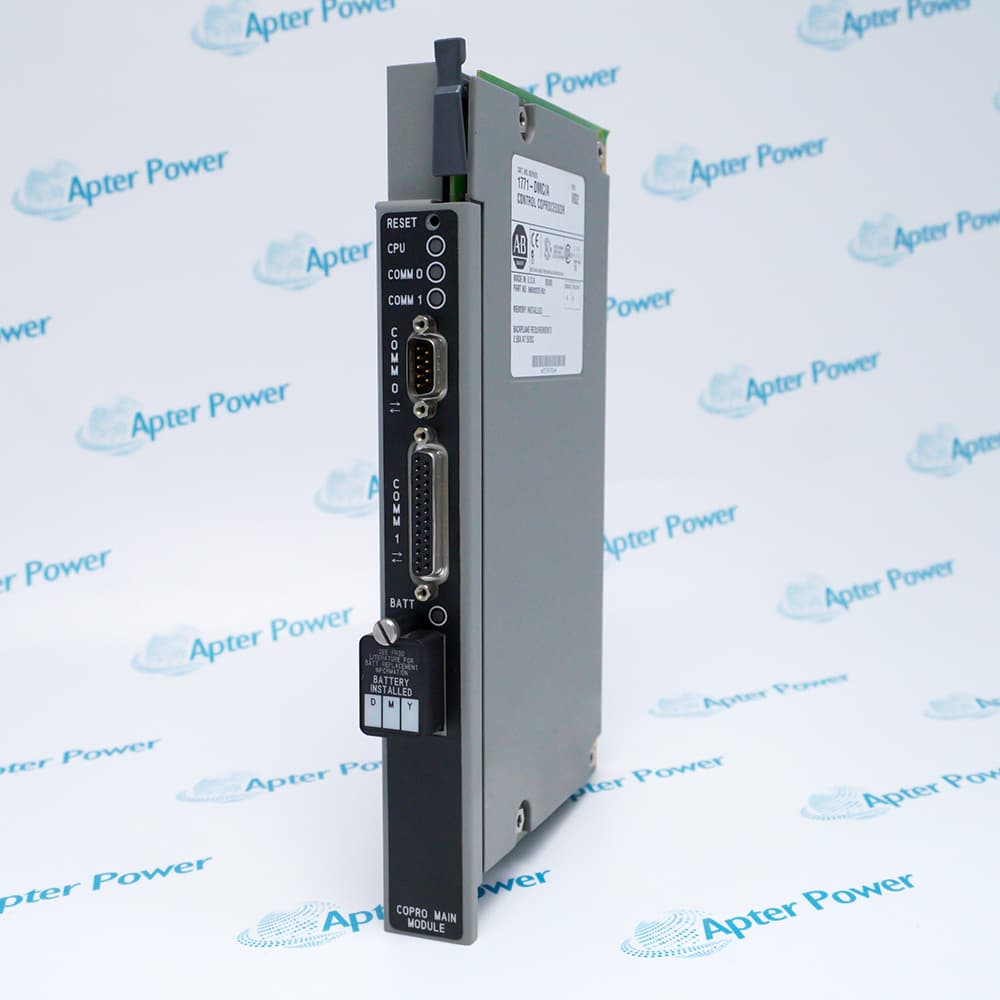
The 1771-DMC functions as an intelligent coprocessor that offloads computationally intensive tasks from the main PLC processor. Engineers can write custom C or BASIC programs to execute complex mathematical algorithms, such as PID calculations with non-standard equations, statistical process control functions, or application-specific formulas that would otherwise consume valuable PLC scan time.
The 1771-DMC implements a sophisticated TAG-based memory management system that simplifies data exchange between the coprocessor and the PLC. The TAG_DEFINE function creates named memory locations in the TAG table, allowing both processors to reference data by symbolic names rather than absolute addresses. The TAG_READ and TAG_WRITE functions provide controlled access to these tagged memory areas, with variations like TAG_READ_W and TAG_WRITE_W offering synchronized read/write operations that ensure data integrity.
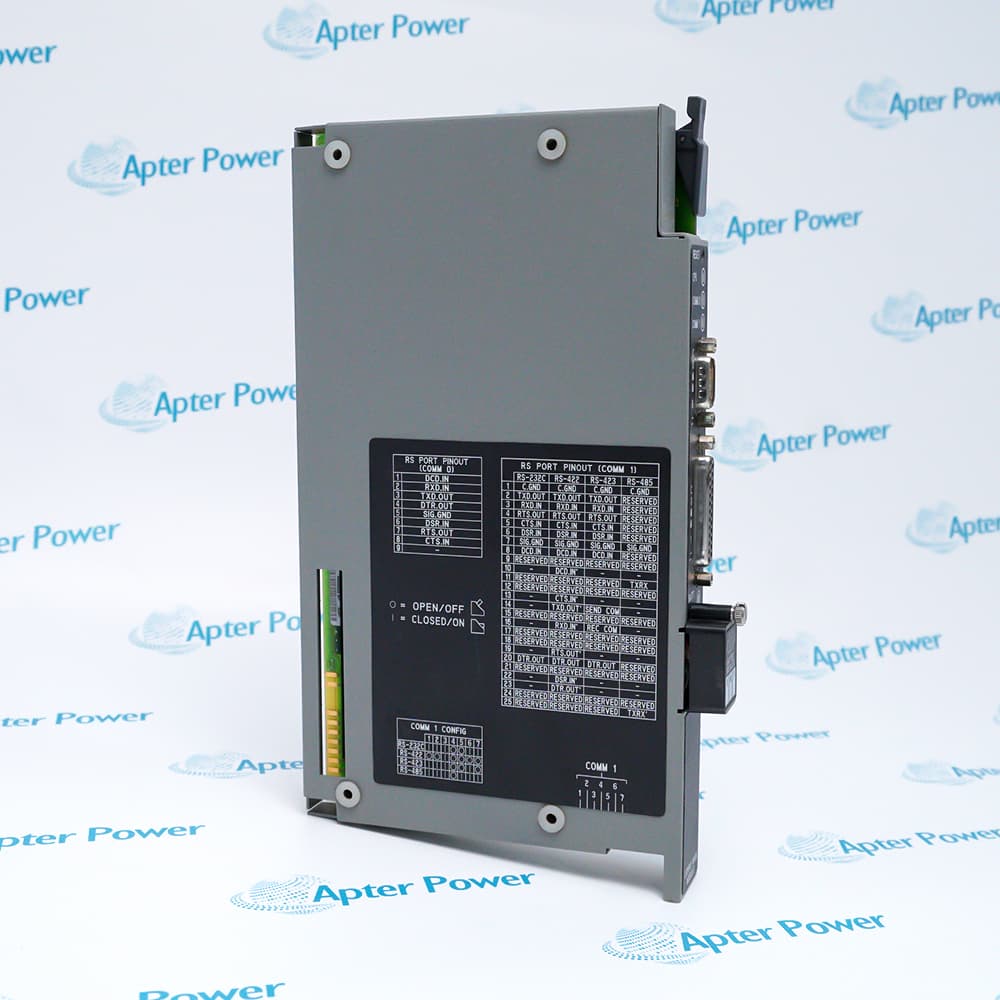
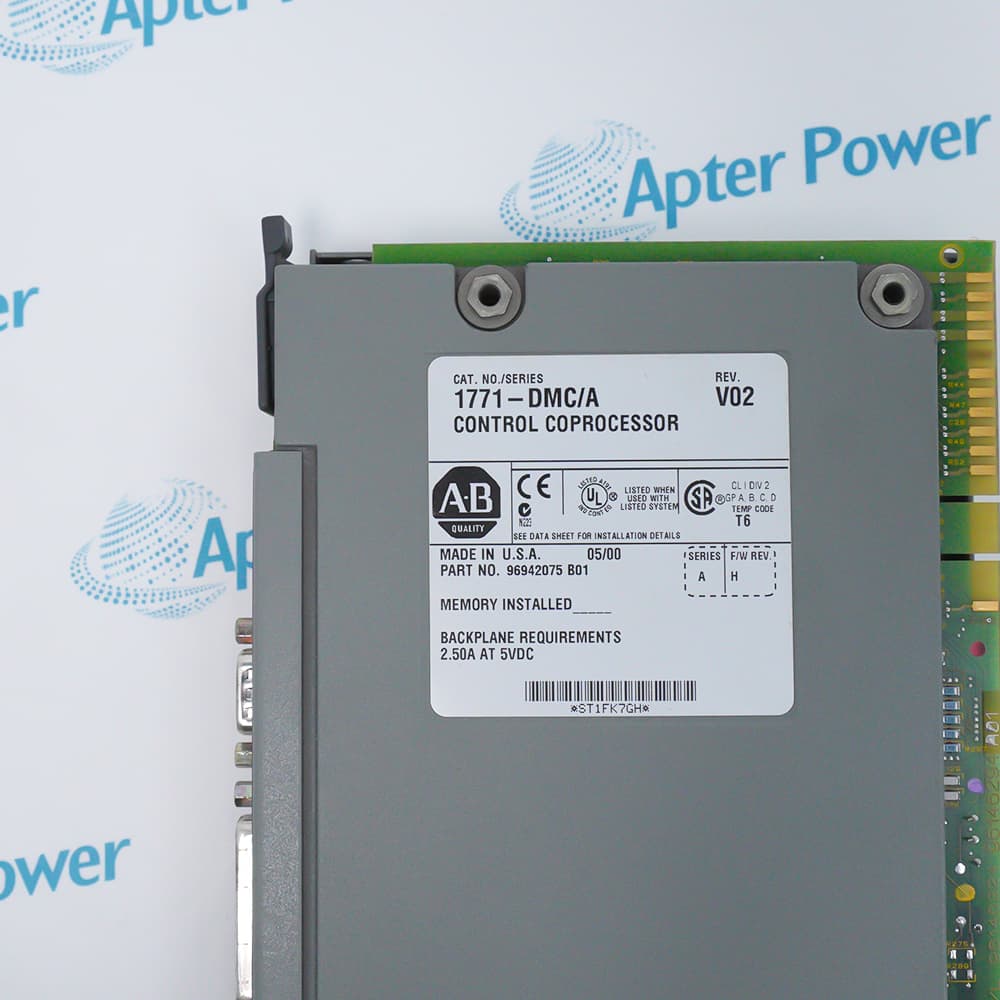
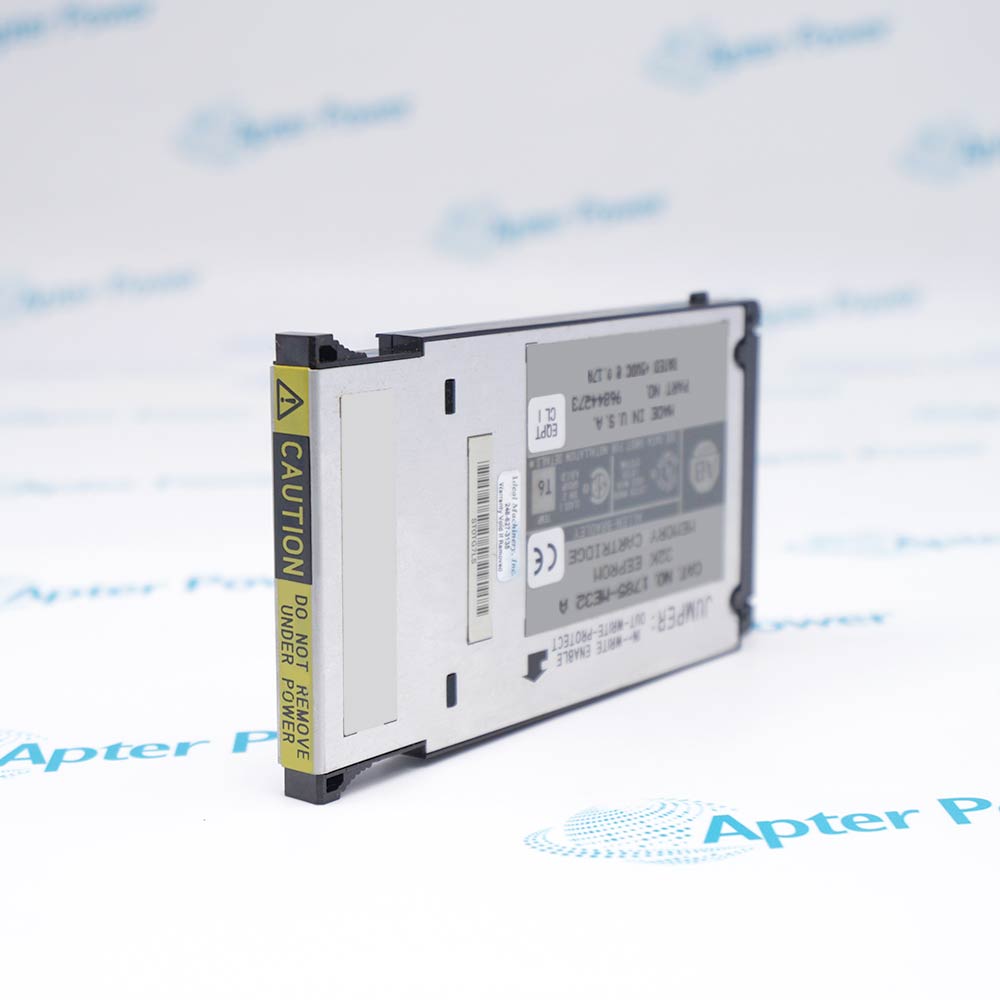
The 1771-DMC is designed for scalability, allowing users to expand functionality as application requirements grow. The optional 1771-DXPS serial expander module adds additional serial communication ports, transforming the single-slot 1771-DMC into a two-slot configuration with enhanced connectivity for multiple field devices. For applications requiring more memory than the standard 256 Kbytes, RAM SIMMs can be installed in the coprocessor's SIMM sockets.
The 1771-DMC Allen-Bradley Control Coprocessor Module may still be available for purchase and support from Apter Power beyond End-Of-Life (EOL)by the manufacturer (OEM).
Allen-Bradley 1771-DMC Control Coprocessor Module Manuals,
Datasheets,Drivers,Link
Important Notice:Other accessories,manuals,cables,calibration data,software,etc.are not
included with this equipment unless listed in the above stock item description.All prices are
shown in USD.
Allen-Bradley 1771-DMC Control Coprocessor Module Specs
General
- Manufacturer Allen-Bradley
- Model 1771-DMC
- Condition New Original ready stock
- Product Family
1771-IL,1771-OWNA,1771-ACN15,1771-OBD
Important Notice:Other accessories,manuals,cables,calibration data,software,etc.are not
included with this equipment unless listed in the above stock item description.All prices are
shown in USD.
- Complex Process Automation: Used in chemical, pharmaceutical, and water treatment industries to execute intricate mathematical algorithms, closed-loop PID formulations, and floating-point multi-variable calculations.
- Legacy Factory Telemetry & Data Logging: Deployed in large-scale assembly lines, food and beverage plants, and automotive factories to serve as a local storage buffer for production metrics, alarms, and historical quality control logs.
- Multi-Vendor Protocol Translation: Acted as a central communication gateway in hybrid industrial facilities where PLC-5 systems needed to interact with non-Rockwell automation equipment, such as weight scales, barcode scanners, and variable frequency drives (VFDs).
- High-Speed Execution of Procedural Languages: Programmed in standard C or BASIC, the module ran complex formulas, text-string manipulations, and data sorting tasks infinitely faster and more efficiently than a standard PLC ladder logic routine could achieve.
- Optimized Backplane Block Transfers: It communicated with the host PLC-5 processor using efficient Rockwell Block Transfer (BT) read/write commands across the 1771 backplane. This decoupled data crunching from the standard I/O scan loop, optimizing the overall scan time efficiency of the main control architecture.
- Dedicated Dual-Port Memory Architecture: Equipped with onboard multi-kilobyte RAM (e.g., 256 KB), allowing it to hold large database look-up tables and communicate variables to the host processor smoothly without inducing backplane data-packet collisions.
- A legacy PLC-5 system needed to pull real-time weight parameters from an external digital scale or command recipes to a non-Allen-Bradley serial controller.
- Process calculations involving complex geometric curves, gas volume natural-gas correction equations, or high-order predictive algorithms that exceeded the math block capabilities of vintage PLC-5 ladder logic.
- Multi-product manufacturing cells where rapid recipe changes were required, but the PLC-5 internal memory lacked the capacity to store hundreds of multi-step configuration arrays.