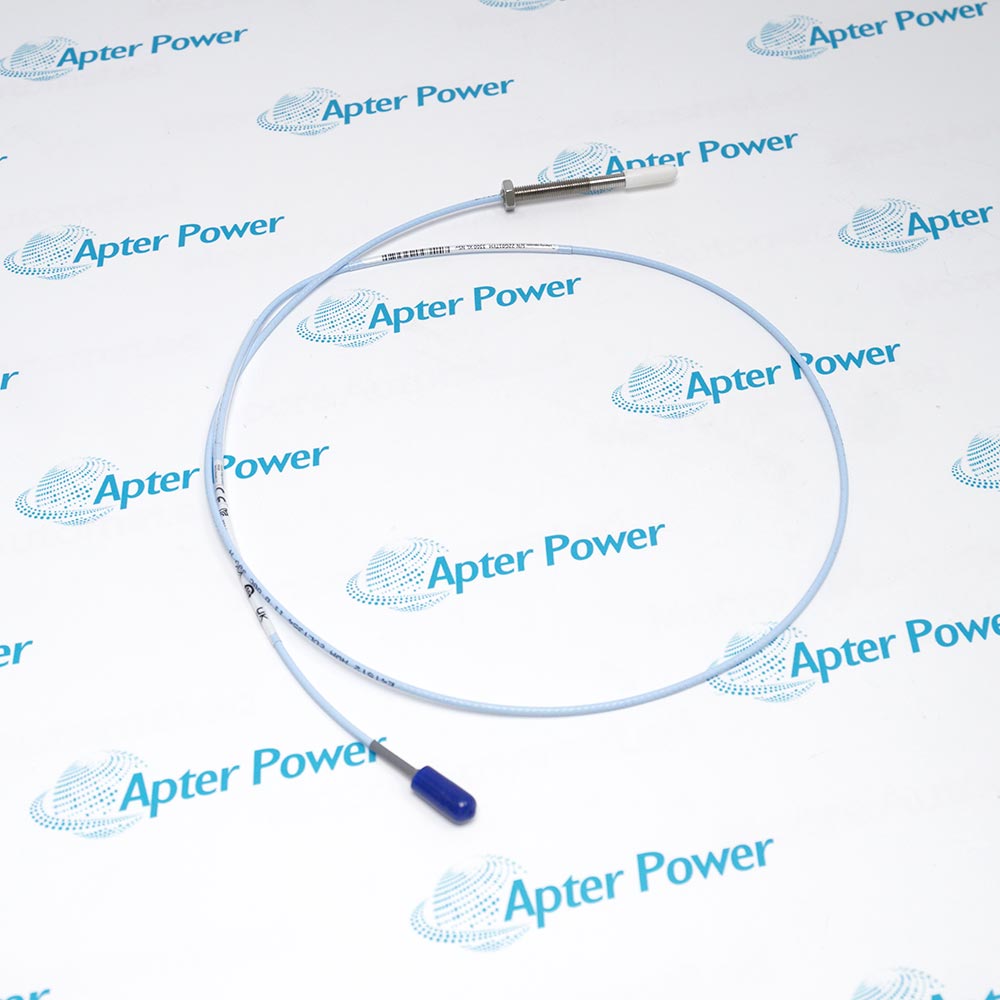
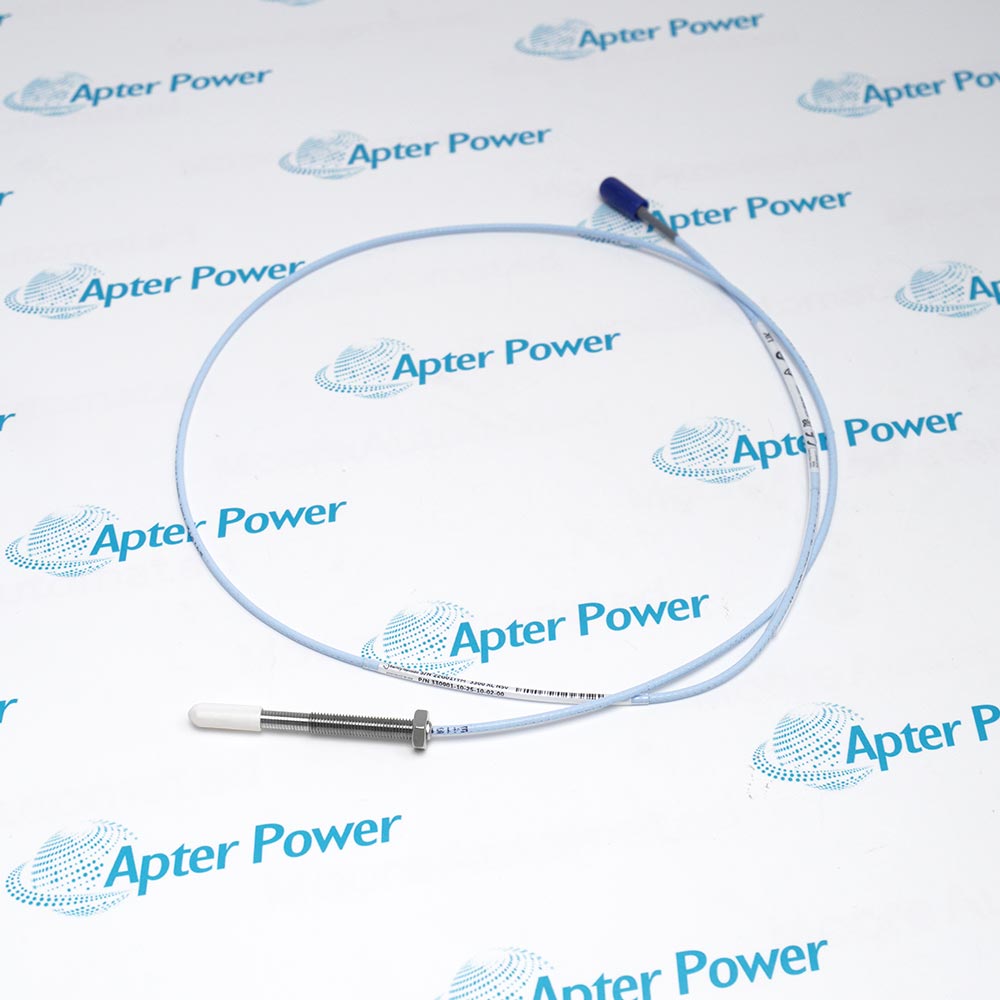
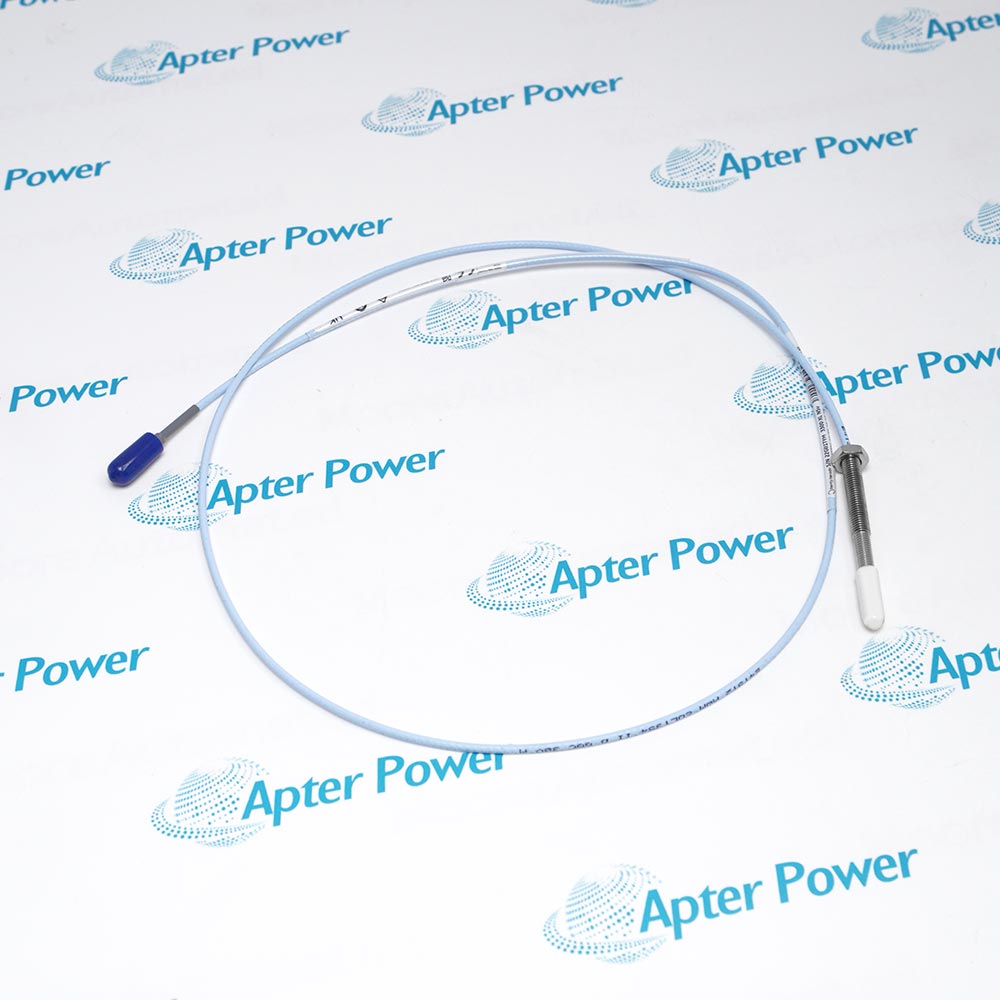
Features:
- The 330901-16-24-10-02-05 features a 1/4-28 UNF thread configuration without armor.
- This model includes a 1.6-inch unthreaded length for installation flexibility.
- The 330901-16-24-10-02-05 offers increased chemical resistance for process compressor applications.
The 330901-16-24-10-02-05 is mechanically and electrically compatible and interchangeable with Bently Nevada's previous 3300 RAM proximity probe designs. This NSv probe features increased chemical resistance compared to the 3300 RAM probe, allowing its use in many process compressor applications where exposure to aggressive media is common. The 330901-16-24-10-02-05 enables seamless upgrades from legacy 3300 RAM installations while providing enhanced durability in chemically challenging environments.
The side-view characteristics of the 330901-16-24-10-02-05 are superior to those of the 3000-series 190 probe when gapping at the same distance from the probe target. This improved performance enables more accurate measurements in confined spaces and applications where probe orientation presents challenges. The 330901-16-24-10-02-05 features reliable ClickLoc connector technology for secure field connections.
With multiple agency approvals, the 330901-16-24-10-02-05 simplifies global deployment in hazardous and non-hazardous locations. This probe delivers reliable vibration and position monitoring while the increased chemical resistance and superior side-view characteristics ensure long-term performance in demanding process environments. The 330901-16-24-10-02-05 represents a complete solution for applications requiring 1/4-28 UNF mounting threads and enhanced chemical resistance.
The 330901-16-24-10-02-05 Bently Nevada 3300 NSv Proximity Probes may still be available for purchase and support from Apter Power beyond
End-Of-Life (EOL) by the manufacturer (OEM).
Bently Nevada 330901-16-24-10-02-05 3300 NSv Proximity Probes Manuals,
Datasheets, Drivers, Link
Important Notice: Other accessories, manuals, cables, calibration data, software, etc. are not
included with this equipment unless listed in the above stock item description. All prices are
shown in USD.
Bently Nevada 330901-16-24-10-02-05 3300 NSv Proximity Probes Specs
General
- Manufacturer GE / Bently Nevada
- Model 330901-16-24-10-02-05
- Condition New Original ready stock
- Product Family
330901-16-24-10-01-05,330901-16-24-10-11-05,330901-16-24-10-02-00
Important Notice: Other accessories, manuals, cables, calibration data, software, etc. are not
included with this equipment unless listed in the above stock item description. All prices are
shown in USD.
- Confined Space Monitoring: Specifically designed for machinery with extremely limited internal space, such as centrifugal air compressors, small high-speed turbines, and refrigeration units.
- Small Shaft Diameter Measurement: Suitable for radial vibration monitoring of shafts with a diameter less than 51 mm (2 in).
- Multi-functional Sensing: Provides high-precision radial vibration, axial displacement, speed (Tachometer), and keyphasor® reference signals.
- API 670 Standard: Meets the American Petroleum Institute (API) 670 requirements for mechanical protection systems in terms of accuracy, linearity, and temperature stability.
- Global Explosion-Proof Certification (-05): The -05 at the end of the model number indicates certification in multiple hazardous areas.
- Physical Protection: The outer shell is made of AISI 304 stainless steel, and the probe head uses polyphenylene sulfide (PPS) material, which has excellent chemical stability.
- Preamplifier Matching: Requires a 3300 XL NSv preamplifier. The system sensitivity is fixed at 7.87 V/mm (200 mV/mil) and typically requires no on-site electrical calibration.
- Gapping: During installation, the initial voltage is usually set to approximately -10 Vdc (corresponding to the midpoint of the linear range) to ensure maximum dynamic measurement range.
- Back-end System Programming: Within the Bently Nevada 3500 framework, the correct probe type (3300 NSv) must be selected via Rack Configuration Software, and the corresponding alarm/danger thresholds and delay times must be set.