Features:
- Provides Precise Non-Contact Measurement Of Shaft Vibration And Displacement.
- Operates Reliably Across Extreme Temperatures From -51 °C To +177 °C.
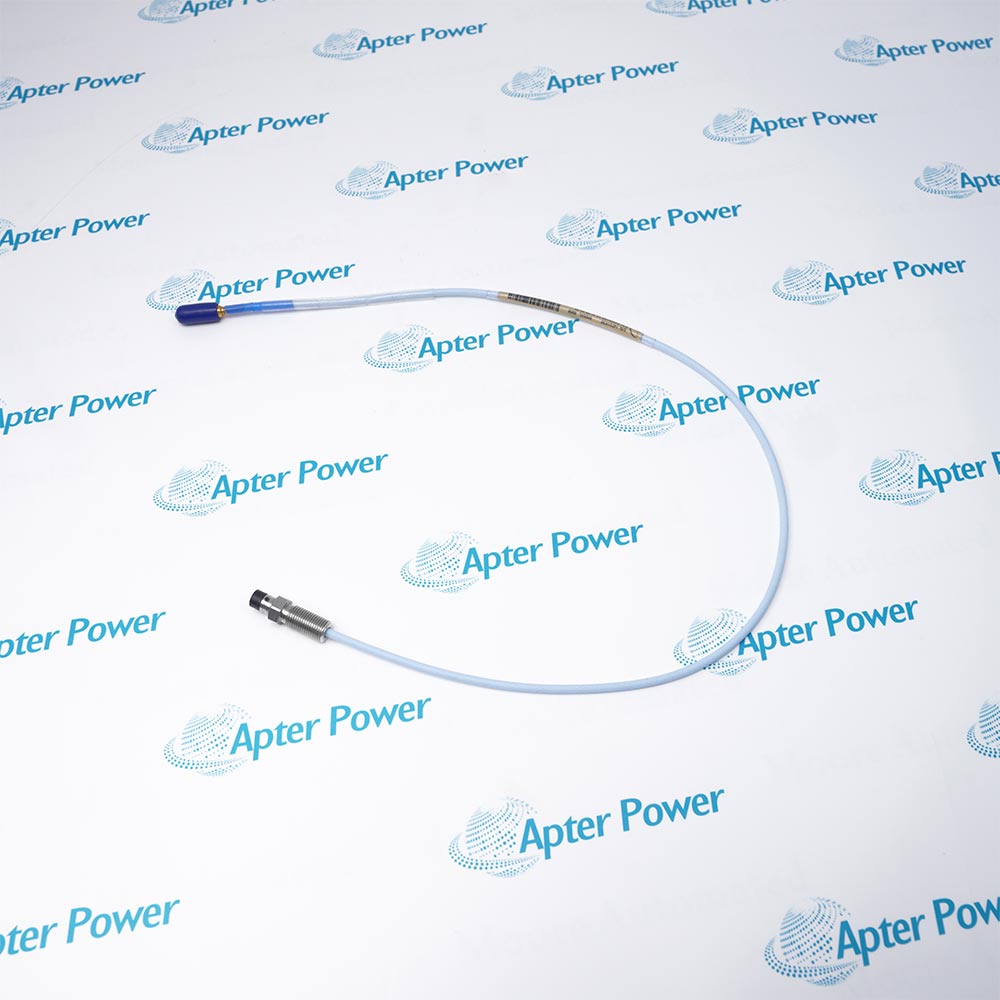
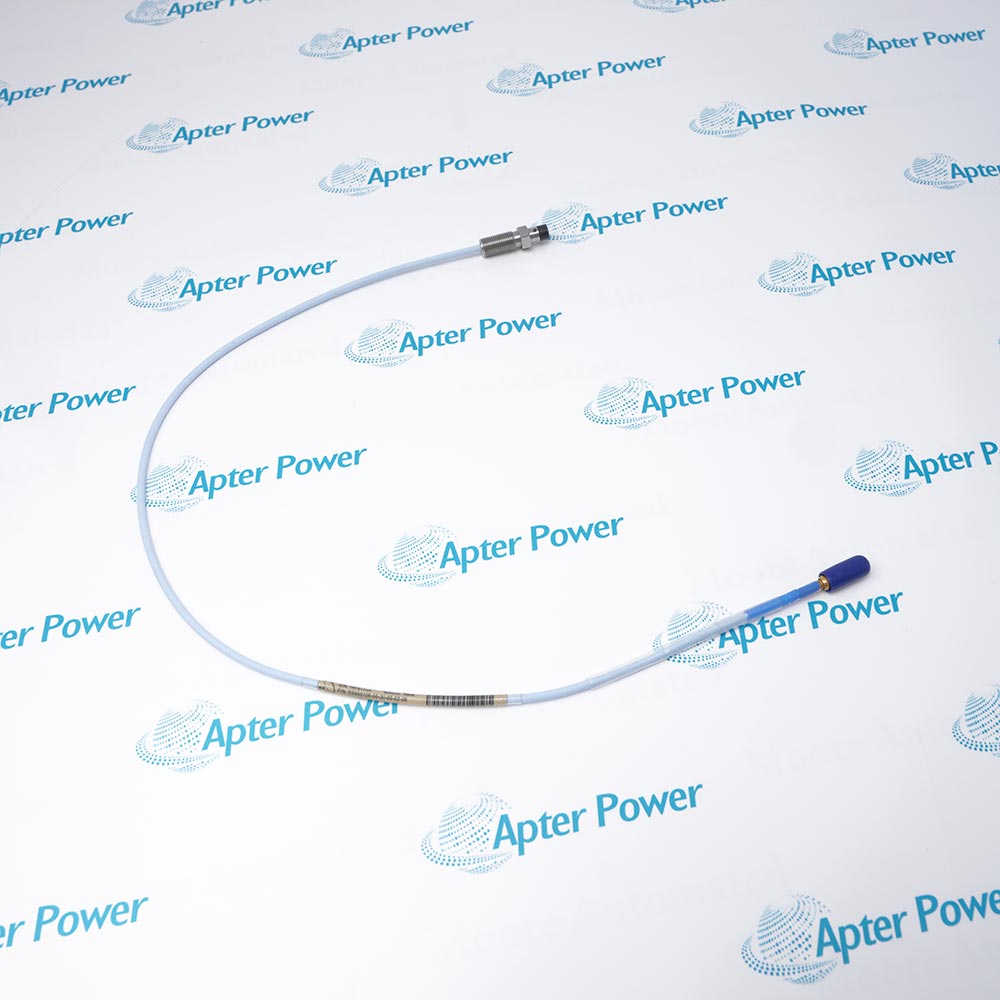
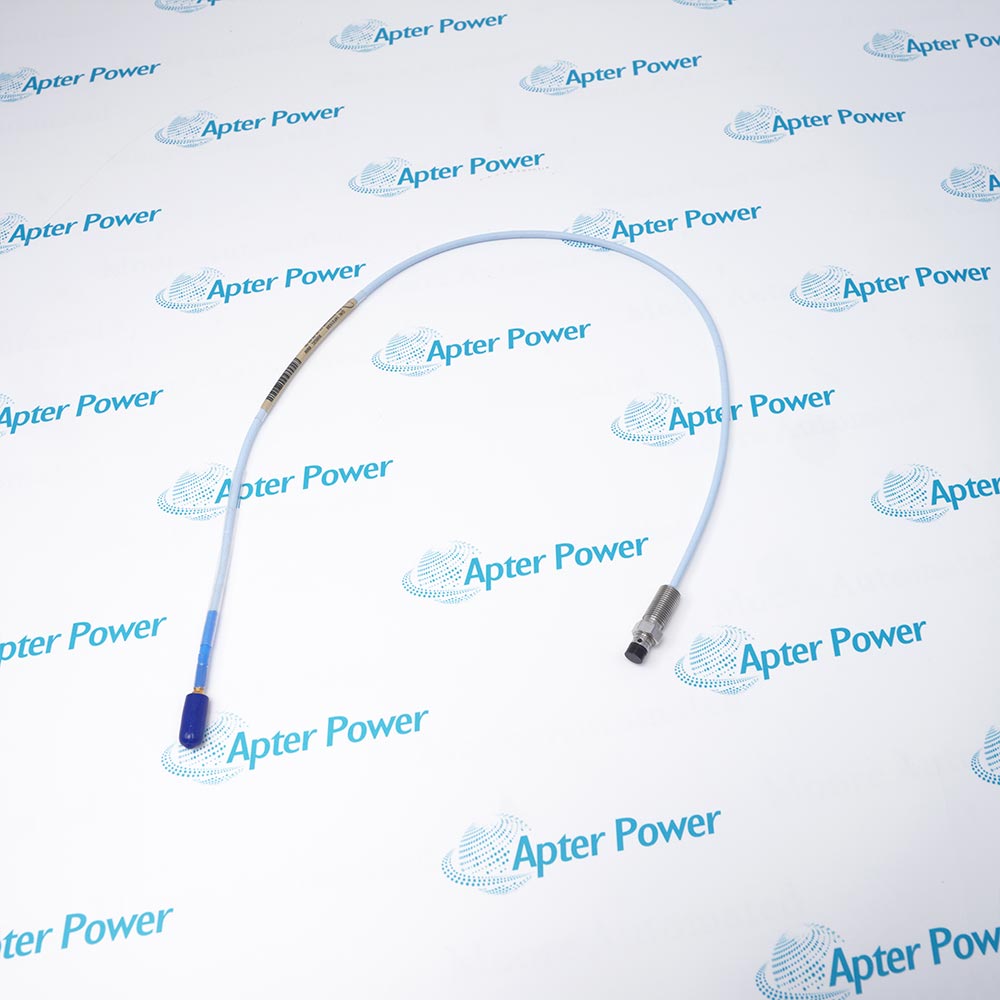
- Features Compact Reverse Mount Design With Miniature ClickLoc Connector And 0.5 Meter Cable.
The Bently Nevada RS900106-05-30-05-02-00 9000XL 8mm Proximity Probe is a high-precision eddy current sensor used for monitoring critical rotating machinery, including turbines, compressors, and pumps. It accurately measures shaft vibration, axial displacement, speed, and keyphasor signals, providing essential data for machine condition monitoring.
Its compact reverse mount design, with an unthreaded length of 0.5 inches and a total housing length of 3.0 inches, allows flexible installation in tight machine spaces. The included 0.5-meter cable and miniature ClickLoc coaxial connector ensure reliable signal transmission to monitoring systems.
Engineered for harsh industrial conditions, the sensor maintains stable operation in extreme temperatures from -51 °C to +177 °C. The standard version (-00) meets typical industrial certification requirements, providing durable and reliable performance in demanding machinery environments.
The RS900106-05-30-05-02-00 Bently Nevada 9000XL 8mm Proximity Probe may still be available for purchase and support from Apter Power beyond End-Of-Life (EOL) by the manufacturer (OEM).
Bently Nevada RS900106-05-30-05-02-00 9000XL 8mm Proximity Probe Manuals,Datasheets,Link
Important Notice: Other accessories, manuals, cables, calibration data, software, etc. are not included with this equipment unless listed in the above stock item description. All prices are shown in USD.
Bently Nevada RS900106-05-30-05-02-00 9000XL 8mm Proximity Probe Specs
General
- Manufacturer GE / Bently Nevada
- Model RS900106-05-30-05-02-00
- Condition New Original ready stock
- Product Family RS900106-05-30-05-02-05,RS900106-05-30-05-01-00,RS900103-05-30-05-02-00
Important Notice: Other accessories, manuals, cables, calibration data, software, etc. are not included with this equipment unless listed in the above stock item description. All prices are shown in USD.
- Gap Voltage Measurement: Use a multimeter to measure the DC voltage at the preamplifier output. The standard operating point is typically -9V to -10V DC. If the voltage approaches 0V or exceeds -18V, the probe may be in contact with the shaft or has an open circuit.
- Shaft Surface Inspection: Eddy current probes are extremely sensitive to the material being measured. Scratches, rust, or residual magnetism (electromagnetic interference) on the shaft surface can cause runout noise in the vibration signal.
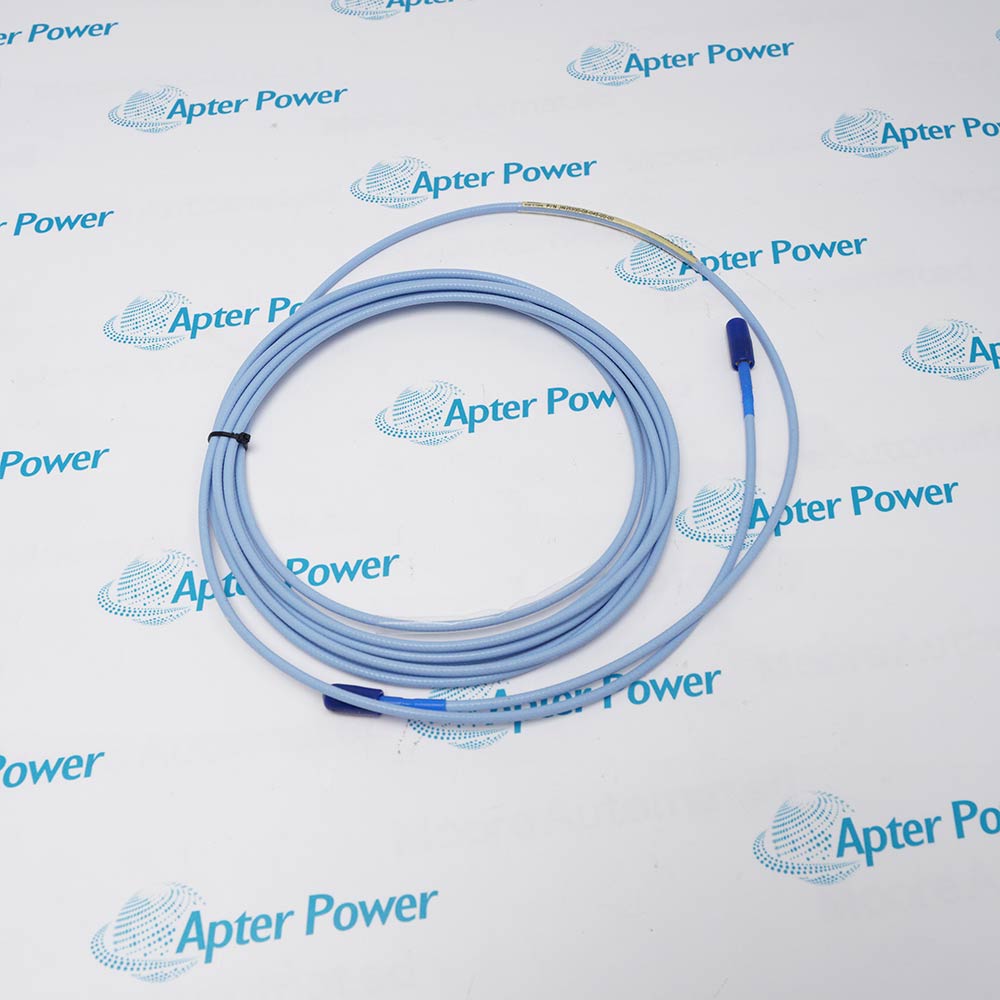
- Coaxial Connector Inspection: Check the gold connector at the connection between the probe and the extension cable for moisture, oil contamination, or looseness. This is the most common cause of signal instability.
- Resistance Test: Disconnect and measure the resistance between the probe's center wire and the outer sheath (typically between 4.0Ω and 11.0Ω, depending on cable length). If the resistance is infinite, the probe's internal coil is broken.
- Zero-point adjustment: During installation, screw the probe in until it touches the shaft surface gently (do not apply force), then screw it out in the opposite direction (typically an 8mm probe corresponds to approximately a 1.27mm/50mils gap) until the preamplifier output voltage reaches approximately -10V DC.
- Cable protection: The probe's cable must be run through a stainless steel flexible conduit (Armor) or protective tubing to prevent oil corrosion and mechanical compression.
- Avoid physical interference: A space of at least 1.5 times the probe diameter (approximately 12mm) should be maintained around the probe head to ensure its electromagnetic field is not interfered with by surrounding bearing bases or metal parts.
- Connector insulation: The connection point between the probe and the extension cable must be covered with heat shrink tubing to prevent the shielding layer from contacting the machine casing and creating a "grounding loop" interference signal.
- Critical rotating equipment monitoring: Widely installed in the bearing housings of steam turbines, centrifugal compressors, and large fans.
- Radial vibration measurement: A pair of probes are mounted at 90° angles (X/Y axis) at the bearing to monitor the shaft's orbital path.
- Thrust bearing displacement: Monitors the longitudinal (axial) movement of the shaft to prevent rotor-stator collisions.
- Keyphasor: Mounted at the keyway on the shaft, it provides a trigger pulse per revolution for calculating rotational speed and analyzing vibration phase.