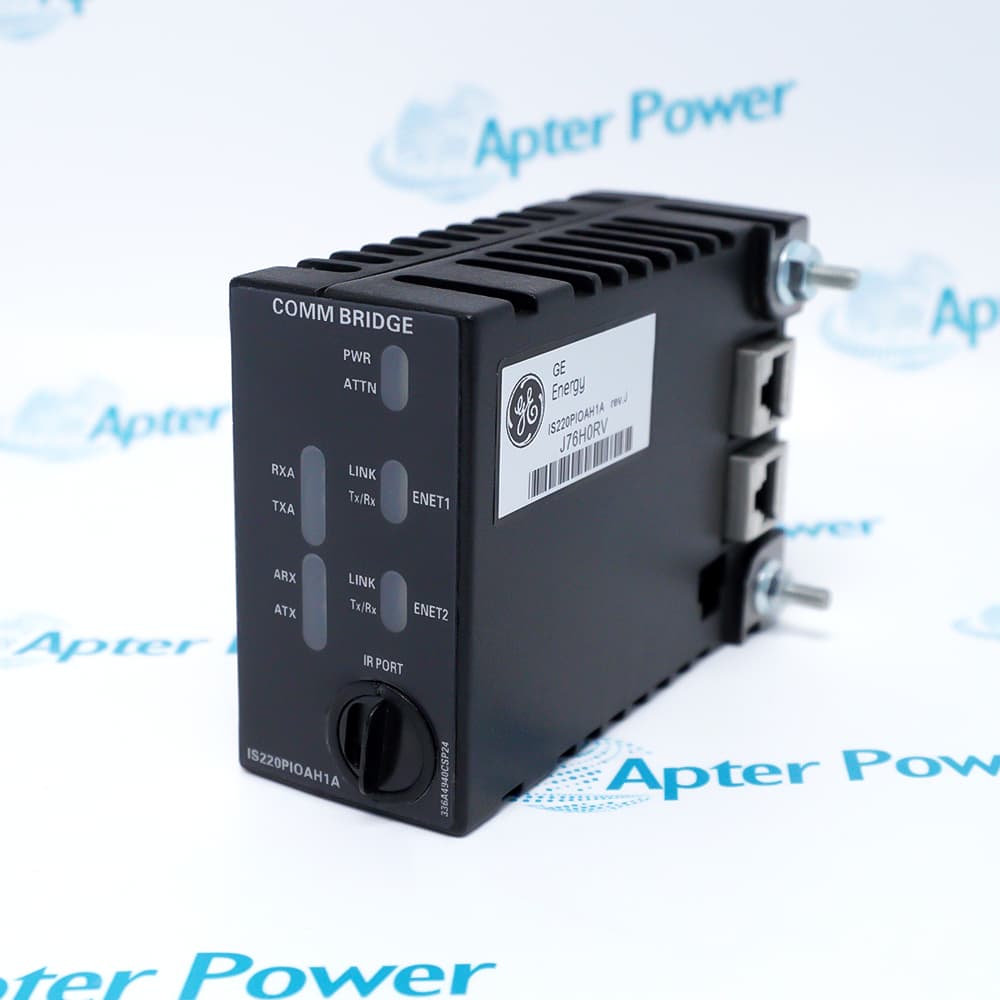
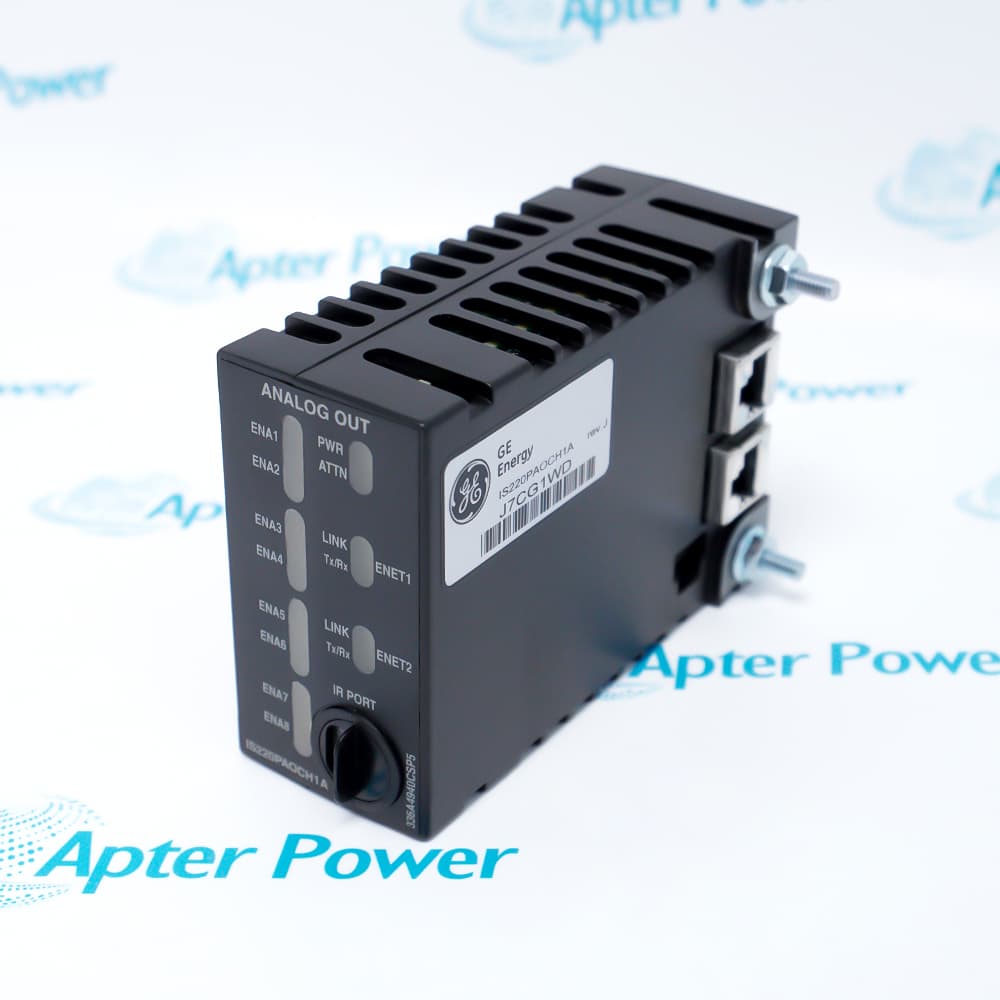
Features:
- Dedicated Hardware-Level PLU Algorithm for Overspeed Prevention
- Peer-to-Peer Multicast Fast Trip Path
- Flexible Simplex/TMR Architecture with High-Accuracy Analog & CT Inputs
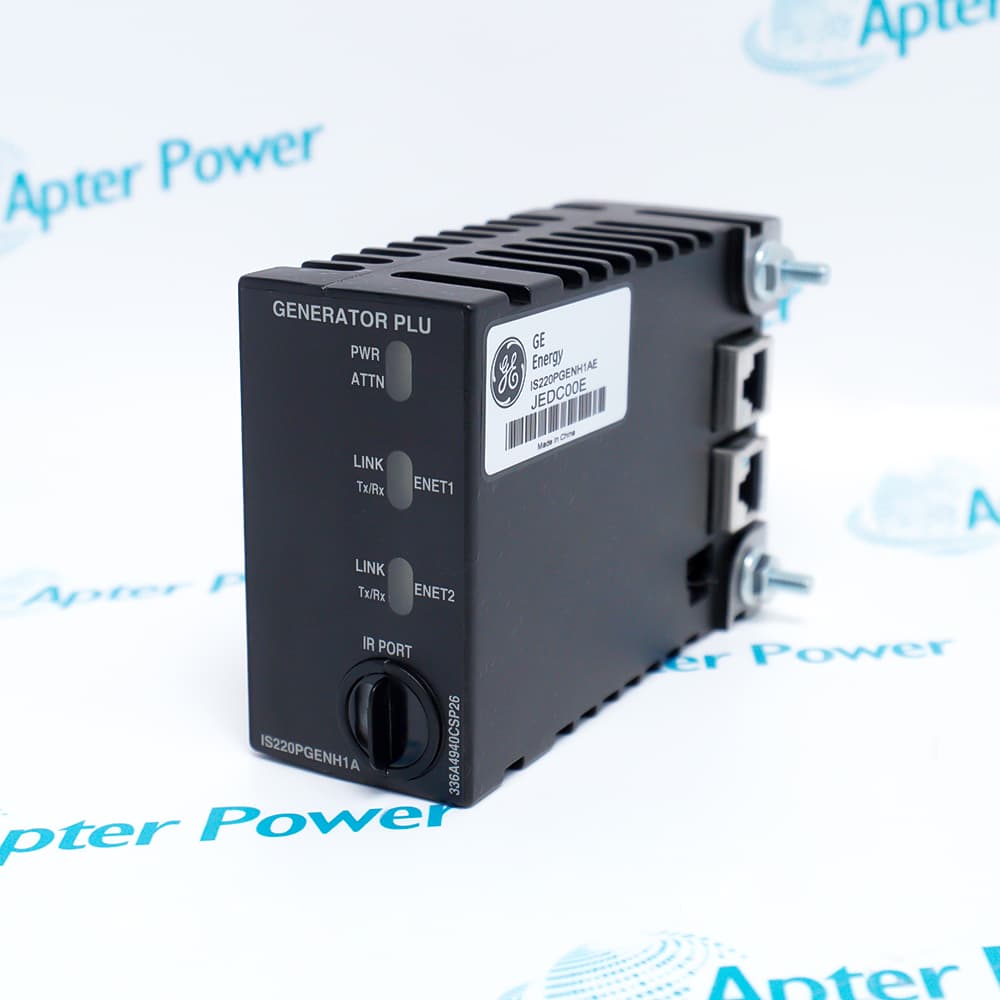
The General Electric IS220PGENH1AE embeds the Power Load Unbalance (PLU) calculation directly in firmware, offloading critical turbine protection from the main controller. It continuously compares steam turbine power (via pressure) to generator electrical power (via CTs) and initiates a trip sequence when imbalance exceeds configured thresholds, preventing catastrophic overspeed.
Unlike traditional I/O that relies on controller signal space, the General Electric IS220PGENH1AE communicates directly with an IS220PDOA output pack using a dedicated peer-to-peer multicast packet. This parallel fast path bypasses normal IONet scan delays, reducing CV/IV solenoid dropout command latency and ensuring staggered relay timing for enhanced turbine protection.
The General Electric IS220PGENH1AE supports both Simplex and TMR configurations for scalable reliability. It features three configurable analog inputs (0-20mA, ±5V, ±10V) for pressure sensors and three 16-bit CT inputs (0-1A or 0-5A RMS) for generator phase current. This enables precise mechanical-to-electrical power comparison with 0.1% full-scale accuracy, even in high-noise environments.
The IS220PGENH1AE General Electric Turbine-Generator Monitor Pack may still be available for purchase and support from Apter Power beyond End-Of-Life (EOL) by the manufacturer (OEM).
General Electric IS220PGENH1AE Turbine-Generator Monitor Pack Manuals,Datasheets,Link
Important Notice: Other accessories, manuals, cables, calibration data, software, etc. are not included with this equipment unless listed in the above stock item description. All prices are shown in USD.
General Electric IS220PGENH1AE Turbine-Generator Monitor Pac
General
- Manufacturer General Electric
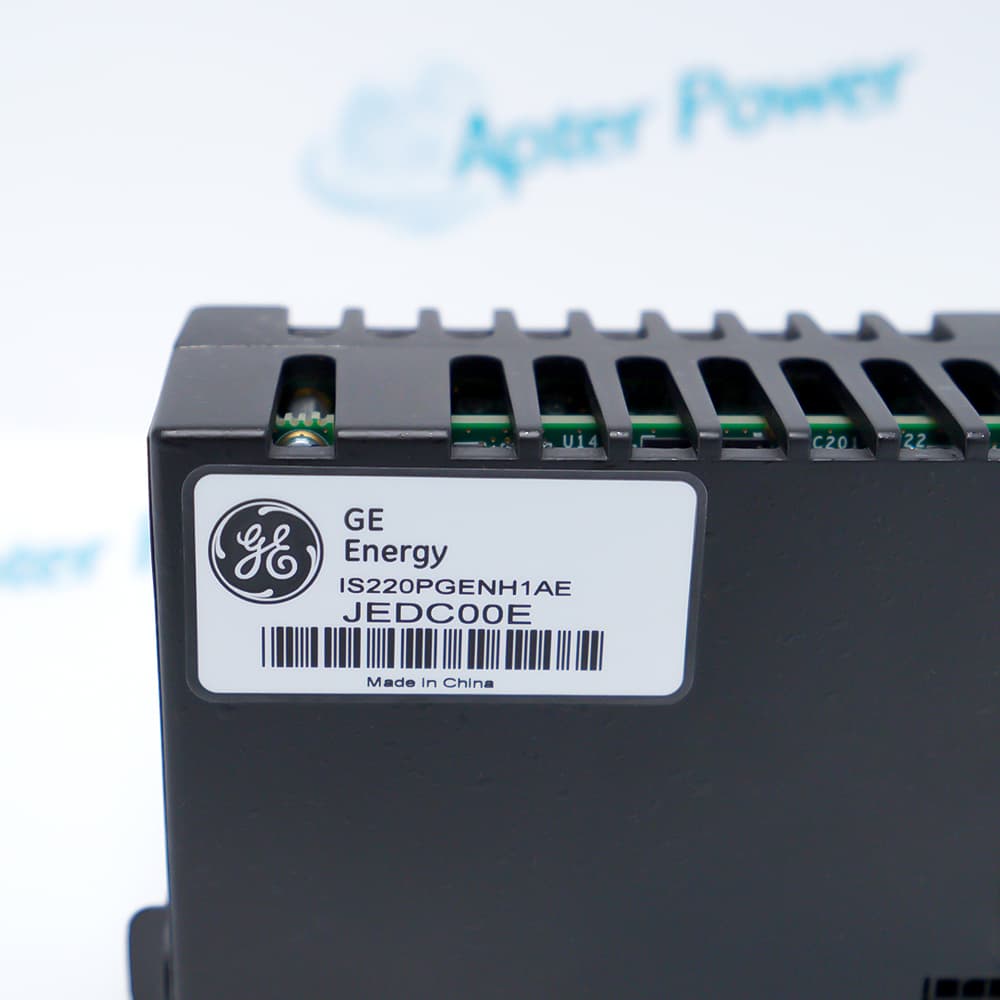
- Model IS220PGENH1AE
- Condition New Original ready stock
- Product Family IS220PTURH1A,IS220PDOAH1B,IS220PRTDH1B
Important Notice: Other accessories, manuals, cables, calibration data, software, etc. are not included with this equipment unless listed in the above stock item description. All prices are shown in USD.
- Steam Turbine Generator Protection: The General Electric IS220PGENH1AE is specifically architected for large steam turbines driving electrical generators. Its core application is Power Load Unbalance (PLU) detection, where it compares steam pressure-derived power to generator electrical power to identify load rejection events.
- Combined Cycle Power Plants (CCPP): In CCPP configurations where a gas turbine exhaust heats a steam turbine's HRSG, the General Electric IS220PGENH1AE provides fast backup overspeed protection if the steam turbine suddenly loses electrical load while the gas turbine continues to produce exhaust.
- Industrial Turbine-Driven Compressors: For applications where a steam turbine drives a large compressor (not a generator), the General Electric IS220PGENH1AE can be configured to compare turbine power to an alternative process variable (e.g., compressor shaft power) via its analog inputs, offering customizable overspeed logic.
- Turbine Retrofit & Upgrade Projects: When upgrading older GE (or third-party) turbine controls to Mark VIe, the General Electric IS220PGENH1AE offers a standardized, pre-engineered solution for PLU protection, simplifying engineering validation and reducing site acceptance test time.
- Real-Time Mechanical vs. Electrical Power Comparison: The General Electric IS220PGENH1AE continuously calculates the per-unit difference between steam turbine pressure (converted to power) and generator phase currents (converted to power). This live value (PLU_Diff_Value) is available for operator trend analysis and predictive diagnostics.
- Autonomous PLU Event Detection & Tripping: When an imbalance (default 40%) persists beyond the configured delay, the General Electric IS220PGENH1AE generates independent PLU_CV_Event and PLU_IV_Event logic signals. It can directly command CV/IV solenoids through a linked PDOA pack via a multicast peer-to-peer packet, bypassing main controller scan delays.
- Staggered Relay Dropout Control: To prevent hydraulic shock, the General Electric IS220PGENH1AE supports configurable dropout timing (0–5 seconds) per relay. This allows control valves (CVs) and intercept valves (IVs) to close in a programmed sequence, minimizing mechanical stress on turbine steam paths.
- Comprehensive I/O Pack & Terminal Board Diagnostics: The General Electric IS220PGENH1AE performs continuous health checks, including its own 28V/18V power supplies, TGNA terminal board ID verification, sensor limits (voltage/current out-of-range), and ADC reference voltage integrity. Any failure sets a global L3DIAG_PGEN alert.
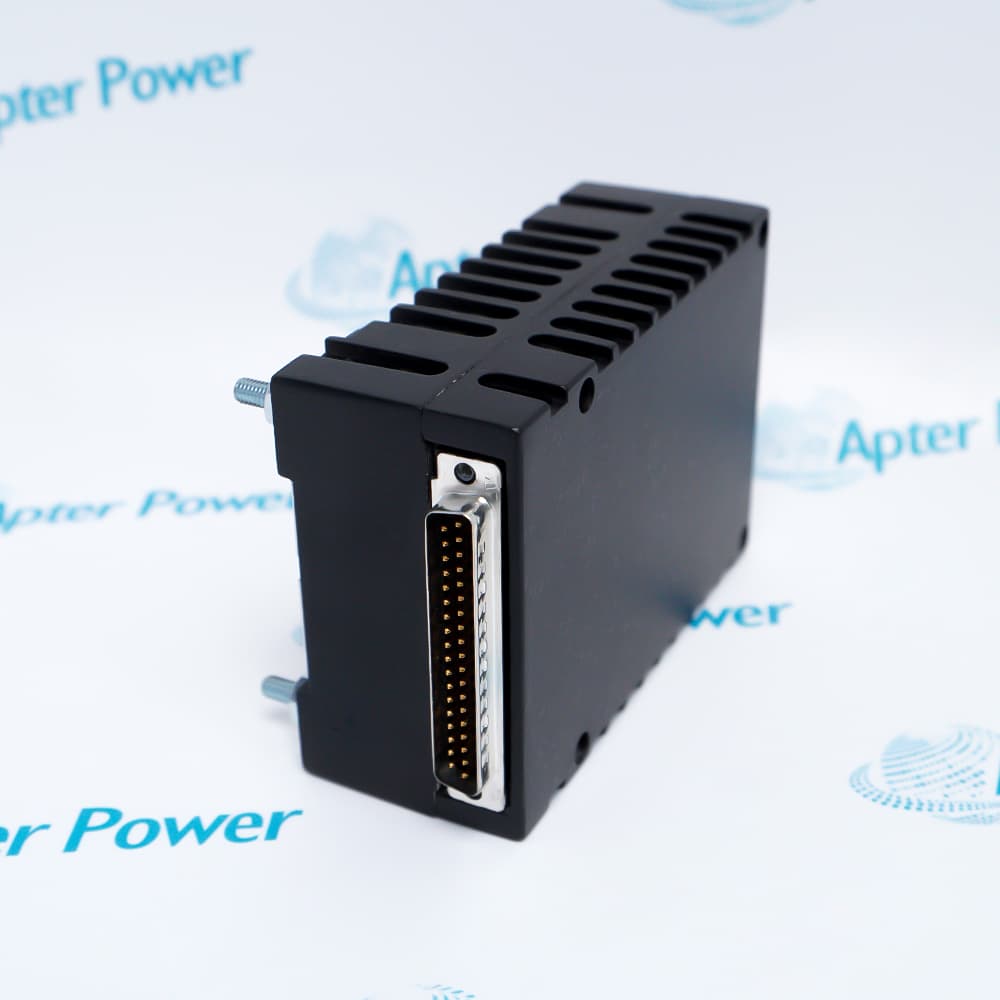
- IS200TGNA Terminal Board: The General Electric IS220PGENH1AE is exclusively compatible with the IS200TGNAH#A terminal board, which provides the necessary burden resistors for CT inputs (1A or 5A), signal conditioning for analog pressure sensors, and electronic ID for hardware verification.
- IS220PDOA Digital Output Pack: For PLU trip execution, the General Electric IS220PGENH1AE must be linked to an IS220PDOA pack via ToolboxST. This link enables multicast peer-to-peer communication, allowing the PGEN to directly command CV/IV relays without controller intervention.
- Mark VIe Controllers (UCCx / UCSx): The General Electric IS220PGENH1AE communicates over the dedicated IONet (R, S, or T networks) using Ethernet Global Data (EGD). It integrates seamlessly with UCCx (CPCI) or UCSx (standalone) controllers running QNX Neutrino, synchronizing via IEEE 1588.
- Primary Trip Terminal Boards (TRLY/TRPG): The final trip path—from the PDOA pack to turbine trip solenoids—uses standard GE TRLYH1B (simplex) or TRLYH1F (TMR) relay terminal boards. The General Electric IS220PGENH1AE’s PLU events are mapped to specific relays on these boards, enabling direct solenoid control.