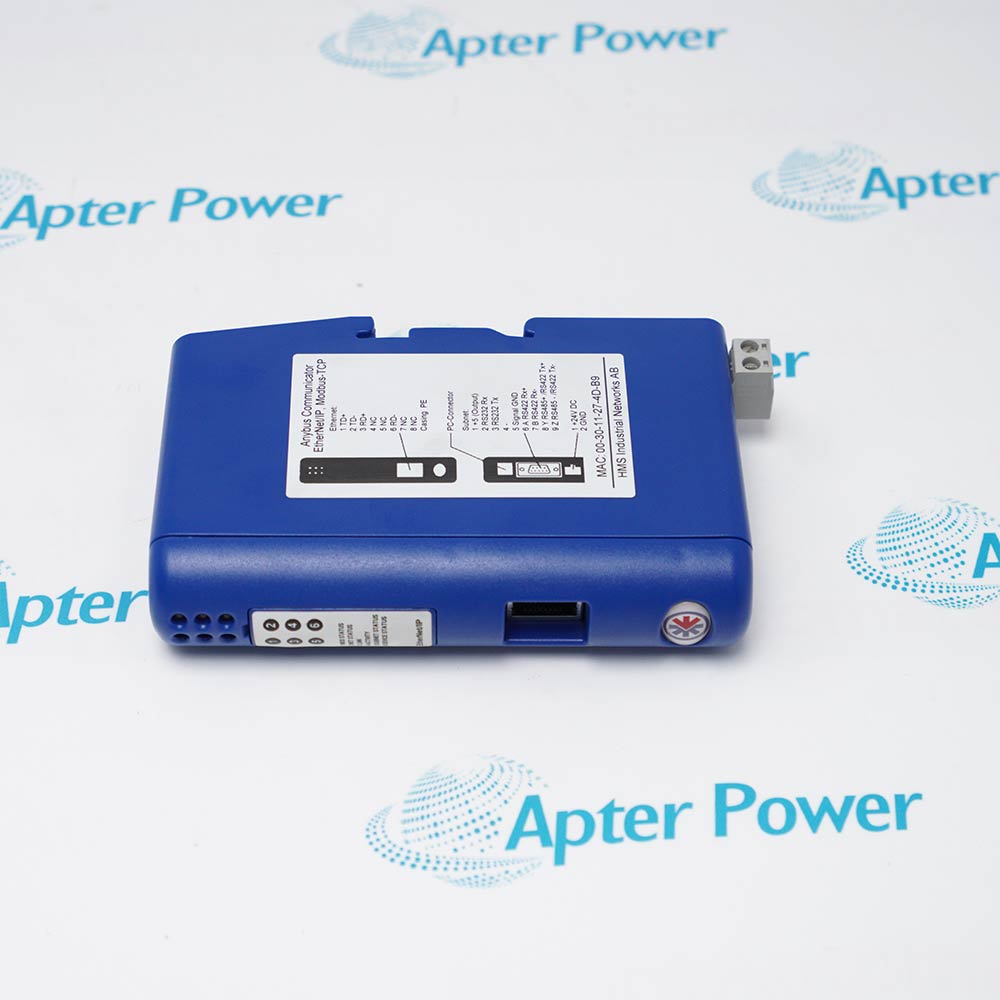
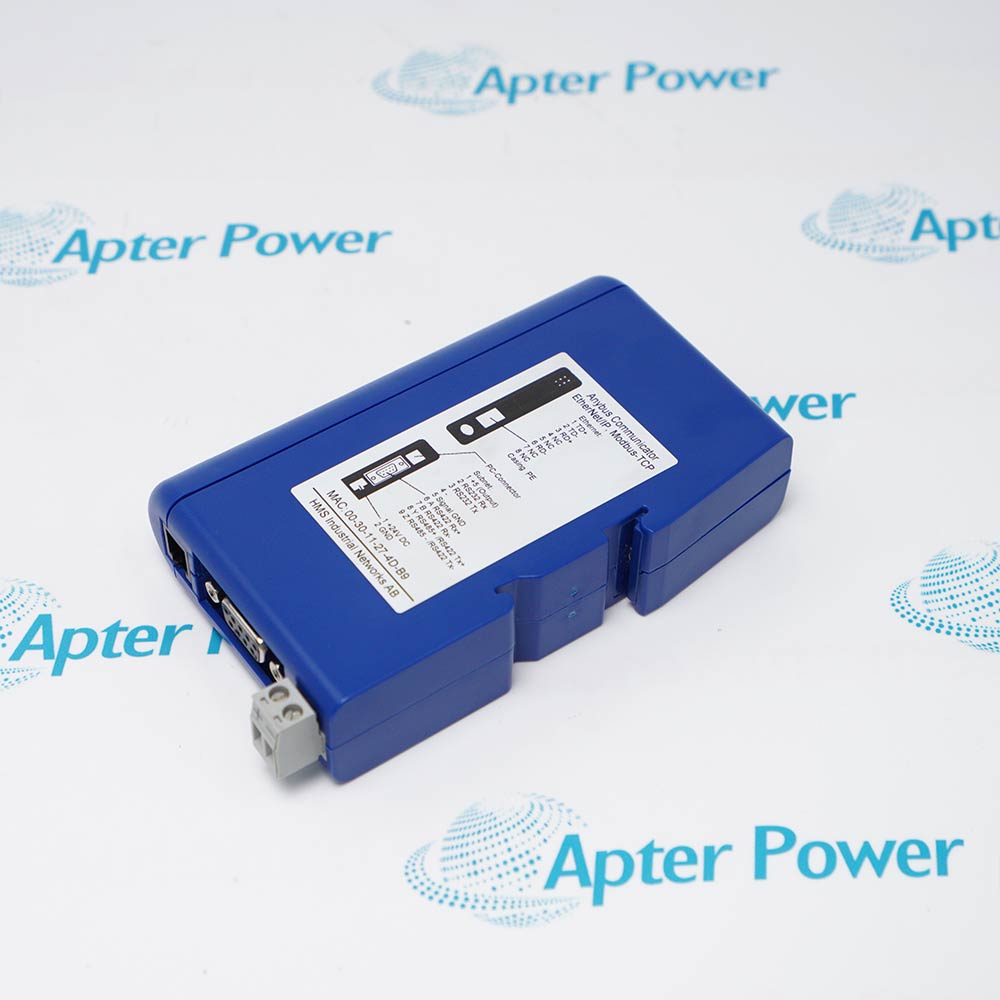
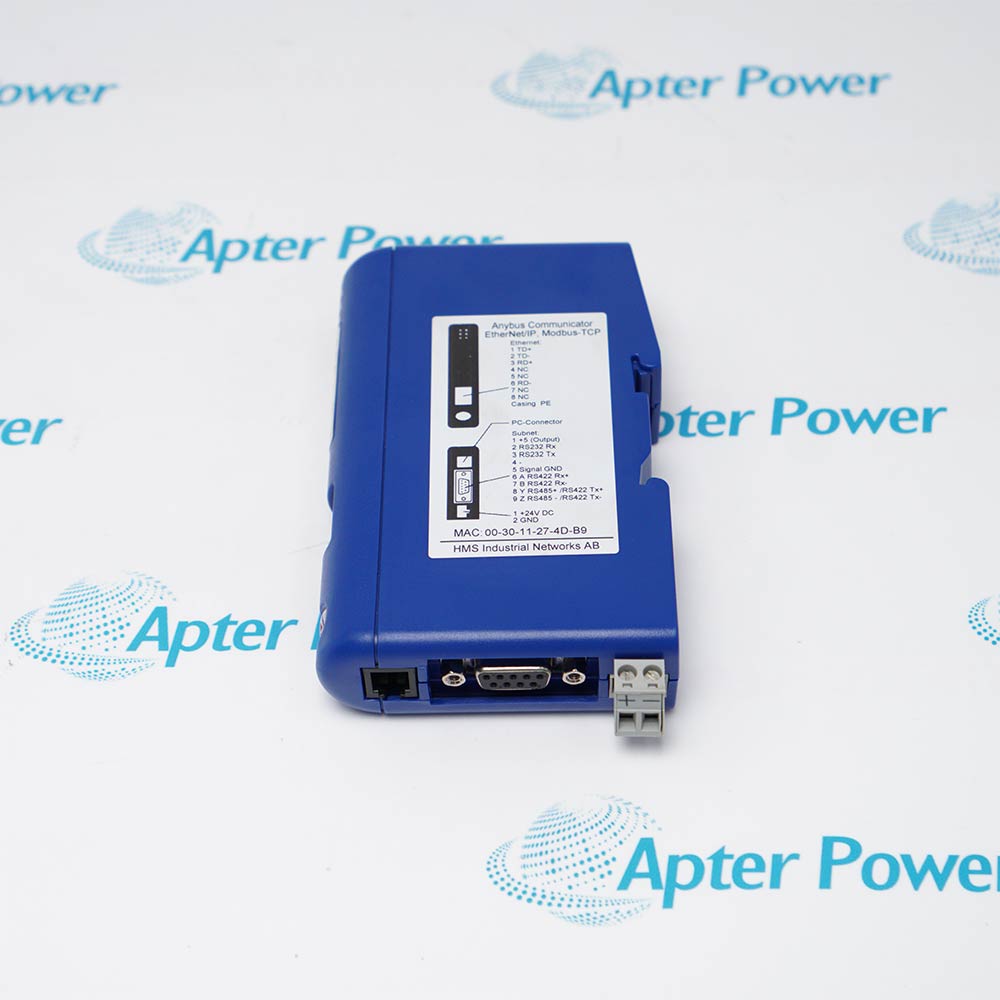
Features:
- HMS Anybus AB7007-C exchanges data between a serial-master channel and an EtherNet/IP adapter interface.
- RS-232, RS-422 and RS-485 connections support Modbus RTU master, DF1 and custom serial transactions.
- The gateway maps serial data into defined EtherNet/IP input and output areas.
The serial side initiates transactions with connected devices instead of waiting as a serial slave.
EtherNet/IP receives the resulting data through the adapter role and returns output values for later serial writes.
DIN-rail mounting, a protected 24 V DC input and an IP20 enclosure define the installation arrangement.
The HMS Anybus AB7007-C Serial Master to EtherNet/IP Protocol Converter may still be available for purchase and support from Apter Power beyond End-Of-Life (EOL) by the manufacturer (OEM).
HMS Anybus AB7007-C Serial Master to EtherNet/IP Protocol Converter Manuals,Datasheets,Link
Important Notice: Other accessories, manuals, cables, calibration data, software, etc. are not included with this equipment unless listed in the above stock item description. All prices are shown in USD.
Building the serial polling side
- Electrical mode: The serial port can operate as RS-232, RS-422 or RS-485.
- Protocol role: Modbus RTU and DF1 transactions are initiated by the gateway's master channel.
- Node count: The configured serial network can contain as many as 31 addressed devices.
- Data collection: Read transactions place returned device values into the serial input area.
Moving collected values onto the control network
- Adapter role: EtherNet/IP scanners address the gateway as an adapter or slave.
- Input image: Collected serial values occupy up to 509 bytes presented to EtherNet/IP.
- Output image: As many as 505 EtherNet/IP output bytes can supply values for serial write commands.
- Device profile: The available EDS file identifies the gateway to the network configuration tool.
Establishing the Ethernet-side address
- Physical controls: Eight documented DIP switches participate in the IP-address selection method.
- Network port: The RJ45 interface operates at 10 or 100 Mbit/s.
- Address match: The selected address must share the control network's intended subnet.
- Role check: Address setup does not change the gateway from EtherNet/IP adapter operation.
Supplying and mounting the gateway
- Power input: A two-pin Phoenix connector accepts 24 V DC within the documented tolerance.
- Protection: Reverse-polarity and short-circuit protection apply at the supply connection.
- Rail mounting: The housing attaches to an EN 50022 DIN rail.
- Operating space: The IP20 unit remains within 0–55 °C and non-condensing humidity limits.