Ask our team:
  • Phone: +86 181 0690 9650
  • E-Mail sales1@apterpower.com

51401946-100

/ 4.9
1001 reviews | Need a Specific Revision?
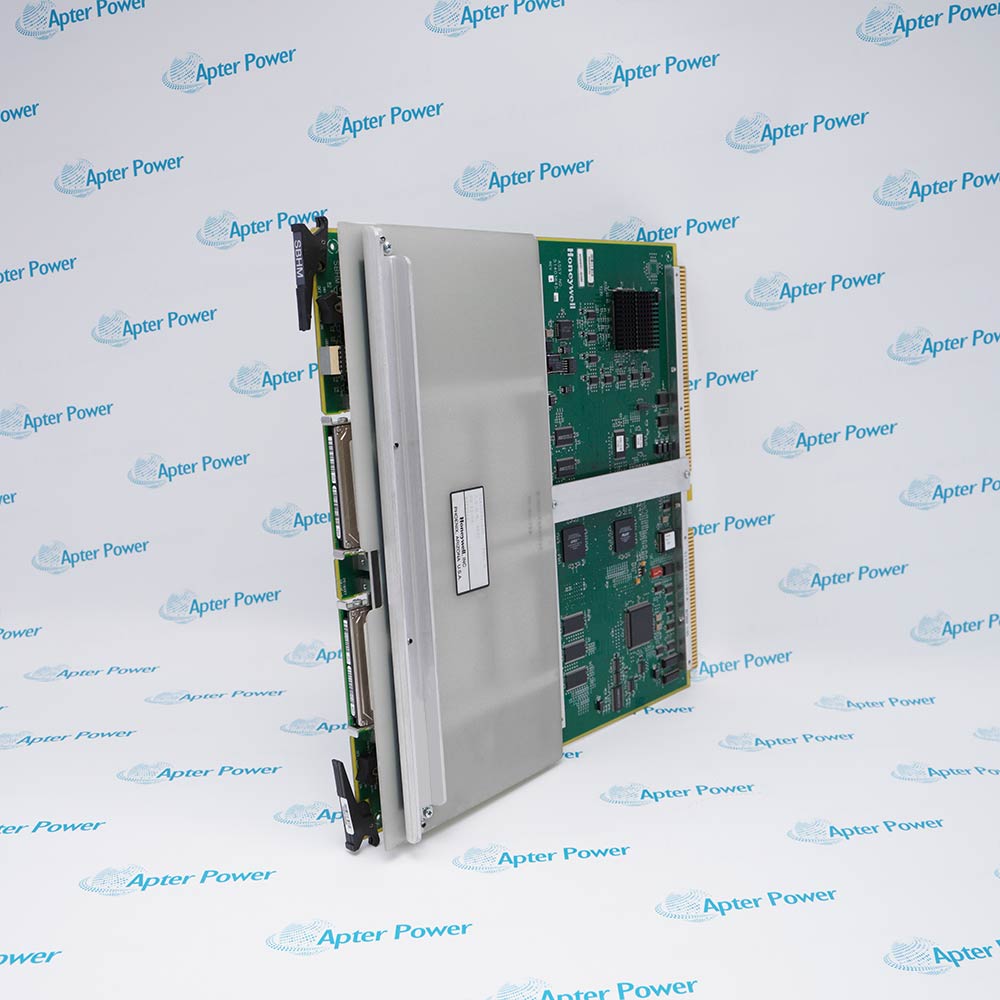
The Honeywell 51401946-100 K4LCN Board is a 4-Megaword memory module designed for LCN (Local Control Network) node address selection and system configuration. The Honeywell 51401946-100 K4LCN Board supports reliable node addressing through jumper-based binary logic and is used in industrial control network architecture.
Get a quick price for 51401946-100
Quantity
*E-mail
Company
*Mobile
*Content
Upload (gif, jpg, jpeg, png, bmp, doc, docx, xls, xlsx, ppt, pdf, csv)

Technical specifications for 51401946-100

  • Manufacturer:
    Honeywell
  • Part Number:
    51401946-100
  • Product Family:
    Honeywell DCS
  • Product Type:
    K4LCN Board
  • Function:
    LCN node address selection
  • Memory Capacity:
    4-Megaword memory board
  • Pinning Block:
    TS2
  • Pinning Block Location:
    Coordinate 21E on board
  • Address Encoding Logic:
    Absence of jumper represents binary “1”
  • Parity Requirement:
    Must be an odd number
  • System Role:
    Supports LCN (Local Control Network) node addressing configuration
  • Weight:
    1.02 kg
  • Estimated shipping dimensions:
    36.6x36.4x2cm
  • Tariff Code:
    8406812000
  • Country of origin:
    USA
  • Place of shipment:
    Xiamen, Fujian, China
By purchasing this item, you agree to the Terms & Conditions, ApterPower is not an authorized distributor for listed manufacturers or tradenames and therefore the manufacturer's warranty does not apply. All our products come with ApterPower's 1-year warranty.

More Information

Overview Manuals Specifications Application Structure Operation & Maintenance

Features:

  • Provides 4-Megaword memory capacity to support stable LCN node configuration and system addressing functions
  • Uses jumper-based binary encoding where absence of jumper represents logic “1” for flexible field configuration
  • Ensures data integrity through mandatory odd parity requirement in LCN node address selection
The Honeywell 51401946-100 K4LCN Board is designed for use in LCN-based distributed control systems where precise node addressing is essential. It supports structured configuration of communication nodes across industrial automation networks. The Honeywell 51401946-100 K4LCN Board integrates memory and addressing logic to ensure stable system operation. Its design allows technicians to configure network nodes efficiently during installation or maintenance. This makes it an important part of Honeywell’s control system architecture.

In industrial applications, the Honeywell 51401946-100 K4LCN Board plays a key role in maintaining reliable communication between control units. It is widely used in environments that require consistent system coordination and accurate data exchange. The Honeywell 51401946-100 K4LCN Board supports jumper-based configuration, simplifying field setup while maintaining system reliability. Its structured addressing method helps reduce configuration errors in complex network systems. As a result, it is well suited for large-scale automation projects.

The Honeywell 51401946-100 K4LCN Board is also valued for its deterministic addressing logic and memory support. It ensures that each node within the LCN system is properly identified and configured. The Honeywell 51401946-100 K4LCN Board helps improve system stability by enforcing parity rules and structured configuration procedures. Its reliable performance makes it suitable for demanding industrial environments. This ensures long-term operational consistency in distributed control applications.

The 51401946-100 Honeywell K4LCN Board may still be available for purchase and support from Apter Power beyond End-Of-Life (EOL) by the manufacturer (OEM).
Honeywell 51401946-100 K4LCN Board Manuals,Datasheets,Link Important Notice: Other accessories, manuals, cables, calibration data, software, etc. are not included with this equipment unless listed in the above stock item description. All prices are shown in USD.
Honeywell 51401946-100 K4LCN Board Specs

General

  • Manufacturer Honeywell
  • Model 51401946-100
  • Condition New Original ready stock
  • Product Family 51401052-100,51400667-100,51401288-100
Important Notice: Other accessories, manuals, cables, calibration data, software, etc. are not included with this equipment unless listed in the above stock item description. All prices are shown in USD.
  • Energy Refining: Serving as the core processing unit of the Local Control Network (LCN) in the TDC 3000 Distributed Control System (DCS) of large oil refineries or chemical plants, maintaining the automated operation of production lines.
  • Power Dispatch: Used in power plant monitoring and data acquisition systems, processing logic control commands for generator sets to ensure smooth grid load switching.
  • System Maintenance: Serving as a critical replacement for outdated automated systems, helping companies extend the service life of existing TDC 3000 equipment and avoid costly overall upgrades.
  • Data Integration: Bridging the communication gap between lower-level equipment and upper-level management workstations (such as Universal Stations), responsible for real-time transmission of process data and command issuance.
  • Kernel Integration: Integrating previously distributed processor cores and network interface functions onto a single board, significantly improving rack space utilization.
  • Computing Engine: Equipped with an industrial-grade Motorola processor, designed for 24/7 uninterrupted industrial computing environments.
  • Communication Hub: Acts as the "brain" of nodes in the LCN network, coordinating the synchronous operation of other modules within the rack.
  • Architectural Heritage: Continues Honeywell's classic board design standards, ensuring compatibility with the slot mechanical structure of earlier systems.
  • Address Setting: Precisely defines the unique identifier of this node in the control network via onboard jumpers or in conjunction with the rear I/O board.
  • Module Interchange: Supports rapid replacement between the same model, reducing factory downtime due to hardware failures.
  • Status Monitoring: Onboard indicator lights provide real-time feedback on operating, warning, or failure status, facilitating intuitive inspection by technicians.
  • Support Management: Requires use with a specific memory daughter card; data cache depth can be adjusted according to system load requirements.
Description
The Honeywell 51401946-100 K4LCN Board is an essential component within Honeywell’s LCN architecture, specifically designed to manage node address selection for system communication. It integrates a 4-Megaword memory structure that supports stable data handling and configuration tasks within distributed control environments. As a core part of network setup, the Honeywell 51401946-100 K4LCN Board ensures accurate identification and organization of control nodes across the system.

In terms of configuration logic, the Honeywell 51401946-100 K4LCN Board uses a jumper-based addressing method where the absence of a jumper represents a binary “1.” This simple yet effective encoding structure allows technicians to configure node addresses directly on the board. The TS2 pinning block, located at coordinate 21E, serves as the central interface for this configuration process, making the Honeywell 51401946-100 K4LCN Board highly practical for field setup and maintenance operations.

From a system functionality perspective, the Honeywell 51401946-100 K4LCN Board plays a critical role in ensuring correct LCN node addressing with strict parity control requirements. The system requires odd parity, which helps maintain data integrity and reduces the risk of addressing errors in network communication. Compared with other LCN-related hardware modules in the same Honeywell family, the Honeywell 51401946-100 K4LCN Board is particularly focused on memory-supported address configuration, offering a more structured and reliable approach to node mapping.

In industrial environments, the Honeywell 51401946-100 K4LCN Board is widely used in distributed control systems where accurate network communication is essential. Its robust memory capacity and deterministic addressing logic make it suitable for complex automation systems in industries such as petrochemical processing, power generation, and large-scale manufacturing. The Honeywell 51401946-100 K4LCN Board ensures consistent system coordination by maintaining precise node identification across the LCN network.
Alternative Names
51402755-100 51403519-160 51201645-800 51201645-400 51401551-800
Exceptional Service

Our Mission

  • 100% Satisfaction

    We believe expertise is priceless. With over 20 years of experience, and top engineers on staff, we can help you solve or avoid problems that threaten your business.
  • Trust Guaranteed

    Not only do we have a vast inventory, our team makes sure every piece of equipment is in working condition. Your purchases are also backed by our Warranty.
  • Expertise

    Time is money, especially when your equipment is down. We work quickly to get your equipment on its way so you can get it back up and running.

FAQS

The following is a list of questions commonly asked by our customers. Please contact us if you have a question about our process that is not answered below.
Why is parity important in the Honeywell 51401946-100 K4LCN Board?
Odd parity is required to ensure data integrity and reduce addressing errors in the Honeywell 51401946-100 K4LCN Board LCN configuration process.
Where is the TS2 pinning block located on the Honeywell 51401946-100 K4LCN Board?
The TS2 pinning block is located at coordinate 21E on the board, providing the main interface for configuration of the Honeywell 51401946-100 K4LCN Board.
How does the Honeywell 51401946-100 K4LCN Board support system communication?
It ensures correct node addressing within the LCN network, allowing the Honeywell 51401946-100 K4LCN Board to maintain proper system communication structure.
How does the Honeywell 51401946-100 K4LCN Board encode addresses?
The Honeywell 51401946-100 K4LCN Board uses a jumper-based system where the absence of a jumper represents a binary “1” for address configuration.

You May Also Like