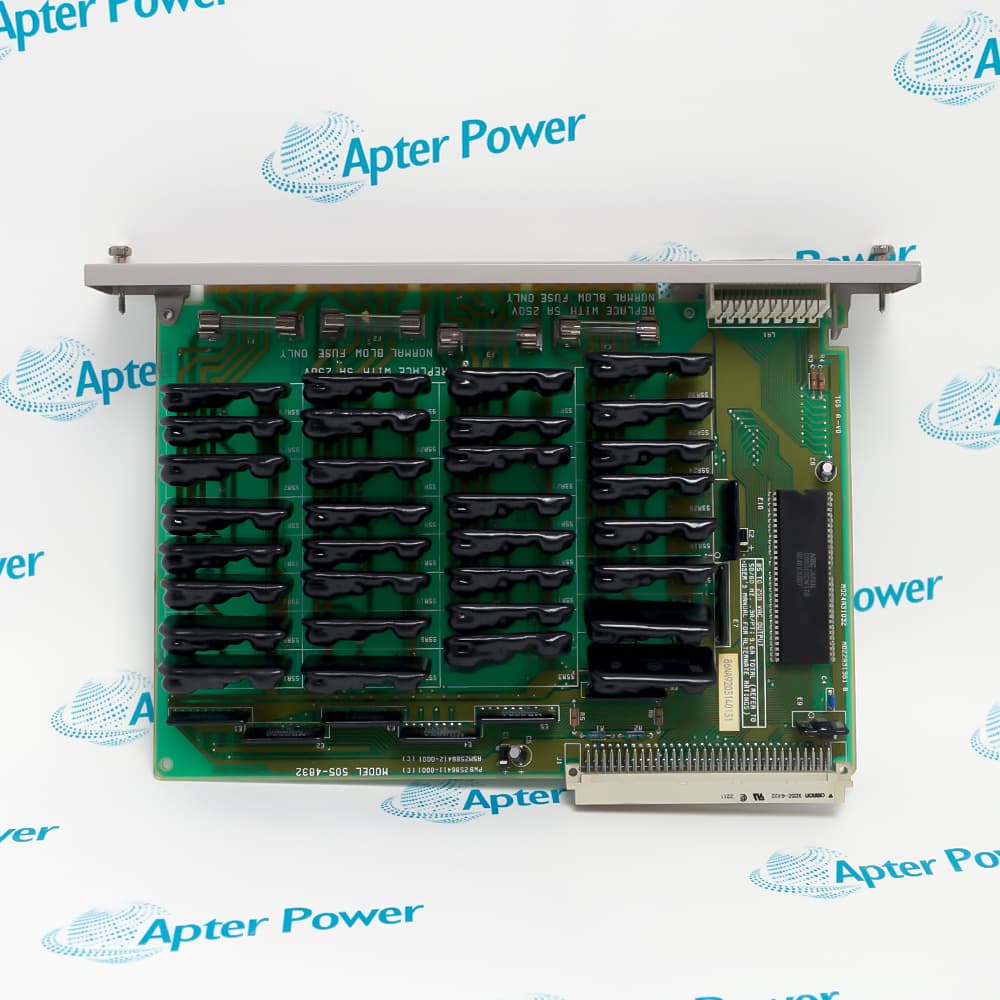
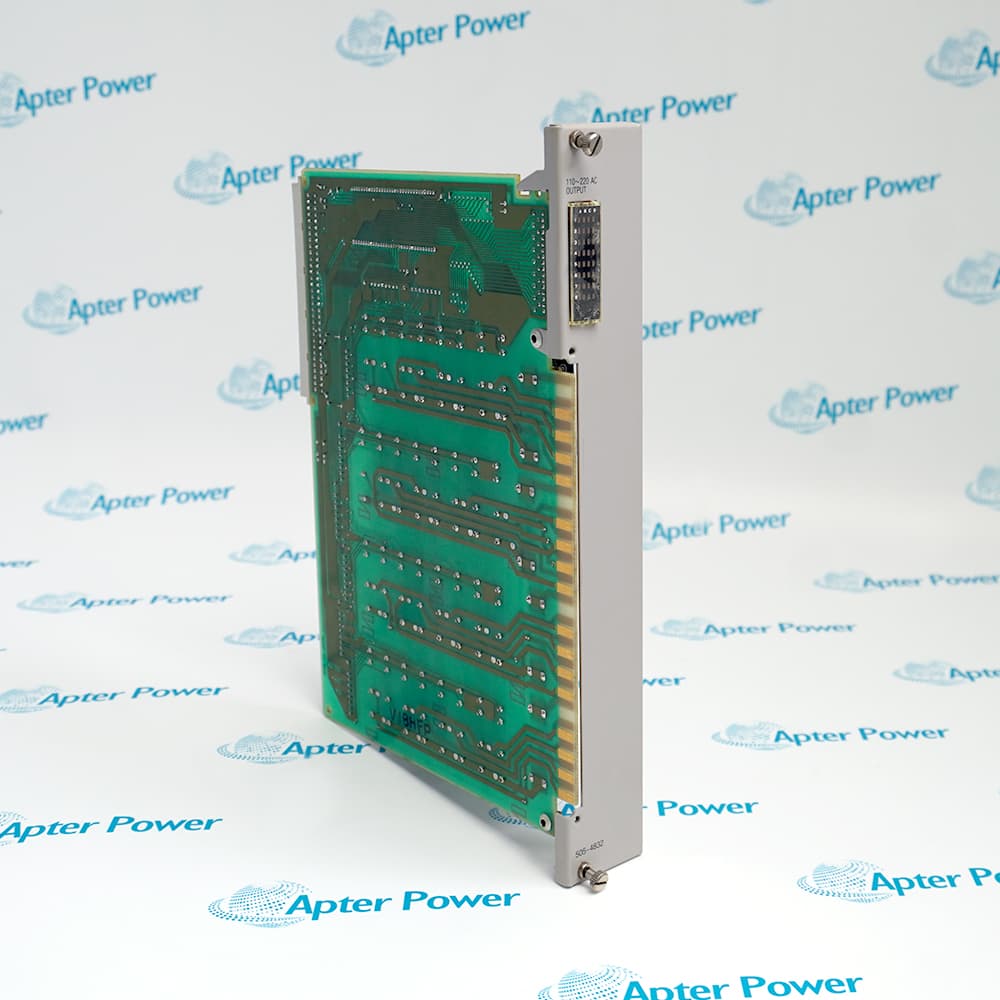
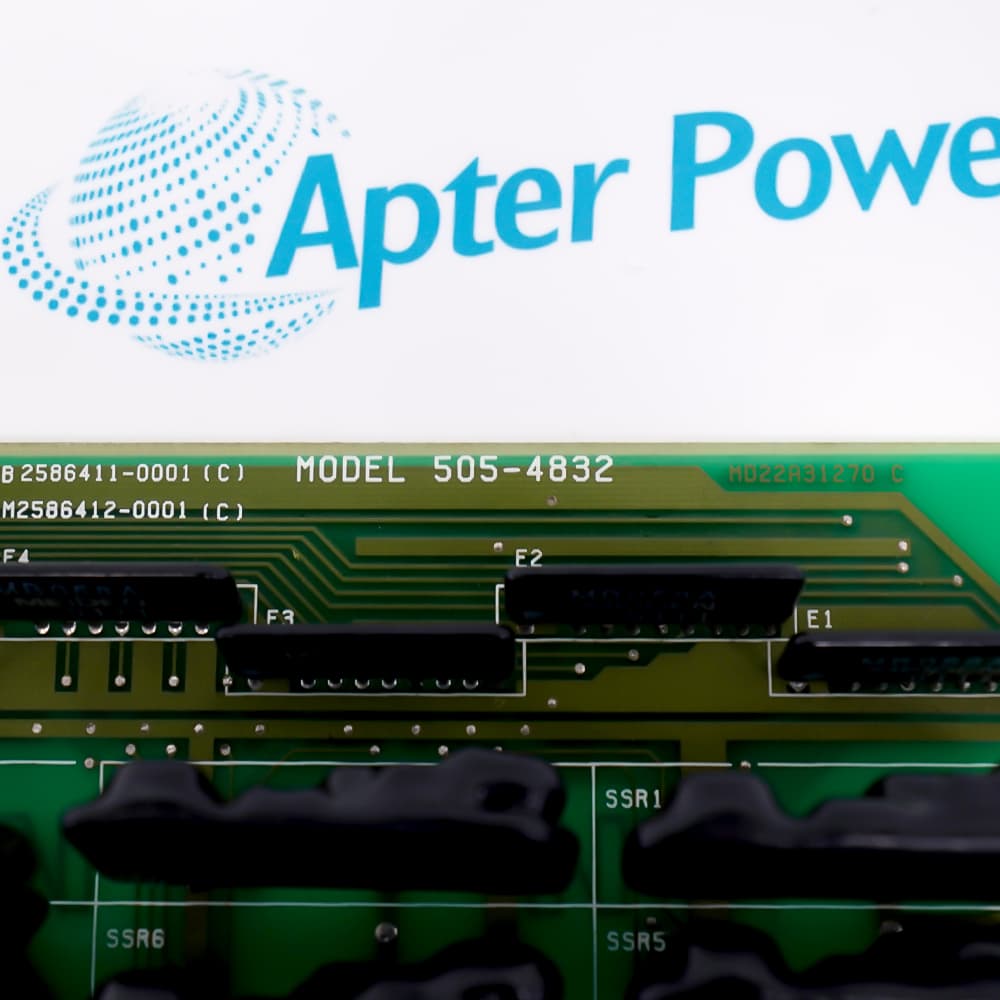
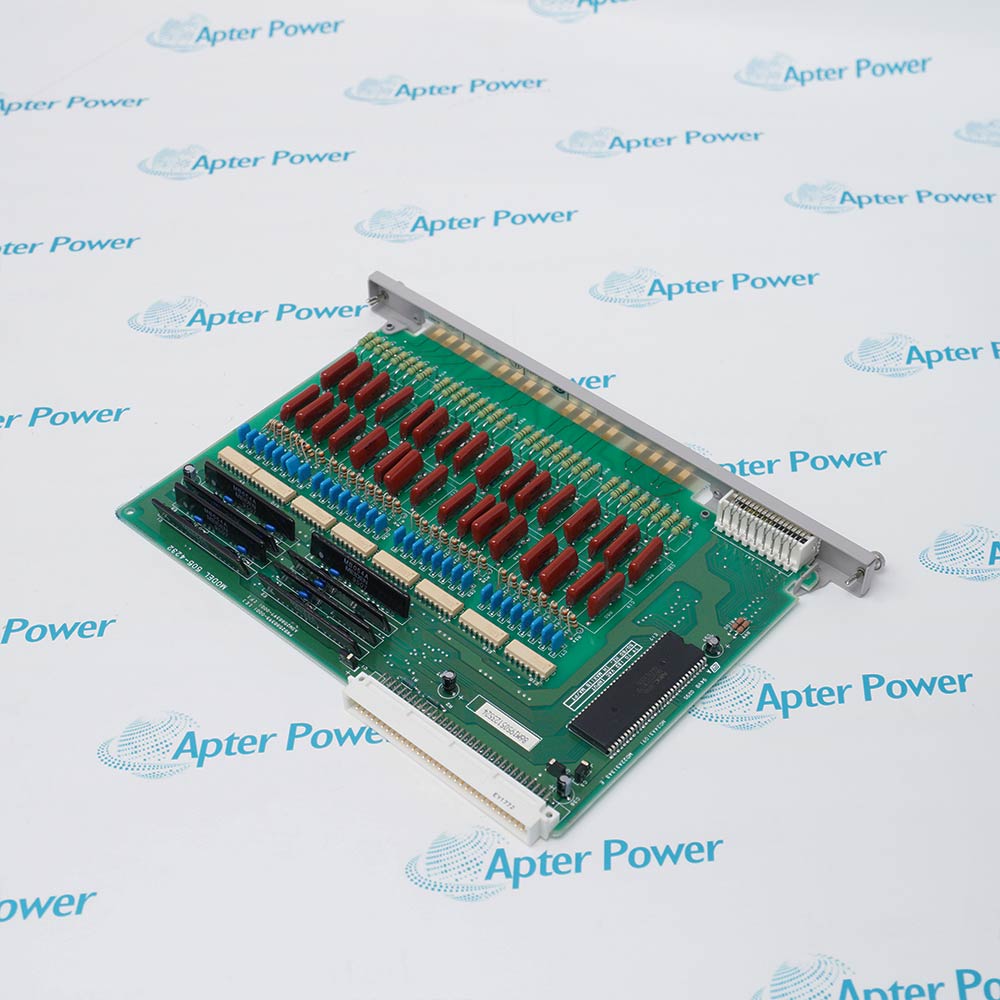
505-4832
505-4832
505-4832
505-4832
505-4832
505-4832
Ask our team:
  • Phone: +86 181 0690 9650
  • E-Mail sales1@apterpower.com
  • Lifecycle status

    Active / Available from OEM
    Apter Power reviews exact identity, condition, documentation, and quotation availability.

505-4832

/ 4.9
1001 reviews | Need a Specific Revision?
Siemens 505-4832 is a 32-point AC output module for switching documented line-voltage field loads in SIMATIC/TI 505 control systems.
In Stock
Ships by Wednesday, October 28
Fast Shipping Available
Get a quick price for 505-4832
Quantity
*E-mail
Company
*Mobile
*Content
Upload (gif, jpg, jpeg, png, bmp, doc, docx, xls, xlsx, ppt, pdf, csv)

Technical specifications for 505-4832

  • Manufacturer:
    Siemens
  • Part Number:
    505-4832
  • Product Family:
    SIMATIC TI505 Input/Output Modules
  • Product Type:
    32-Point AC Output Module
  • Stock:
    1
  • Output points:
    32
  • Rated output class:
    100–230 VAC
  • Operating voltage range:
    85–265 VAC
  • Minimum load:
    50 mA per point
  • Line frequency:
    47–63 Hz
  • Maximum turn-on delay:
    2 ms
  • Maximum turn-off delay:
    11 ms
  • Module base power:
    5 W maximum
  • Output characteristic:
    Non-latching, unprotected
  • Specified fuse:
    5 A, 250 V normal-blow
  • Weight:
    0.66 kg
  • Estimated shipping dimensions:
    4x18.6x26.5cm
  • Tariff Code:
    Please confirm the destination before shipping
  • Country of origin:
    Germany
  • Place of shipment:
    Xiamen,Fujian,China
By purchasing this item, you agree to the Terms & Conditions, ApterPower is not an authorized distributor for listed manufacturers or tradenames and therefore the manufacturer's warranty does not apply. All our products come with ApterPower's 1-year warranty.

More Information

Overview Manuals Load Switching Sequence Timing Protection Design Product Applications

Features:

  • Output density: thirty-two AC points consolidate line-load control in one module
  • Switching boundary: non-latching outputs require the documented load and protection design
  • Sequence planning: published on/off delays support controlled machine timing review
Siemens positions 505-4832 as an AC output resource for the established SIMATIC/TI 505 control platform.

Its switching role connects controller decisions to line-voltage field loads while keeping point assignments inside the installed rack design.

Selection must preserve the complete order code, electrical load behaviour, protection scheme, wiring record, and timing needs of the controlled process.

Apter Power supports document review, quotation, and procurement for the Siemens 505-4832 32-Point AC Output Module.
Siemens 505-4832 32-Point AC Output Module Manuals,Datasheets,Link
Important Notice: No qualified exact-model English PDF is attached. Use the complete product model in every document request.
  • Thirty-two commands: the module lets one rack position serve many independently assigned AC loads.
  • Line-voltage duty: the documented voltage class must agree with the installed field circuit before energization.
  • Minimum-load behaviour: each active point needs enough current for the output stage to behave as specified.
  • Non-latching action: restart logic must restore outputs through the controller program rather than stored module state.
  • Different edge delays: on and off transitions do not occur at the same maximum speed.
  • Machine interlocks: the longer release delay belongs in any stop or hand-off timing review.
  • Frequency boundary: switching behaviour is documented for the stated AC line-frequency range.
  • Acceptance test: controlled point-by-point operation should confirm the installed sequence after service.
  • Unprotected outputs: external circuit protection remains part of the panel design.
  • Fuse record: the Siemens-specified fuse belongs in the maintenance and spares plan.
  • Fault isolation: a field short must be traced before a replacement output is energized.
  • Wiring release: terminal assignments and load returns must match the approved drawing, not visual similarity.
  • SIMATIC/TI 505 machine control: switch documented AC actuators and indicators from an installed rack.
  • Legacy panel maintenance: replace an exact output identity while retaining field wiring and program assignments.
  • Sequenced equipment: apply the published transition limits when loads participate in timed interlocks.
  • Controlled receiving: compare the full model, connector arrangement, and shipping record before the outage.

Description
A single rack position can command a large group of line-powered loads when 505-4832 is fitted to a SIMATIC/TI 505 controller. Its thirty-two AC points reduce module count while keeping every field circuit tied to the controller’s point assignment.

Protection remains outside 505-4832: its outputs are non-latching and unprotected, and each energized point must meet the stated minimum load. A replacement decision therefore has to consider branch fusing and the actual device current, not only the connector.

Machine sequence timing is the final service boundary for 505-4832. Because maximum turn-on and turn-off delays differ, maintenance can use the original interlock record to prove that an exchanged module releases and transfers loads at the expected moments.
Alternative Names
Siemens 5054832 Siemens 505 4832 Siemens 505-4832 output module PPX:505-4832 PPX5054832 PPX 505 4832 SIMATIC 505 32-point AC output module TI 505 AC output module 5054832 AC output card
Technical notes
For 505-4832 service, reconcile the installed wiring, point assignments, field-load current, branch protection, line frequency, and required switching delay with the Siemens manual. The outputs are non-latching and unprotected, so connector fit alone cannot establish a safe replacement or prove that the original machine sequence will be preserved.
Exceptional Service

Our Mission

  • 100% Satisfaction

    We believe expertise is priceless. With over 20 years of experience, and top engineers on staff, we can help you solve or avoid problems that threaten your business.
  • Trust Guaranteed

    Not only do we have a vast inventory, our team makes sure every piece of equipment is in working condition. Your purchases are also backed by our Warranty.
  • Expertise

    Time is money, especially when your equipment is down. We work quickly to get your equipment on its way so you can get it back up and running.

FAQS

The following is a list of questions commonly asked by our customers. Please contact us if you have a question about our process that is not answered below.
Should a panel designer select 505-4832 when the field circuit uses a different voltage class?
No. The documented AC operating range must contain the actual field voltage; otherwise select an output design supported for that circuit before wiring work begins.
What should stop maintenance from energizing 505-4832 after an output fault?
Stop if the failed field load, short circuit, return path, or branch protection has not been resolved. The module outputs are unprotected, so replacing hardware without clearing the fault can repeat the failure.
Can 505-4832 be accepted when a connected pilot device draws very little current?
Only after the load is checked against the documented minimum current per energized point. A lower-current device may need an approved interface or burden rather than direct connection.
Why must a controls engineer review both switching edges before installing 505-4832?
The maximum turn-on and turn-off delays differ. The engineer should compare both with interlock, permissive, and stop timing so the existing process sequence is not unintentionally changed.
Which records should accompany 505-4832 during a planned rack exchange?
Carry the rack and slot identity, point list, terminal map, field voltage, load current, fuse record, and relevant sequence timing into the work package before removal.
How should 505-4832 be released after replacement in a running machine?
With outputs initially inhibited where the procedure permits, verify wiring and protection, exercise each assigned point under controlled conditions, confirm the expected sequence, and only then restore automatic operation.

Product Browsing History