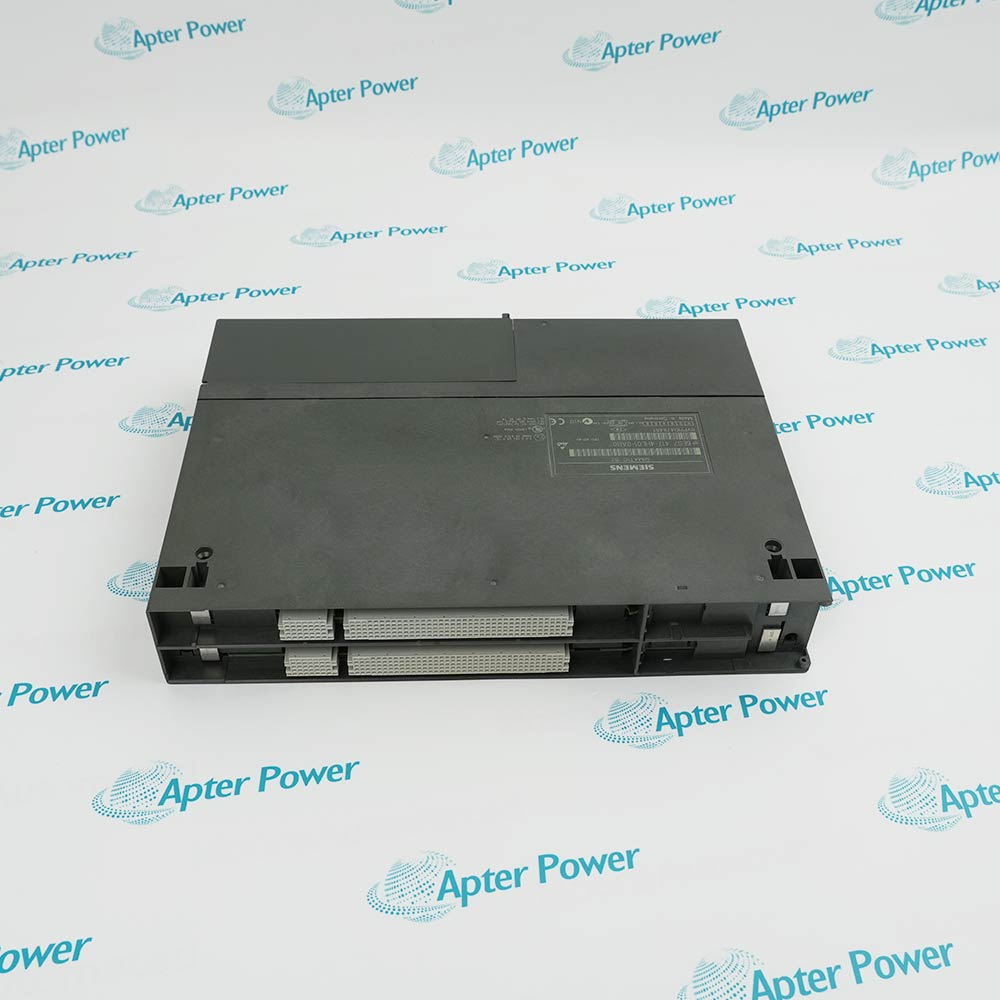
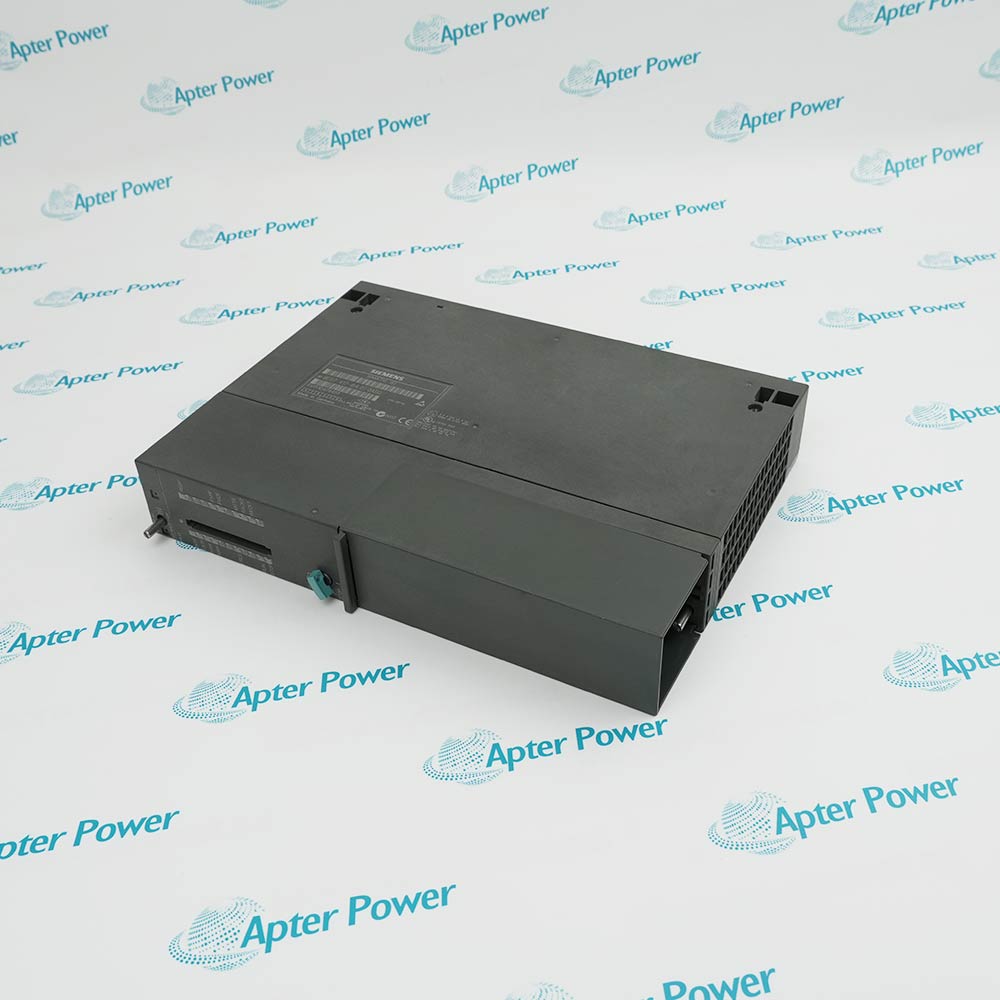
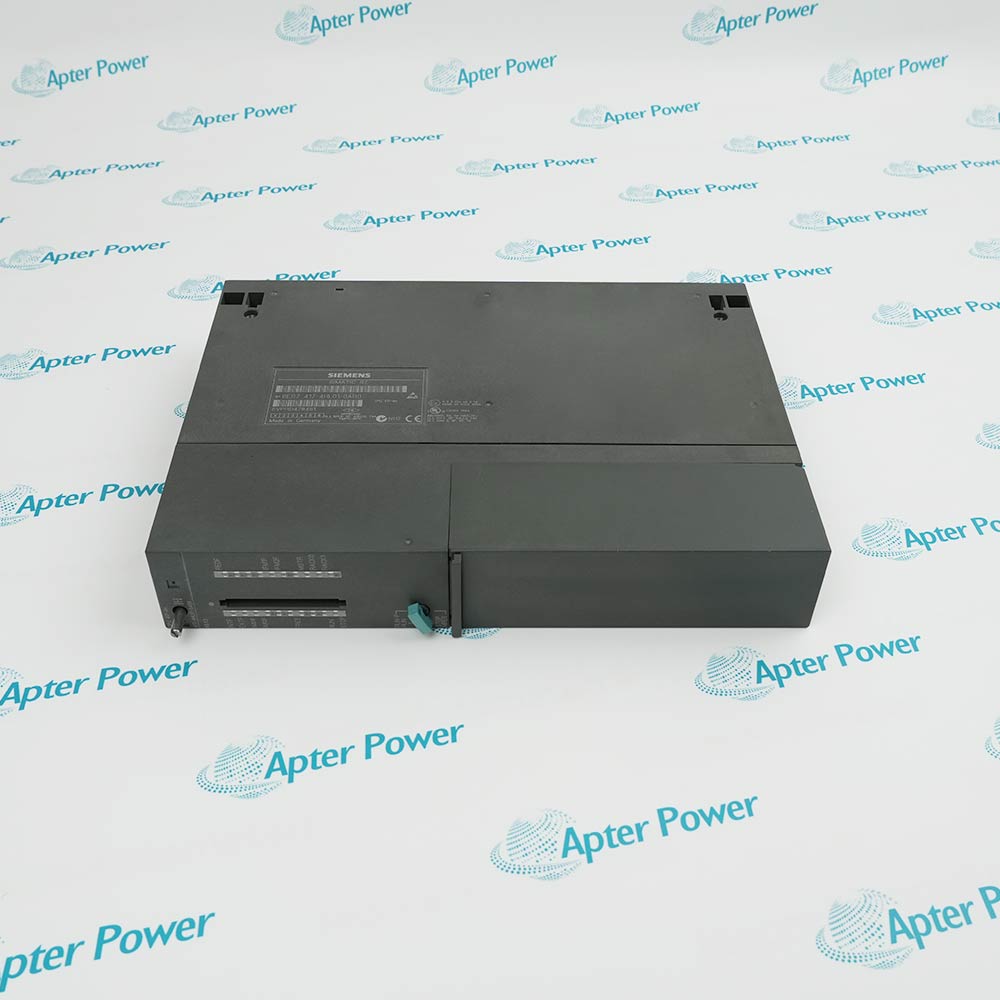
Features:
- Designed for S7‑400H fault‑tolerant systems; two CPUs synchronize via fiber optic cables; bumpless switchover on failure.
- 4 MB integrated (2 MB code, 2 MB data); work memory expandable to 20 MB; load memory expandable to 64 MB via memory cards.
- 0.1 µs execution time; supports 131,072 digital I/O and 8,192 analog I/O; 21 expansion units; 2 integrated DP masters (32 and 125 slaves).
The 6ES7417-4HL01-0AB0 is purpose‑built for Siemens S7‑400H, a high‑availability automation system used in critical processes where even a few seconds of downtime is unacceptable. In an H‑system, two identical CPU 417H modules are installed in separate racks (or the same rack) and connected via dedicated fiber optic synchronization modules. The CPUs run in lockstep – both execute the same user program simultaneously, and all data is mirrored between them. If the primary CPU fails (power loss, hardware fault, or watchdog timeout), the standby CPU immediately takes over control without any loss of process data (bumpless switchover). This failover is transparent to the I/O and to higher‑level systems.
Large automation programs, especially those in process industries, require substantial memory for code, data blocks, and extensive I/O mapping. The 6ES7417-4HL01-0AB0 comes with 4 MB of integrated work memory, partitioned as 2 MB for code and 2 MB for data. This is sufficient for medium‑sized applications. For larger projects, work memory can be expanded to 20 MB (10 MB code, 10 MB data). Load memory – where the user program is stored before being loaded into work memory – can be expanded to 64 MB using FEPROM or RAM memory cards (order separately). Up to 8,192 DBs, 6,144 FBs, and 6,144 FCs are supported.
The 6ES7417-4HL01-0AB0 delivers processing speeds of 0.1 µs for bit, word, and fixed‑point operations – making it one of the fastest CPUs in the S7‑400H family. Floating‑point arithmetic executes in 0.6 µs. This speed is essential for applications requiring fast interlocking, high‑speed counting, or complex closed‑loop control (e.g., turbine speed control, compressor surge protection). The CPU supports an enormous I/O capacity: up to 131,072 digital inputs and 131,072 digital outputs, plus 8,192 analog inputs and 8,192 analog outputs. Up to 21 expansion units and 6 interface modules can be connected.
The 6ES7417-4HL01-0AB0 Siemens Central Unit may still be available for purchase and support from Apter Power beyond
End-Of-Life (EOL)by the manufacturer (OEM).
Siemens 6ES7417-4HL01-0AB0 Central Unit Manuals,
Datasheets,Drivers,Link
Important Notice:Other accessories,manuals,cables,calibration data,software,etc.are not
included with this equipment unless listed in the above stock item description.All prices are
shown in USD.
Siemens 6ES7417-4HL01-0AB0 Central Unit Specs
General
- Manufacturer Siemens
- Model 6ES7417-4HL01-0AB0
- Condition New Original ready stock
- Product Family
6ES7417-4HL00-0AB0,6ES7417-4XT05-0AB0,6ES7414-4HL01-0AB0
Important Notice:Other accessories,manuals,cables,calibration data,software,etc.are not
included with this equipment unless listed in the above stock item description.All prices are
shown in USD.
- Critical Infrastructure: Such as power plant control systems, power distribution networks, and oil and gas production and refining.
- Process Industries: Industries requiring long-term continuous and stable operation, such as chemical plants, pharmaceutical plants, and water treatment plants.
- Safety-Related Applications: Can be configured as an F/FH system to process safety commands for emergency shutdown (ESD) or fire detection systems.
- Operating Temperature: Standard operating range is 0°C to 60°C.
- Humidity Requirements: 5% to 95%, non-condensing.
- Storage Temperature: Safely stored in environments ranging from -40°C to 70°C.
- Multi-interface communication: Integrates 4 interfaces, including 1 MPI/DP interface, 1 DP interface (supporting PROFIBUS), and 2 dedicated synchronization module interfaces.
- Fault-tolerant monitoring: Supports redundant architecture. When one CPU fails, another CPU seamlessly takes over control, ensuring uninterrupted monitoring.
- Advanced diagnostics: Built-in advanced error detection functions can identify CPU, communication, or I/O faults and identify them using three- or four-digit error codes.