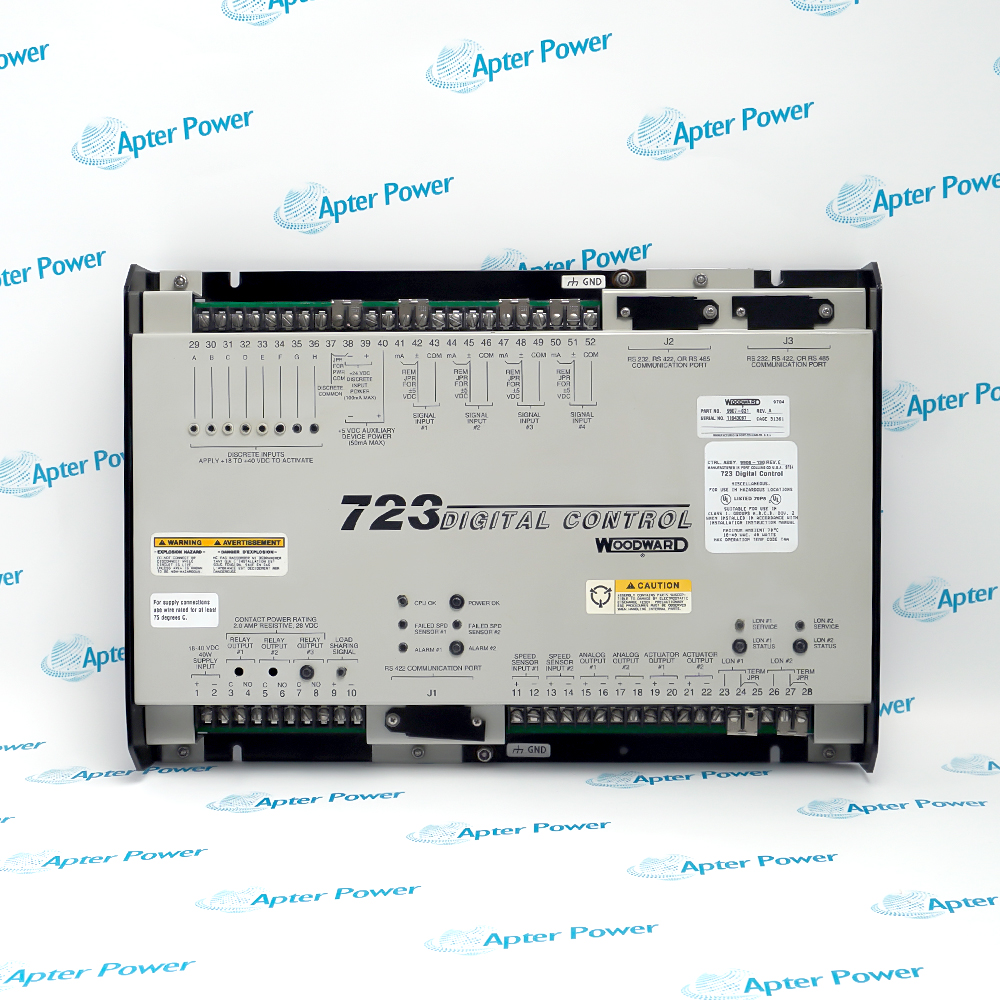
Features:
- Engine control: combines speed regulation and load control for reciprocating-engine applications.
- Sensor redundancy: accepts two magnetic-pickup or proximity speed inputs.
- System interface: supports DSLC, serial communication and optional LinkNet application functions.
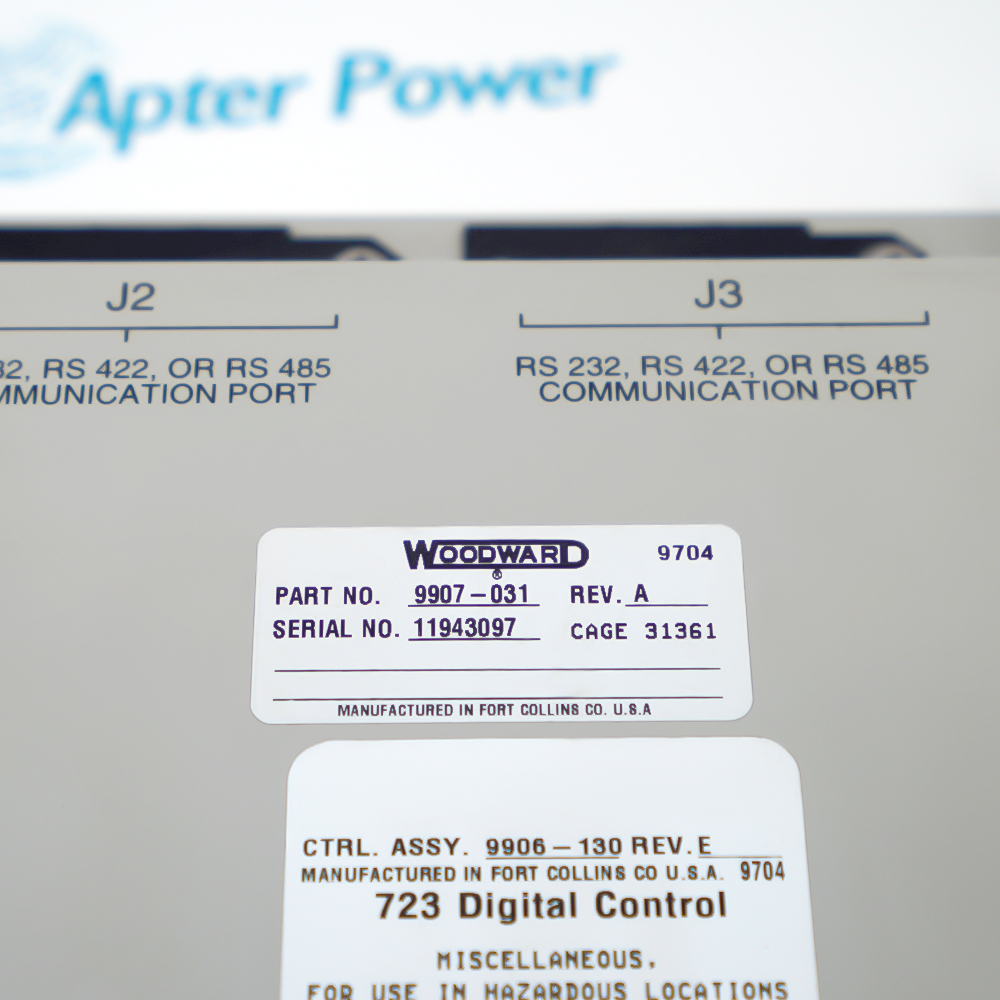
The 9907-031 order number closes the low-voltage hardware identity within the 723 DSLC-compatible range.
Application settings determine actuator behavior, speed references, fuel limits and the communication profile used by the engine package.
Commissioning restores local speed control first, then adds load sharing and remote interfaces after direction and feedback are proven.
Apter Power supports legacy-spare review and quotation for Woodward 9907-031 723 Digital Speed Control.
Woodward 9907-031 723 Digital Speed Control Manuals,Datasheets,Link
Important Notice: Use the complete 9907-031 product model in every document request.
- Speed channels: two sensor inputs provide the engine-speed evidence used by the control.
- Discrete states: configured contacts establish operating modes and permissive conditions.
- Analog references: assigned signals can influence speed, load or limiting functions.
- Application file: configured input use must match the installed engine package.
- Actuator command: output direction and range must agree with the fuel or energy-control device.
- Load interface: the DSLC-compatible path supports coordinated generator loading.
- Fuel limiting: configured limits protect the engine during starting and load transitions.
- Alarm behavior: relay and communication responses remain tied to the approved application settings.
- Configuration capture: save the active 723 application before removing the legacy control.
- Sensor proof: confirm both speed signals and their selected priority during controlled rotation.
- Direction test: prove actuator motion before the engine is allowed to start.
- Network return: restore Modbus, HMI, DSLC or LinkNet functions only after stable local control.
- Reciprocating generator sets: regulates engine speed and supports coordinated electrical-load control.
- DSLC-based plants: retains the installed load-sharing interface and engine-package logic.
- Dual-speed-sensor packages: uses two feedback inputs where the application requires sensor selection or redundancy.
- Legacy engine-control recovery: restores an existing 723 application when the configuration and wiring record are available.