Ask our team:
  • Phone: +86 181 0690 9650
  • E-Mail sales1@apterpower.com
  • Lifecycle status

    Discontinued / Obsolete by OEM
    Apter Power provides quotations, technical documents, sourcing support and system-matching guidance for this legacy product.

XVME-113

/ 4.9
1001 reviews | Need a Specific Revision?
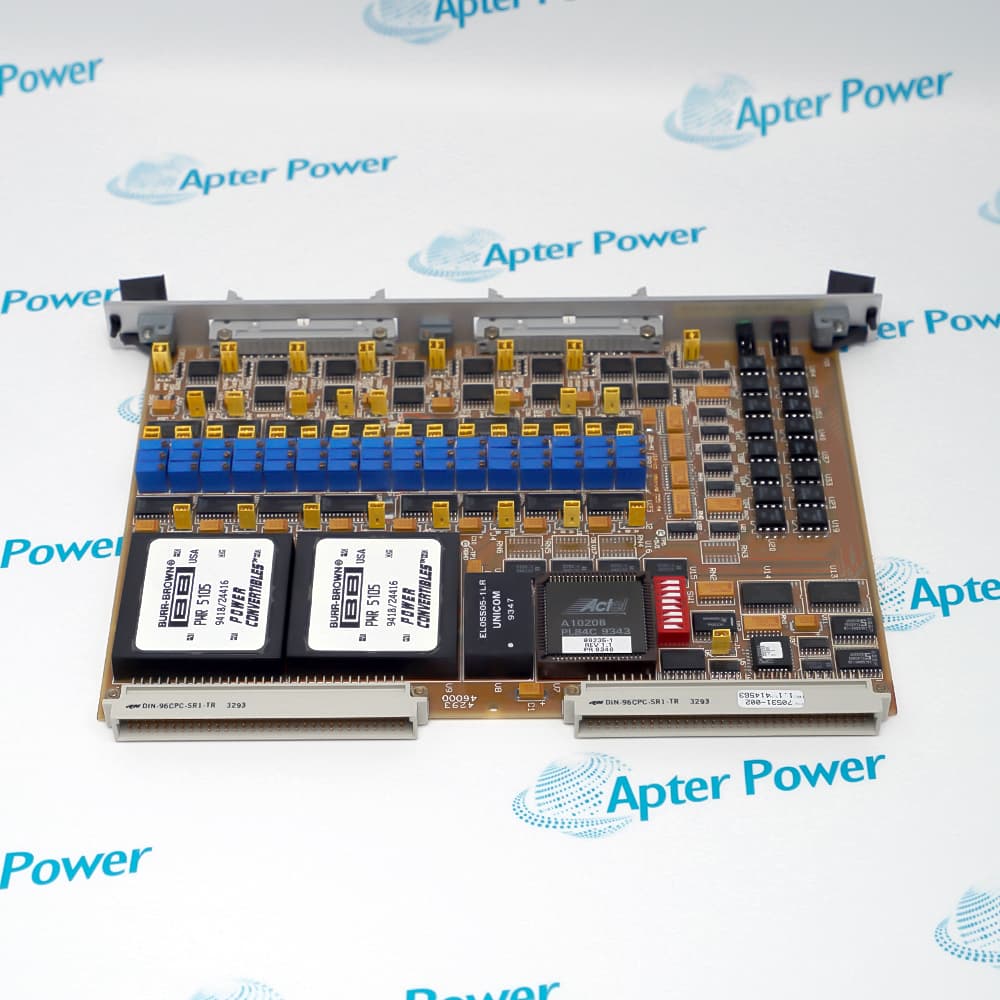
Xycom XVME-113 is a retired VMEbus RAM/ROM memory module with real-time clock support and configurable memory-device options.
In Stock
Ships by Wednesday, October 28
Fast Shipping Available
Get a quick price for XVME-113
Quantity
*E-mail
Company
*Mobile
*Content
Upload (gif, jpg, jpeg, png, bmp, doc, docx, xls, xlsx, ppt, pdf, csv)

Technical specifications for XVME-113

  • Manufacturer:
    Xycom
  • Part Number:
    XVME-113
  • Product Family:
    XVME I/O Modules
  • Product Type:
    RAM/ROM Memory Module
  • Stock:
    1
  • Bus:
    VMEbus
  • Clock function:
    Programmable real-time clock
  • Configuration:
    Switch and jumper selectable
  • Weight:
    0.4 kg
  • Estimated shipping dimensions:
    25x23.3x1.1cm
  • Tariff Code:
    Please confirm the destination before shipping
  • Country of origin:
    USA
  • Place of shipment:
    Xiamen,Fujian,China
By purchasing this item, you agree to the Terms & Conditions, ApterPower is not an authorized distributor for listed manufacturers or tradenames and therefore the manufacturer's warranty does not apply. All our products come with ApterPower's 1-year warranty.

More Information

Overview Manuals Memory Setup Clock Records Rack Service Applications

Features:

  • Memory role: Provides configurable RAM and ROM resources.
  • Clock function: Includes a programmable real-time clock.
  • Configuration control: Switches and jumpers define the installed setup.
The populated memory devices should be inventoried before a spare is selected.

Address switches, jumpers and the VME slot must be copied from verified site records rather than inferred.

Battery and clock handling should follow the approved maintenance procedure to protect retained data.

Apter Power supports Xycom XVME-113 RAM/ROM Memory Module sourcing, documentation and memory-configuration review.
Xycom XVME-113 RAM/ROM Memory Module Manuals,Datasheets,Link
Important Notice: Other accessories, manuals, cables, calibration data, software, etc. are not included with this equipment unless listed in the above stock item description. All prices are shown in USD.
  • Devices: Record all installed RAM and ROM devices.
  • Addressing: Capture switch-selected base-address settings.
  • Sockets: Compare populated and empty socket positions.
  • ROM contents: Preserve the approved program-image identity for every populated ROM.
  • RTC: Preserve the real-time clock configuration.
  • Backup power: Record the selected CMOS RAM backup-power arrangement.
  • Software: Retain the application’s clock-access configuration.
  • Initialization: Record the accepted date-and-time state before returning the host application.
  • Slot: Record the VME slot and card guides.
  • Jumpers: Record all jumper positions in the service package.
  • Startup: Verify the memory map before application execution.
  • Revision: Compare the board revision with the removed module and maintenance record.
  • Legacy memory: Supports documented VMEbus memory expansion.
  • ROM programs: Carries site-specific programmed memory devices.
  • Clocked systems: Provides real-time clock functions for installed applications.
Description
XVME-113 is a Xycom VMEbus RAM/ROM memory module documented for configurable memory devices and real-time clock operation. Its switch and jumper setup forms part of the installed memory map and must remain traceable.

A replacement XVME-113 should be compared for installed memory devices, address configuration, memory-backup power selection, real-time-clock configuration and backplane position. A bare board number does not describe the complete programmed or populated state.

Because XVME-113 is retired, a sourcing decision should preserve site data, switch settings and memory-device details. Apter Power can support exact-board quotations and documentation.
Alternative Names
XVME113 XVME 113 XVME_113 Xycom XVME-113 Xycom XVME 113 Acromag XVME-113 XVME-113 memory module XVME 113 RAM ROM board
Technical notes
XVME-113 divides its twenty-four memory sockets into two independently configurable banks: bank one has sixteen sites and bank two has eight. Devices within one bank must share the same type and speed, while address, modifier and device selections can differ between banks before a field replacement is energized.
Exceptional Service

Our Mission

  • 100% Satisfaction

    We believe expertise is priceless. With over 20 years of experience, and top engineers on staff, we can help you solve or avoid problems that threaten your business.
  • Trust Guaranteed

    Not only do we have a vast inventory, our team makes sure every piece of equipment is in working condition. Your purchases are also backed by our Warranty.
  • Expertise

    Time is money, especially when your equipment is down. We work quickly to get your equipment on its way so you can get it back up and running.

FAQS

The following is a list of questions commonly asked by our customers. Please contact us if you have a question about our process that is not answered below.
Can a bare XVME-113 replace a populated field board?
Not by itself; the required RAM or ROM devices, address settings, jumpers and approved program images must be recreated first.
How can programmed ROMs be protected during an XVME-113 replacement?
Inventory each device and socket, preserve approved program-image records and follow an antistatic, verified transfer procedure.
What should be checked before changing backup power on XVME-113?
Confirm the approved CMOS RAM retention method and protect site data before moving any backup-power selection.
Why can two boards marked XVME-113 behave differently?
Their populated memory devices, switch settings, jumpers, board revisions and programmed contents may not match.
What should be investigated after an XVME-113 memory conflict?
Compare the configured address range, device population, jumper map and host memory allocation with the removed board record.
What should be checked if the real-time clock loses time after an XVME-113 exchange?
Compare the clock initialization, backup-power selection and application access settings with the removed module configuration.

Product Browsing History