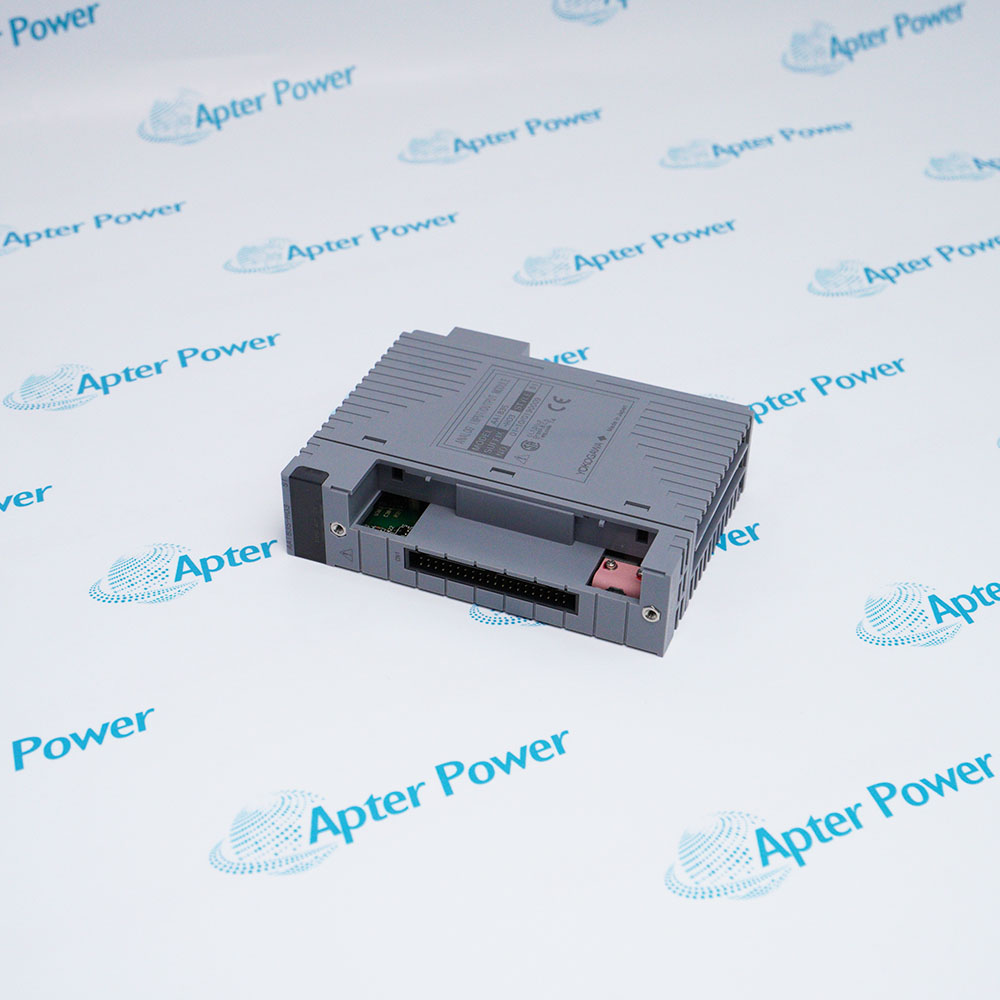
Features:
- Redundant analog termination: sixteen channels are routed to supported Yokogawa redundant module pairs
- Pressure-clamp wiring: field conductors land directly at compact channel terminals
- No integral absorber: the -00 option relies on the engineered external surge-protection arrangement
Module focus: Use the terminal board only with the documented analog module and channel type.
Redundancy focus: Keep channel numbering and electrical conditions aligned across both paths.
Diagnostic focus: Compare terminal measurements with each module's channel status.
Apter Power supports Yokogawa ATA4D-00 S2 terminal board quotations, technical documents and analog I/O configuration review.
Yokogawa ATA4D-00 S2 Dual-redundant 16-point analog pressure-clamp terminal board Manuals,Datasheets,Link
Important Notice: Other accessories, manuals, cables, calibration data, software, etc. are not included with this equipment unless listed in the above stock item description. All prices are shown in USD.
- Channel mapping: Keep terminal numbers aligned with both redundant module channels.
- Field power: Apply transmitter or output-loop power according to the selected channel type.
- Isolation: Follow the module and system rules for commons, shields and channel isolation.
- Analog input: Confirm AAI141, AAV141, AAV144, AAI143 or AAI543 configuration details.
- Combined I/O: Confirm AAI841, AAB841 or AAV544 channel behavior.
- Installed node: Use the installed node and module revision when confirming the configuration.
- Conductor preparation: Strip to the documented length and prevent loose strands.
- Signal fault: Measure the field signal at the terminal and compare both module paths.
- Noise: Inspect shield termination, common routing and nearby power conductors.
- Transmitters: Terminate supported current or voltage inputs for redundant acquisition.
- Analog control: Connect supported combined I/O loops where the configured module provides output channels.
- Critical process units: Support redundant analog paths in CENTUM-based control cabinets.