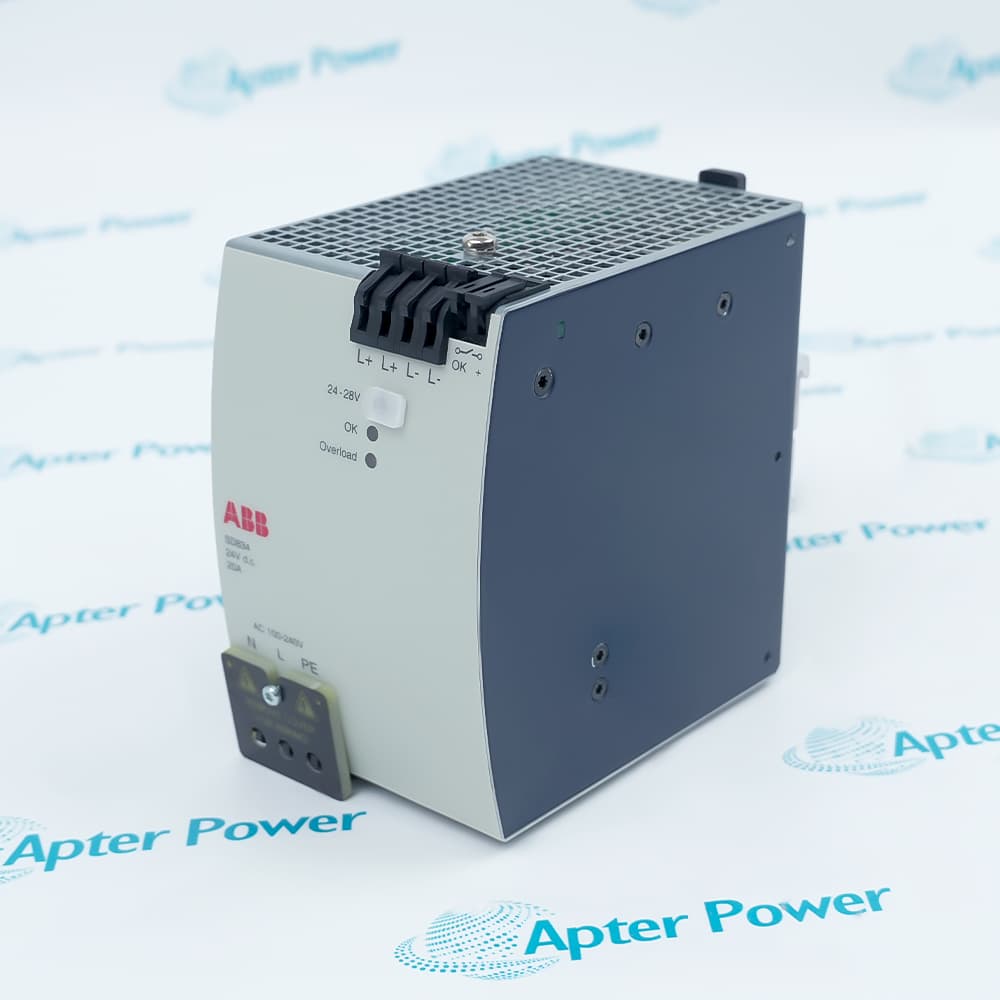
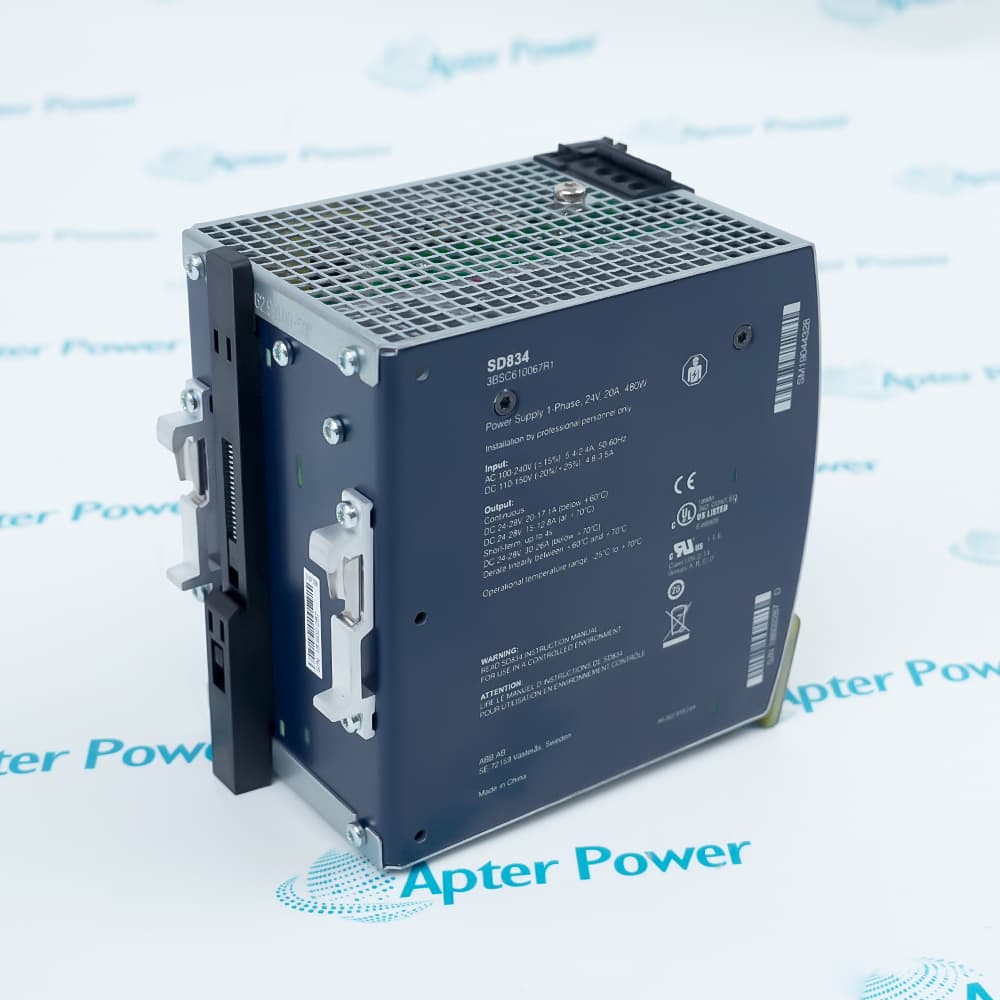
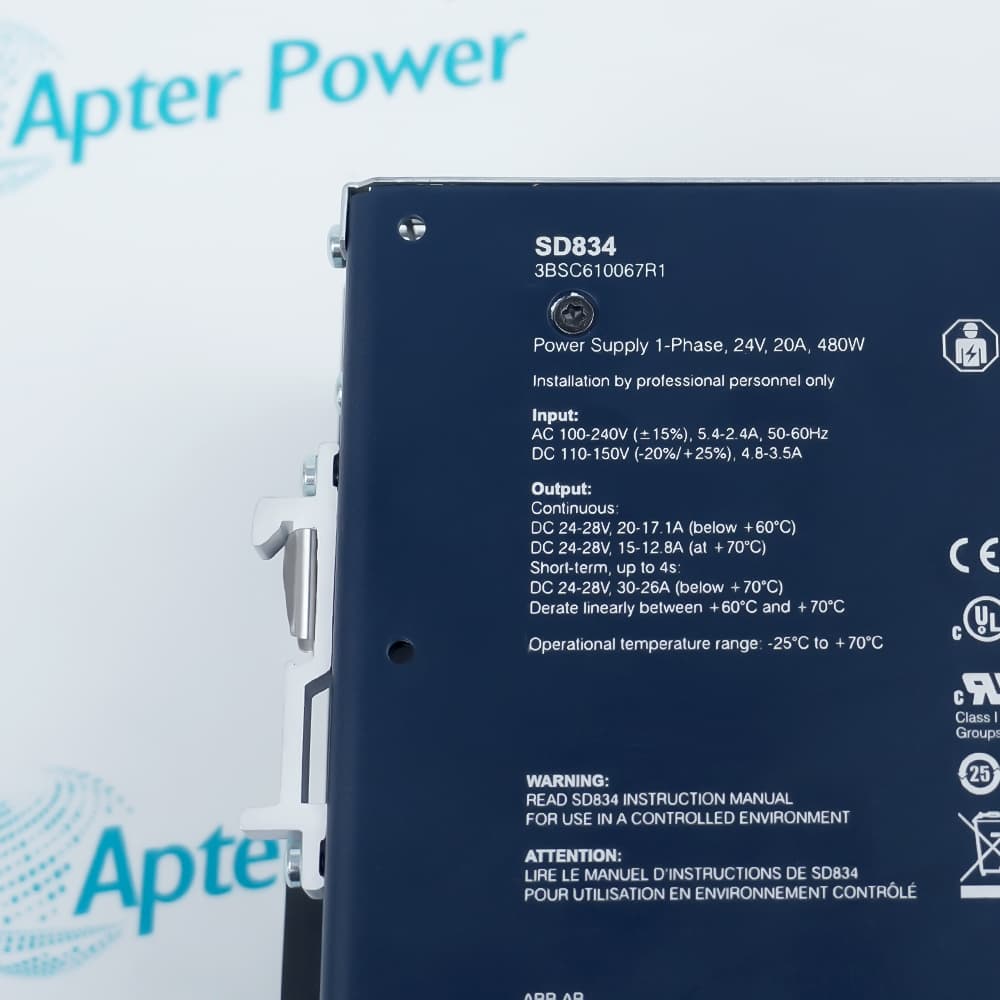
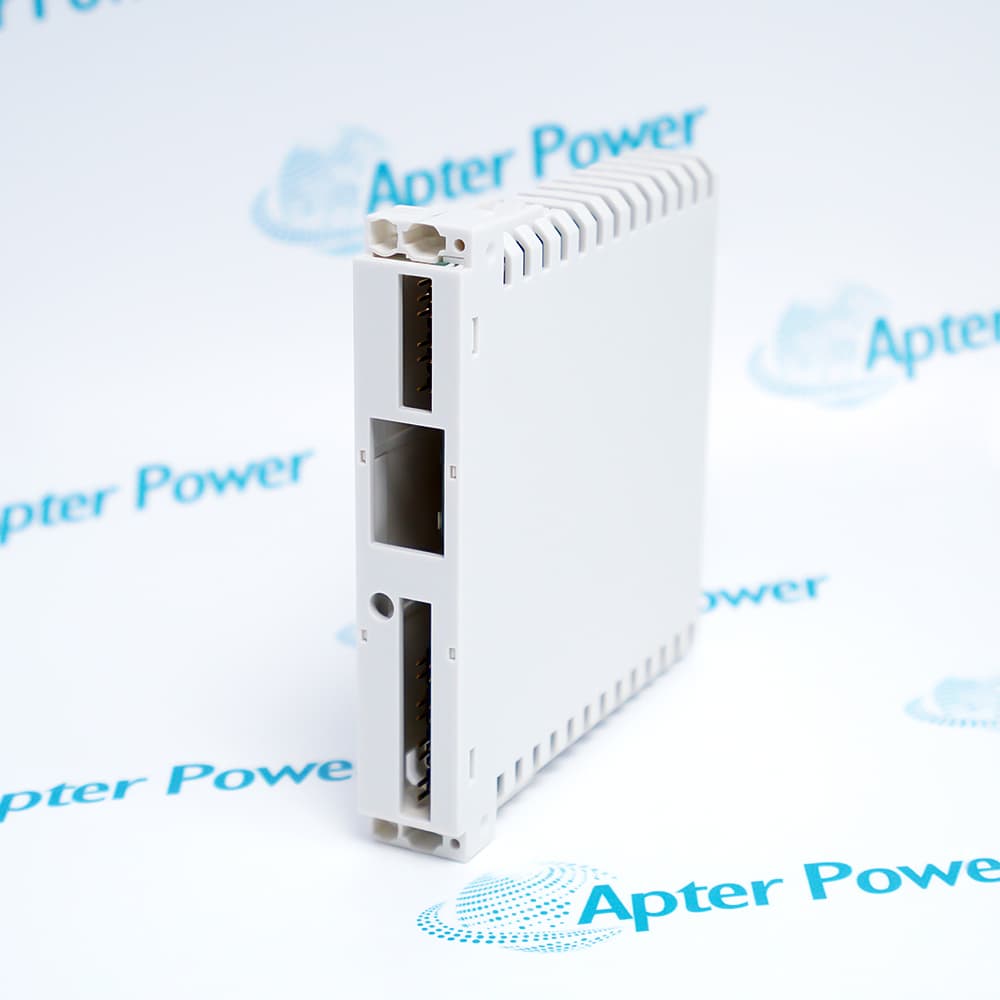
Features:
- Converts a wide AC or DC mains range into a regulated 24 V DC supply.
- Delivers 20 A continuously with a documented short-duration current reserve.
- Supports parallel load sharing and a floating DC-OK supervision contact.
The SD83x switch-mode architecture separates the primary mains circuit from the SELV or PELV secondary supply used by control and I/O loads.
Soft start limits the current drawn at energization, and the accepted input range allows the same unit to operate from the documented AC or DC source.
Parallel and redundant systems use different connection rules: load sharing combines capacity, while a supervised redundant design adds the specified voting unit.
The ABB SD834 3BSC610067R1 Power Supply Unit is included in ABB's current AC 800M and S800 I/O hardware information and may be available for purchase and support from Apter Power.
ABB SD834 3BSC610067R1 24 V DC Power Supply Unit Manuals,Datasheets,Link
Important Notice: Other accessories, manuals, cables, calibration data, software, etc. are not included with this equipment unless listed in the above stock item description. All prices are shown in USD.
Moving energy from the primary source to the 24 V bus
- Dual-source input: The primary stage accepts the documented AC range or a compatible DC source.
- Soft start: Controlled energization reduces the peak current imposed on upstream protection.
- Protective separation: Isolation keeps the secondary suitable for the specified SELV or PELV circuit.
- Regulated output: The conversion stage holds the control-system bus near its 24 V DC target as load changes.
Separating capacity sharing from redundancy
- Shared load: Parallel connection lets two supplies divide current when both are configured for load sharing.
- Redundant path: A voting unit keeps the two supply outputs separated while feeding the common consumer.
- Supervision: Voltage monitoring from the voting architecture identifies loss of one supply path.
- Common boundary: Input protection, output conductors and cabinet heat must be sized for the complete arrangement.
Using the floating contact for supply supervision
- Independent contact: The relay interface is electrically separate from the 24 V power output.
- Status path: A control input can use the contact to monitor whether the DC output remains in its valid state.
- Alarm design: Logic should distinguish a supply warning from a downstream field-device fault.
- Commissioning check: Test the contact during normal power, input removal and restored input conditions.
Responding to overload, short circuit and excess voltage
- Current limit: The secondary stage restricts sustained overload current before wiring or loads are damaged.
- Hiccup cycle: A short circuit causes repeated on and off intervals until the fault condition clears.
- Overvoltage clamp: The protection boundary prevents an abnormal regulator condition from driving the output indefinitely upward.
- Upstream fuse: Primary protection still has to match the input source and the recommended fuse range.