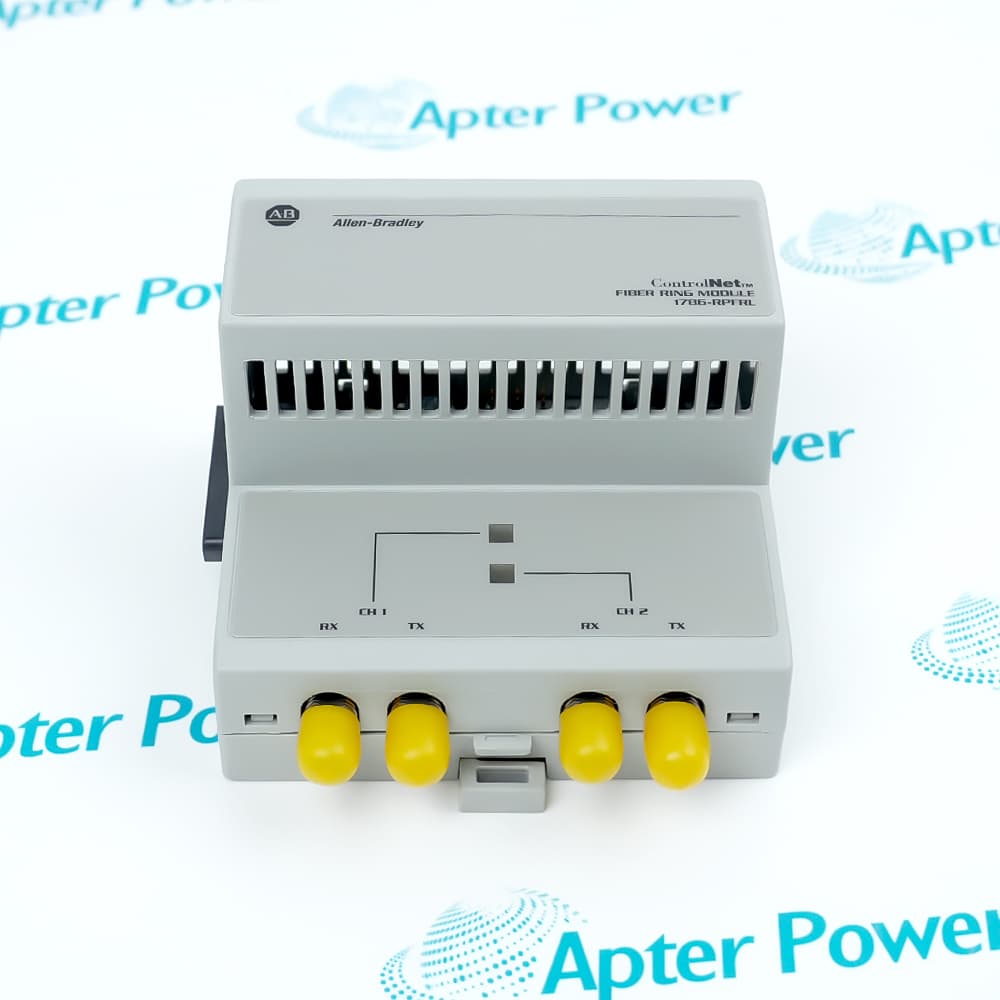
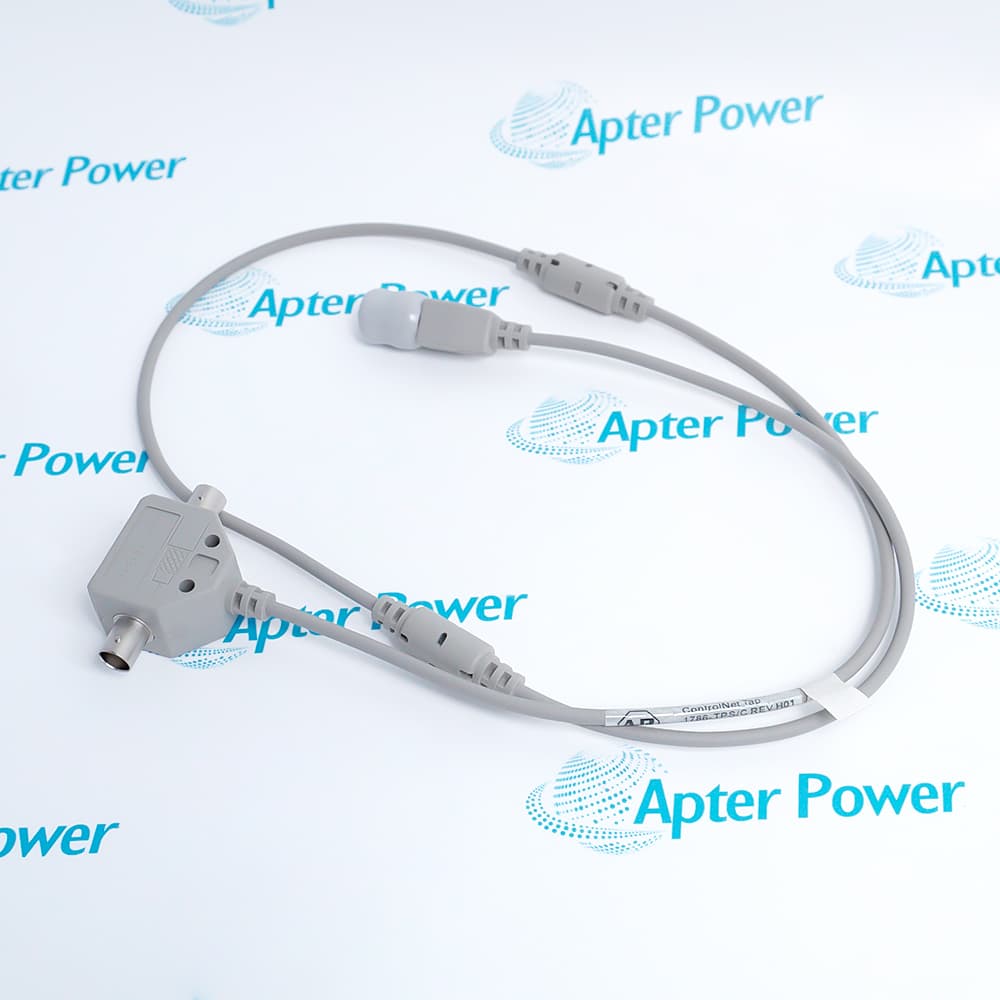
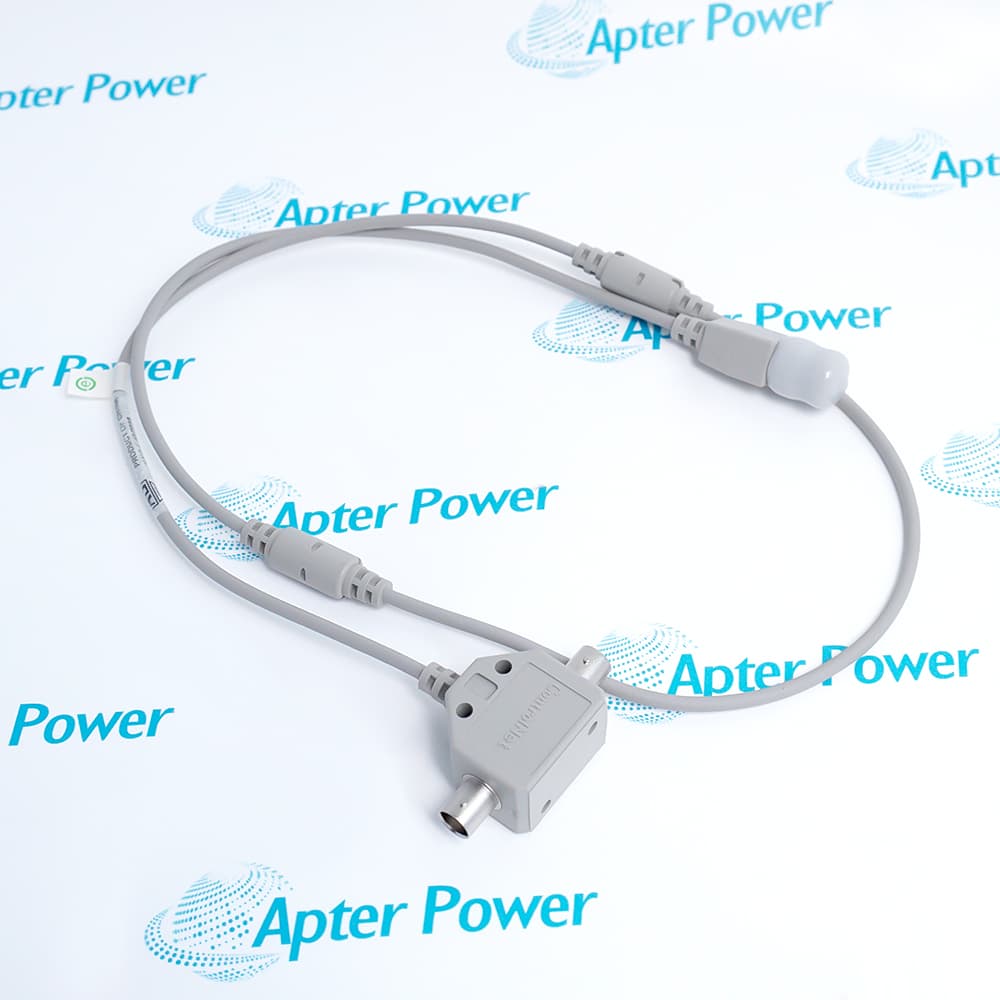
Features:
- 75-ohm BNC termination ensuring proper ControlNet coaxial signal integrity
- Required for unused repeater or trunk line channels to maintain network stability
- Compact passive design supporting wide industrial temperature and marine-certified environments
The Allen-Bradley 1786-XT is used in ControlNet network systems to ensure proper termination of coaxial media segments. It plays a key role in maintaining signal quality by matching the required 75-ohm impedance across network channels. The 1786-XT is commonly installed in systems where repeaters or unused network ports are present. It helps prevent signal reflection that could affect communication stability. Its simple design makes it a standard component in structured ControlNet installations.
In practical network configurations, the 1786-XT is applied to unused channels on repeater modules such as the 1786-RPCD. When only one channel is active, the second channel must be terminated using this component to maintain proper electrical balance. The 1786-XT ensures both channels operate consistently even when not fully utilized. It is also used in trunk line termination scenarios where network continuity must be preserved. This makes it essential for maintaining reliable communication performance.
From an industrial application perspective, the Allen-Bradley 1786-XT supports stable operation in distributed control systems using coaxial ControlNet media. It is suitable for environments where network expansion, segmentation, or fiber integration is implemented. The device operates reliably across a wide temperature range and supports nonhazardous industrial installations. The 1786-XT contributes to overall system stability by ensuring correct termination at every required network point. Its role is critical in maintaining long-term ControlNet communication integrity.
The 1786-XT Allen-Bradley ControlNet Media BNC Terminator may still be available for purchase and support from Apter Power beyond End-Of-Life (EOL) by the manufacturer (OEM).
Allen-Bradley 1786-XT ControlNet Media BNC Terminator Manuals,Datasheets,Link
Important Notice: Other accessories, manuals, cables, calibration data, software, etc. are not included with this equipment unless listed in the above stock item description. All prices are shown in USD.
Allen-Bradley 1786-XT ControlNet Media BNC Terminator Specs
General
- Manufacturer Allen-Bradley
- Model 1786-XT
- Condition New Original ready stock
- Product Family 1786-TPS,1786-RG6,1786-CP
Important Notice: Other accessories, manuals, cables, calibration data, software, etc. are not included with this equipment unless listed in the above stock item description. All prices are shown in USD.
- High-Frequency Physical Reflection Absorption: By absorbing residual electrical signals reflected back at the cable end, it protects the transceivers of all physical cards along the cable from high-voltage surges caused by overlapping electromagnetic waves.
- Dust and Moisture Proof Port Sealing: Installed on the unused BNC physical interface at the end of the coaxial tap, it provides robust end-cap-like mechanical protection, preventing conductive dust and moisture from entering and contaminating the contacts.
- Electromagnetic Radiation Leakage Suppression: As a physical barrier for the RF closed loop, it effectively prevents the high-frequency communication carrier inside the coaxial cable from radiating and leaking into the external environment, while ensuring the system is unaffected by strong external electromagnetic interference (EMI).
- Maintaining Network Signal Impedance: It provides a highly stable physical electrical load, preventing physical open circuits at the end, thereby protecting the waveform of data frames transmitted within the control network segment from distortion.
- Industrial Network Specification Certification: Fully compliant with the coaxial dielectric layer physical design specifications established by the ControlNet International Organization (CI), it is a necessary basic hardware component for this communication network to pass international standard certification.
- Mandatory Dual-Ended Closed-Loop Standard: In Rockwell system architecture audits, each coaxial physical segment must have two terminating resistors installed at both ends; otherwise, field engineering acceptance will fail.
- Strict Impedance Deviation Control: Each passive component undergoes high-precision electrical matching testing before leaving the factory, resulting in extremely low impedance tolerances and fully meeting the high reliability standards for long-distance industrial distributed I/O network communication.
- Wide Temperature Range Compliance: Its materials and manufacturing processes meet Rockwell's stringent industrial-grade temperature resistance, vibration resistance, and environmental compliance requirements for control cabinet components, enabling stable, long-term, all-weather operation along the coaxial bus.
- Distributed I/O Segment End-of-Loop Closure: In ControlLogix remote I/O or FLEX I/O coaxial network topologies, the resistor must be plugged into an unused 1786-TPS tap at both the very beginning and the very end of the trunkline.
- Multi-segment relay system isolation: When the network is large and requires signal amplification using 1786-RPFM fiber/coaxial repeaters, it is used to build a physical closed loop for each isolated independent coaxial sub-segment.
- On-site commissioning and temporary network testing: Used by automation engineers to quickly simulate standard physical link boundaries when setting up temporary test environments in the laboratory or performing individual communication quality analysis on a disconnected coaxial segment in the factory.
- Multi-master redundant network enhancement: In factory networks configured with dual-path redundant coaxial media (such as large power plants and oil drilling platform control systems), it performs physical termination for all communication endpoints of Trunk A and Trunk B.