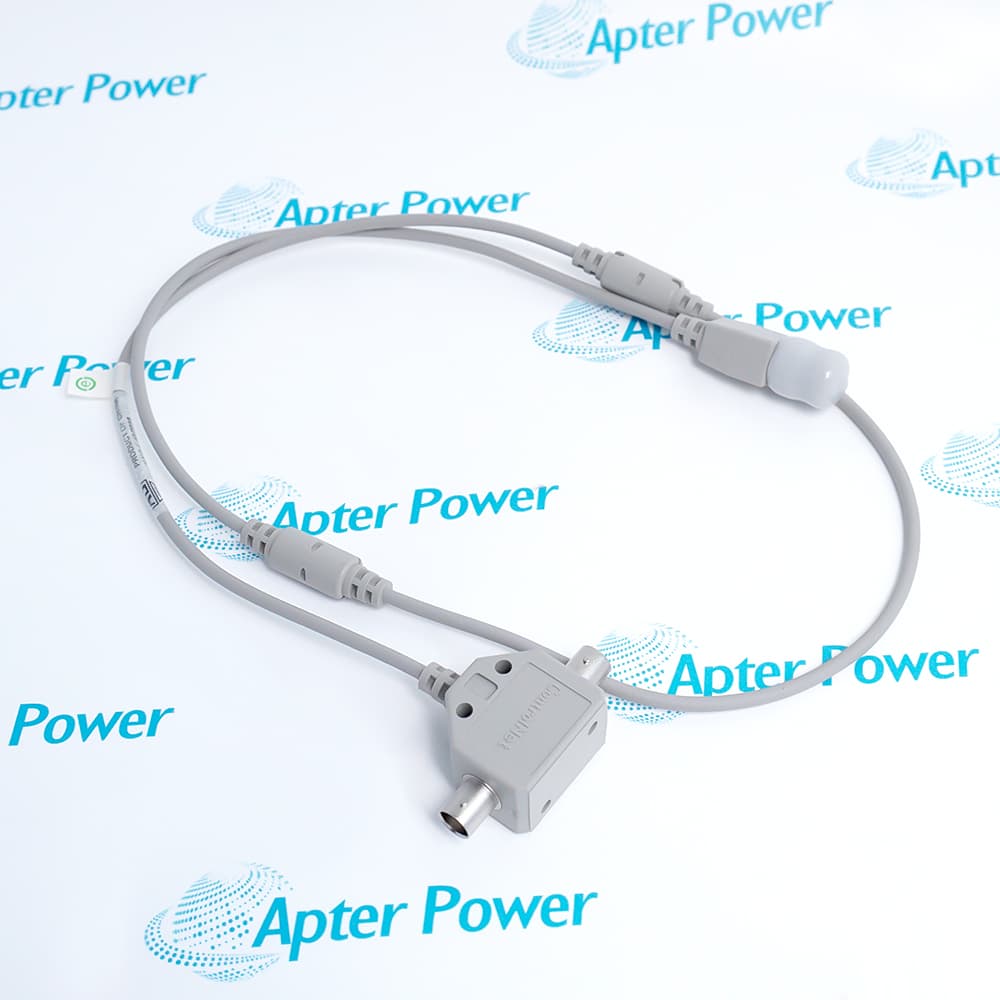
Features:
- 1 m ControlNet coaxial T-tap enabling structured network branching and connectivity
- Multiple mounting options including DIN rail, surface, and through-hole installation flexibility
- High mechanical durability with strong shock, vibration, and environmental resistance for industrial use
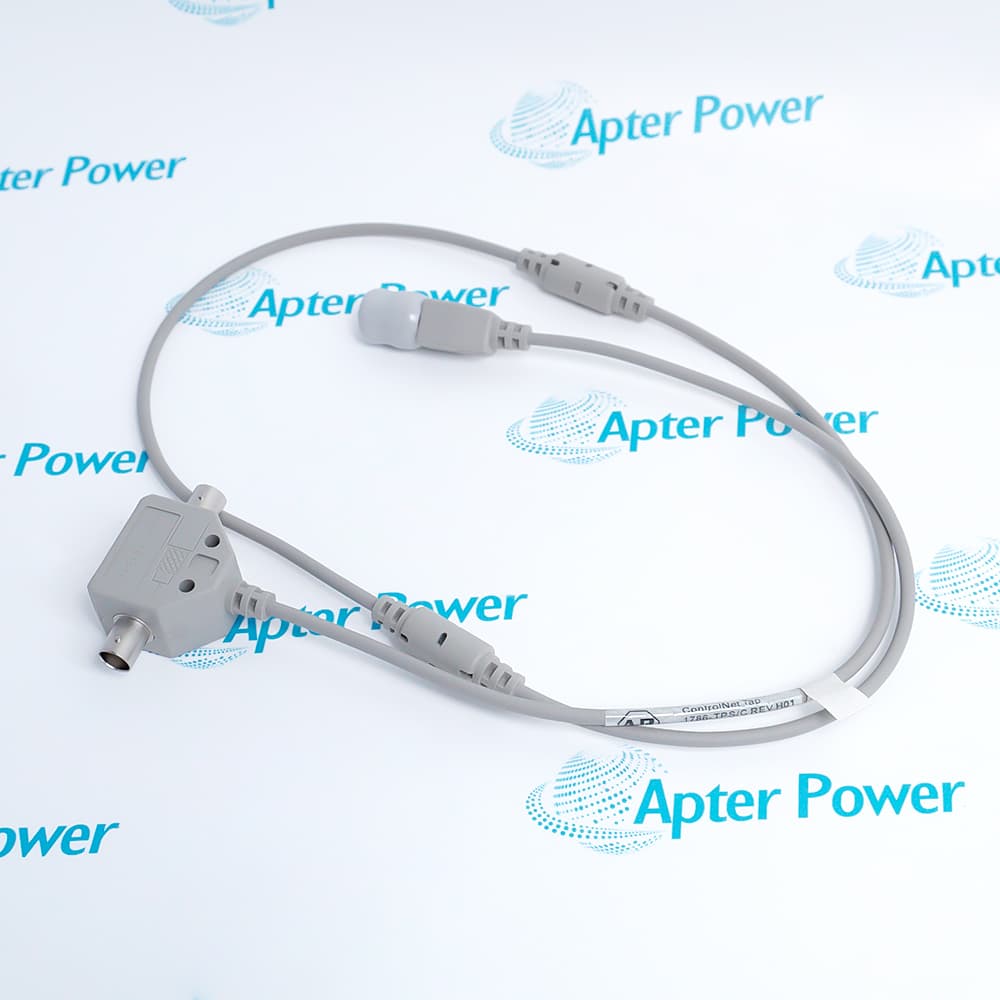
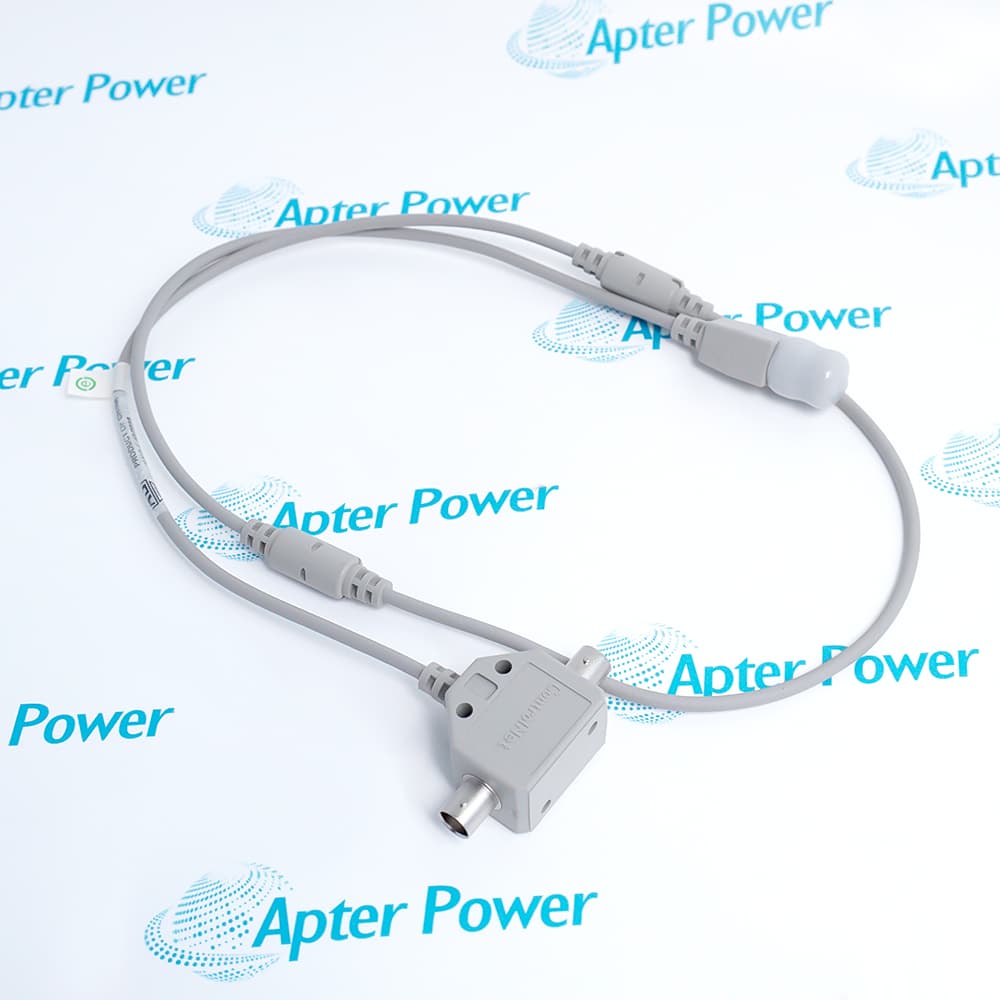
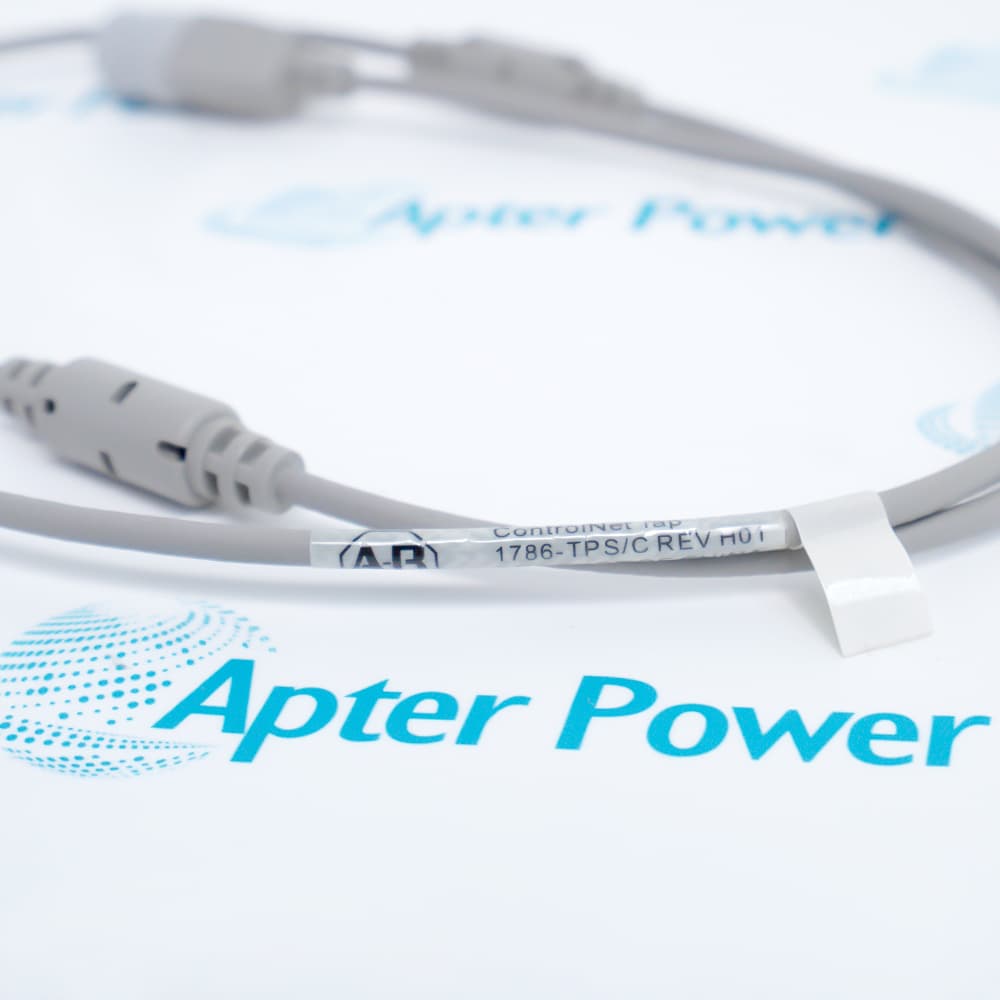
The Allen-Bradley 1786-TPS is used in ControlNet network systems where structured coaxial connections are required to maintain stable communication paths. It provides a 1 m T-tap interface that supports organized branching of network cabling in industrial automation environments. This allows engineers to design scalable communication layouts across distributed control systems. The 1786-TPS supports integration into both compact control panels and larger industrial network architectures. Its role is essential in maintaining consistent ControlNet connectivity.
From an installation perspective, the 1786-TPS offers multiple mounting configurations to suit different industrial setups. It can be installed using DIN rail mounting with a universal bracket or mounted directly onto surfaces and fixtures. A transition plate option is available when horizontal DIN rail mounting is required, adding flexibility in panel design. Cable management accessories such as tie wraps and hook-and-loop straps help secure coaxial lines. The 1786-TPS therefore supports practical and adaptable installation practices in real-world environments.
In operational environments, the Allen-Bradley 1786-TPS maintains reliable performance under varying temperature, humidity, and mechanical stress conditions. It withstands vibration and shock levels typical in industrial machinery areas, ensuring stable physical positioning of network connections. Its environmental tolerance allows deployment in both controlled and demanding industrial spaces. The 1786-TPS contributes to maintaining communication integrity within ControlNet systems. This makes it suitable for continuous operation in automation networks requiring consistent signal distribution.
The 1786-TPS Allen-Bradley ControlNet 1 m Coaxial Straight T-Tap may still be available for purchase and support from Apter Power beyond End-Of-Life (EOL) by the manufacturer (OEM).
Allen-Bradley 1786-TPS ControlNet 1 m Coaxial Straight T-Tap Manuals,Datasheets,Link
Important Notice: Other accessories, manuals, cables, calibration data, software, etc. are not included with this equipment unless listed in the above stock item description. All prices are shown in USD.
Allen-Bradley 1786-TPS ControlNet 1 m Coaxial Straight T-Tap Specs
General
- Manufacturer Allen-Bradley
- Model 1786-TPS
- Condition New Original ready stock
- Product Family 1786-TPR,1786-TPYR,1786-TPYS
Important Notice: Other accessories, manuals, cables, calibration data, software, etc. are not included with this equipment unless listed in the above stock item description. All prices are shown in USD.
- Non-disconnectable physical access: Utilizing a T-shaped internal bridge structure, node devices can connect to or disconnect from the ControlNet trunkline without interrupting the physical electrical connections between other nodes in the network.
- Straight physical connector: Employing a 180-degree straight BNC connector design, it provides the optimal bending radius for internal wiring in control cabinets with ample rack space and where field coaxial cables can be routed in a straight line.
- Complete node impedance matching: The tap integrates a high-precision capacitance and inductance matching network, strictly limiting high-frequency signal attenuation and reflection from the trunk cable to within permissible limits.
- Convenient flexible cable termination: Includes a 1-meter (3.3-foot) flexible coaxial drop-cable with a standard BNC male connector at the end, allowing direct screwing into the A/B ports of any ControlNet communication module.
- Deterministic High-Frequency Data Transmission: The hardware is specifically designed for ControlNet networks, fully meeting the low-loss physical layer transmission requirements for 5 Mbps deterministic, repeatable data frames.
- Dual-Path Redundancy Media Support: Each node can deploy two 1786-TPS taps, connected to Trunk A and Trunk B respectively, enabling millisecond-level redundancy switching at the underlying physical layer in conjunction with the communication module.
- Support for Multi-Node, High-Capacity Topologies: In standard coaxial network segments without repeaters, it supports cascading up to 48 standard ControlNet physical nodes with taps of the same series.
- Low Insertion Loss Attenuation Control: The taps undergo rigorous electrical attenuation testing, resulting in extremely low signal insertion loss for individual devices, ensuring a high signal-to-noise ratio (SNR) in long-distance backbone network deployments.
- Large Distributed I/O Site Cascading: Used in large industrial areas such as automotive assembly lines and paper mills to introduce coaxial cables from the main trunk line into each remote Flex I/O or ControlLogix remote sub-base.
- Multi-master redundant control network construction: In power plants, critical chemical plants, and other systems employing dual-machine hot standby (Redundancy) systems, this serves as a standard passive component, connecting the primary and backup controllers via a ControlNet bridge card.
- Digital transformation of traditional control systems: When networking existing PLC-5 or SLC 500 systems via ControlNet, this serves as a standard physical tapping component, used for quickly extracting signal lines from the backbone cable.
- Anti-interference networking in complex industrial workshops: In aluminum electrolysis and heavy machinery processing workshops with high-frequency, strong electromagnetic interference, this serves as the preferred physical connection for anti-interference data networks, in conjunction with highly shielded coaxial cables.