Ask our team:
  • Phone: +86 181 0690 9650
  • E-Mail sales1@apterpower.com
  • Lifecycle status

    Discontinued / Obsolete by OEM
    Apter Power supports Series verification, recovery-media review, interface documentation, and condition-focused legacy sourcing.

1769-L32E

/ 4.9
1001 reviews | Need a Specific Revision?
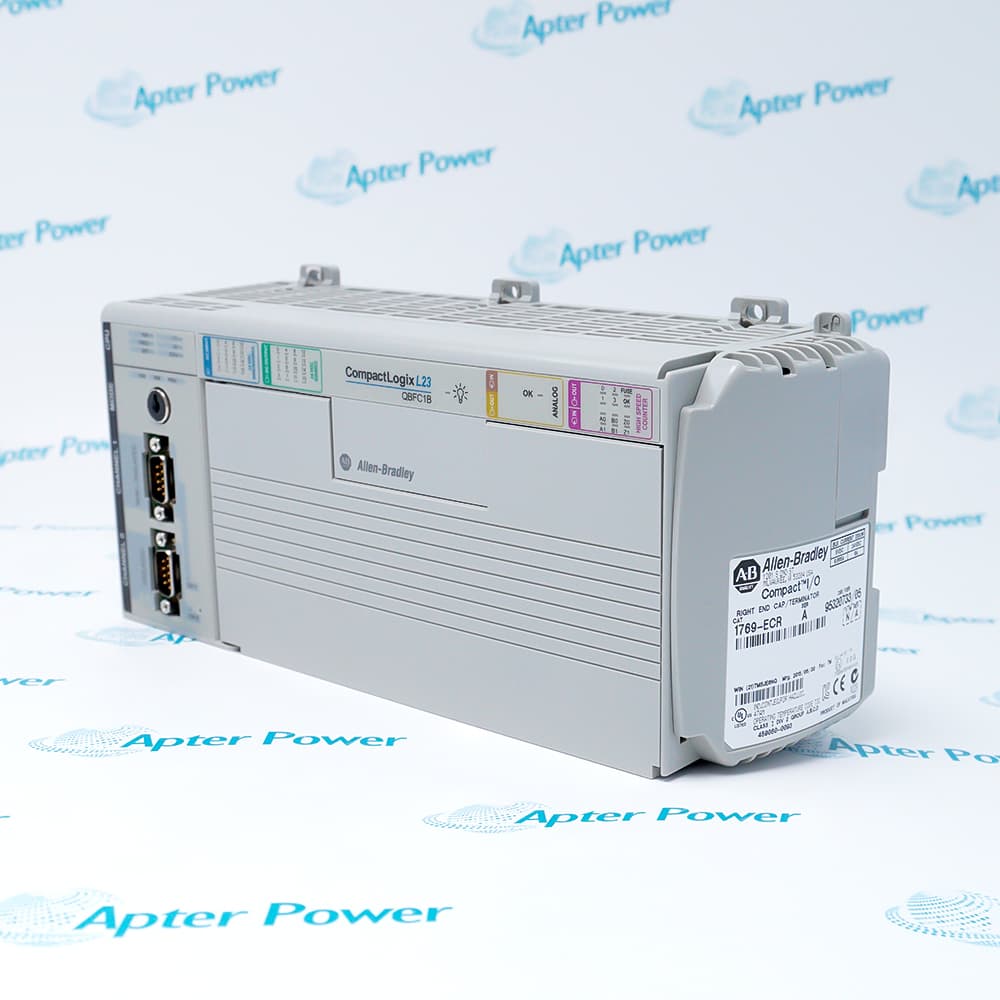
Legacy modular control combines Ethernet, isolated serial communication and three-bank Compact I/O expansion in the discontinued 1769-L32E.
In Stock
Ships by Thursday, October 29
Fast Shipping Available
Get a quick price for 1769-L32E
Quantity
*E-mail
Company
*Mobile
*Content
Upload (gif, jpg, jpeg, png, bmp, doc, docx, xls, xlsx, ppt, pdf, csv)

Technical specifications for 1769-L32E

  • Manufacturer:
    Allen-Bradley
  • Part Number:
    1769-L32E
  • Product Family:
    CompactLogix
  • Product Type:
    Legacy CompactLogix EtherNet/IP Controller
  • Stock:
    1
  • User memory:
    750 KB
  • Communication ports:
    One 10/100BASE-T Ethernet and one isolated RS-232 port
  • Local Compact I/O:
    16 modules maximum
  • I/O banks:
    3 maximum
  • Nonvolatile memory:
    1784-CF128 CompactFlash
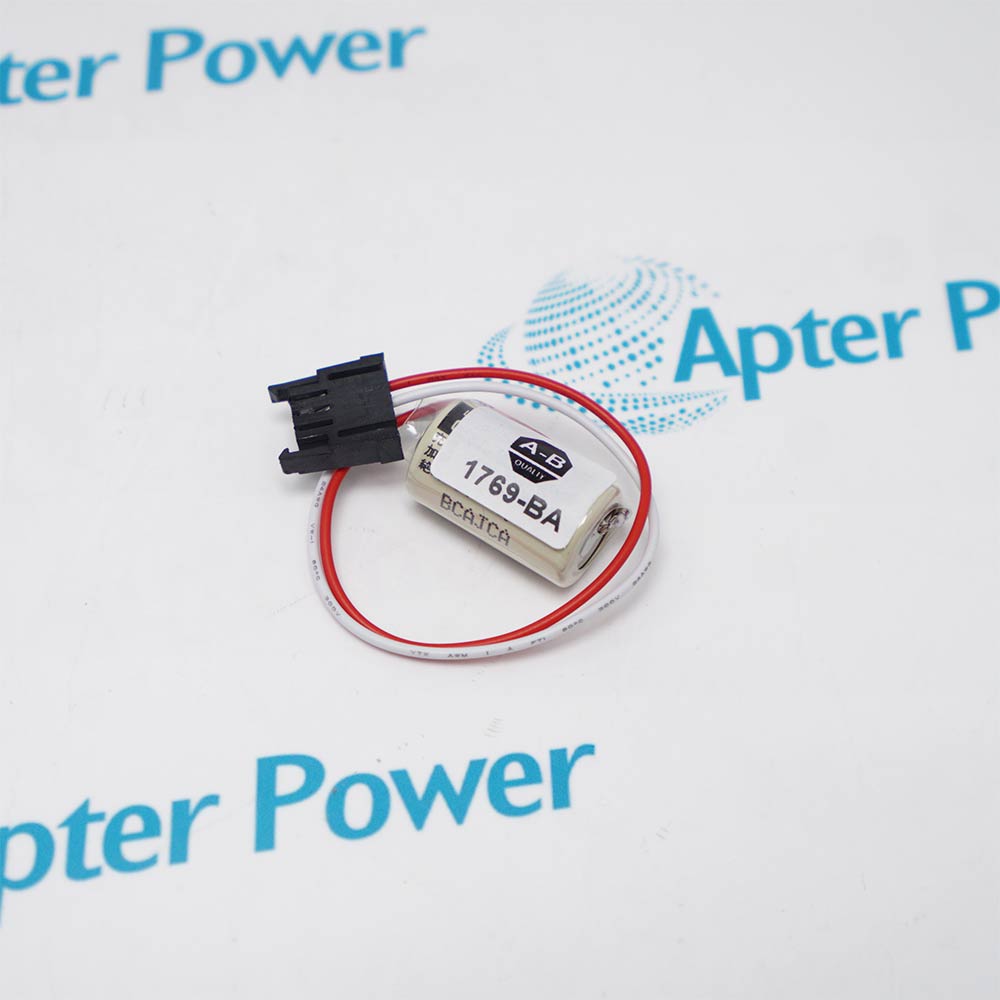
  • Replacement battery:
    1769-BA
  • Weight:
    0.32 kg
  • Estimated shipping dimensions:
    6.75x8.7x13.16cm
  • Tariff Code:
    8537101190
  • Country of origin:
    Singapore
  • Place of shipment:
    Xiamen,Fujian,China
By purchasing this item, you agree to the Terms & Conditions, ApterPower is not an authorized distributor for listed manufacturers or tradenames and therefore the manufacturer's warranty does not apply. All our products come with ApterPower's 1-year warranty.

More Information

Overview Manuals Recovery Interfaces I/O Migration Product Applications

Features:

  • Legacy 750 KB platform: modular CompactLogix control
  • Dual communication: one Ethernet and one isolated RS-232 port
  • Three-bank expansion: up to 16 local Compact I/O modules
1769-L32E belongs to the earlier battery-backed modular CompactLogix generation rather than the later 5370 architecture.

Its Ethernet, serial, CompactFlash, battery, and three-bank I/O design all affect how a plant can restore or migrate the system.

A usable spare plan begins with a verified project archive, firmware, communication settings, media image, I/O layout, and tested commissioning procedure.

Availability of 1769-L32E is subject to Apter Power inventory and sourcing confirmation.

Verified resources for 1769-L32E:

Important Notice: Other accessories, manuals, cables, calibration data, software, etc. are not included with this equipment unless listed in the above stock item description. All prices are shown in USD.

  • Project: archive the last validated controller file and programming release.
  • Firmware: record Series and revision from the installed hardware.
  • CompactFlash: image the 1784-CF128 and document its load behavior.
  • Battery: inspect the 1769-BA and retain the planned power-down procedure.
  • Ethernet: capture address, subnet, messaging paths, and connected devices.
  • RS-232: record DF1 or ASCII protocol, baud, framing, and cable.
  • Dependencies: identify HMIs, gateways, and supervisory systems.
  • Cutover: test communication and rollback with the actual project.
  • Module order: preserve slot, bank, and module-definition information for all local I/O.
  • Power layout: document supplies, expansion cables, distance ratings, and current on each rail.
  • Data behavior: map tags, scaling, alarms, and special-module configuration into the target design.
  • Cutover: test field wiring, communications, and rollback before retiring the legacy controller.
  • Legacy machine control: run established logic with modular Compact I/O.
  • EtherNet/IP communication: connect approved plant and cell devices.
  • Serial integration: maintain documented DF1 or ASCII equipment paths.
  • Migration staging: preserve the installed controller while a replacement architecture is validated.
Description
Brownfield machines with both Ethernet and serial dependencies may still rely on 1769-L32E as their modular CompactLogix controller. The platform links the ladder application to local 1769 I/O, one network interface and an isolated RS-232 path.

The installed role of 1769-L32E spans the ladder application, both communication paths and a modular 1769 layout. Three-bank expansion increases the number of power, cable and module-order dependencies that a replacement or modernization project must reproduce.

Modernizing the discontinued 1769-L32E requires more than selecting a controller with adequate memory. The new design must reproduce Ethernet messaging, isolated serial integration, local I/O behavior and the original machine acceptance criteria.
Revisions

Revision Part #

Also known as

1769-L32E Series A
1769-L32E/A, Series A
1769-L32E Series B
1769-L32E/B, Series B
Alternative Names
Allen-Bradley 1769-L32E Rockwell Automation 1769-L32E AB 1769-L32E 1769L32E 1769 L32E legacy CompactLogix 750 KB Ethernet controller
Technical notes
Project and CompactFlash loss is the principal service risk for 1769-L32E. Save the validated application, image the 1784-CF128 and record its load policy, then capture firmware and both communication configurations before power-down; stop removal if a restorable recovery package cannot be demonstrated for the installed machine.
Exceptional Service

Our Mission

  • 100% Satisfaction

    We believe expertise is priceless. With over 20 years of experience, and top engineers on staff, we can help you solve or avoid problems that threaten your business.
  • Trust Guaranteed

    Not only do we have a vast inventory, our team makes sure every piece of equipment is in working condition. Your purchases are also backed by our Warranty.
  • Expertise

    Time is money, especially when your equipment is down. We work quickly to get your equipment on its way so you can get it back up and running.

FAQS

The following is a list of questions commonly asked by our customers. Please contact us if you have a question about our process that is not answered below.
Why can serial devices remain offline after a replacement 1769-L32E restores its ladder project?
Reapply the documented RS-232 protocol, framing, cable and device addresses separately from the Ethernet configuration, then test each serial path with a known transaction.
What should be checked when an I/O bank faults after 1769-L32E is exchanged?
Compare module order, power-supply placement, expansion cables, end caps, distance ratings and rail current with the archived three-bank drawing.
How should a CompactFlash load problem on 1769-L32E be diagnosed?
Verify the card image, controller Series and firmware, load policy and application revision; do not reformat the only recovery media before making a protected copy.
Why might Ethernet devices fail to reconnect to 1769-L32E even when the controller runs locally?
Restore the recorded IP settings, messaging paths and dependent device addresses, then compare switch and controller diagnostics before editing the machine program.
What must a migration from 1769-L32E preserve beyond the local I/O map?
Carry forward the serial protocol, Ethernet messaging, application behavior, alarm handling and recovery process, then prove them under a controlled cutover plan.
When a low-battery event is recorded on 1769-L32E, what maintenance action should follow?
Protect the project and CompactFlash image first, then service the battery under the manufacturer procedure and verify retained operation before another power interruption.

You May Also Like

Product Browsing History