Features:
- Provides 32 NPN outputs in a compact 94 mm module, saving panel space and reducing module count.
- Accepts 10...31.2V DC (including 5% AC ripple), accommodating industrial power supply variations and battery-backed systems.
- Rated for 0-55°C operation, 5g vibration, 30g shock, with ESD immunity (6kV/8kV) and 10V/m radiated RF immunity.
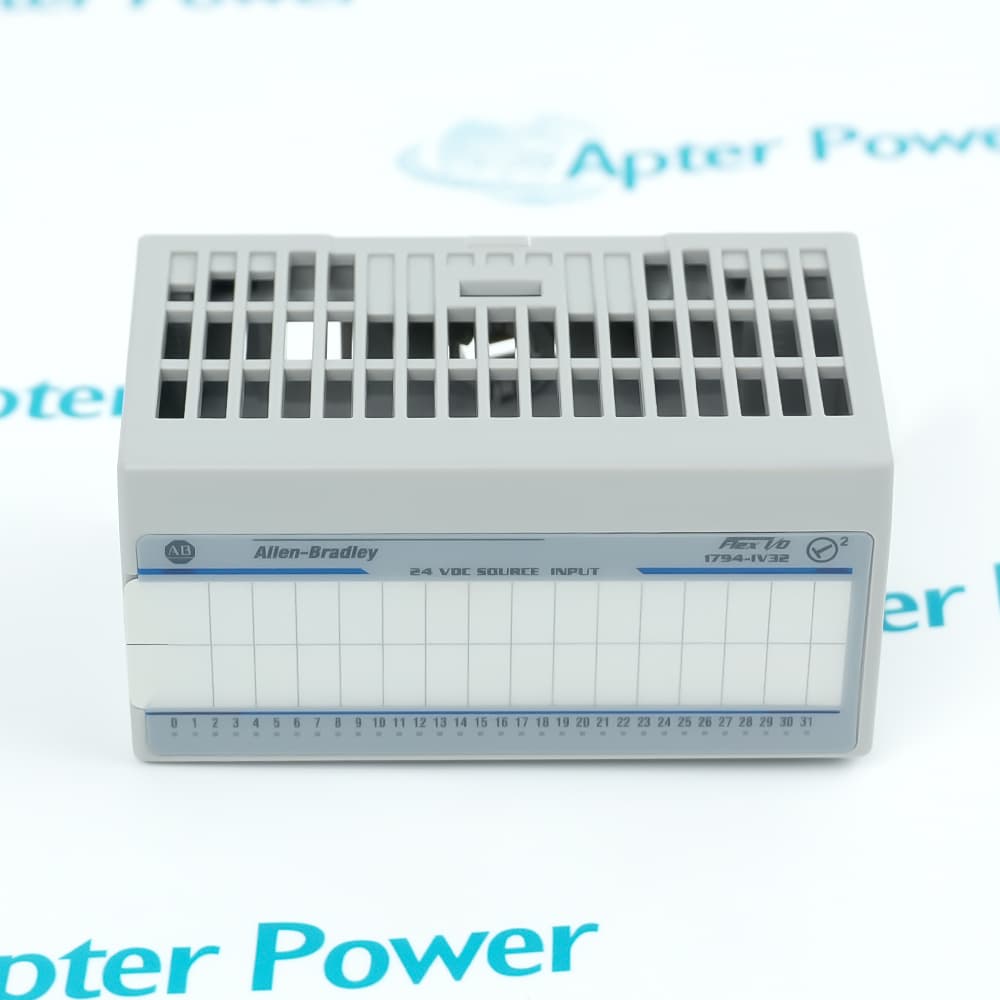
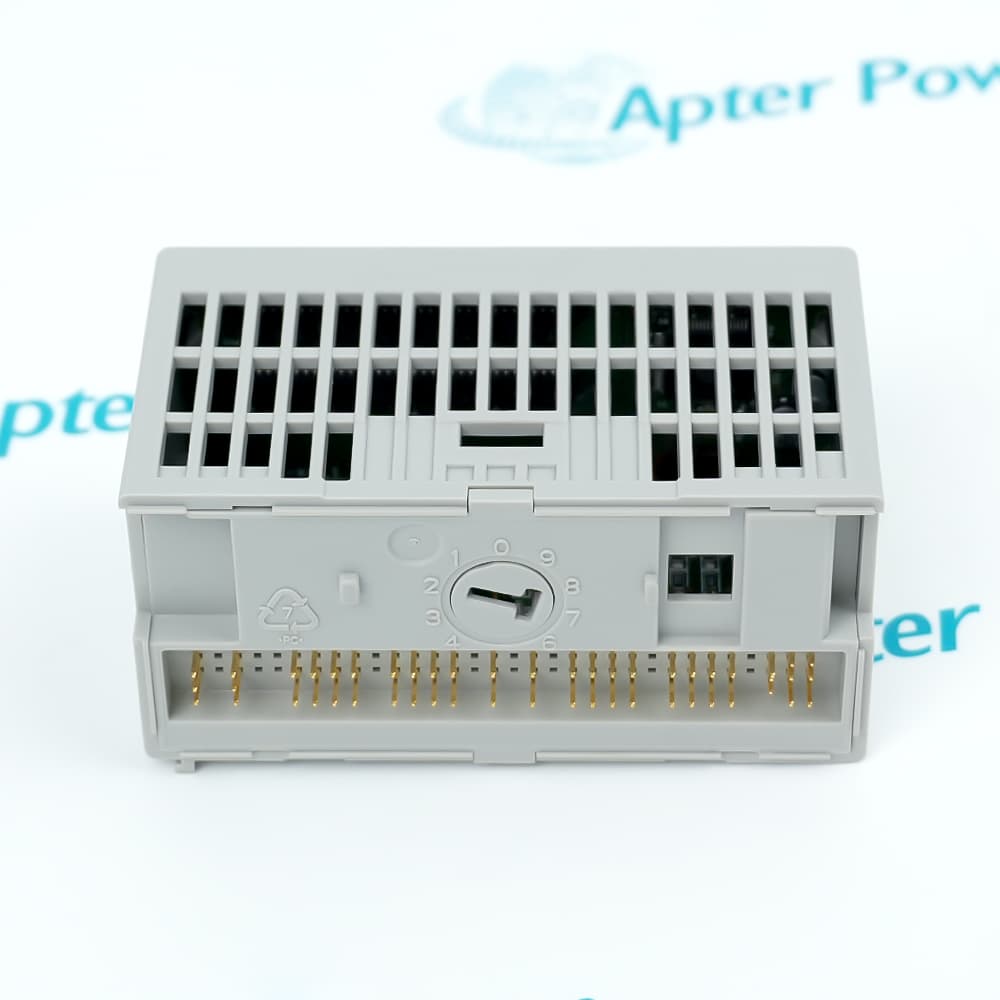
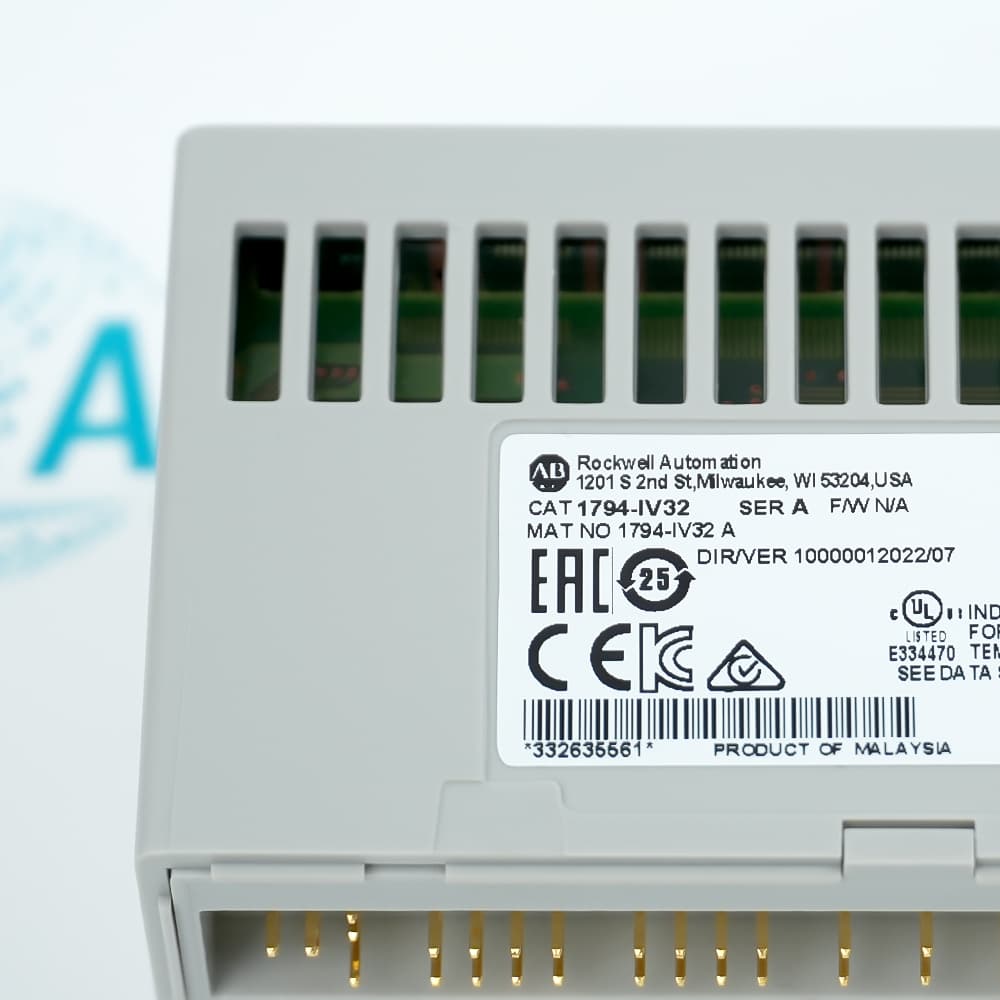
The 1794-IV32 packs 32 discrete sinking output channels into a module measuring just 94 x 94 x 69 mm. This high density is a significant advantage for control panels with limited space. In a typical FLEX I/O system, a 16-point output module would require two modules to achieve 32 outputs, consuming two terminal bases, two backplane positions, and twice the panel area. The 1794-IV32 reduces this to one module, one terminal base, and one slot. Each output is rated at 0.5A at 10-31.2V DC, sufficient for controlling small solenoids, indicator lights, relay coils, and PLC inputs directly without external interposing relays.
The 1794-IV32 operates from 10 to 31.2V DC, including up to 5% AC ripple. This wide range provides several practical advantages in industrial environments. First, it accommodates typical 24V DC power supplies with their natural output variation (e.g., 22-28V). Second, it supports 12V DC systems (common in older control panels or battery-powered equipment) as long as the voltage stays above 10V. Third, the tolerance for 5% AC ripple means the module will function correctly even if the DC supply has residual ripple from insufficient filtering – a common issue when adding I/O to an existing power supply.
The 1794-IV32 is designed to survive in demanding industrial environments. It operates over a temperature range of 0 to 55°C (32 to 131°F), allowing installation in control cabinets without air conditioning in many climates. For storage or transportation, it withstands -40 to 85°C (-40 to 185°F). Vibration resistance is 5g at 10-500 Hz – suitable for mounting near rotating machinery or on movable equipment. Shock tolerance is 30g operating and 50g non-operating, providing resilience against impacts during installation or machine operation.
The 1794-IV32 Allen-Bradley Input Module may still be available for purchase and support from Apter Power beyond End-Of-Life (EOL)by the manufacturer (OEM).
Allen-Bradley 1794-IV32 Input Module Manuals, Datasheets,Drivers,Link
Important Notice:Other accessories,manuals,cables,calibration data,software,etc.are not included with this equipment unless listed in the above stock item description.All prices are shown in USD.
Allen-Bradley 1794-IV32 Input Module Specs
General
- Manufacturer Allen-Bradley
- Model 1794-IV32
- Condition New Original ready stock
- Product Family
1794-OB32,1794-OV16,1794-OB16
Important Notice:Other accessories,manuals,cables,calibration data,software,etc.are not
included with this equipment unless listed in the above stock item description.All prices are
shown in USD.
- Machinery and Process Control: Collects signals from sensors, limit switches, buttons, and photoelectric switches, suitable for packaging machinery, assembly lines, and material handling systems.
- Distributed I/O Systems: Serves as remote stations in large factories, transmitting field signals back to the main PLC (such as ControlLogix or CompactLogix) via networks such as EtherNet/IP, ControlNet, or DeviceNet.
- High Space Utilization Requirements: Provides 32 inputs per module, significantly reducing the space occupied by guide rails in the cabinet.
- Relative Humidity: 5% to 95% (non-condensing).
- Shock Resistance and Isolation: Resistant to operational shocks up to 30g. The module provides a continuous 50V isolation voltage (between the field and system ends) to protect the PLC internal wiring from external surges.
- Protection Rating: Must be installed in an industrial-standard rack to prevent dust and moisture.
- The panel is equipped with 32 status indicators. When a valid signal is input to the corresponding channel, the indicator light illuminates, facilitating quick troubleshooting by on-site technicians.
- Hot-Swap (RIUP): Supports "hot-plugging," allowing the control system to maintain network communication without downtime when changing modules during system operation.
- Diagnostic Feedback: Modules can transmit their operational status (such as communication abnormalities or configuration errors) to the PLC controller in real time, which is then displayed on the software diagnostic screen.