Ask our team:
  • Phone: +86 181 0690 9650
  • E-Mail sales1@apterpower.com
  • Lifecycle status

    Active / Available from OEM
    Apter Power verifies processor identity, project requirements, quality, documentation, and sourcing before quotation.

1775-L2

/ 4.9
1001 reviews | Need a Specific Revision?
1775-L2 keeps advanced PLC-3 numerical routines available when the validated application depends on floating-point or high-order integer operations.
In Stock
Ships by Wednesday, October 28
Fast Shipping Available
Get a quick price for 1775-L2
Quantity
*E-mail
Company
*Mobile
*Content
Upload (gif, jpg, jpeg, png, bmp, doc, docx, xls, xlsx, ppt, pdf, csv)

Technical specifications for 1775-L2

  • Manufacturer:
    Allen-Bradley
  • Part Number:
    1775-L2
  • Product Family:
    PLC-3
  • Product Type:
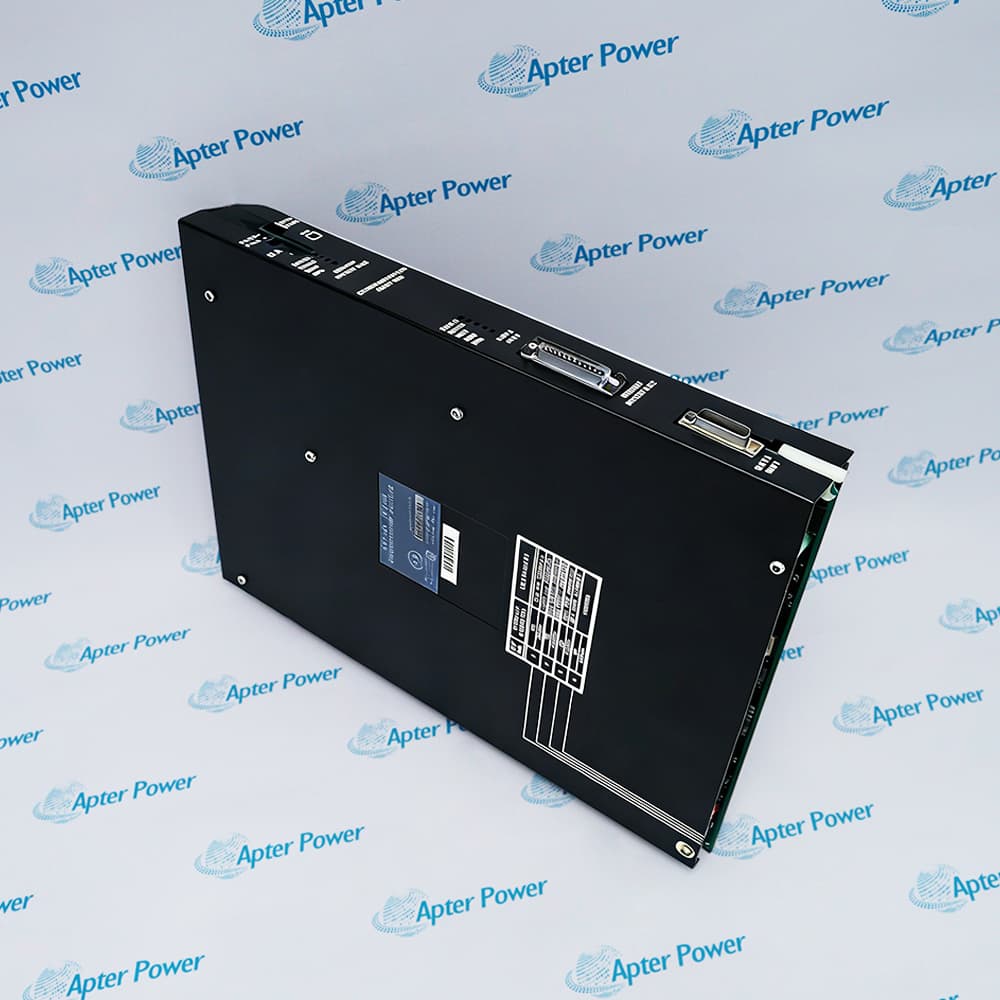
    PLC-3 Level 2 Main Processor Module
  • Stock:
    1
  • Processor level:
    Level 2
  • Chassis space:
    2 slots
  • Recommended location:
    Two left-most slots in PLC-3 main chassis
  • Level 2 operations:
    Floating-point and high-order integer
  • Processor architecture:
    Four AMD 2903 bit-slice processors
  • Backplane current at +5 V:
    9.4 A
  • Backplane current at +15 V:
    40 mA
  • Operating temperature:
    0 to 60 °C
  • Storage temperature:
    -40 to 85 °C
  • Relative humidity:
    5 to 95%, noncondensing
  • Tariff Code:
    8537101190
  • Country of origin:
    USA
  • Place of shipment:
    Xiamen,Fujian,China
By purchasing this item, you agree to the Terms & Conditions, ApterPower is not an authorized distributor for listed manufacturers or tradenames and therefore the manufacturer's warranty does not apply. All our products come with ApterPower's 1-year warranty.

More Information

Overview Manuals Advanced Operations Main Chassis Integration Calculation Validation Product Applications

Features:

  • Level 2 processing: supports the documented advanced PLC-3 instruction scope
  • Calculation capability: serves projects using floating-point or high-order integer operations
  • Validation-led replacement: project calculations and processor class must remain aligned
1775-L2 is selected for what the PLC-3 application calculates, not simply because it is the higher processor level.

That makes the audited instruction inventory and numerical baseline central to sourcing and post-restore acceptance.

The hardware, archive, and calculation results should be treated as one controlled system record.

Availability of 1775-L2 is subject to Apter Power's current inventory and sourcing confirmation.
Allen-Bradley 1775-L2 PLC-3 Level 2 Main Processor Module Manuals, Datasheets, Links
Important Notice: Other accessories, manuals, cables, calibration data, software, etc. are not included with this equipment unless listed in the above stock item description. All prices are shown in USD.
  • Floating-point use: identify routines that depend on real-number calculations.
  • High-order integer use: retain evidence for operations outside the Level 1 scope.
  • Instruction baseline: keep the audited project list with the processor record.
  • Processor role: maintain program execution and memory management in the PLC-3 chassis.
  • Physical plan: reserve and inspect the documented processor positions.
  • Backplane review: include the complete installed module set in the chassis calculation.
  • Reference results: preserve approved outputs from critical numerical routines.
  • Restore comparison: check constants, data files, and instruction use against the baseline.
  • Release control: approve production only after calculation and application tests pass.
  • PLC-3 numerical control: execute validated projects requiring documented Level 2 operations.
  • Legacy process calculation: maintain floating-point or high-order integer routines in service.
  • Capability-qualified recovery: restore an application with matched processor and calculation evidence.
Description
Numerical behavior defines the system value of 1775-L2. Its Level 2 instruction capability supports PLC-3 projects whose control calculations depend on floating-point or high-order integer operations.

After a restoration, 1775-L2 cannot be accepted from a successful download alone. Constants, data files, instruction use, and approved calculation results must agree with the application baseline before the process relies on those routines.

The physical main-processor role of 1775-L2 still requires the documented chassis positions and a complete backplane review, but those hardware checks serve a larger goal: preserving the verified numerical application and its recovery evidence.
Alternative Names
Allen-Bradley 1775-L2 Main Processor Rockwell Automation 1775L2 PLC-3 AB 1775 L2 Level 2 CPU PLC-3 1775-L2 Processor
Technical notes
A restored 1775-L2 project is not released until its critical numerical routines reproduce the approved baseline. Compare instruction use, constants, data files, and calculation outputs; investigate every deviation before production. An L1 alternative is rejected whenever the audit finds floating-point or high-order integer operations that depend on Level 2 capability.
Exceptional Service

Our Mission

  • 100% Satisfaction

    We believe expertise is priceless. With over 20 years of experience, and top engineers on staff, we can help you solve or avoid problems that threaten your business.
  • Trust Guaranteed

    Not only do we have a vast inventory, our team makes sure every piece of equipment is in working condition. Your purchases are also backed by our Warranty.
  • Expertise

    Time is money, especially when your equipment is down. We work quickly to get your equipment on its way so you can get it back up and running.

FAQS

The following is a list of questions commonly asked by our customers. Please contact us if you have a question about our process that is not answered below.
Which project evidence proves that 1775-L2 is required instead of a Level 1 processor?
Audit the validated application for floating-point and high-order integer operations, then retain the routines and official instruction references with the processor decision. A higher catalog level is justified by required operations, not by preference alone.
Can 1775-L2 be replaced by an L1 processor when the same chassis positions are available?
Only if a complete instruction audit proves that the application does not use Level 2-only operations. Stop the substitution whenever floating-point or high-order integer capability is required; mechanical fit does not establish functional equivalence.
After restoring a project, how should critical numerical routines on 1775-L2 be accepted?
Compare constants, data files, instruction use, and approved calculation results with the validated baseline. Investigate any difference before production release, and retain the pre-change archive and recovery procedure until the numerical checks pass.
Why should processor identity be checked before troubleshooting changed calculations on 1775-L2?
A restored archive can be correct while the installed processor class or project baseline is wrong. Confirm the nameplate and instruction capability first, then compare the numerical data and application records before editing logic.
What should be reviewed if a populated PLC-3 chassis becomes unstable after 1775-L2 installation?
Verify the two-slot processor placement, backplane calculation, connector condition, adjacent module map, and restored archive against official records. Isolate chassis and project acceptance before assuming that the advanced instructions caused the hardware symptom.
What information should accompany a time-critical request for 1775-L2?
Provide the full nameplate, validated archive, audited Level 2 instruction list, numerical acceptance baseline, chassis and module layout, backplane calculation, condition requirement, quantity, destination, and outage date. These details distinguish a genuine L2 requirement from a generic PLC-3 request.