Features:
- Interface Between Optical Sensors and PLC-5 Control System
- Combines Capability of High-Speed Pulse Detection with Latching Input Support
- Operates in Conjunction with Optical Sensors and Standard 1771 I/O Chassis
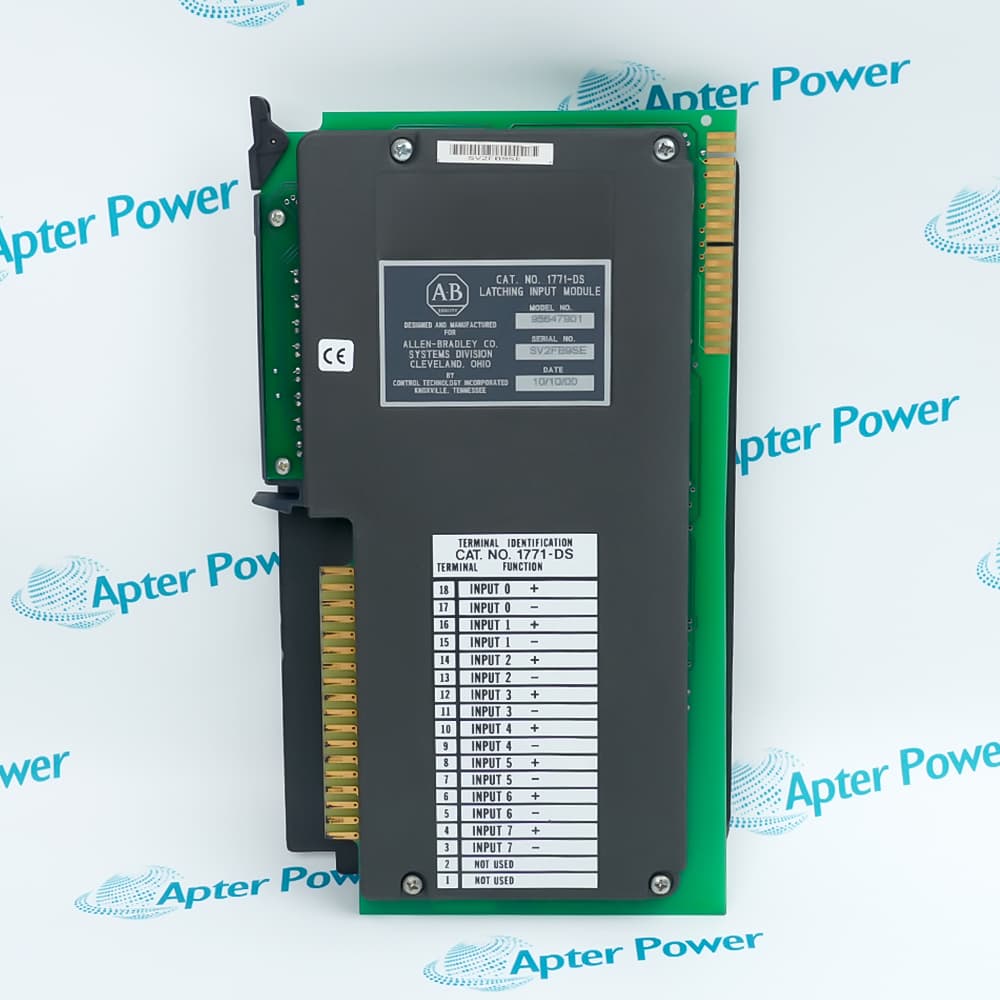
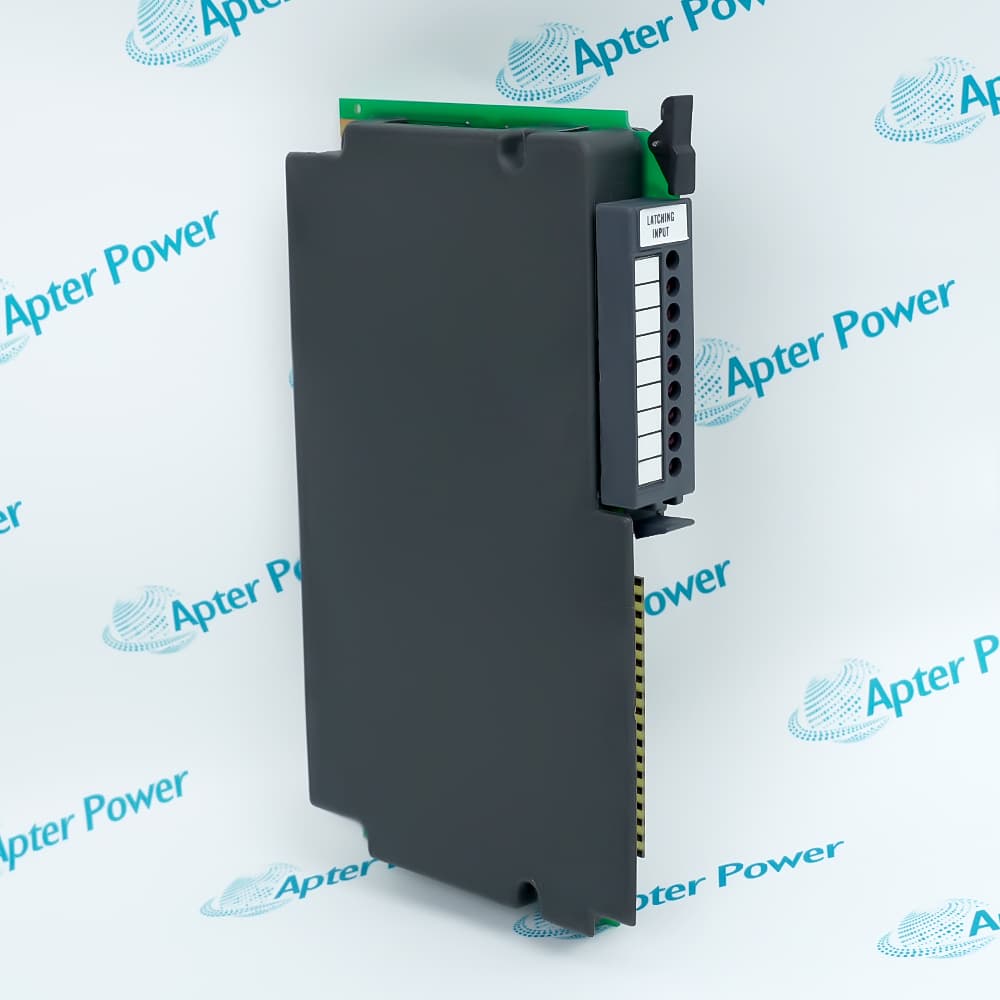
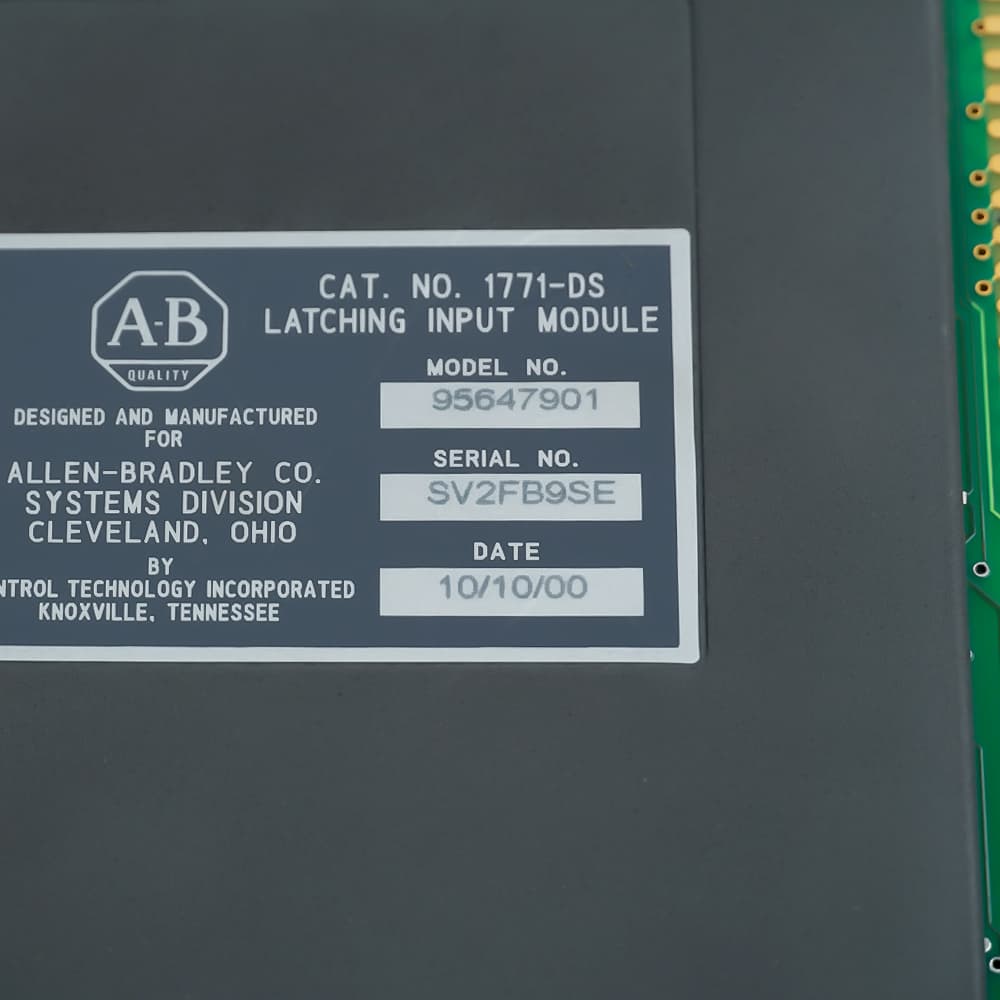
The 1771-DS operates as the Latching (10-27V DC) Input Module in a 1771 I/O chassis, providing reliable detection of high-speed pulse signals to the PLC-5 control system. It continuously monitors input terminals for pulses ranging from 0.1 to 5.0 milliseconds in duration and sets corresponding bits in the input image table address during the next I/O scan cycle. Seamless pulse capture is standard with the 1771-DS, however using the Paired Input Configuration will allow coordinated response between gate signals and pulse events for enhanced application flexibility. The 1771-DS has made improvements in several areas over previous input module designs in addition to incorporating latching capability within the 1771 I/O system.
The 1771-DS provides essential input functions common to the entire control system, and is a critical component of the monitoring path, directly affecting the proper, normal operation of high-speed counting and positioning applications. One or more 1771-DS modules are required per chassis depending on the number of pulse inputs needed. The 1771-DS occupies a standard single slot in the 1771 I/O chassis and can be located in any available I/O slot position.
For Paired Input applications, the 1771-DS requires configuration of two inputs working in coordination. In addition to standard independent operation, the paired configuration also performs synchronized signal processing. The 1771-DS paired input configuration executes coordinated detection using the internal circuitry specified in the module specifications. Using this method, the paired input system continually monitors both the gate signal and pulse input. If the 1771-DS detects that the gate signal is active and a pulse event occurs, it will automatically process both signals accordingly and update the input image table for the PLC-5 processor.
The 1771-DS Allen-Bradley Latching Input Module may still be available for purchase and support from Apter Power beyond End-Of-Life (EOL) by the manufacturer (OEM).
Allen-Bradley 1771-DS Latching Input Module Manuals,Datasheets,Link
Important Notice: Other accessories, manuals, cables, calibration data, software, etc. are not included with this equipment unless listed in the above stock item description. All prices are shown in USD.
Allen-Bradley 1771-DS Latching Input Module Specs
General
- Manufacturer Allen-Bradley
- Model 1771-DS
- Condition New Original ready stock
- Product Family 1771-OFE,1771-WV,1771-DV
Important Notice: Other accessories, manuals, cables, calibration data, software, etc. are not included with this equipment unless listed in the above stock item description. All prices are shown in USD.
- High-Speed Pulse Detection: It can detect and latch pulses with a duration as short as 0.1 to 5.0 ms.
- Optical Sensor Integration: Frequently used with optical sensors that have isolated pulse or gate outputs.
- Manufacturing Automation: Ideal for processes requiring precise monitoring of rapid events that occur between standard I/O scans, such as part detection on high-speed assembly lines.
- PLC Compatibility: It is compatible with Allen-Bradley programmable controllers that support the 1771 I/O structure and block transfer capabilities.
- I/O Scanning: When a pulse is detected, the module sets a bit in the corresponding input image table address, which the PLC processor then reads during its next I/O scan.
- Voltage Range: Operates within a 10–27V DC range, allowing it to interface with a wide variety of industrial DC devices.
- Field Wiring: Connections are made via a dedicated field wiring arm (typically 1771-WN or similar), which allows for module replacement without disconnecting individual wires.
- Environmental Protection: The module is classified as open-style equipment and must be installed in a suitable enclosure to meet safety requirements.
- Electrical Isolation: Features opto-electrical isolation to protect backplane and logic circuits from electrical transients and noise.
- Hot-Swapping Warning: Power must be removed from the I/O chassis before inserting or removing the module to prevent electrical arcing or equipment damage.
- ESD Sensitivity: The unit is sensitive to electrostatic discharge; users should use grounding wrist straps and follow ESD handling guidelines.
- Directives: Older versions were tested to meet Council Directive 73/23/EEC (Low Voltage) and safety requirements of EN 61131-2.