Ask our team:
  • Phone: +86 181 0690 9650
  • E-Mail sales1@apterpower.com
  • Lifecycle status

    Discontinued / Obsolete by OEM
    Apter Power provides quotations, technical documentation, procurement support and system guidance.

1747-KFC15

/ 4.9
1001 reviews | Need a Specific Revision?
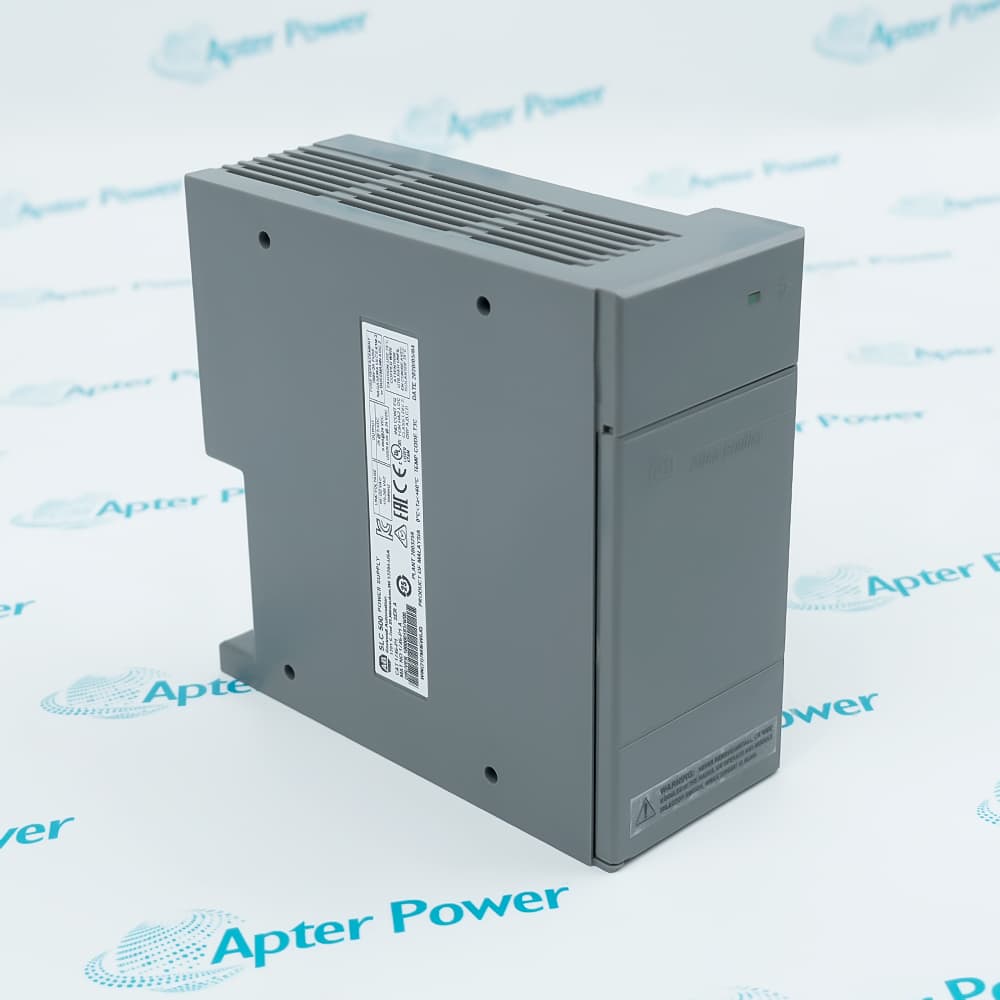
Allen-Bradley 1747-KFC15 is an RS-232 DF1-to-ControlNet interface module for connecting compatible serial devices and SLC equipment to a ControlNet network.
In Stock
Ships by Thursday, October 29
Fast Shipping Available
Get a quick price for 1747-KFC15
Quantity
*E-mail
Company
*Mobile
*Content
Upload (gif, jpg, jpeg, png, bmp, doc, docx, xls, xlsx, ppt, pdf, csv)

Technical specifications for 1747-KFC15

  • Manufacturer:
    Allen-Bradley
  • Part Number:
    1747-KFC15
  • Product Family:
    SLC 500
  • Product Type:
    ControlNet RS-232 Interface Module
  • Stock:
    8
  • Product family:
    SLC communication interfaces
  • Network side:
    ControlNet, redundant BNC
  • Service port:
    ControlNet NAP
  • Serial side:
    RS-232 DF1 full duplex
  • Serial rate:
    1200–57,600 bit/s
  • Message buffers:
    67
  • Weight:
    0.2176 kg
  • Estimated shipping dimensions:
    14x14.5x3.5cm
  • Tariff Code:
    8537101190
  • Country of origin:
    USA
  • Place of shipment:
    Xiamen,Fujian,China
By purchasing this item, you agree to the Terms & Conditions, ApterPower is not an authorized distributor for listed manufacturers or tradenames and therefore the manufacturer's warranty does not apply. All our products come with ApterPower's 1-year warranty.

More Information

Overview Manuals Serial Link ControlNet Path Fault Diagnosis Product Applications

Features:

  • RS-232 DF1 full-duplex to ControlNet protocol interface
  • Redundant ControlNet BNC connectors plus network access port
  • Configurable 1200–57,600 bit/s serial channel with message buffering
The 1747-KFC15 joins a configured DF1 serial device to a scheduled or unscheduled ControlNet messaging path.

Serial and network settings form two separate diagnostic boundaries, so communication on one side does not prove correct configuration on the other.

Replacement success depends on restoring addressing, schedule and keeper context, media, termination, framing, firmware, and message routes together.

The 1747-KFC15 Allen-Bradley may still be available for purchase and support from Apter Power beyond End-Of-Life (EOL) by the manufacturer (OEM).

Allen-Bradley 1747-KFC15 ControlNet RS-232 Interface Module Manuals,Datasheets,Link

Important Notice: Other accessories, manuals, cables, calibration data, software, etc. are not included with this equipment unless listed in the above stock item description. All prices are shown in USD.

  • Use RS-232 DF1 full-duplex settings supported by both devices.
  • Match baud rate, framing, station address, and cable pinout.
  • Prove local serial communication before loading network traffic.
  • Restore the node address, keeper, schedule, and message routing.
  • Preserve redundant-channel BNC connections, taps, and termination.
  • Use the NAP only for its documented network access role.
  • Treat codes 9 and 10 as node-address checks first.
  • Separate serial faults from media, schedule, and routing faults.
  • Record indicators and counters before cycling power or changing configuration.
  • Connecting documented DF1 devices to legacy ControlNet
  • Maintaining SLC communication paths during planned outages
  • Network troubleshooting with separate serial and ControlNet records
Description
Allen-Bradley 1747-KFC15 bridges an RS-232 DF1 half- or full-duplex serial connection to a ControlNet network. It provides two ControlNet BNC connectors and a network access port; both BNC connectors are used when the installed network uses redundant media.

1747-KFC15 supports configured serial baud rates from 1200 to 57,600 bit/s, while internal message buffering manages network and serial traffic. It does not convert EtherNet/IP, DH+, or arbitrary serial protocols, and it is not interchangeable with similarly named 1747 communication modules.

A replacement plan for 1747-KFC15 should capture the full catalog and firmware identity, ControlNet node address, coax channel and tap arrangement, termination, DF1 baud and framing, station addresses, and message paths. Restore and test local serial communication before reconnecting the complete network workload.
Revisions

Revision Part #

Also known as

1747-KFC15 Ser A
1747-KFC15/A, Series A, Rev A
Alternative Names
1747-KFC15 1747KFC15 1747 KFC15 Allen-Bradley 1747-KFC15 Allen Bradley 1747-KFC15 1747-KFC15 ControlNet RS-232 Interface
Technical notes
Before replacing 1747-KFC15, save the ControlNet node, schedule and keeper context, DF1 baud, framing and station settings, message paths, firmware, and cabling record. Preserve coax taps, redundant channels, termination, and NAP use. Fault codes 9 or 10 should first direct attention to duplicate or illegal node addressing.
Exceptional Service

Our Mission

  • 100% Satisfaction

    We believe expertise is priceless. With over 20 years of experience, and top engineers on staff, we can help you solve or avoid problems that threaten your business.
  • Trust Guaranteed

    Not only do we have a vast inventory, our team makes sure every piece of equipment is in working condition. Your purchases are also backed by our Warranty.
  • Expertise

    Time is money, especially when your equipment is down. We work quickly to get your equipment on its way so you can get it back up and running.

FAQS

The following is a list of questions commonly asked by our customers. Please contact us if you have a question about our process that is not answered below.
Can 1747-KFC15 be replaced by 1747-KE or another 1747 communication module?
No direct interchangeability should be assumed. The KFC15 bridges DF1 to ControlNet; compare network type, connectors, protocol, addressing, firmware, and message paths before selecting any alternative.
What do fault codes 9 or 10 change when troubleshooting 1747-KFC15?
They direct the technician to the ControlNet node address. Check for a duplicate or illegal address, then verify the saved network configuration before replacing hardware.
Why can the serial side of 1747-KFC15 work while ControlNet communication fails?
The DF1 path can be correct while the ControlNet node address, channel, coax tap, termination, or message route is wrong. Diagnose the serial and ControlNet sides of 1747-KFC15 separately.
What should be saved before removing 1747-KFC15?
Record node and station addresses, DF1 baud and framing, firmware, message routes, network schedule, keeper context, BNC channel use, taps, termination, and NAP connections.
Can an EtherNet/IP gateway replace 1747-KFC15 as a drop-in device?
No. A protocol migration changes addressing, messaging, network media, configuration, and validation. Treat it as an engineered conversion rather than a direct module exchange.
What should be verified before reconnecting 1747-KFC15 to ControlNet?
Verify the node address, coax channel and taps, termination, NAP use, DF1 framing and station addresses, firmware, and saved message routes before restoring network traffic.