Features:
- Closed-loop excitation control maintains the selected synchronous-generator voltage.
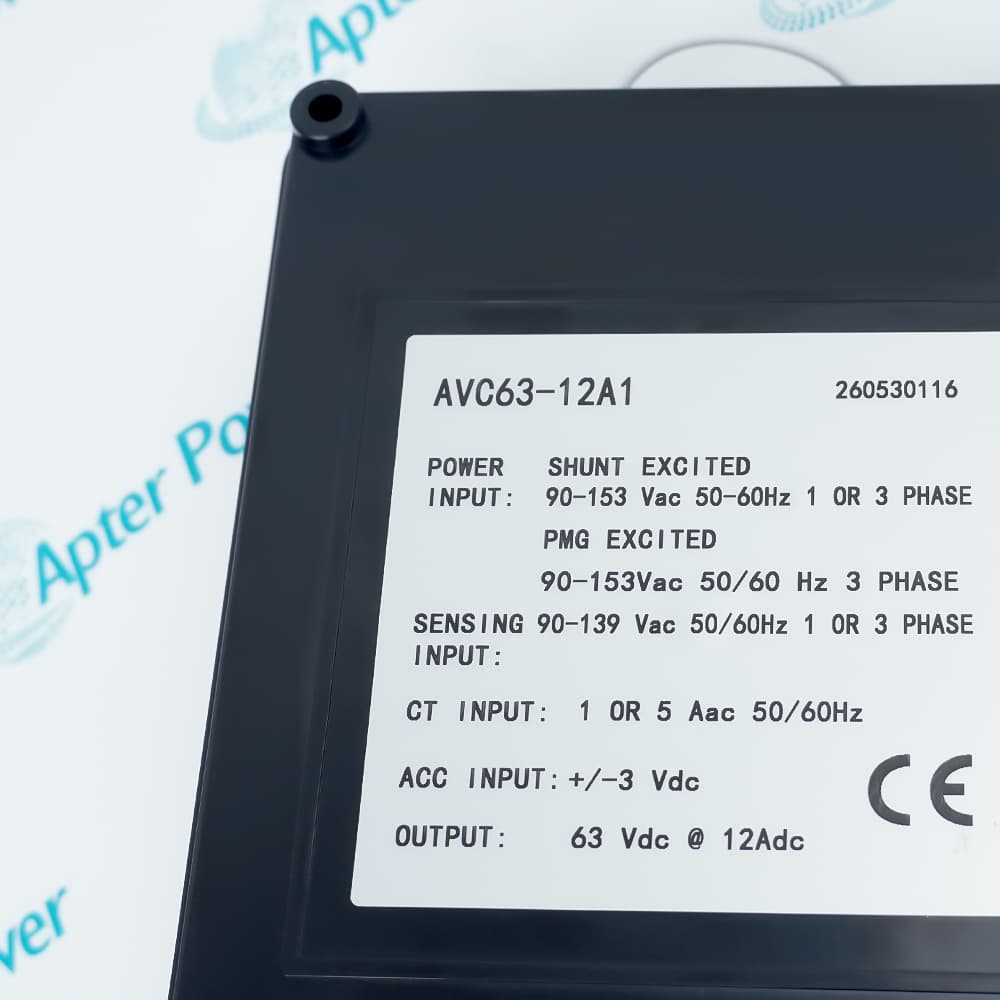
- The A1 option is configured for 100/120 VAC sensing at 50 or 60 Hz.
- Shunt or PMG power can be supplied through single- or three-phase connections.
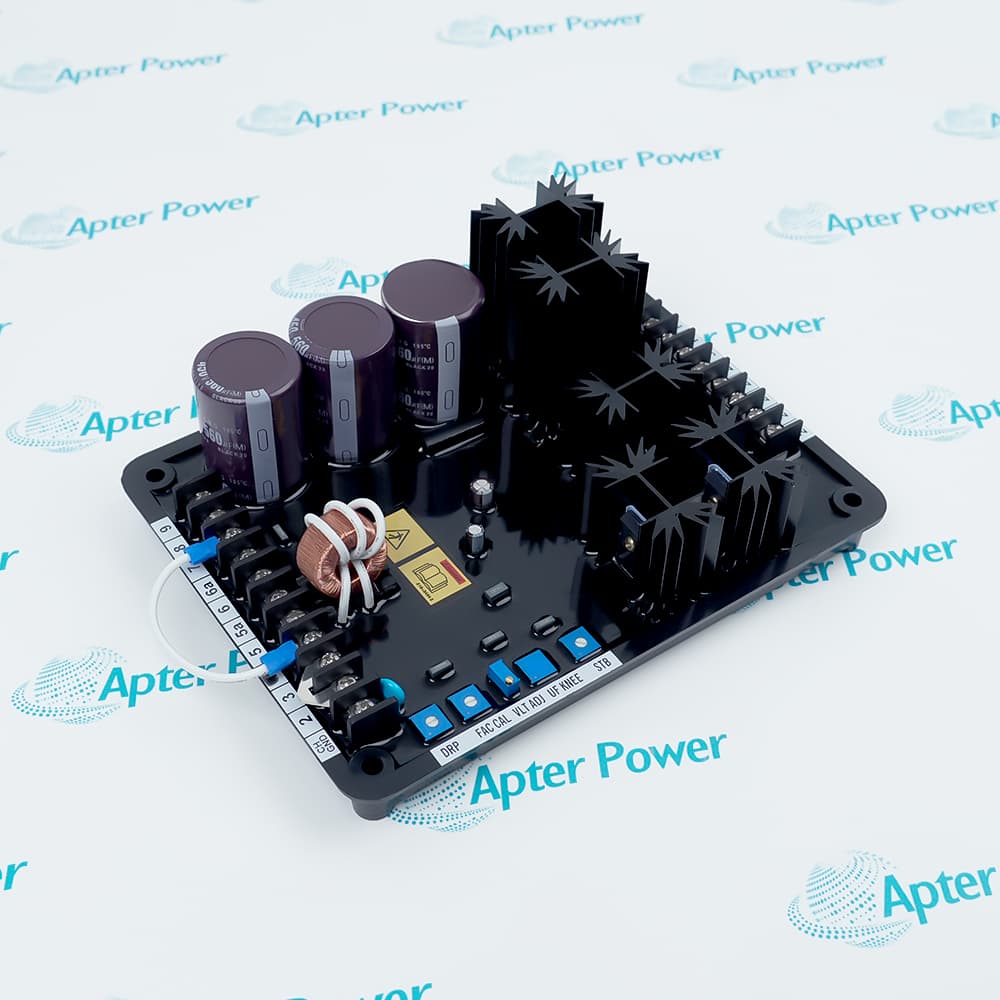
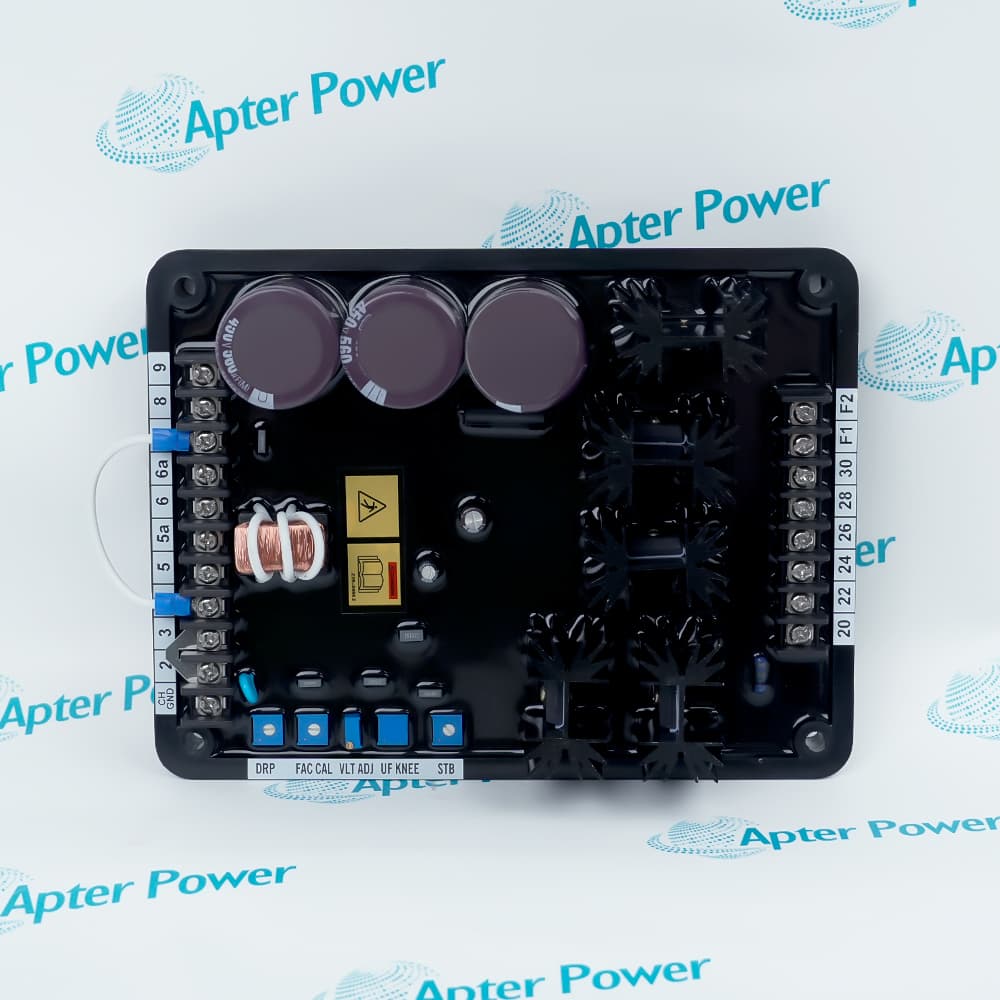
AVC63-12A1 forms its control error by comparing the rectified sensing signal with an internal reference.
Its power stage then varies DC field energy rather than switching the generator load circuit directly.
Droop, accessory-input, and protection functions allow the regulator to operate as part of a coordinated excitation system.
Apter Power supports documentation, selection review, and system matching for the Basler Electric AVC63-12A1 Voltage Regulator.
Basler Electric AVC63-12A1 Voltage Regulator Manuals,Datasheets,Link
Important Notice: Other accessories, manuals, cables, calibration data, software, etc. are not included with this equipment unless listed in the above stock item description. All prices are shown in USD.
Measurement Configuration
- A1 selection: The sensing circuit is matched to 100 or 120 VAC at 50 or 60 Hz.
- Phase choice: Jumper positions select single-phase or three-phase voltage sensing.
- Input burden: Each sensing phase draws less than 1 VA from the generator measurement circuit.
- Trim range: The voltage-adjust control permits approximately ±10% adjustment from the nominal setting.
Field-Power Control
- Power source: Excitation energy may come from generator shunt terminals or a permanent-magnet generator.
- Continuous level: The regulated field output reaches 63 VDC at 12 ADC continuously.
- Forcing duty: A ten-second ceiling of 125 VDC at 24 ADC supports transient excitation demand.
- Field boundary: The connected field circuit must present at least 5.25 ohms of resistance.
Excitation Safeguards
- V/Hz limiting: Selectable compensation lowers the voltage command as frequency falls below the knee.
- Overexcitation trip: An inverse-time function shuts down output after excessive field demand persists.
- Voltage buildup: Residual generator voltage initiates automatic excitation buildup.
- EMI filtering: Internal suppression supports immunity to radiated, conducted, ESD, and fast-transient disturbances.
Generator Control Roles
- Brushless excitation: The regulator controls the field of a conventional brushless synchronous generator.
- Parallel operation: Droop compensation enables reactive-load sharing between generator sets.
- Power-factor control: The accessory input accepts commands from a compatible var or power-factor controller.
- Excitation limiting: An external limiter can bias the regulator through the same accessory interface.