Features:
- Dual message roles: Server mode responds to remote requests, while client mode lets PLC logic initiate network exchanges.
- Legacy media choice: Link-beat detection selects the twisted-pair path, while AUI supports an installed transceiver arrangement.
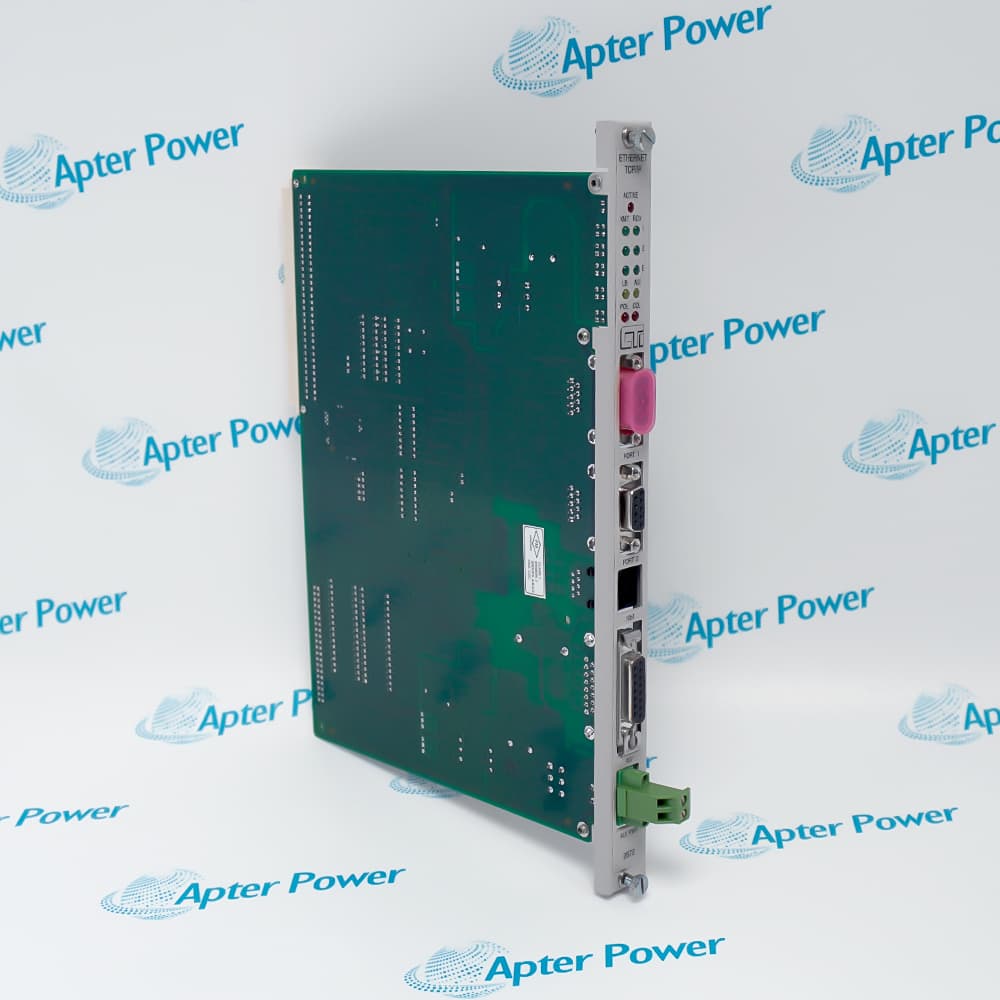
- Visible diagnostics: Front-panel indications separate module activity, port traffic, media selection and physical-network faults.
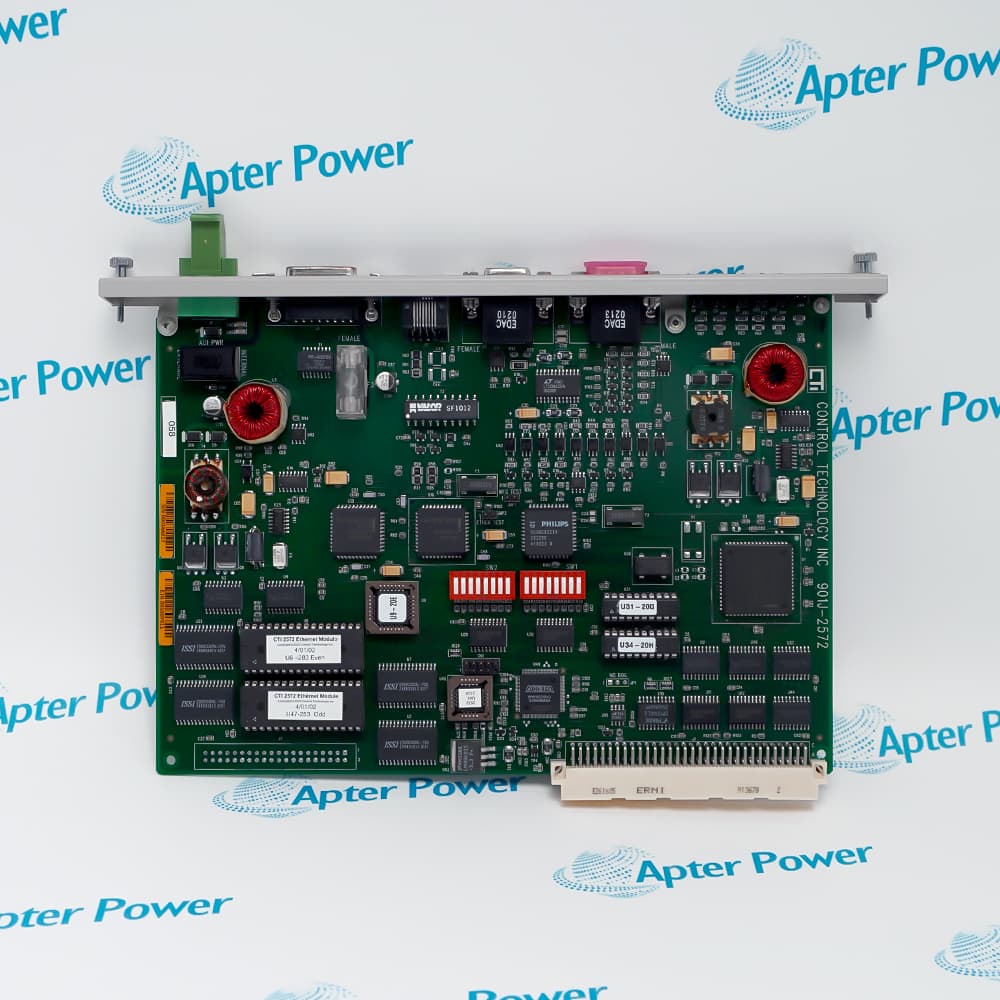
The module identifies an installed CTI or SIMATIC 505 PLC node that must exchange programming, supervisory or peer-to-peer traffic over Ethernet.
Its server, client and serial-routing functions are configured parts of the application, so a hardware match alone does not reconstruct the communication path.
A service decision should preserve the working addresses, message roles and PLC logic before considering an exact spare or a migration project.
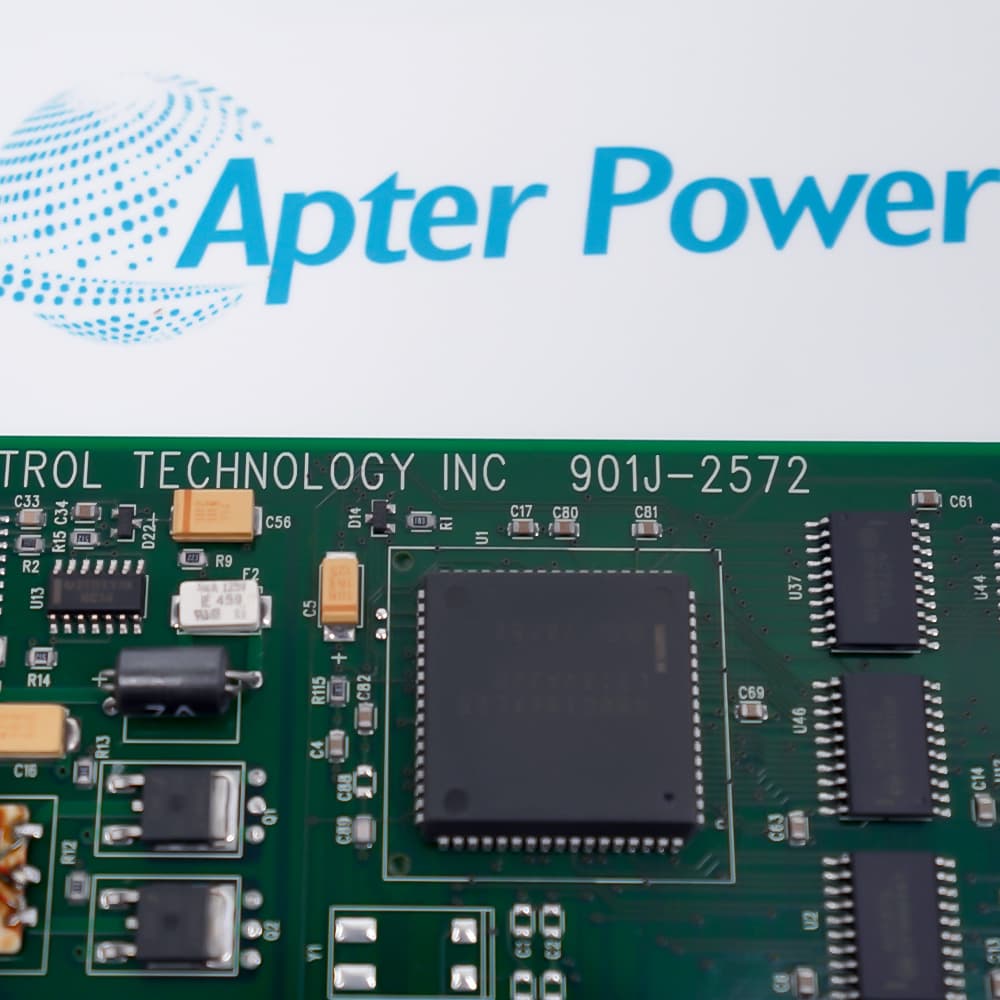
Apter Power can help confirm the CTI-Control Technology Inc 2572 hardware identity and documented communication role before quotation.
CTI-Control Technology Inc 2572 Ethernet TCP/IP Adapter Module Manuals,Datasheets,Link
Important Notice: Other accessories, manuals, cables, calibration data, software, etc. are not included with this equipment unless listed in the above stock item description. All prices are shown in USD.
- Server operation: Remote devices issue PLC commands carried in TCP/IP packets, and the module returns the PLC response.
- Client operation: Ladder logic defines what is sent, the destination and the event that initiates the message.
- Peer communication: A module can operate as both server and client so equipped PLCs exchange data directly.
- PLC integration: Client communications depend on the assigned PLC words and the installed message logic.
- Forward path: Configured serial-port data is encapsulated in TCP/IP and sent to a defined network node.
- Return path: Replies from the destination are routed back to the originating serial port.
- Engineering access: The module serial ports can serve PLC programming and MMI connections in the documented installation.
- Configuration boundary: Serial service settings and the network destination must be preserved as one communication path.
- Module state: The ACTIVE indication provides the first checkpoint for module operation.
- Traffic direction: TX and RX indications distinguish activity on Ethernet and each serial channel.
- Media selection: Link Beat and AUI Selected show which Ethernet attachment path the module is using.
- Physical faults: Collision and Reversed Polarity indications direct attention to the media layer before application changes.
- PLC programming: Extends Workshop or TISOFT engineering access across an Ethernet connection.
- Supervisory access: Connects supported MMI or SCADA software with data in an installed PLC.
- Controller exchange: Enables peer-to-peer reads, writes and event-driven messages between equipped PLC nodes.
- Serial extension: Routes a configured serial service through TCP/IP to a defined remote destination.