Ask our team:
  • Phone: +86 181 0690 9650
  • E-Mail sales1@apterpower.com
  • Lifecycle status

    Active / Available from OEM
    Apter Power verifies KJ2004X1-BA1 version fit, carrier scope and current supply before quotation.

KJ2004X1-BA1

/ 4.9
1001 reviews | Need a Specific Revision?
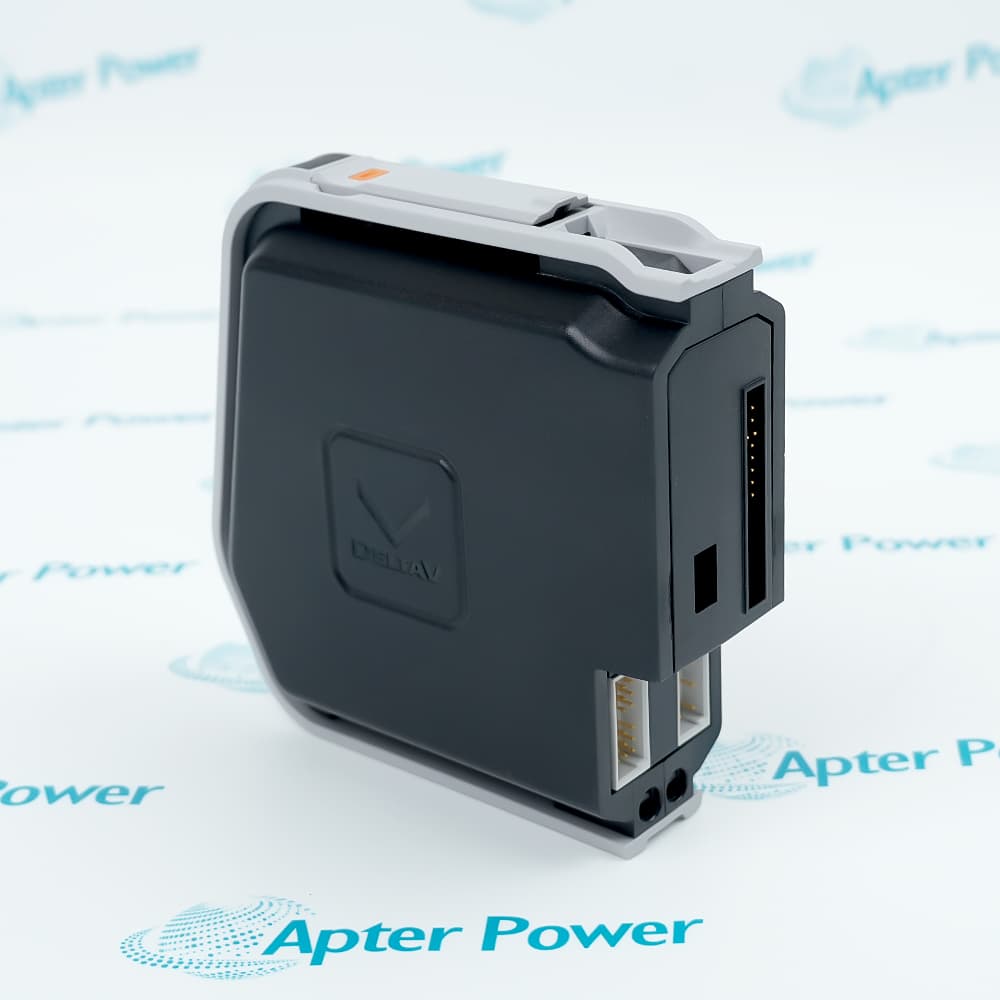
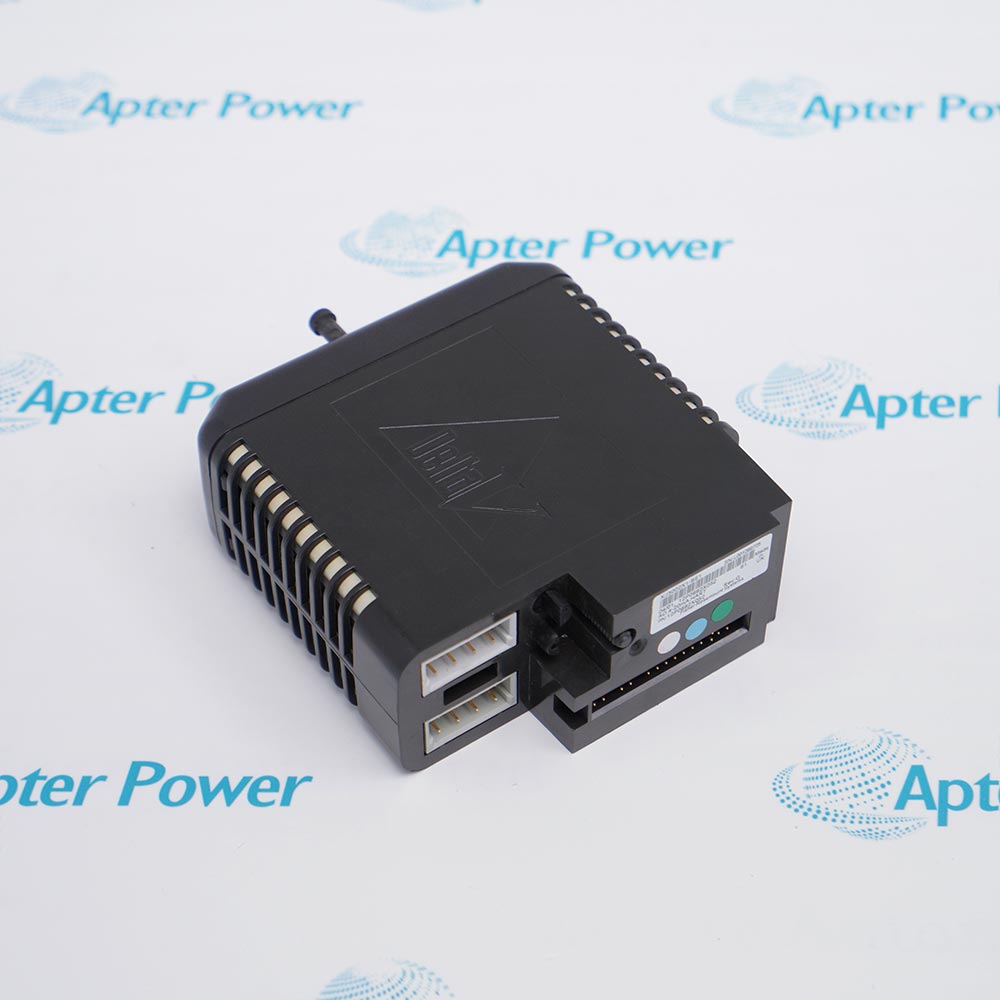
Emerson KJ2004X1-BA1 is the original DeltaV M-series Zone 2 Remote Interface Unit specified for systems earlier than v13.3.1.
In Stock
Ships by Wednesday, October 28
Fast Shipping Available
Get a quick price for KJ2004X1-BA1
Quantity
*E-mail
Company
*Mobile
*Content
Upload (gif, jpg, jpeg, png, bmp, doc, docx, xls, xlsx, ppt, pdf, csv)

Technical specifications for KJ2004X1-BA1

  • Manufacturer:
    Emerson
  • Part Number:
    KJ2004X1-BA1
  • Product Family:
    DeltaV
  • Product Type:
    DeltaV M-series Original Remote Interface Unit
  • Stock:
    1
  • Product Type:
    DeltaV M-series Original Remote Interface Unit
  • System:
    DeltaV M-series Zone 2 Remote I/O
  • I/O Capacity:
    Up to 8 simplex I/O cards on an 8-wide carrier
  • Version Boundary:
    Requested for DeltaV versions prior to v13.3.1
  • Network Role:
    Connects remote I/O to DeltaV controllers
  • Power Requirement:
    Dedicated DeltaV system power supply
  • Tariff Code:
    Please confirm the destination before shipping
  • Country of origin:
    USA
  • Place of shipment:
    Xiamen,Fujian,China
By purchasing this item, you agree to the Terms & Conditions, ApterPower is not an authorized distributor for listed manufacturers or tradenames and therefore the manufacturer's warranty does not apply. All our products come with ApterPower's 1-year warranty.

More Information

Overview Manuals Remote I/O Role Station Design System Fit Applications

Features:

  • Field-side I/O placement: Moves conventional DeltaV signal interfaces closer to the process, reducing long multicore cable runs back to the controller cabinet.
  • Shared control ownership: Cards at one remote station can serve more than one DeltaV controller while control strategies remain in the controller layer.
  • Automatic network identity: The RIU presents the remote station to DeltaV without a technician assigning an invented node address.
KJ2004X1-BA1 is the network bridge between a field-mounted M-series I/O carrier and the DeltaV controllers that use its signals.

At startup, the station identifies its supported interfaces and makes their measurements, state and HART information available over the control network.

Because control strategies remain in the assigned controllers, maintenance can verify station discovery, link health and per-card ownership as separate parts of the remote-I/O path.

Apter Power can help confirm the software, carrier and station scope for the Emerson KJ2004X1-BA1 DeltaV M-series Original Remote Interface Unit before quotation.
Emerson KJ2004X1-BA1 DeltaV M-series Original Remote Interface Unit Manuals,Datasheets,Link
Important Notice: Other accessories, manuals, cables, calibration data, software, etc. are not included with this equipment unless listed in the above stock item description. All prices are shown in USD.
  • Network bridge: The RIU carries supported M-series I/O data between the remote carrier and the DeltaV control network.
  • Controller-resident strategy: Control execution remains in DeltaV controllers even though the signal hardware is physically remote.
  • Per-card ownership: I/O interfaces on one station can be targeted to the controller responsible for each process function.
  • Smart-data passthrough: HART information from supported remote cards can reach workstations and maintenance applications over the control network.
  • Modular field node: The RIU, remote I/O carrier and system power supply form a station rather than one self-contained device.
  • Defined card portfolio: The remote subsystem serves the conventional and HART I/O families documented for this architecture.
  • Flexible mounting: Horizontal or VerticalPlus carrier arrangements let the same remote concept fit different cabinet layouts.
  • Dual-network visibility: Primary and secondary communication paths provide separate link status for station diagnostics.
  • Release-coupled identity: The original RIU belongs to a defined DeltaV generation, so hardware selection starts from the running project rather than enclosure appearance.
  • Controlled modernization: A later RIU changes the software and validation scope and should be treated as an upgrade, not an incidental spare substitution.
  • Documented card boundary: The remote station accepts a defined I/O portfolio; adding another communication family changes the architecture.
  • Predictable outage scope: Keeping the proven generation lets maintenance restore a node without introducing unrelated platform work.
  • Zone 2 Remote I/O stations: Connects a supported field-mounted M-series carrier to the DeltaV control network.
  • Conventional and HART I/O: Carries supported remote card data and smart-instrument information back to DeltaV.
  • Shared remote stations: Allows documented I/O-card ownership across several controllers while strategies remain controller-resident.
  • Original-RIU restoration: Replaces a verified earlier-generation remote interface when the installed software baseline is retained.
Description
KJ2004X1-BA1 connects a remote M-series I/O carrier to the DeltaV control network, allowing up to eight supported I/O cards to be installed closer to field wiring while remaining assigned to DeltaV controllers. This distributed arrangement reduces long multicore cable runs and keeps conventional I/O engineering inside the DeltaV system.

As the original RIU, KJ2004X1-BA1 remains the version-controlled choice for DeltaV releases earlier than v13.3.1. Its strongest value is therefore compatibility with installed legacy systems: matching the existing software baseline avoids introducing the RIU2 requirements associated with later DeltaV releases.
Technical notes
Select KJ2004X1-BA1 only after confirming the installed DeltaV release is earlier than v13.3.1. Each remote I/O unit requires the correct eight-wide I/O carrier and a dedicated system power supply. Record carrier identity, controller ownership for each card, primary and secondary network-link status and current node diagnostics before replacement.
Exceptional Service

Our Mission

  • 100% Satisfaction

    We believe expertise is priceless. With over 20 years of experience, and top engineers on staff, we can help you solve or avoid problems that threaten your business.
  • Trust Guaranteed

    Not only do we have a vast inventory, our team makes sure every piece of equipment is in working condition. Your purchases are also backed by our Warranty.
  • Expertise

    Time is money, especially when your equipment is down. We work quickly to get your equipment on its way so you can get it back up and running.

FAQS

The following is a list of questions commonly asked by our customers. Please contact us if you have a question about our process that is not answered below.
After replacing KJ2004X1-BA1, should the technician copy a manual node address from the old unit?
No. The RIU identifies itself to the DeltaV network automatically. Verify valid primary and secondary network communication and the discovered station in DeltaV instead of setting an invented address or copying unrelated switch assumptions.
Can a redundant I/O card pair be installed on the remote carrier served by KJ2004X1-BA1?
No. The Zone 2 Remote I/O subsystem supports the applicable cards in simplex form; I/O-card redundancy is not supported. Place a redundancy requirement in an architecture designed for redundant I/O rather than using two remote slots.
A sequence assigned through KJ2004X1-BA1 requires a guaranteed end-to-end response below 200 ms. Does the published RIU timing establish that guarantee?
No. Emerson reports an average input-to-output response of about 200 ms when a 100 ms I/O scan is assumed; that is not a guaranteed maximum. Validate the complete strategy timing or choose an architecture with a proven response bound.
Can a FOUNDATION Fieldbus, serial or another unsupported communication card be added to the carrier behind KJ2004X1-BA1?
No. The RIU supports the documented conventional and HART I/O portfolio, not every M-series interface. Use the remote architecture intended for that communication family instead of relying on physical slot fit.
A replacement KJ2004X1-BA1 is visible on the network, but one card supplies no values to its control module. What should be checked next?
Verify that card identity, slot discovery and controller ownership match the DeltaV project. Network discovery proves the station is present; it does not by itself assign the I/O card to the intended control strategy.
An expansion plan with KJ2004X1-BA1 approaches sixteen RIUs on one controller or three hundred combined RIU and I/O nodes. Can another station be approved from free cabinet space alone?
No. Those are controller-level limits, so review the complete controller node count, network loading and ownership plan before adding the station. Physical room at the remote cabinet is not evidence of controller capacity.

Product Browsing History