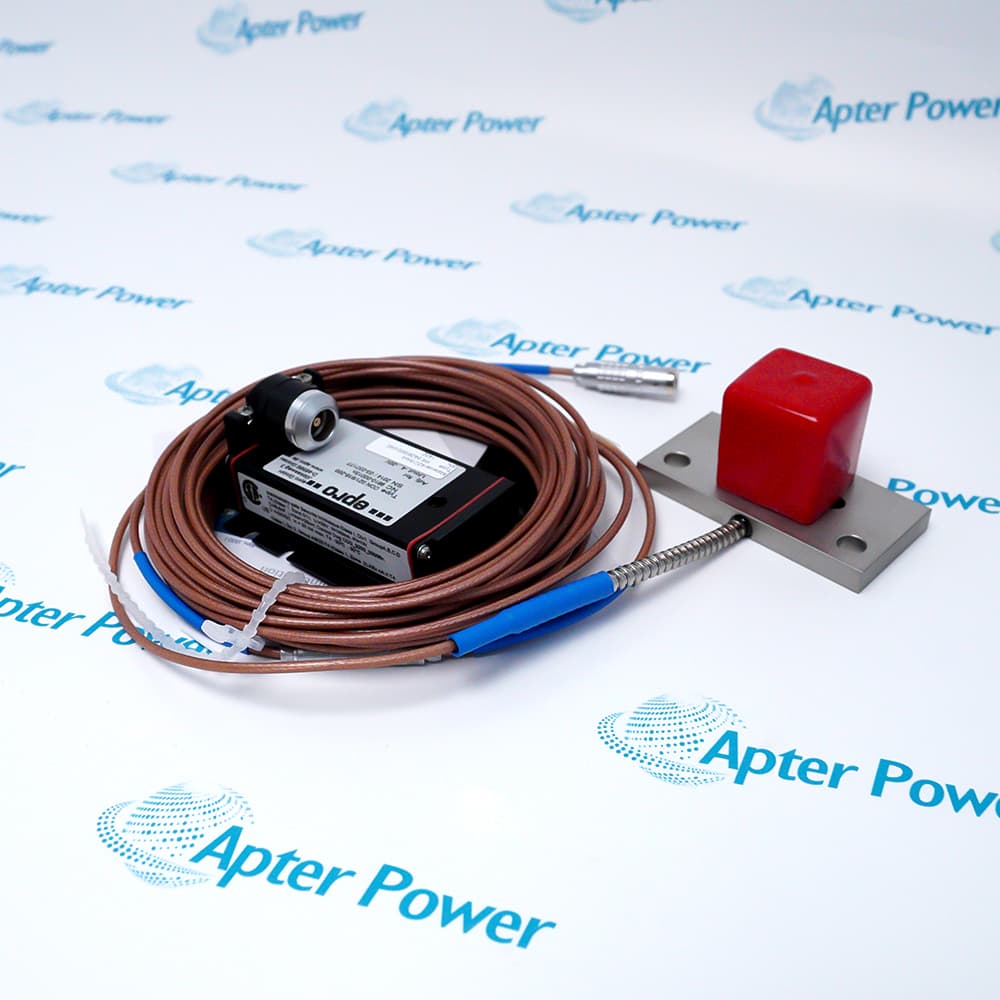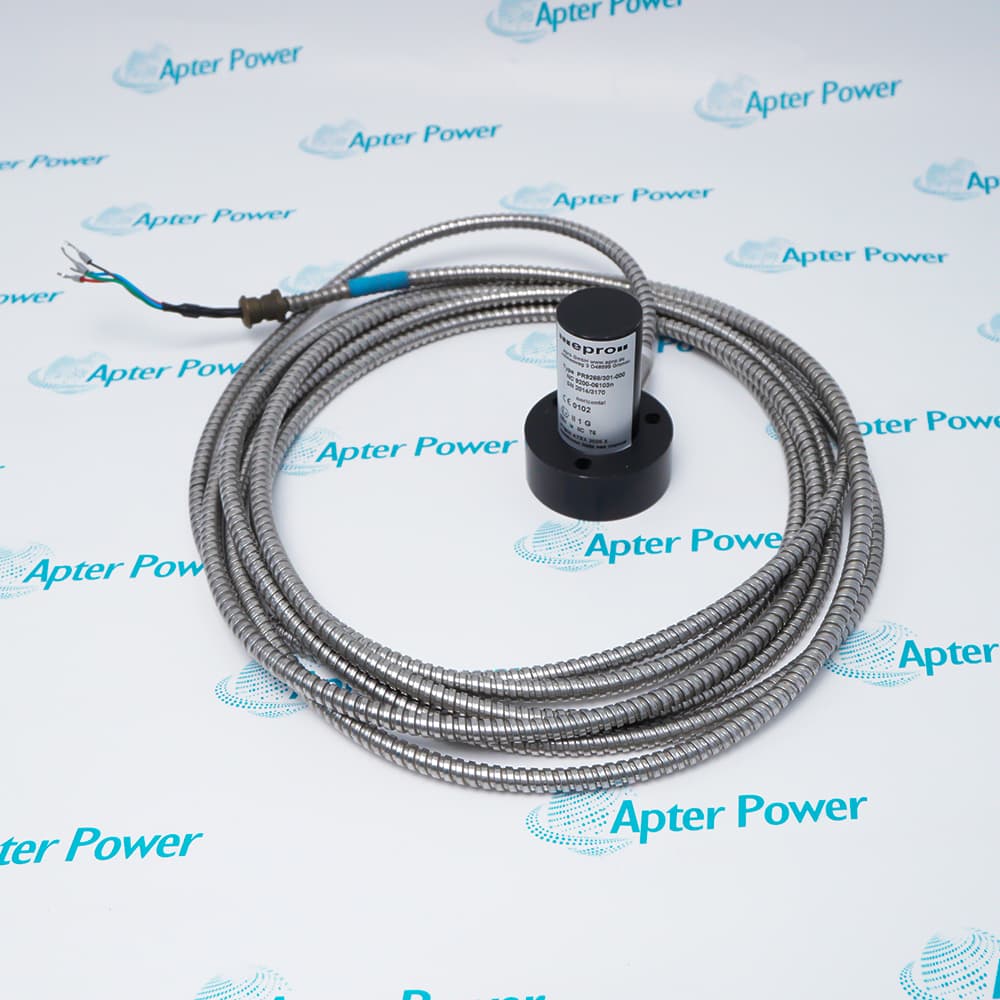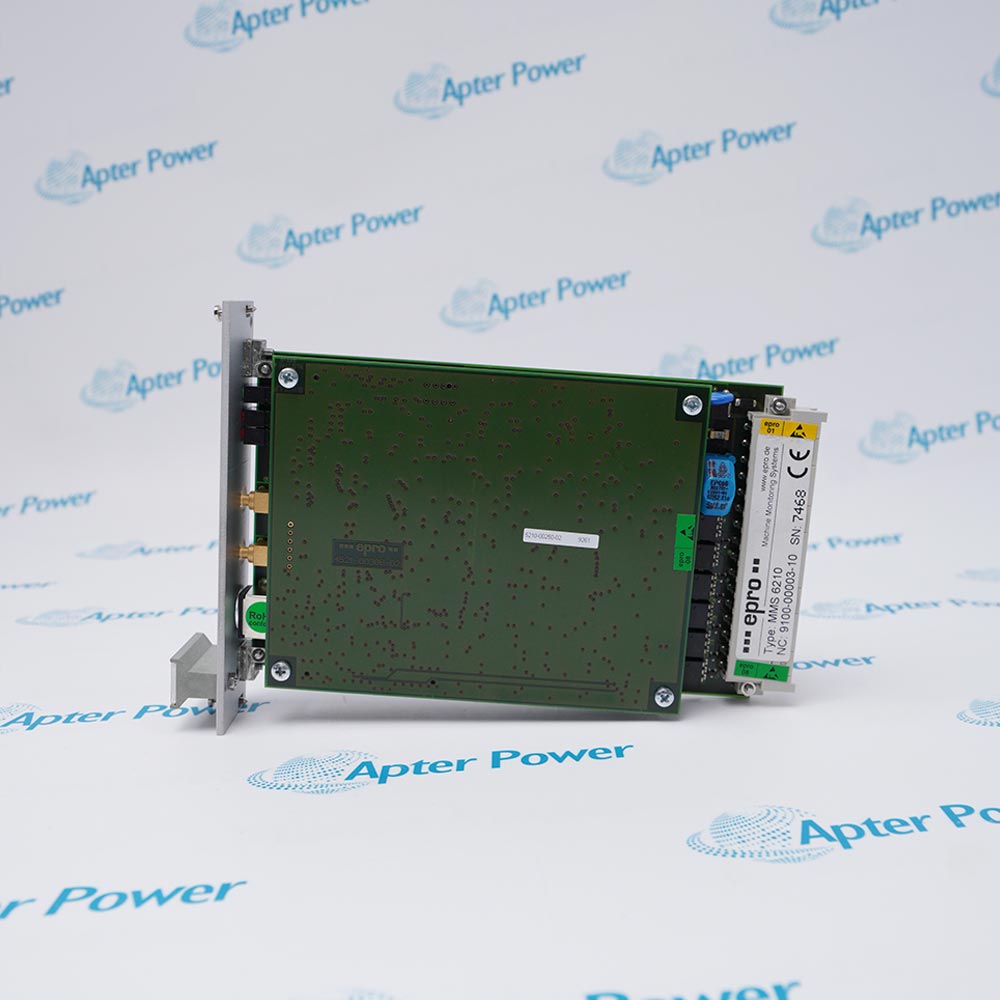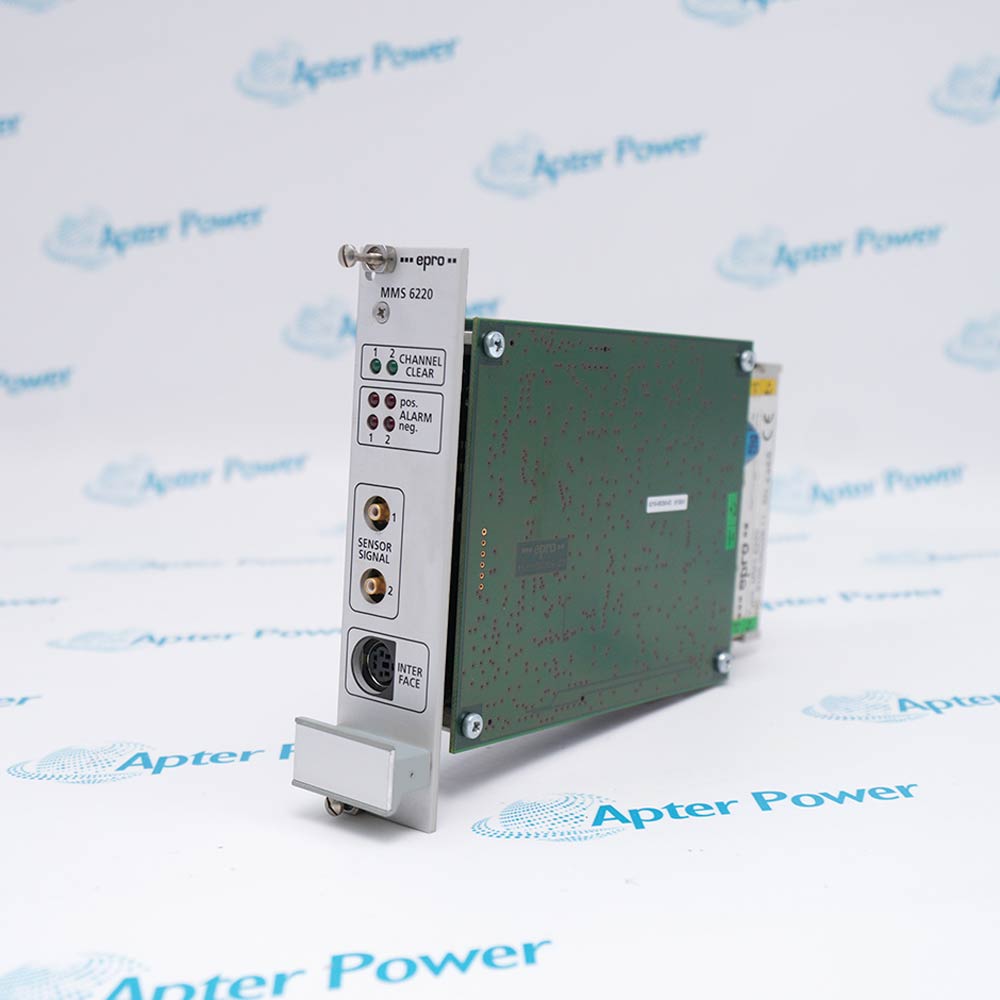
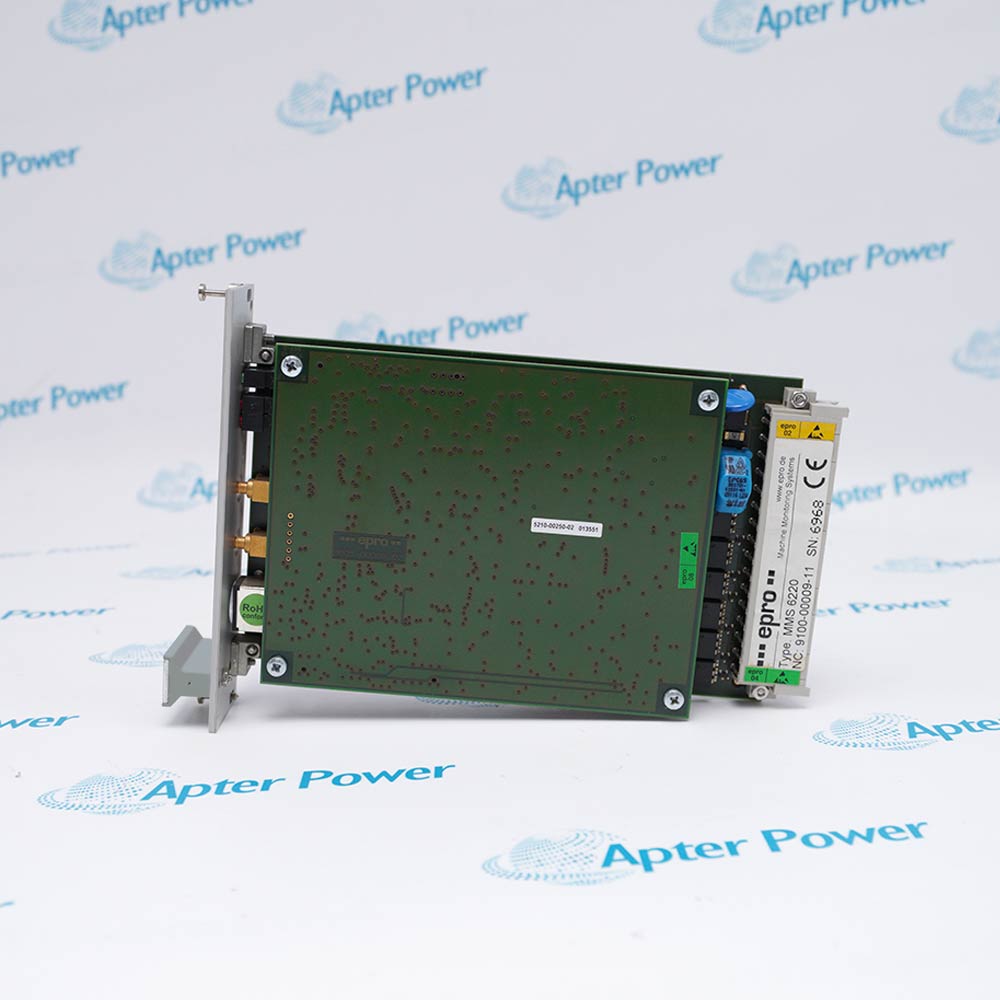
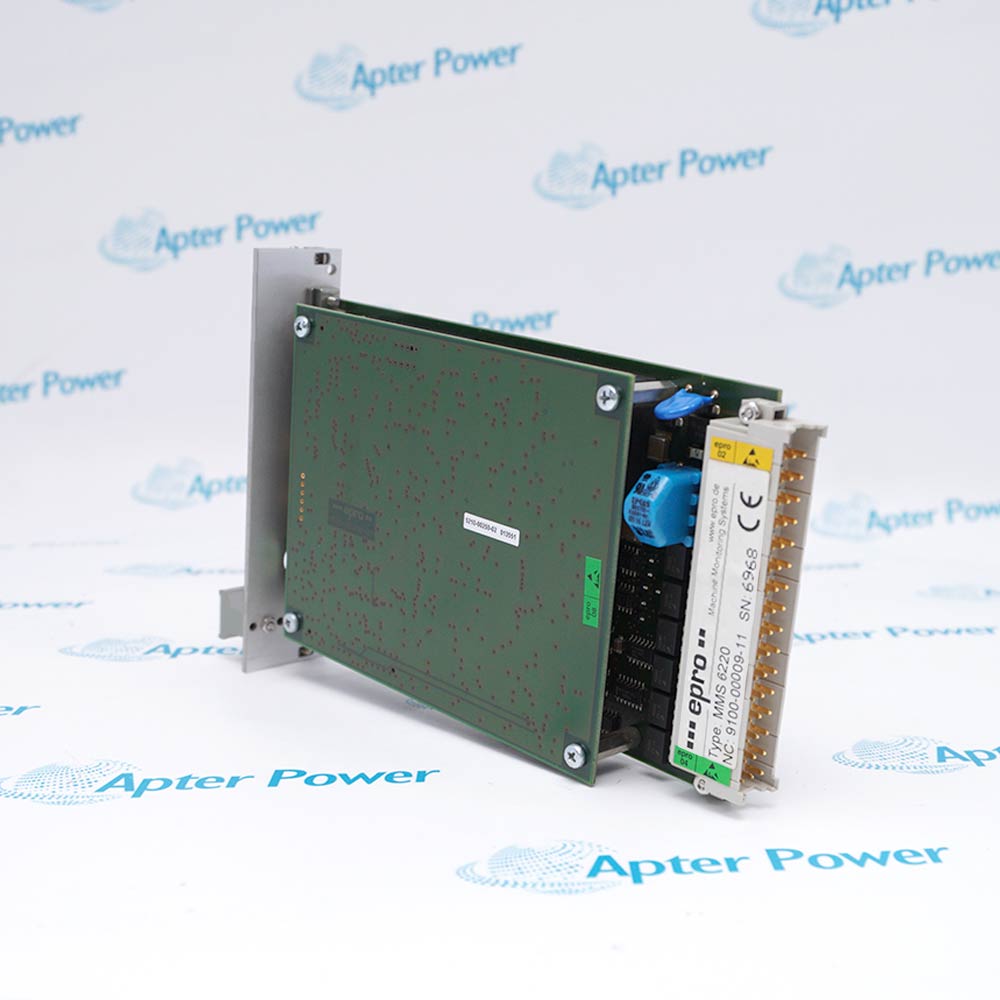
EPRO MMS6220
EPRO MMS6220
EPRO MMS6220
EPRO MMS6220
EPRO MMS6220
EPRO MMS6220
Ask our team:
  • Phone: +86 181 0690 9650
  • E-Mail sales1@apterpower.com

MMS6220

/ 4.9
1001 reviews | Need a Specific Revision?
EPRO MMS6220 is a dual-channel MMS 6000 monitor for low-speed eccentricity, shaft bow and run-up/run-down events.
In Stock
Ships by Wednesday, October 28
Fast Shipping Available
Get a quick price for MMS6220
Quantity
*E-mail
Company
*Mobile
*Content
Upload (gif, jpg, jpeg, png, bmp, doc, docx, xls, xlsx, ppt, pdf, csv)

Technical specifications for MMS6220

  • Manufacturer:
    Emerson
  • Part Number:
    MMS6220
  • Product Family:
    Epro
  • Product Type:
    Dual-Channel Shaft Eccentricity Monitor
  • Stock:
    1
  • Sensor inputs:
    2 PR642x eddy-current measuring chains
  • Evaluations:
    Peak-to-peak and minimum/maximum
  • Frequency range:
    0.017 to 70 Hz; approximately 1.02 to 4200 rpm
  • Run event memory:
    Stores characteristic values from the last run-up or run-down
  • Power consumption:
    Maximum 6 W; 250 mA at 24 VDC
  • Supply voltage:
    18 to 31.2 VDC; nominal 24 VDC
  • Configuration interface:
    RS232 on module front
  • System interface:
    RS485; up to 31 modules / 62 channels per bus
  • Module protection:
    IP00; front plate IP21
  • Operating temperature:
    0 to 65°C
  • Storage and transport temperature:
    -30 to 85°C
  • Relative humidity:
    5 to 95%, non-condensing
  • Dimensions:
    3.0 × 12.84 × 16.0 cm
  • Weight:
    0.32 kg
  • Tariff Code:
    9031809090
  • Country of origin:
    Germany
  • Place of shipment:
    Xiamen, Fujian, China
By purchasing this item, you agree to the Terms & Conditions, ApterPower is not an authorized distributor for listed manufacturers or tradenames and therefore the manufacturer's warranty does not apply. All our products come with ApterPower's 1-year warranty.

More Information

Overview Manuals Slow-Roll Setup Run Recording Diagnostics Application
  • Compare eccentricity only at equivalent slow-roll conditions
  • Preserve run-up and run-down recording criteria
  • Verify the key or speed reference used for event capture

EPRO MMS6220 is a two-channel monitor for shaft eccentricity and bow from low-speed relative radial vibration signals.

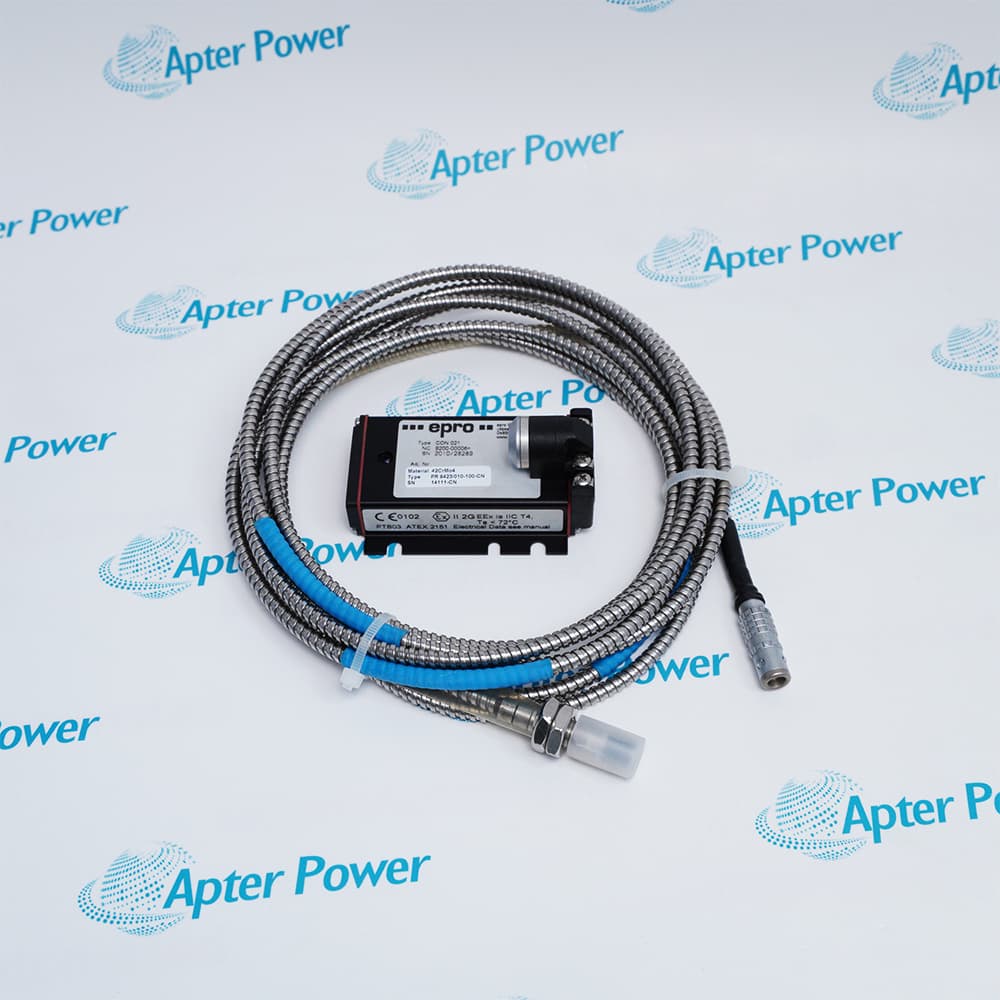
It works with compatible PR642x eddy-current chains, evaluates peak-to-peak or minimum/maximum behavior and retains characteristic data from the last run-up or run-down.

Before replacement, record probe chains, cold gaps, slow-roll conditions, channel scales, evaluation mode, run-event data, key input, alarms, outputs, relays, bypasses and module configuration.

Availability, condition, price, and shipping time for MMS6220 are confirmed during quotation.

Emerson MMS6220 Manuals, Datasheets, Links

Important Notice: Other accessories, manuals, cables, calibration data, software, etc. are not included with this equipment unless listed in the above stock item description. All prices are shown in USD.

  • Confirm turning speed and thermal machine state
  • Set probe gap with runout and shaft growth margin
  • Use the approved eccentricity reference rather than operating-speed limits
  • Verify start and stop criteria for event capture
  • Preserve key or speed-reference wiring
  • Export characteristic data before replacing the card
  • Compare raw gaps before judging eccentricity
  • Inspect target runout and bracket rigidity
  • Prove record storage and alarm behavior through a controlled cycle
  • Turbine slow-roll eccentricity monitoring
  • Shaft-bow assessment during startup and shutdown
  • Run-up and run-down characteristic capture for critical rotating machinery
Description
MMS6220 is an Emerson/epro MMS 6000 dual-channel monitor for low-speed shaft eccentricity and bow.

It evaluates peak-to-peak or minimum/maximum behavior from 0.017 to 70 Hz and stores characteristic values from the last run-up or run-down.

Compare results only at equivalent turning speed and thermal condition, and verify the probe gap, target runout and event-capture settings.
Alternative Names
MMS6220 MMS 6220 EPRO MMS6220 EPRO MMS 6220 Emerson EPRO MMS6220 MMS 6000 MMS6220
Technical notes
MMS6220 eccentricity should be compared at equivalent slow-roll conditions. A value taken at operating speed or from a different mechanical reference is not directly comparable.
Exceptional Service

Our Mission

  • 100% Satisfaction

    We believe expertise is priceless. With over 20 years of experience, and top engineers on staff, we can help you solve or avoid problems that threaten your business.
  • Trust Guaranteed

    Not only do we have a vast inventory, our team makes sure every piece of equipment is in working condition. Your purchases are also backed by our Warranty.
  • Expertise

    Time is money, especially when your equipment is down. We work quickly to get your equipment on its way so you can get it back up and running.

FAQS

The following is a list of questions commonly asked by our customers. Please contact us if you have a question about our process that is not answered below.
When is EPRO MMS6220 more suitable than a normal shaft-vibration monitor?
Use it for low-speed eccentricity or shaft-bow assessment during turning gear, startup or shutdown, including last run-up and run-down characteristics.
Can EPRO MMS6220 use operating-speed vibration limits as eccentricity limits?
No. Establish eccentricity limits from the machine's slow-roll reference, probe geometry and approved protection philosophy.
Why can EPRO MMS6220 show a different value on each startup?
Compare turning speed, thermal shaft condition, probe gap, target runout, key reference, stored run selection and mechanical preload before changing settings.
What must be archived before replacing EPRO MMS6220?
Save both probe chains and gaps, measuring mode, multiplier and key input, run-up/down records, limits, delays, outputs, relays, bypasses and rack slot.
What should be checked if EPRO MMS6220 loses the run-up record?
Verify key or speed reference, configured start and stop criteria, uninterrupted module power, channel state and whether a new event overwrote the previous record.
Can EPRO MMS6220 be commissioned using a static gap check only?
No. Static gap verifies the probe chain, but eccentricity performance also requires controlled slow-roll observation and comparison with machine runout.
How should EPRO MMS6220 be accepted after installation?
Verify both bias voltages, capture a controlled slow-roll trace, compare peak-to-peak and min/max values, and prove event storage, outputs, alarms and relays.

Product Browsing History