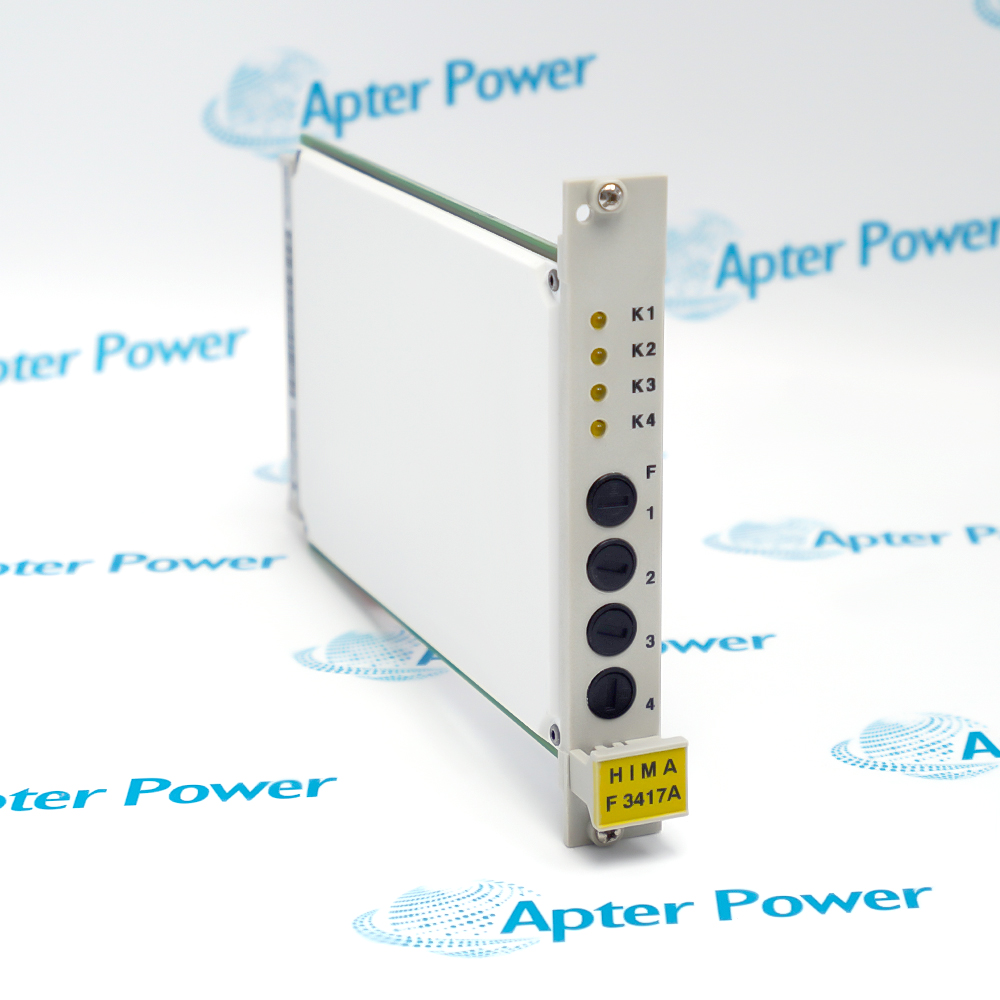
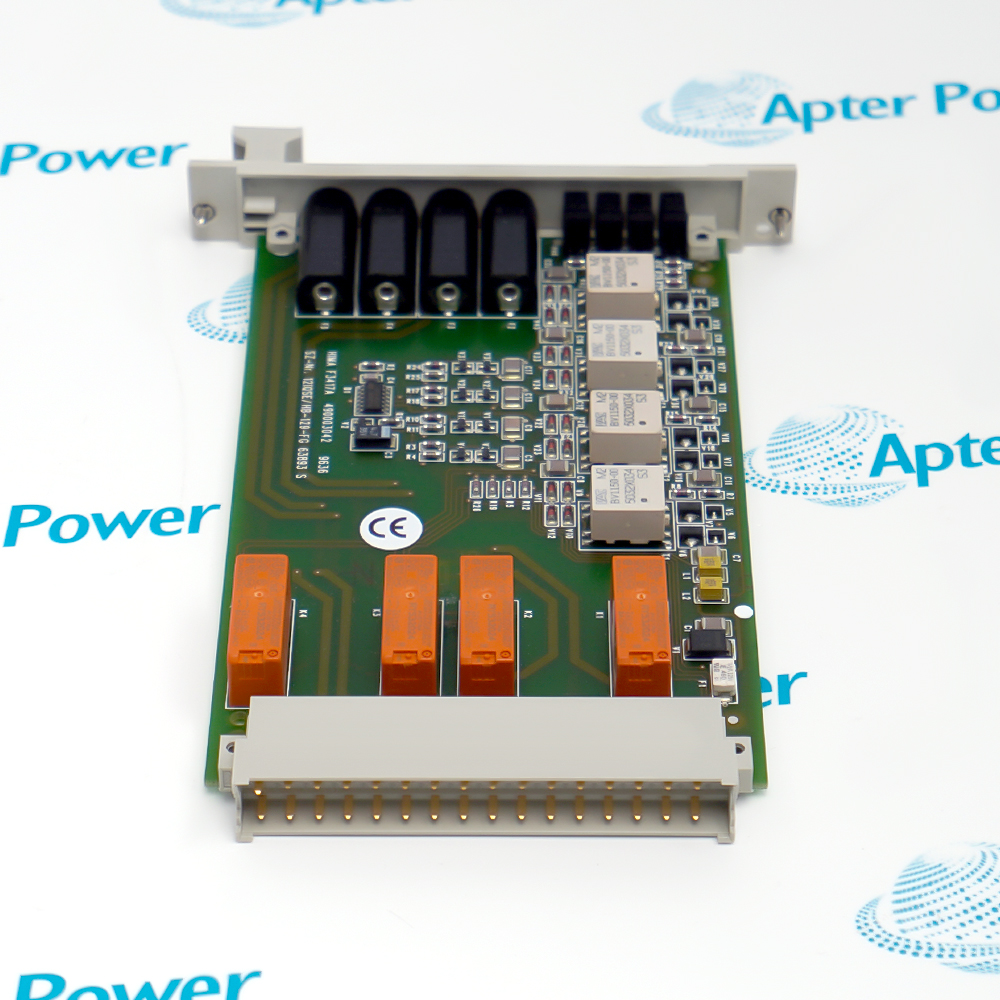
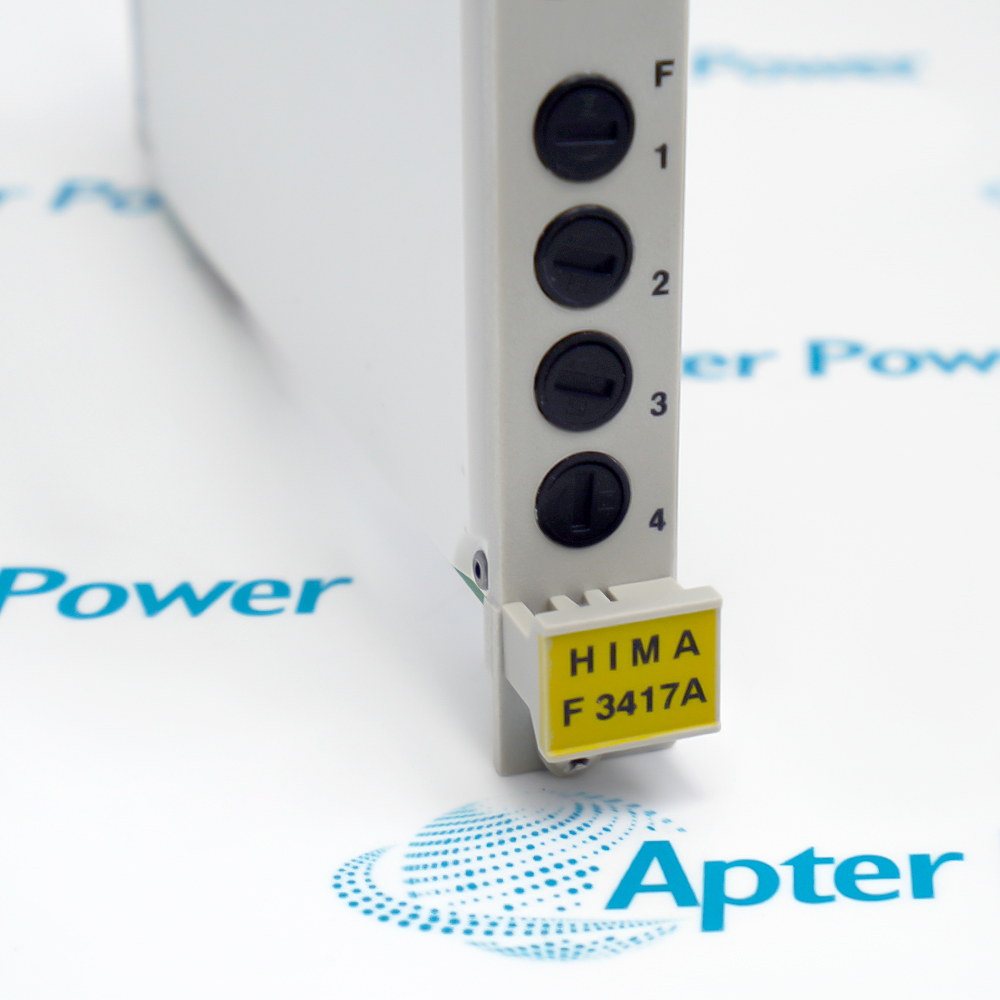
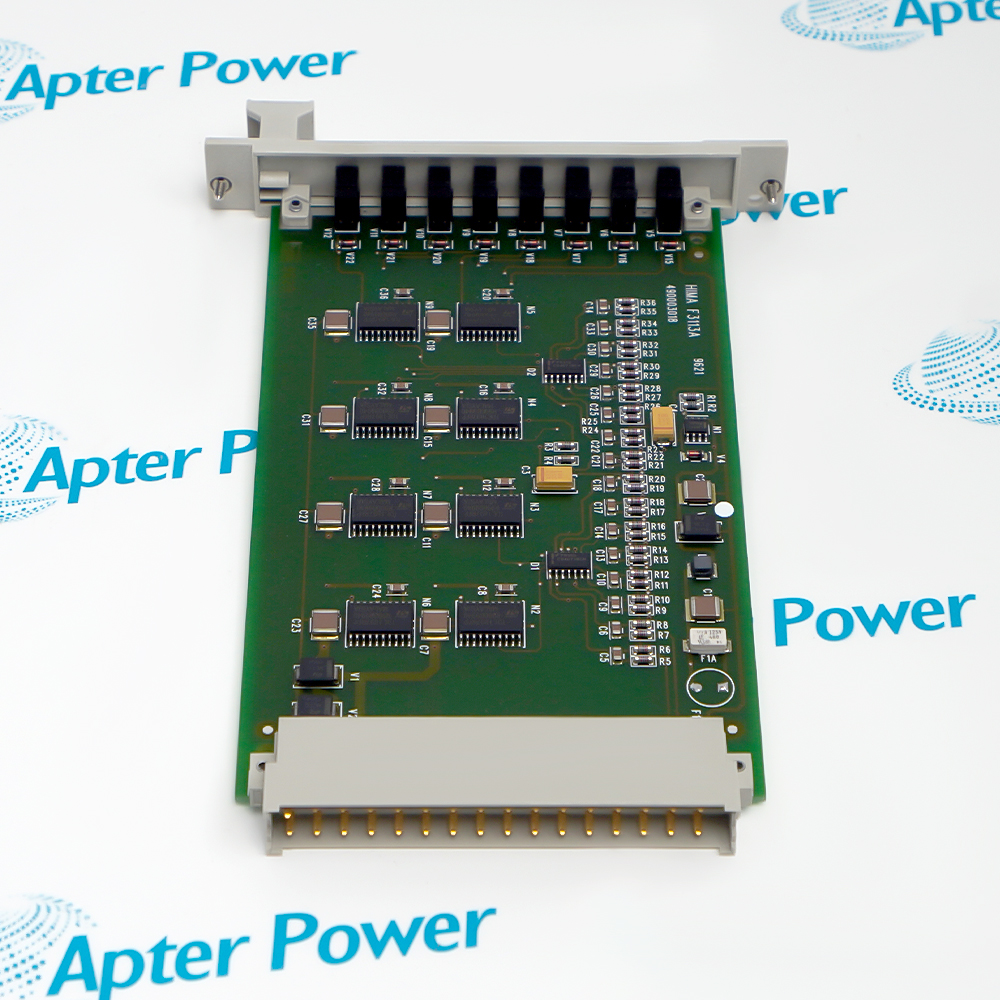
Features:
- Four relay channels: provides independent changeover contacts for documented safety functions.
- Safe isolation: supports the published isolation boundary up to 250 V.
- Relay output interface: converts Planar F control commands into isolated field-circuit switching.
F3417A supports legacy installations that depend on four discrete relay paths rather than a general-purpose output card.
Each changeover contact can serve a different trip, alarm or permissive duty, making the original terminal schedule central to a successful service decision.
Users comparing available modules should review the complete HIMA label, contact arrangement and circuit voltage together.
Apter Power supports HIMA F3417A 4-Channel Safety Relay Amplifier Module enquiries with technical-document review, responsive quotation and application-focused sourcing assistance.
HIMA F3417A 4-Channel Safety Relay Amplifier Module Manuals,Datasheets,Link
Important Notice: These Apter Power links support product discovery, technical reference and quotation assistance; final suitability depends on the installed system configuration.
- Four channels: each provides one changeover contact.
- Assignments: NO, NC and common must follow the original circuit.
- State check: test energized and de-energized paths.
- Isolation: separate a suspect contact from its load.
- Limits: isolation capability does not replace load-rating checks.
- Load: voltage, current and type must follow the cabinet design.
- Routing: retain separation specified by the safety drawing.
- Safe state: confirm behavior when relay power is removed.
- Slot position: keep the original module location and connector orientation documented by the cabinet drawing.
- Terminals: preserve NO, NC and common numbering.
- Grouped faults: inspect shared supplies and terminal commons before isolating individual relay channels.
- Testing: verify each affected field circuit.
- Trip and permissive relays in process-safety cabinets.
- Alarm isolation in chemical and pharmaceutical plants.
- Shutdown interfaces in oil-and-gas facilities.
- Relay-coupled protection circuits in power generation.