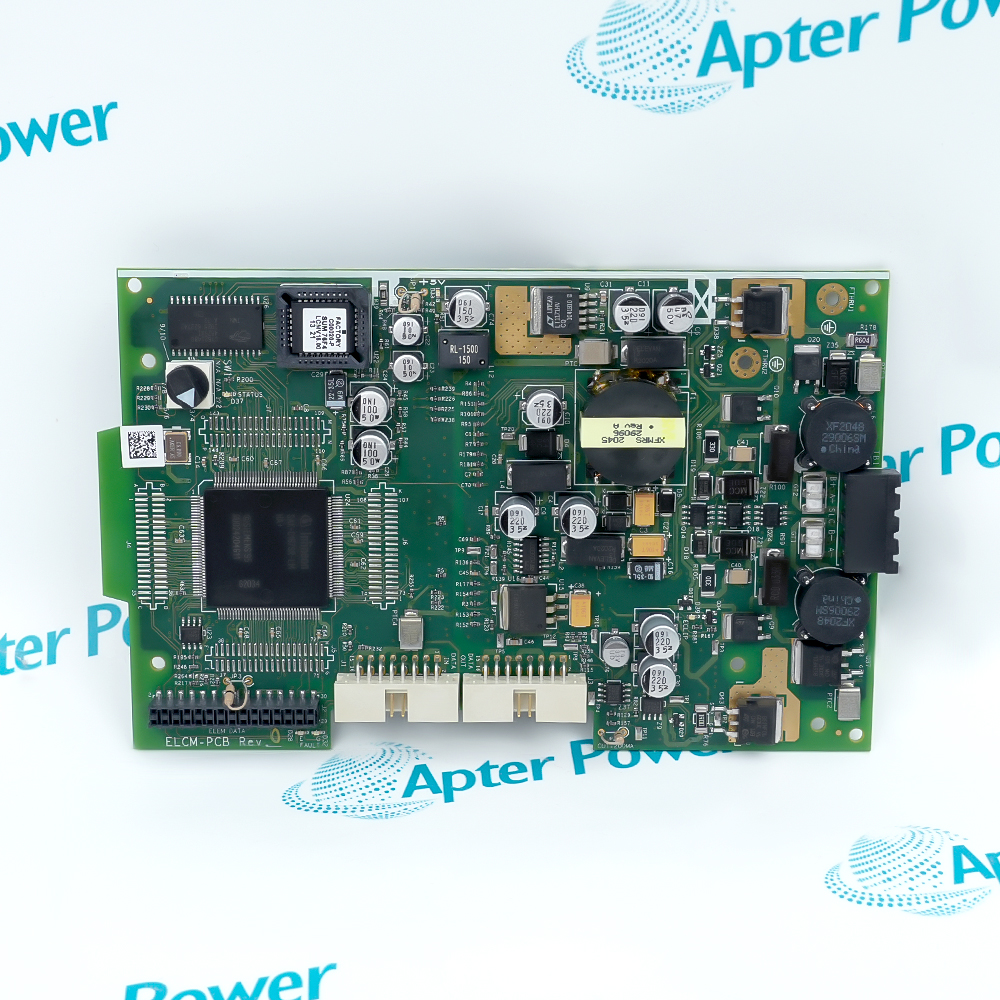
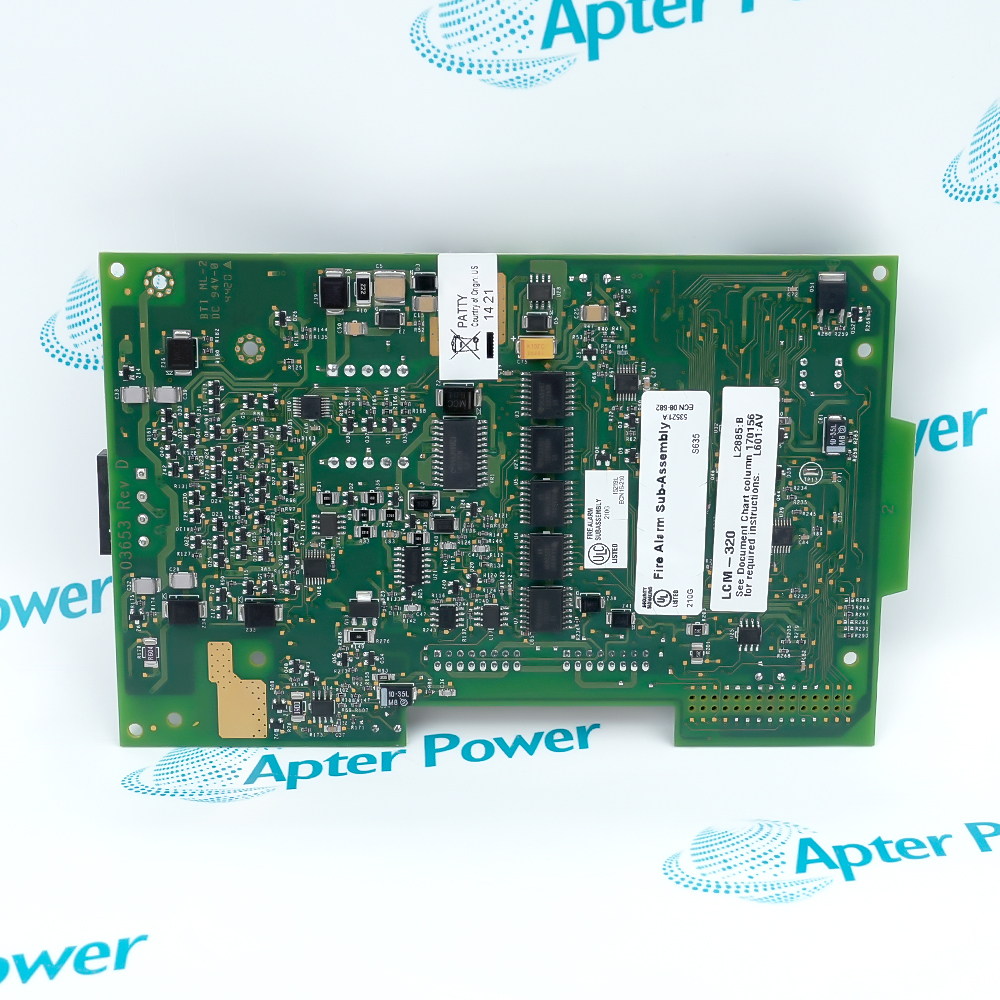
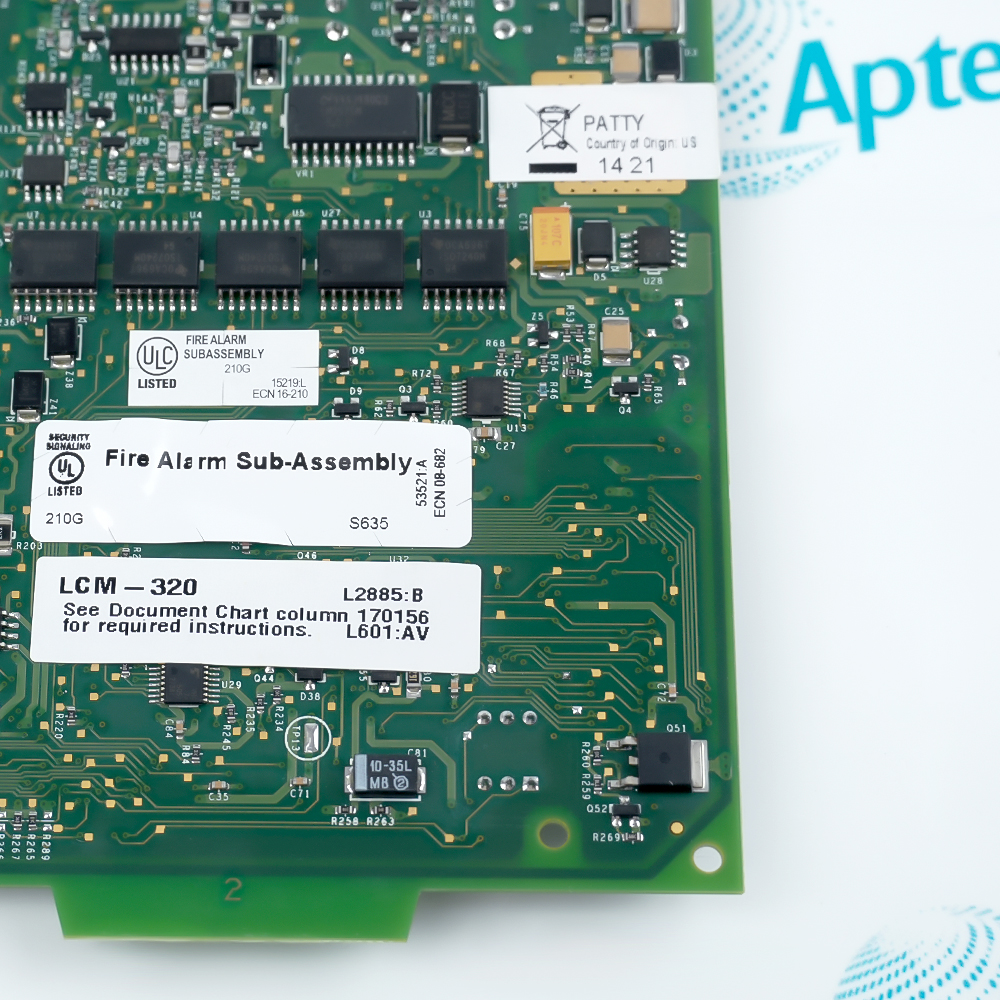
Features:
- Adds an addressable Signaling Line Circuit to a supported fire alarm control panel.
- Carries a Class B Style 4 loop up to 12,500 feet over twisted, unshielded cable.
- Uses built-in degraded mode to increase loop survivability within the supported panel arrangement.
Honeywell NOTIFIER LCM-320 extends panel loop capacity without turning addressable devices into individual home-run circuits.
In AFP-2800 systems, the LCM-320 establishes odd-numbered loops and companion expansion modules provide the corresponding even-numbered loops.
Protocol selection, current budgeting, chassis placement, and loop wiring are resolved against the host panel before the plug-in module is commissioned.
The Honeywell NOTIFIER LCM-320 Signaling Line Circuit Loop Control Module may still be available for purchase and support from Apter Power beyond End-Of-Life (EOL) by the manufacturer (OEM).
Honeywell NOTIFIER LCM-320 Signaling Line Circuit Loop Control Module Manuals,Datasheets,Link
Important Notice: Other accessories, manuals, cables, calibration data, software, etc. are not included with this equipment unless listed in the above stock item description. All prices are shown in USD.
Addressable Loop Extension
- Added circuit: The module contributes another Signaling Line Circuit to the host fire alarm panel.
- Class B reach: A Style 4 loop can extend to 12,500 feet over the specified cable.
- Cable type: The documented Class B path uses twisted, unshielded conductors.
- Multiple loops: Plug-in construction permits several loop modules within a compact panel enclosure.
Odd-and-Even Loop Arrangement
- LCM positions: AFP-2800 systems assign the LCM-320 to loops 1, 3, 5, 7, or 9.
- Expansion positions: Companion LEM-320 hardware supplies loops 2, 4, 6, 8, or 10.
- Protocol choice: CLIP or FlashScan operation depends on the panel and system configuration.
- Current budget: SMX+ documentation assigns 0.130 A to each LCM-320 in the panel calculation.
Survivability Within the Loop Path
- Built-in mode: The module includes degraded mode without requiring an external adapter.
- Published purpose: Honeywell identifies the degraded mode as increasing survivability.
- Panel boundary: The mode remains part of the host-panel and configured-loop arrangement.
- Fault isolation: Loop and panel diagnostics must still be read together when normal processing is interrupted.
Plug-in Hardware and Approvals
- Mechanical format: The module installs as a plug-in card in the supported panel hardware.
- Enclosure density: Multiple loops can be placed in one enclosure without separate standalone controllers.
- Approval set: Published approvals include UL/ULC, FM, CSFM, and FDNY.
- Selection check: Panel model, loop number, protocol, and current budget must agree before installation.