Features:
- M16 threaded sensor-head format for compact metallic-target gauging
- Dedicated EX-205 amplifier pairing with selectable analog output
- HIGH and LOW response modes plus auto-zero and cable alarm
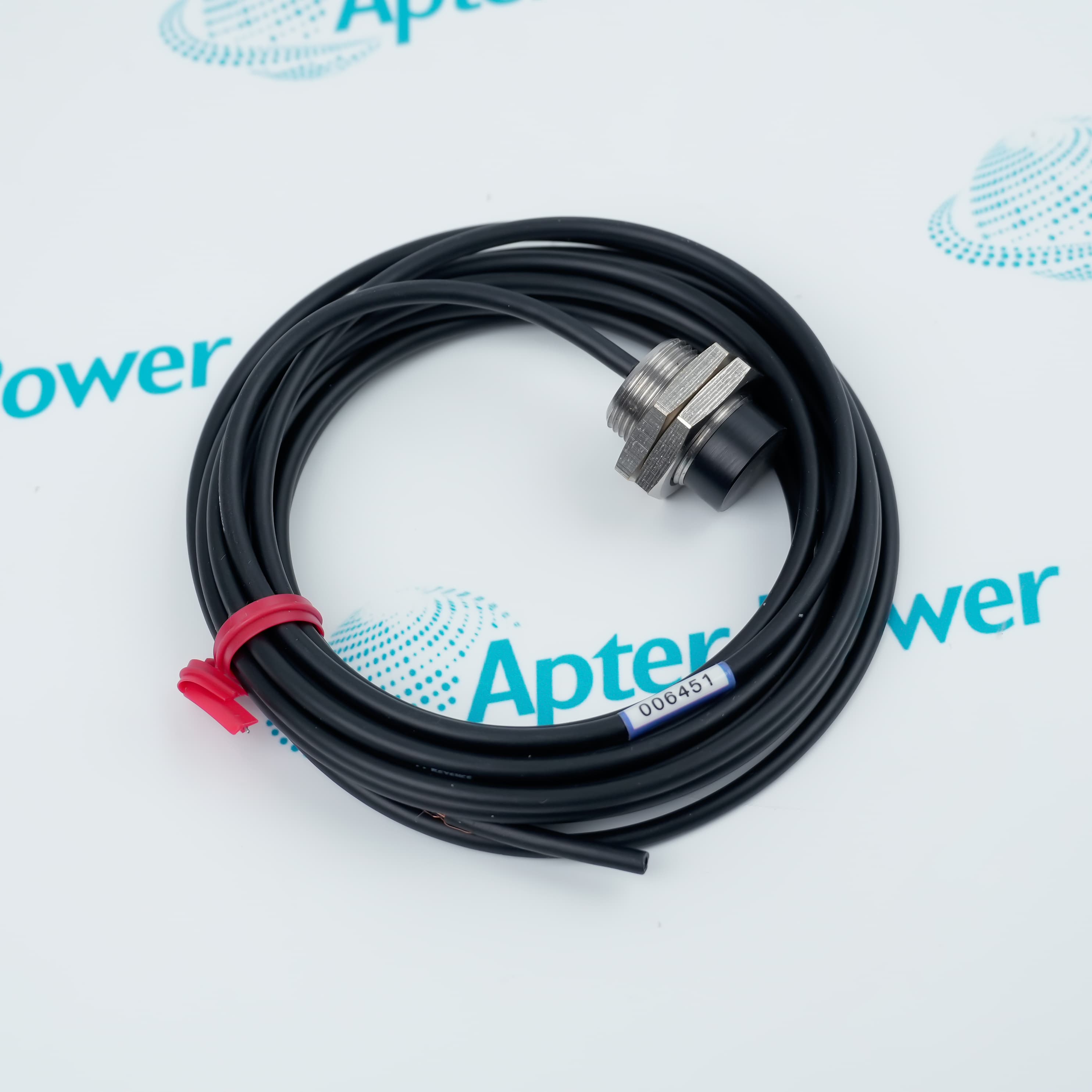
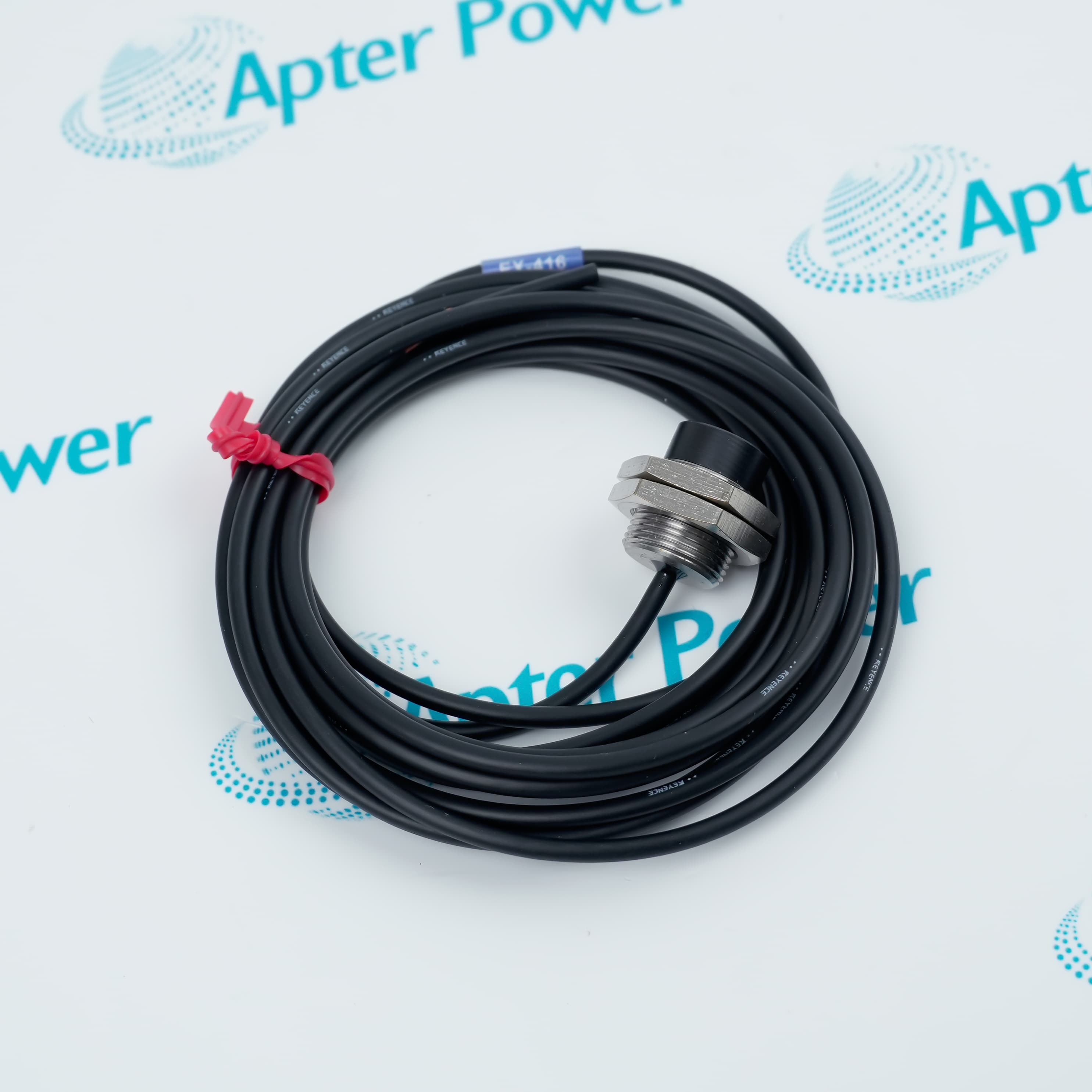
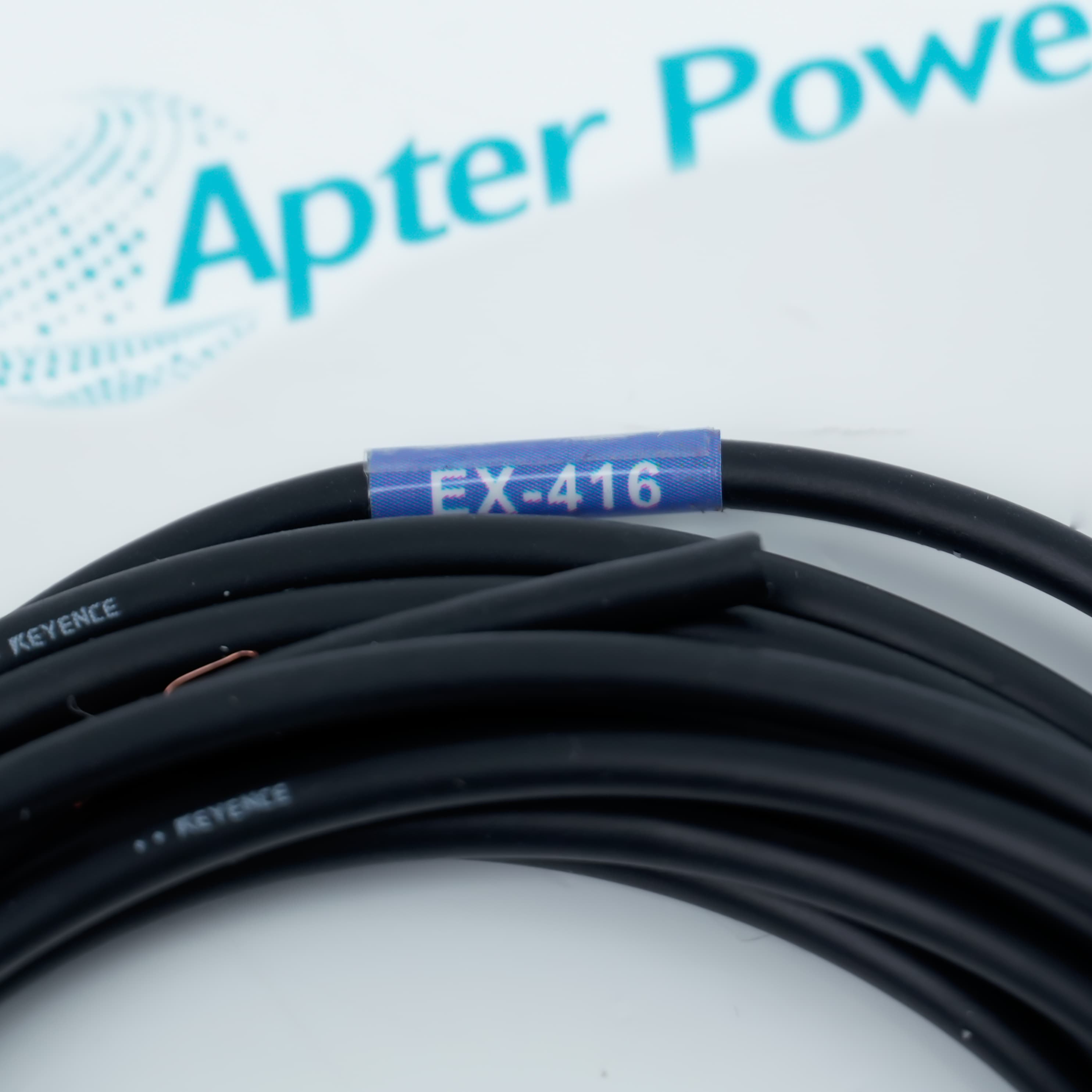
EX-416 is quickly identified by its cylindrical threaded body and its role as the remote sensing head rather than the amplifier.
The head detects target displacement while EX-205 supplies processing, analog output and the selectable response functions used by the control system.
Selection should therefore start with the installed amplifier, target material and receiving input, then confirm that the mechanical mounting matches the M16 head.
For KEYENCE EX-416 Sensor Head sourcing, Apter Power can help confirm the complete model, amplifier pairing and requested signal interface.
KEYENCE EX-416 Sensor Head Manuals,Datasheets,Link
Important Notice: Other accessories, manuals, cables, calibration data, software, etc. are not included with this equipment unless listed in the above stock item description. All prices are shown in USD.
- Reference target: Published accuracy data uses the specified steel target.
- Material curves: Aluminum, copper and stainless steel have separate correction characteristics.
- Working point: Keep the target inside the 0 to 5 mm measuring span.
- Zero setting: Use auto-zero after the mechanical reference position is established.
- Voltage path: The 0 to 5 V output has 100 Ω output impedance.
- Current path: The 4 to 20 mA output supports a 0 to 350 Ω load.
- Alarm path: The EX-416/EX-205 configuration uses a normally closed NPN disconnection alarm.
- PNP conversion: KEYENCE lists OP-5148 to convert that NPN alarm output to PNP.
- Supply: Operate from 12 to 24 VDC within the stated tolerance.
- Temperature: Use between -10°C and +60°C without freezing.
- Humidity: Maintain 35% to 85% RH without condensation.
- Housing: IP67 applies to the documented sensor-head construction.
- Gap monitoring: Tracks displacement of a metallic target over the five-millimetre sensing span.
- Fast motion: HIGH mode supports rapidly changing target positions.
- Stable gauging: LOW mode supports measurement where maximum response speed is unnecessary.
- Threaded mounting: The M16 body suits repeatable adjustment in a machine fixture.