Ask our team:
  • Phone: +86 181 0690 9650
  • E-Mail sales1@apterpower.com
  • Lifecycle status

    Active / Available from OEM
    For SZ-VH1, Apter Power provides quotations, product manuals, and product selection.

SZ-VH1

/ 4.9
1001 reviews | Need a Specific Revision?
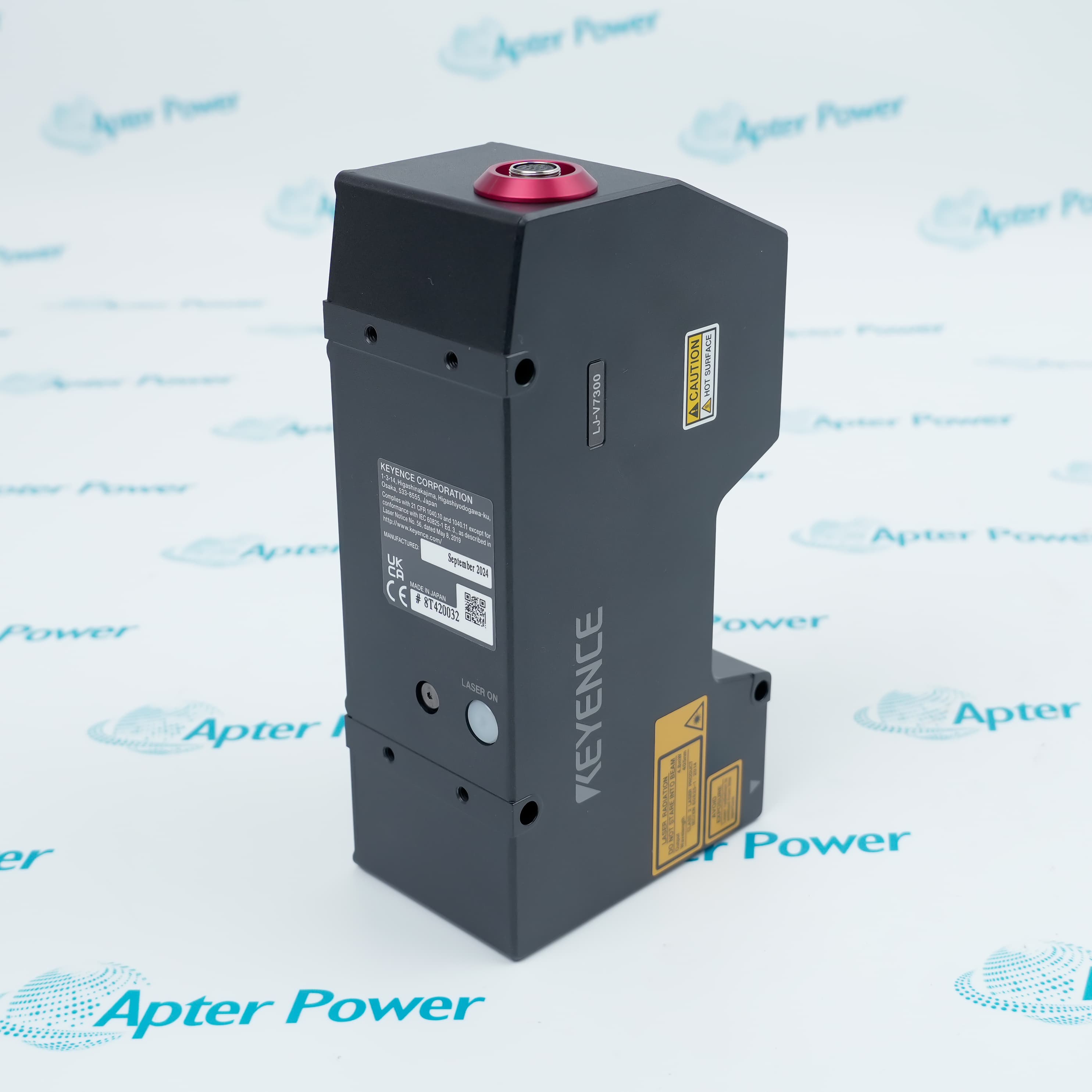
KEYENCE SZ-VH1 is the standard scanner head used with the SZ-V safety laser scanner system.
In Stock
Ships by Wednesday, October 28
Fast Shipping Available
Get a quick price for SZ-VH1
Quantity
*E-mail
Company
*Mobile
*Content
Upload (gif, jpg, jpeg, png, bmp, doc, docx, xls, xlsx, ppt, pdf, csv)

Technical specifications for SZ-VH1

  • Manufacturer:
    KEYENCE
  • Part Number:
    SZ-VH1
  • Product Family:
    KEYENCE
  • Product Type:
    SZ-V Series Standard Safety Laser Scanner Head
  • Stock:
    1
  • Camera Function:
    Not integrated; the camera-equipped head is SZ-VH1X
  • Detectable Angle:
    190° (-5° to 185°)
  • Laser Source:
    Infrared laser diode, 905 nm
  • Laser Classification:
    Class 1 per IEC/EN 60825-1
  • Scanner Heads per System:
    Up to 3
  • Head-to-Display Cable Length:
    Up to 20 m per scanner head
  • Weight:
    3.527 lbs (1.6 kg)
  • Estimated shipping dimensions:
    12.5x13x11.9cm
  • Tariff Code:
    9031499090
  • Country of origin:
    Japan
  • Place of shipment:
    Xiamen,Fujian,China
By purchasing this item, you agree to the Terms & Conditions, ApterPower is not an authorized distributor for listed manufacturers or tradenames and therefore the manufacturer's warranty does not apply. All our products come with ApterPower's 1-year warranty.

More Information

Overview Manuals Head Selection Scan Field System Scaling Operating Limits

Features:

  • SZ-VH1 is the standard non-camera scanner head for modular SZ-V assemblies.
  • Separate SZ-V display units provide the user interface, safety outputs, and network functions.
  • One supported display unit can coordinate as many as three connected scanner heads.
Choosing SZ-VH1 identifies the optical head, not a complete scanner set; the display unit, system memory, head cable, and mounting hardware remain separate selections.

The display-unit choice establishes the finished system function: SZ-VU04 is multifunction, SZ-VU32 is multi-bank, SZ-VU32N is PROFIsafe network, and SZ-VU32NC is CIP Safety.

When image or video monitoring is required, the head designation changes to SZ-VH1X. SZ-VH1 remains the standard head without the camera function.

The KEYENCE SZ-VH1 Standard Safety Laser Scanner Head may still be available for purchase and support from Apter Power beyond End-Of-Life (EOL) by the manufacturer (OEM).
KEYENCE SZ-VH1 Standard Safety Laser Scanner Head Manuals,Datasheets,Link Important Notice: Other accessories, manuals, cables, calibration data, software, etc. are not included with this equipment unless listed in the above stock item description. All prices are shown in USD.

Head Selection

  • Component Scope: SZ-VH1 is the scanner head, so the display unit, system memory, and head cable are selected separately.
  • Standard Version: SZ-VH1 performs laser scanning without an integrated monitoring camera.
  • Camera Version: Image and video monitoring require the separate SZ-VH1X head.
  • Set Identity: The paired display unit determines whether the completed scanner is multifunction, multi-bank, PROFIsafe, or CIP Safety.

Scan Field

  • Detection Arc: The scanner covers 190 degrees from -5 to 185 degrees.
  • Optical Source: A 905 nm infrared laser diode operates as a Class 1 laser under IEC/EN 60825-1.
  • Zone Evaluation: SZ-VH1 supplies scan data while the connected display/control unit evaluates the configured protection and warning zones.
  • Reflective Surfaces: A highly reflective background within 1.5 m of the zone boundary requires 200 mm of additional necessary distance.

System Scaling

  • Head Count: A supported SZ-V system can coordinate up to three SZ-VH1 scanner heads.
  • Link Distance: Each scanner head can use a head-to-display cable up to 20 m long.
  • Display Functions: Configuration, status display, safety outputs, and network interfaces remain in the selected display/control unit.
  • Unit Choice: SZ-VU04, SZ-VU32, SZ-VU32N, and SZ-VU32NC assign the completed system its functional and network configuration.

Operating Limits

  • Enclosure: The scanner head is rated IP65 under IEC 60529.
  • Temperature: Operation is specified from -10 to +50°C without freezing.
  • Humidity: The operating range is 35% to 85% RH without condensation.
  • Construction: The head uses a magnesium main case with a polycarbonate and PEI optical window.
Description
KEYENCE SZ-VH1 is the standard, non-camera scanner head for the SZ-V Series safety laser scanner. Installed at the monitored area, it produces the optical scan used by a separately selected SZ-V display/control unit to evaluate protection and warning zones.

Within a modular scanner, SZ-VH1 carries the infrared laser source and optical window, while the display/control unit handles configuration, status display, safety outputs, and system communications. This division keeps the sensing hardware at the protection point without placing the operator interface in the same position.

A supported system can connect as many as three SZ-VH1 heads, each through its own head-to-display cable of up to 20 m. The chosen display unit determines whether the finished scanner is a multifunction, multi-bank, PROFIsafe, or CIP Safety configuration.

Before positioning SZ-VH1, the installer must establish the protection-zone geometry and calculate the safety distance for the actual surroundings. If a highly reflective background lies within 1.5 m of a zone boundary, the SZ-V requirements add 200 mm to the necessary distance.
Alternative Names
KEYENCE SZ-VH1 Scanner Head SZ-VH1 Safety Laser Scanner SZ VH1 Standard Scanner Head KEYENCE SZ-V Standard Head SZ-VH1 Laser Safety Head SZ-V Series SZ-VH1 KEYENCE SZ-VH1 Sensor Head SZ-VH1 Non-Camera Scanner
Technical notes
KEYENCE SZ-VH1 is the non-camera scanner head for modular SZ-V assemblies. Pair it with the required display unit, system memory, connection cable, and mounting hardware.
Exceptional Service

Our Mission

  • 100% Satisfaction

    We believe expertise is priceless. With over 20 years of experience, and top engineers on staff, we can help you solve or avoid problems that threaten your business.
  • Trust Guaranteed

    Not only do we have a vast inventory, our team makes sure every piece of equipment is in working condition. Your purchases are also backed by our Warranty.
  • Expertise

    Time is money, especially when your equipment is down. We work quickly to get your equipment on its way so you can get it back up and running.

FAQS

The following is a list of questions commonly asked by our customers. Please contact us if you have a question about our process that is not answered below.
Does a KEYENCE SZ-VH1 listing represent a complete safety laser scanner or only the optical head?
KEYENCE SZ-VH1 is the optical scanner head only; a working SZ-V assembly also requires the appropriate display unit, system memory, connection cable, and installation hardware.
Which display unit should be paired with KEYENCE SZ-VH1 when PROFIsafe or CIP Safety communication is required?
Pair KEYENCE SZ-VH1 with SZ-VU32N for a PROFIsafe configuration or SZ-VU32NC for a CIP Safety configuration; the display unit determines the network function.
Can KEYENCE SZ-VH1 provide camera monitoring if the selected display unit supports network functions?
No. KEYENCE SZ-VH1 is the standard non-camera head, while camera monitoring requires the separate SZ-VH1X head regardless of the selected display unit.
How should reflective backgrounds affect the safety-distance calculation for KEYENCE SZ-VH1?
For KEYENCE SZ-VH1, a highly reflective background within 1.5 m of the protection-zone boundary requires 200 mm to be added when calculating the necessary distance.
What limits apply when one SZ-V display unit serves several KEYENCE SZ-VH1 heads?
An SZ-V system can coordinate up to three KEYENCE SZ-VH1 heads, with each head connected to the display unit by a cable no longer than 20 m.

Product Browsing History