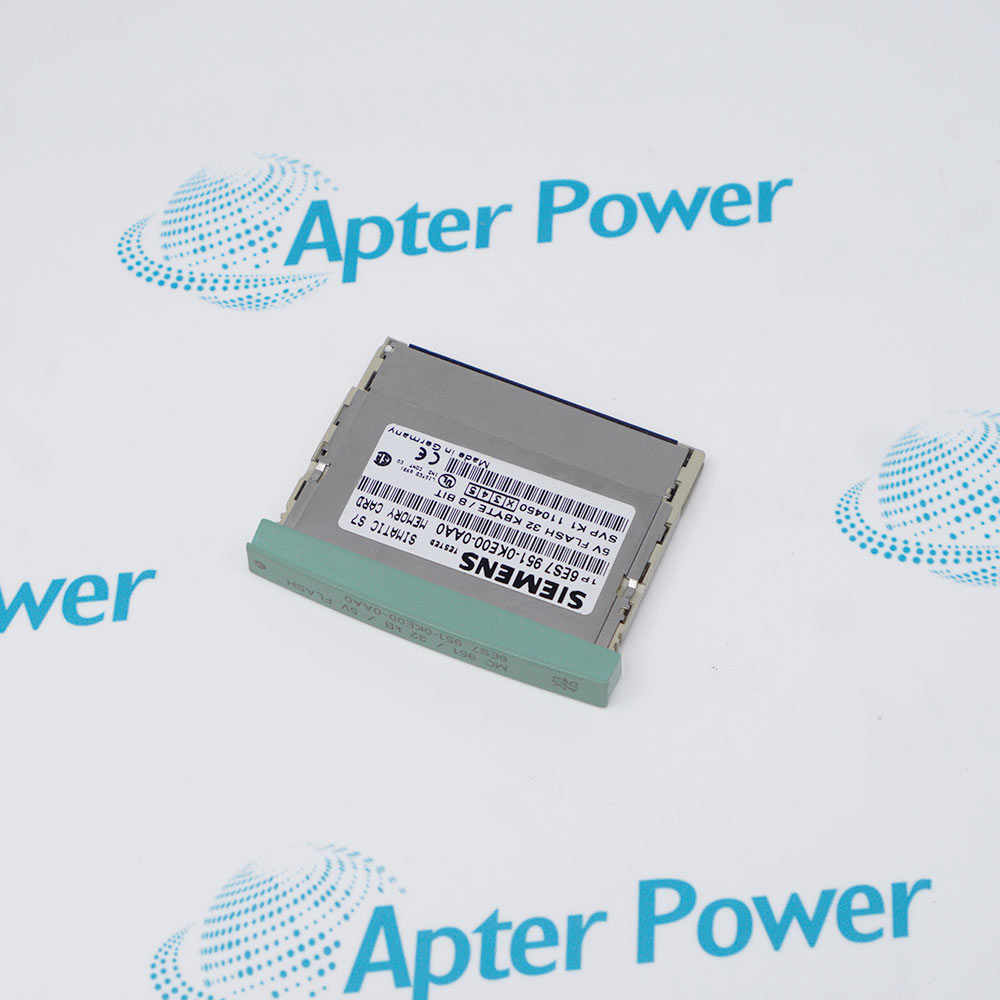
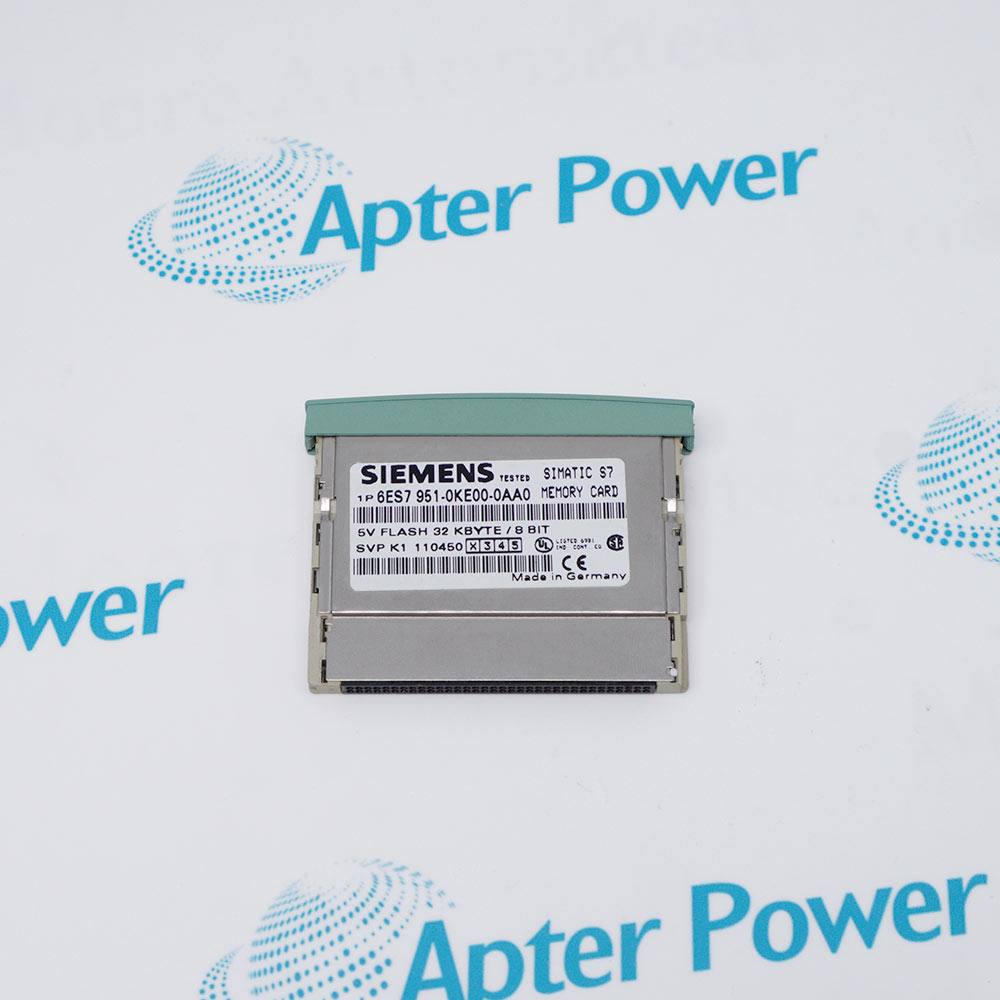
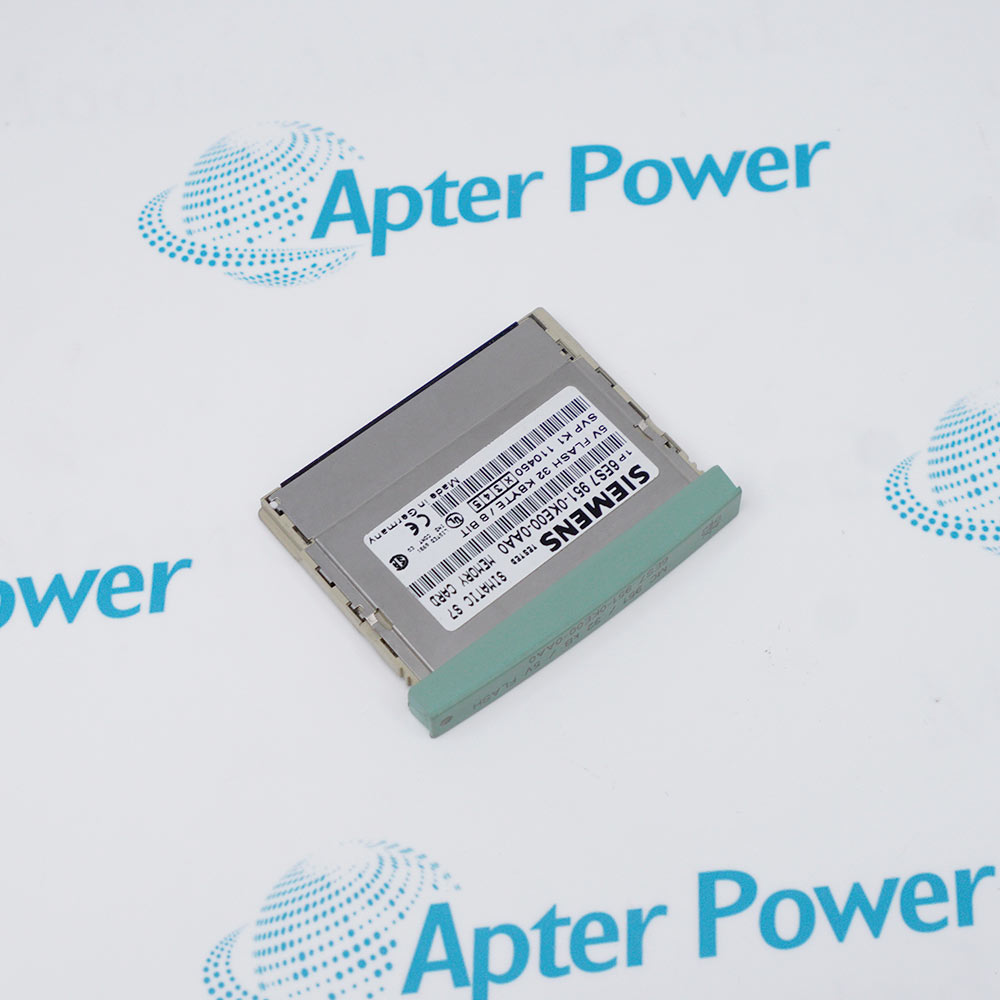
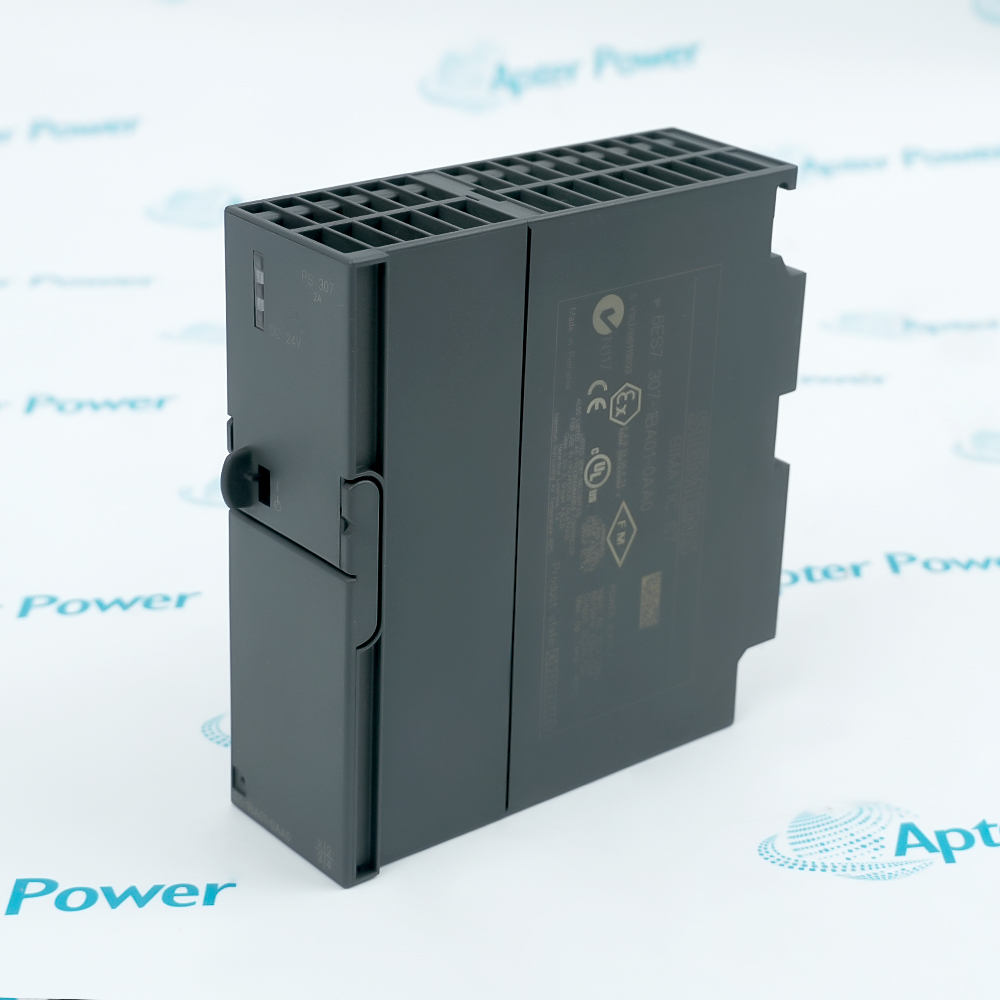
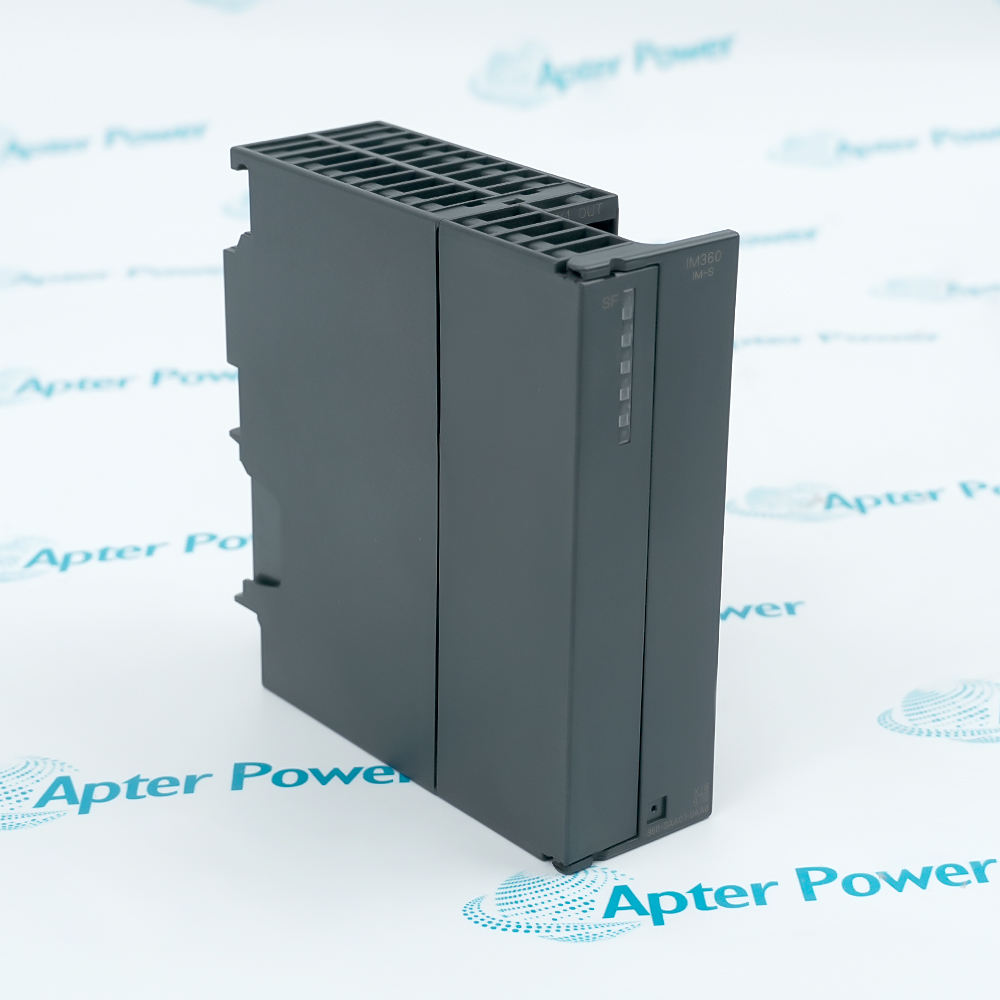
Features:
- Retains program and data without a backup battery; no battery maintenance.
- Compact size fits standard S7‑300 CPU slots without protruding.
- Direct replacement for failing memory cards in existing S7‑300 systems, avoiding a full PLC migration.
The 6ES7951-0KE00-0AA0 uses Flash‑EPROM technology, which retains all stored data even when the PLC is powered off for extended periods. This eliminates the need for a backup battery – a common point of failure in older RAM‑based memory cards. With battery‑backed solutions, maintenance teams must replace batteries every 1–5 years to avoid data loss. If a battery fails, the entire user program can be lost, causing costly downtime. The 6ES7951-0KE00-0AA0 removes this risk entirely. Once programmed, the card holds the user program, hardware configuration, and fixed data indefinitely without power.
The 6ES7951-0KE00-0AA0 is a "short version" memory card, meaning it lacks the extended plastic housing found on some larger S7‑300 memory cards. This compact design sits flush with or slightly recessed into the CPU slot, reducing the risk of accidental snagging or damage during maintenance. The short form factor is particularly useful in densely packed control cabinets where space is limited, or when the CPU is mounted near cabinet doors or other obstructions. Despite its small physical size, the card weighs approximately 38 grams and is easy to handle.
The 6ES7951-0KE00-0AA0 is explicitly marked as a SPARE PART, indicating that it is no longer in active production and is intended only for maintaining existing S7‑300 systems. Siemens has discontinued the S7‑300 platform in favor of the S7‑1200 and S7‑1500 families, but many industrial plants still operate S7‑300 systems that run critical production lines. When a memory card fails, replacing it with the 6ES7951-0KE00-0AA0 avoids a costly and time‑consuming full PLC migration. The card is a direct, drop‑in replacement – no hardware modifications, no program conversion, and no re‑wiring.
The 6ES7951-0KE00-0AA0 Siemens MEMORY CARD may still be available for purchase and support from Apter Power beyond
End-Of-Life (EOL) by the manufacturer (OEM).
Siemens 6ES7951-0KE00-0AA0 MEMORY CARD Manuals,
Datasheets, Drivers, Link
Important Notice: Other accessories, manuals, cables, calibration data, software, etc. are not
included with this equipment unless listed in the above stock item description. All prices are
shown in USD.
Siemens 6ES7951-0KE00-0AA0 MEMORY CARD Specs
General
- Manufacturer Siemens
- Model 6ES7951-0KE00-0AA0
- Condition New Original ready stock
- Product Family
6ES7951-0KF00-0AA0,6ES7951-0KG00-0AA0
Important Notice: Other accessories, manuals, cables, calibration data, software, etc. are not
included with this equipment unless listed in the above stock item description. All prices are
shown in USD.
- Program Fixing: Used in early S7-300 CPUs (such as older models like CPU 312 IFM, 314, and 315-2DP) to store user programs and data blocks, ensuring program integrity in the event of power outages or battery failure.
- Gradual Equipment Maintenance: Widely used in production lines, pump stations, and infrastructure control systems installed from the late 1990s to the early 2000s.
- Data Archiving: Due to its limited capacity of only 32 KB, it is primarily used to store core logic code, rather than large amounts of historical data.
- Direct Read/Write Not Available: Unlike a USB flash drive, it cannot be directly read by a standard card reader.
- Update Method: To update the card's contents, the new user program must be downloaded from the computer to the CPU via the PLC's programming interface (such as MPI or PROFIBUS), and then the "Copy RAM to ROM" instruction must be executed.
- Hardware Limitations: It uses Flash technology, limiting the number of write cycles (although usually sufficient for industrial applications) and does not support frequent dynamic data writing.
- Configuration Tools: Only supports STEP 7 V5.x or earlier versions. It does not support TIA Portal.
- Programming Flow:Select the corresponding older CPU model in the STEP 7 hardware configuration.