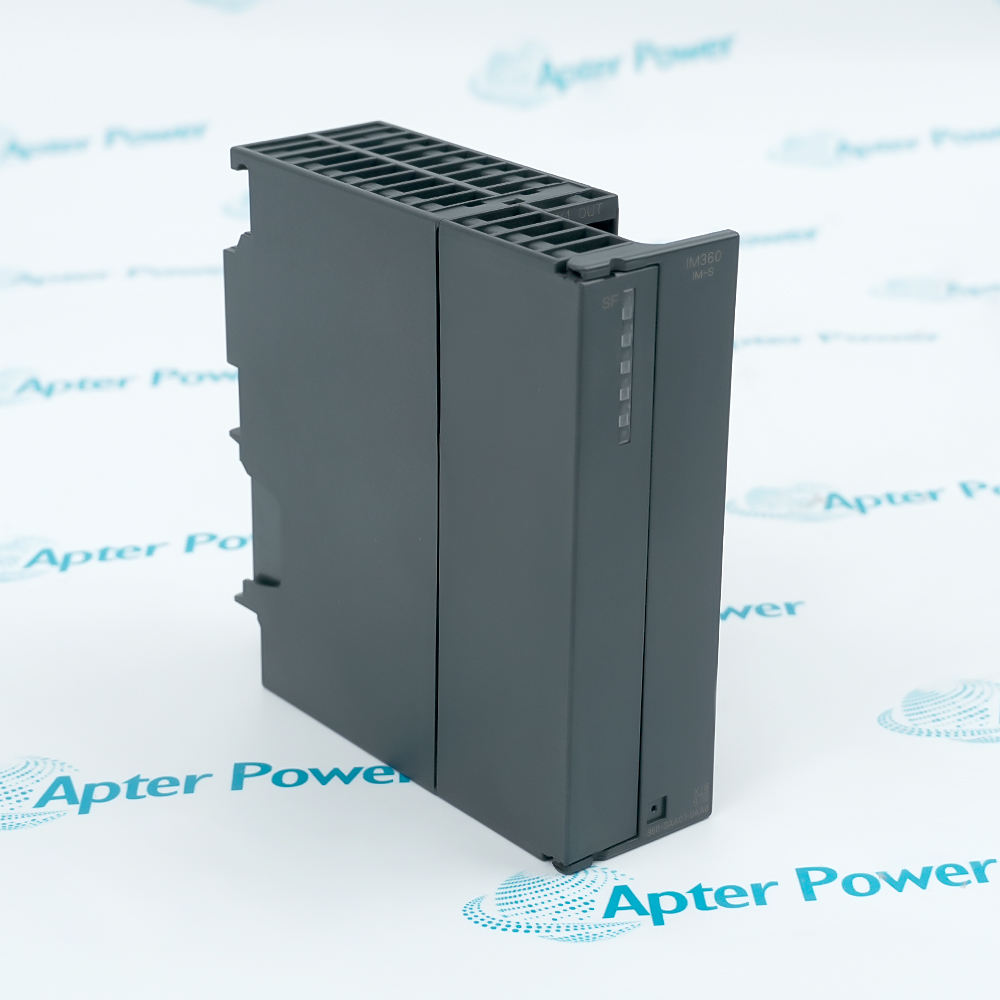
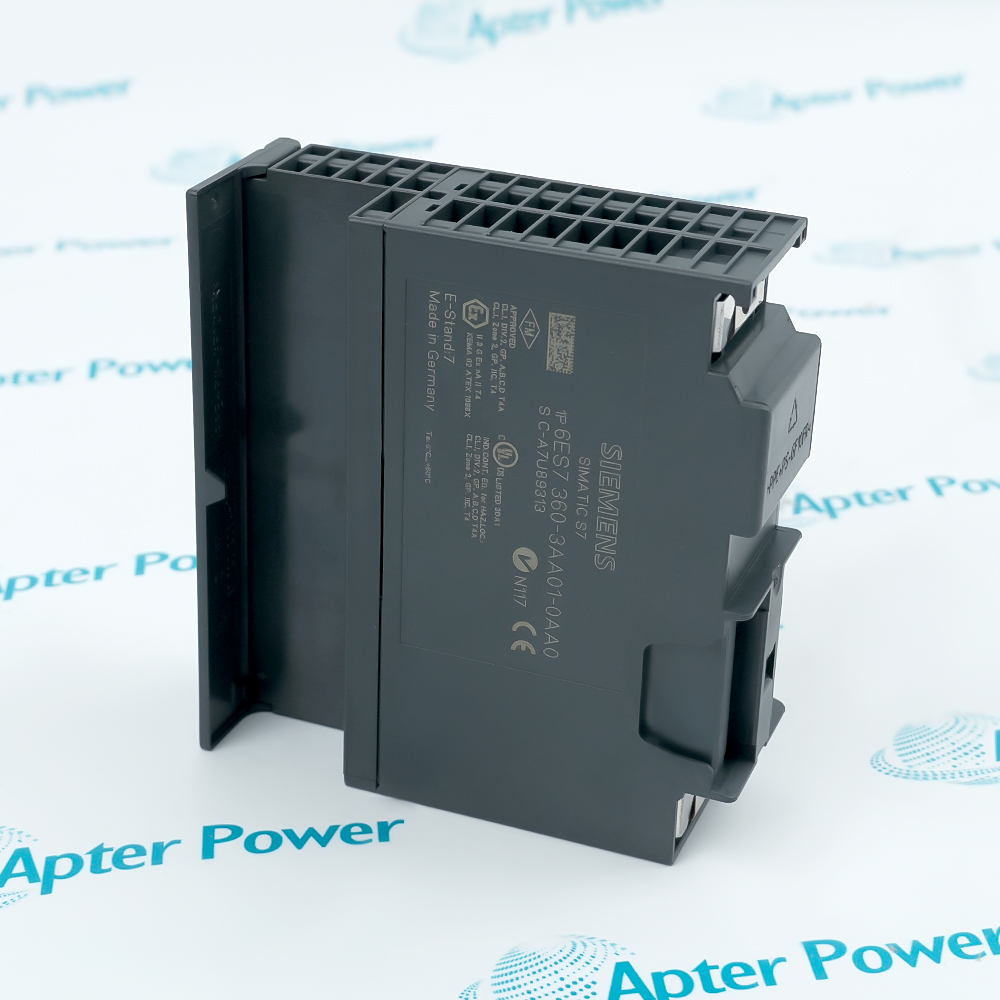
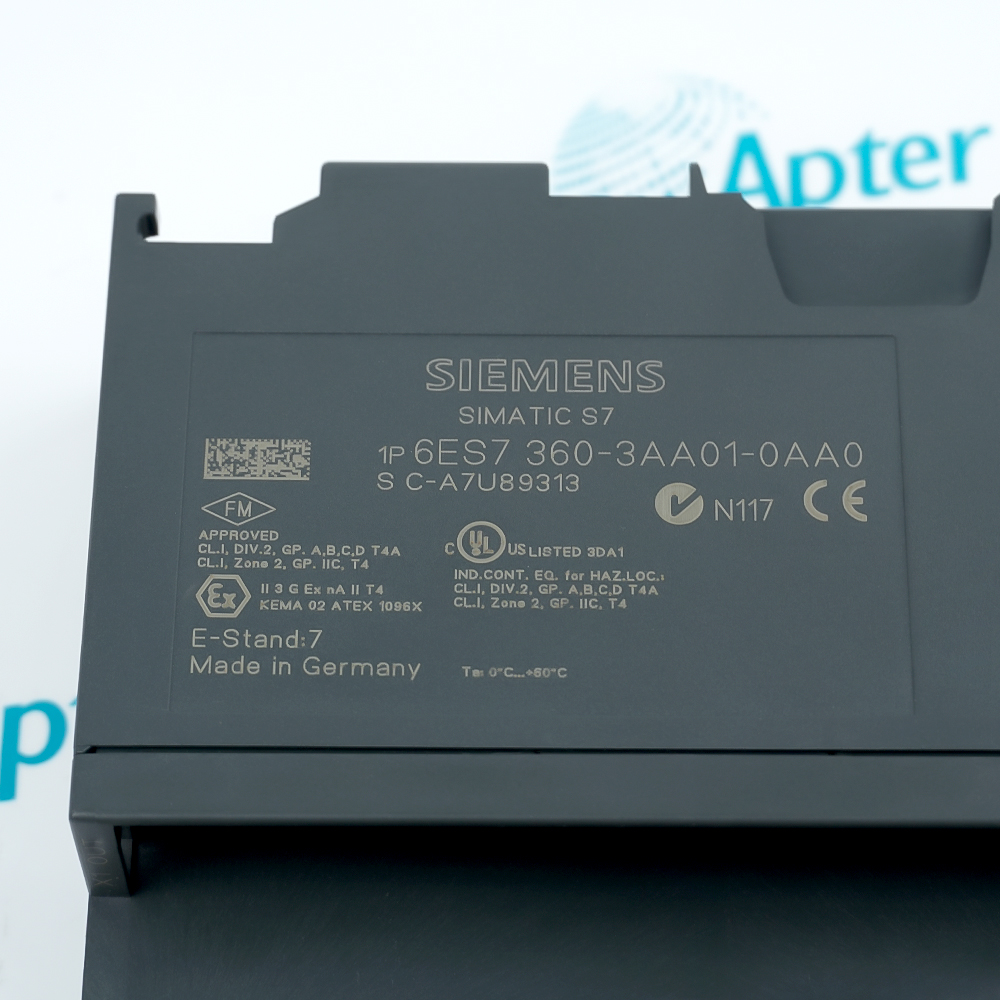
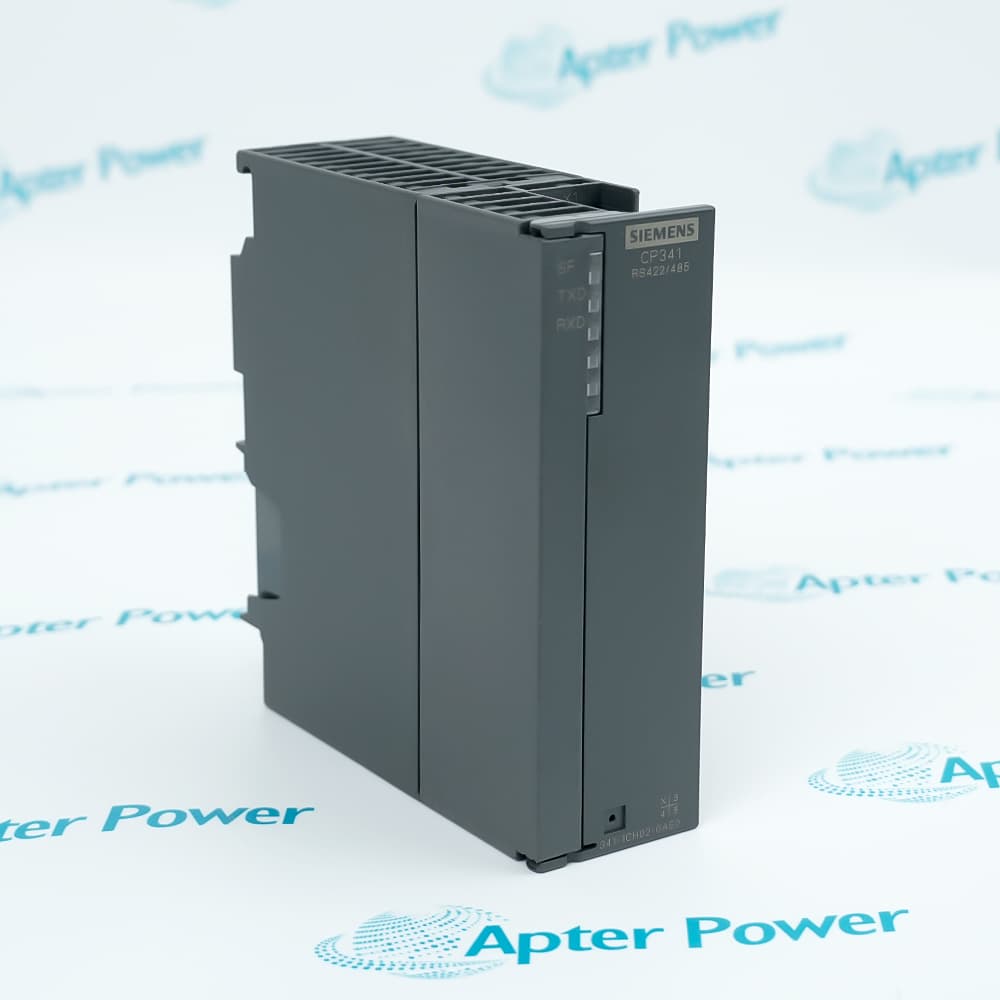
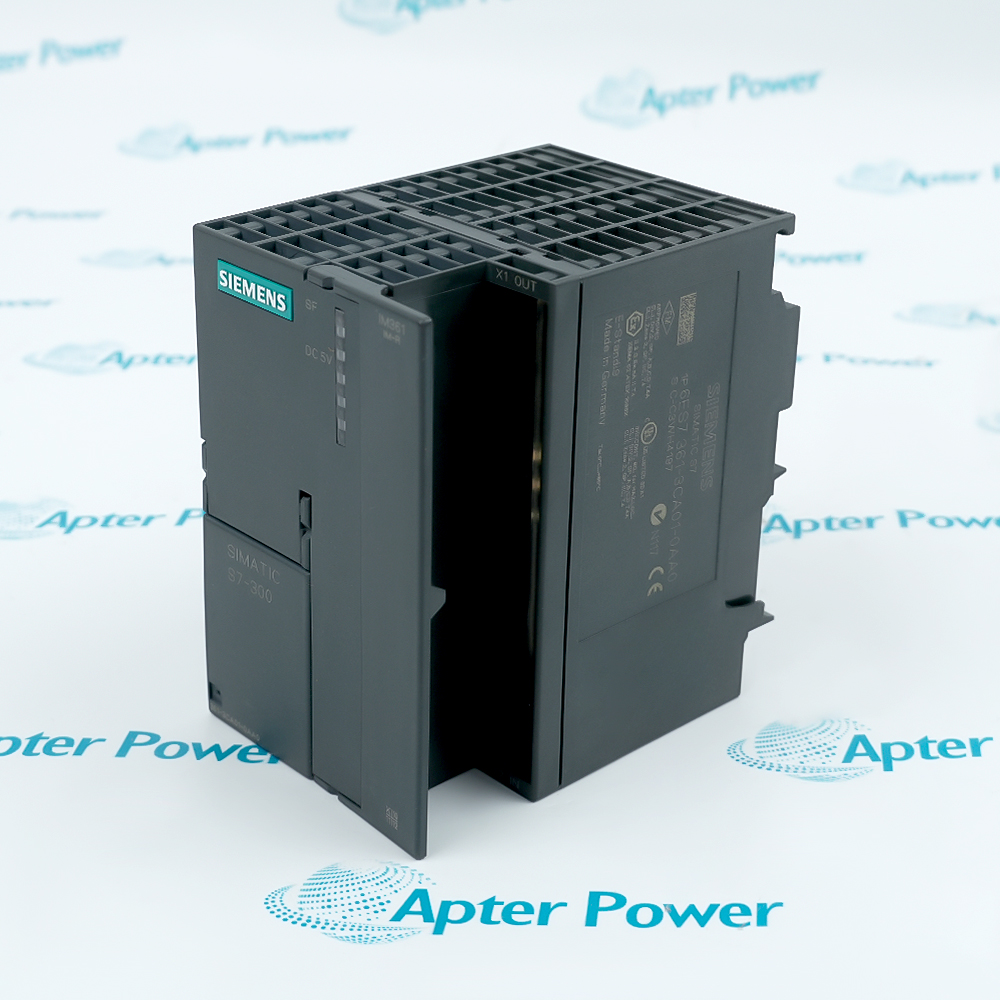
Features:
- Provides the central-rack interface for an S7-300 expansion chain.
- Extends both communication and K-bus signals to as many as three expansion racks.
- Uses the 40 mm S7-300 module format with a 5 V backplane load.
The order number identifies an IM 360, not the receiving interface installed in an expansion rack.
Its bus drivers carry controller communication and peripheral access across the documented rack chain.
Rack addresses, cable sequence and the matching IM 361 hardware must be validated against the project.
Apter Power can review sourcing, documentation and system matching for 6ES7360-3AA01-0AA0.
Verified resources for Siemens 6ES7360-3AA01-0AA0:
Important Notice: Other accessories, manuals, cables, calibration data, software, etc. are not included with this equipment unless listed in the above stock item description. All prices are shown in USD.
- Large S7-300 cabinets can place additional I/O modules in expansion racks linked to the CPU rack.
- Machine sections with separated module groups use the interface to preserve one controller backplane architecture.
- Legacy expansions can be maintained when the original IM 360/IM 361 topology remains electrically and mechanically intact.
- The central rack uses this interface while each connected expansion rack uses the matching receiver module.
- Both communication and K-bus paths are extended through the rack-connection cable.
- The STEP 7 hardware layout must mirror the physical rack numbering.
- Up to three expansion racks can be represented behind one central-rack interface.
- Module positions and rack addresses are configured as part of the S7-300 hardware project.
- Existing cable order should be recorded before dismantling a running installation.
- A missing expansion rack appears through the controller's configured hardware diagnostics.
- Cable seating and receiving-interface power are primary checks after a rack communication fault.
- Backplane-current planning helps prevent faults caused by an overloaded central rack.