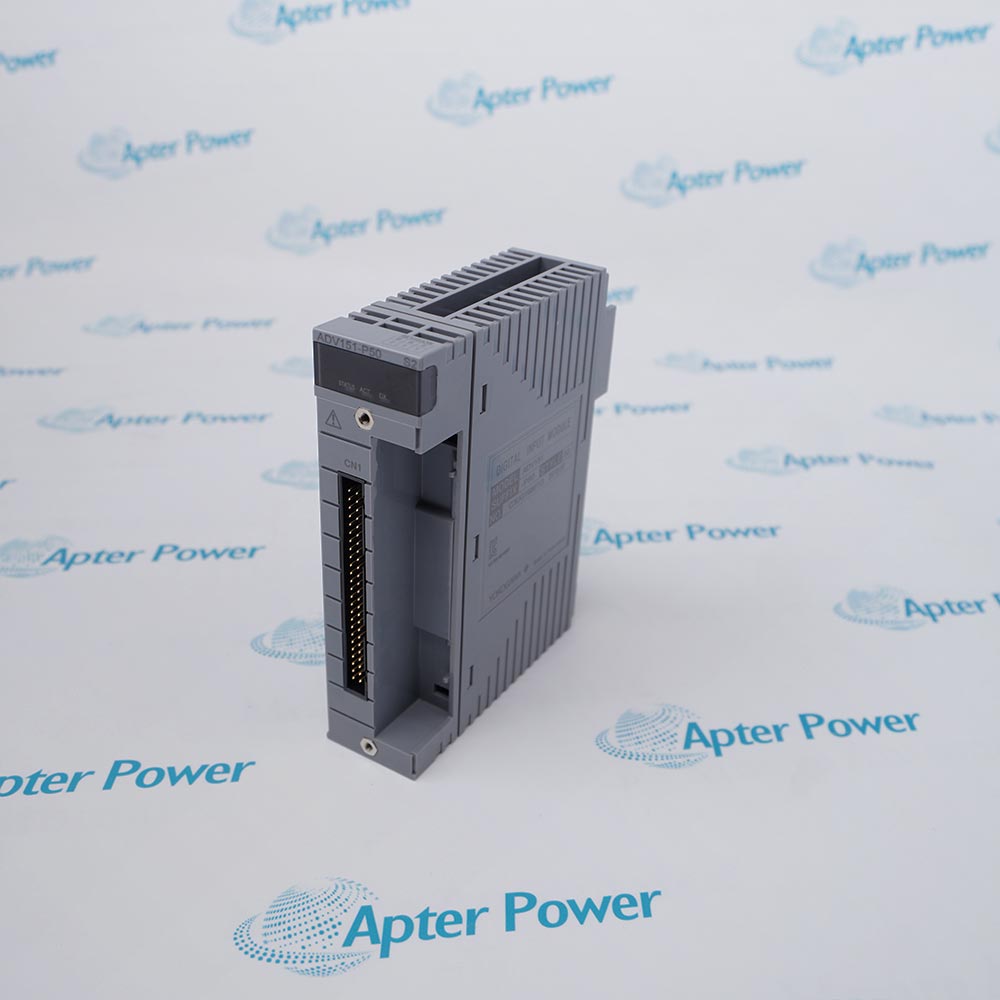
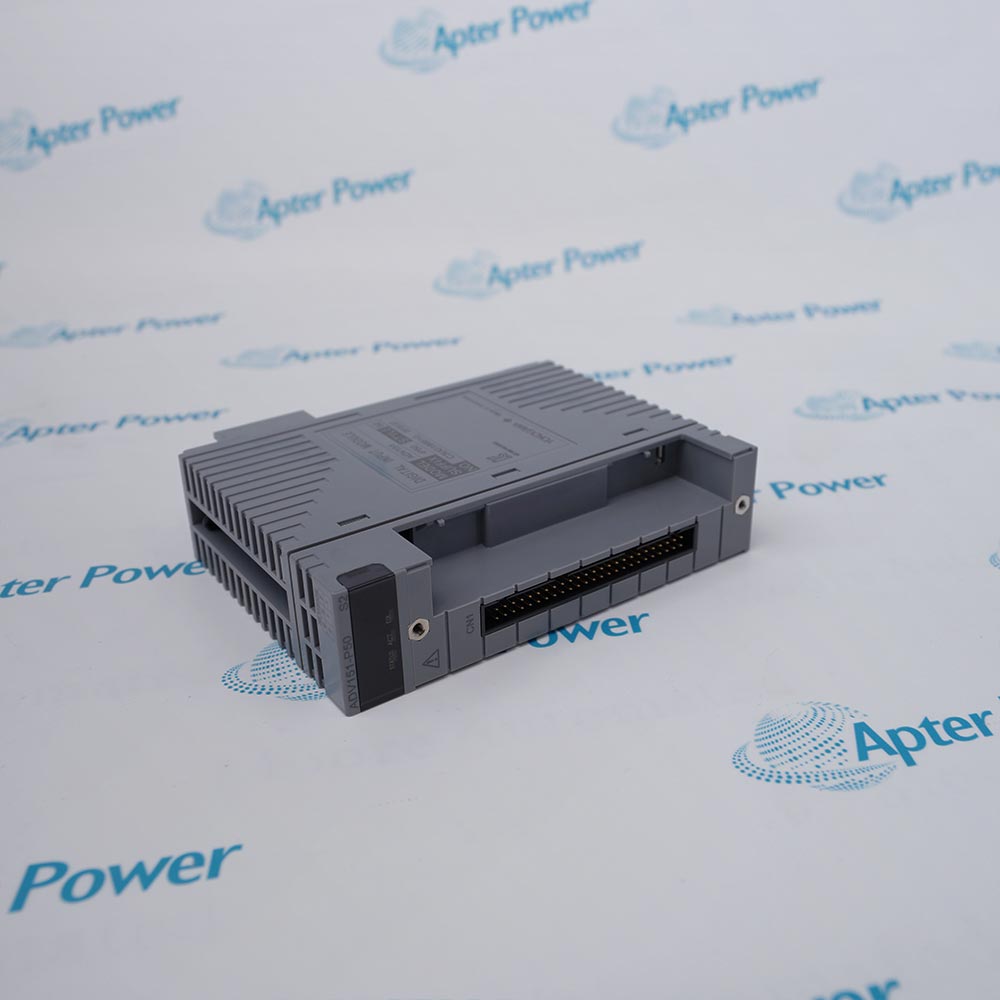
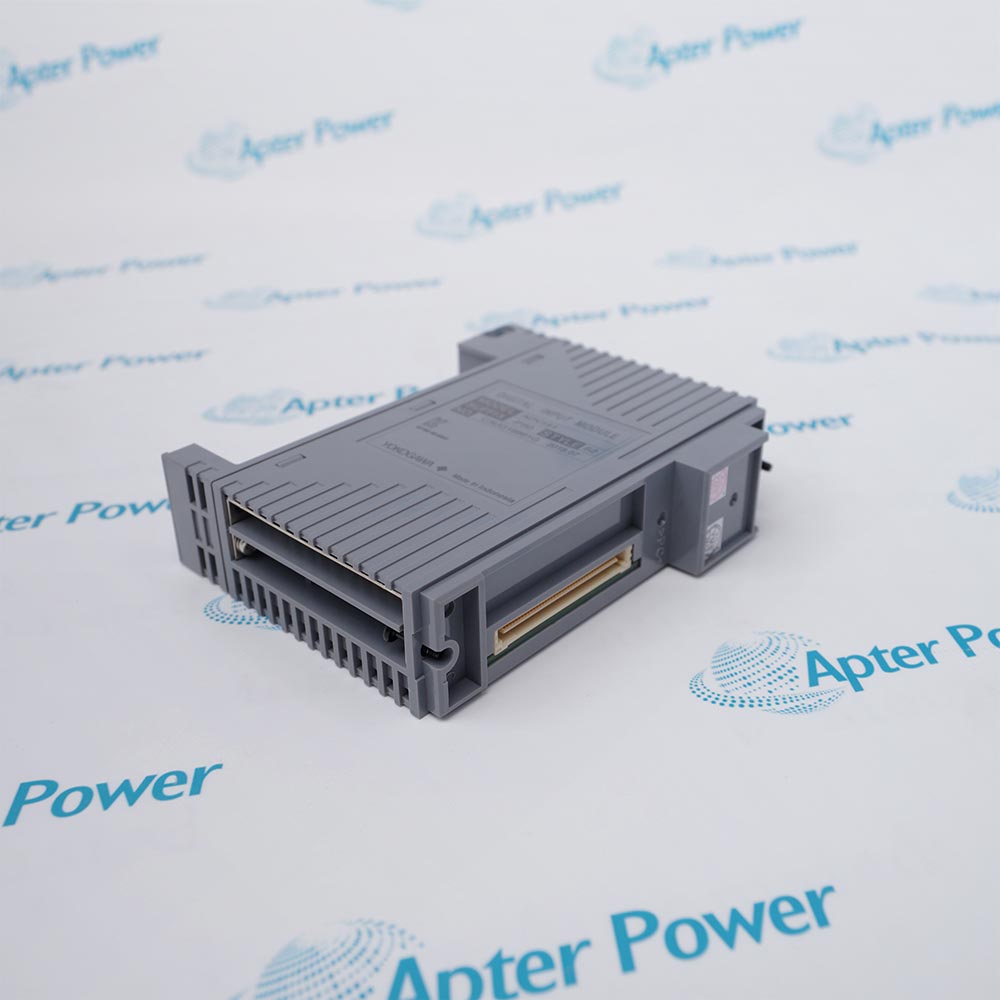
ADV151-P50 S2
ADV151-P50 S2
ADV151-P50 S2
ADV151-P50 S2
ADV151-P50 S2
ADV151-P50 S2
Ask our team:
  • Phone: +86 181 0690 9650
  • E-Mail sales1@apterpower.com
  • Lifecycle status

    Discontinued / Obsolete by OEM
    Apter Power provides original Yokogawa ADV151-P50 S2 FIO modules, delivering premium quality, full redundancy support, and reliable component replacement to guarantee uninterrupted industrial automation.

ADV151-P50 S2

/ 4.9
1001 reviews | Need a Specific Revision?
The Yokogawa ADV151-P50 S2 is a 32-channel isolated digital input module that ensures reliable status monitoring and edge-triggered countdown tracking in high-density process environments.
In Stock
Ships by Thursday, October 29
Fast Shipping Available
Get a quick price for ADV151-P50 S2
Quantity
*E-mail
Company
*Mobile
*Content
Upload (gif, jpg, jpeg, png, bmp, doc, docx, xls, xlsx, ppt, pdf, csv)

Technical specifications for ADV151-P50 S2

  • Manufacturer:
    Yokogawa
  • Part Number:
    ADV151-P50 S2
  • Product Family:
    Centum CS-Centum VP
  • Product Type:
    Digital Input Module
  • Stock:
    9
  • Number of Inputs:
    32 channels, Galvanically Isolated
  • Rated Input Voltage:
    24 V DC
  • Input ON Voltage:
    18.0 V DC to 26.4 V DC
  • Input OFF Voltage:
    5.0 V DC or less
  • Input Current:
    4.1 mA ±20% per channel
  • Max Allowable Input:
    30.0 V DC
  • Internal Power Draw:
    Maximum 500 mA
  • Input Response Time:
    8 milliseconds or less
  • Min Edge Detection:
    20 milliseconds
  • Max Toggle Frequency:
    25 Hz (for edge-counting input mode)
  • Operating Temperature:
    0°C to +60°C (Standard cabinet deployment)
  • Storage Temperature:
    -20°C to +85°C (Avoid continuous high humidity conditions)
  • Relative Humidity:
    10% to 90% RH (Non-condensing)
  • Weight:
    0.24 kg
  • Estimated shipping dimensions:
    3.2x10.6x13cm
  • Tariff Code:
    8537101190
  • Country of origin:
    Japan
  • Place of shipment:
    Xiamen, Fujian, China
By purchasing this item, you agree to the Terms & Conditions, ApterPower is not an authorized distributor for listed manufacturers or tradenames and therefore the manufacturer's warranty does not apply. All our products come with ApterPower's 1-year warranty.

More Information

Overview Manuals Specifications Applications Environmental Ratings Safety & Compliance

Features:

  • Galvanic Protection with 2 kV AC Isolation Barrier
  • Dual-Redundant Architecture for Zero-Downtime Operations
  • Optimized FIO Density with Versatile Field Connection Interfaces
The YOKOGAWA ADV151-P50 S2 features premium isolation circuitry rated up to 2 kV AC between the field loops and the control bus, alongside 500 V AC isolation between internal channel groups. This rugged design effectively contains electrical faults, protects central processing assets, and guarantees data logging integrity in heavy electromagnetic environments.

Designed for continuous industrial infrastructure, the YOKOGAWA ADV151-P50 S2 supports pairing in a dual-redundant configuration within the ESB bus nodes. If a module anomaly occurs, the backup seamlessly inherits processing with zero signal loss, preventing expensive plant interlocks and facilitating live hot-swaps without system disruption.

Packing 32 fully isolated input points into a compact 32.8 mm wide profile, the YOKOGAWA ADV151-P50 S2 optimizes rack spacing. By supporting screw pressure clamp blocks, pre-fabricated AKB331 cables, and standard MIL connectors, it accommodates diversas wiring layouts, simplifying loop validation and accelerating commissioning phases.

The ADV151-P50 S2 YOKOGAWA Digital Input Module 32-Channel CENTUM VP DCS FIO System may still be available for purchase and support from Apter Power beyond End-Of-Life (EOL) by the manufacturer (OEM).
YOKOGAWA ADV151-P50 S2 Digital Input Module 32-Channel CENTUM VP DCS FIO System Manuals,Datasheets,Link Important Notice: Other accessories, manuals, cables, calibration data, software, etc. are not included with this equipment unless listed in the above stock item description. All prices are shown in USD.
YOKOGAWA ADV151-P50 S2 Digital Input Module 32-Channel CENTUM VP DCS FIO System

General

  • Manufacturer YOKOGAWA
  • Model ADV151-P50 S2
  • Condition New Original ready stock
  • Product Family ADV151-P53 S2,ADV551-P10 S2,ADV161-P50 S2
Important Notice: Other accessories, manuals, cables, calibration data, software, etc. are not included with this equipment unless listed in the above stock item description. All prices are shown in USD.
  • Petrochemical and Refining Control Loops: Acts as the primary state monitor for field valves, safety limit switches, and process interlocks, feeding clean telemetry into DCS logic to prevent overpressure or flow failures.
  • Thermal Power Plant Boiler System Monitoring: Aggregates critical trip inputs, auxiliary fan status signals, and operator emergency pushbuttons, ensuring safe combustion cycles through rapid 8 ms response times.
  • Water and Wastewater Treatment Infrastructures: Coordinates inputs from distant pumping stations, tank level floats, and automated bar screens, maintaining continuous system availability over large-scale municipal sites.
  • Pulp, Paper, and Mining Material Handling: Monitors conveyor safety pull-cords, speed switch triggers, and motor contactor statuses, providing the rugged isolation needed to endure heavy machine vibration.
  • Regulated Thermal Adaptability: Performs reliably within an operating envelope of 0°C to +60°C, managing heat dissipation efficiently without needing dedicated internal module fans.
  • Extended Storage Protection: Endures a storage range from -20°C to +85°C, ensuring internal electronic integrity and component longevity even during extended warehouse storage in tropical or sub-zero climates.
  • Humidity and Moisture Mitigation: Operates effectively within 10% to 90% non-condensing relative humidity, with conformal-coated PCB paths protecting against ambient moisture and trace particulate buildup.
  • Industrial Vibration Resistivity: Tested against standard FIO vibration tolerances, ensuring mechanical and electrical integrity when mounted in standard industrial control cabinets near heavy machinery.
  • Robust Galvanic Barrier Security: Provides 2 kV AC dielectric isolation between the input channels and the internal system bus, containing field-side electrical surges and safeguarding upstream CPU assets.
  • Safe-Zone Operational Compliance: Labeled with a "50" suffix, this module is optimized for non-hazardous locations, offering a cost-effective choice for standard control rooms without paying for unnecessary ATEX/IECEx overhead.
  • Standard Functional Safety Integration: Supports dual-redundant configurations that align with high-availability industrial paradigms, reducing common-cause failures and supporting plants targeting compliance with IEC 61508 standards.
  • Global Market Conformance: Complies with standard CE directives, KC certification, and RCM frameworks, ensuring smooth customs processing and meeting standard corporate engineering compliance requirements globally.
Description
Engineered as a cornerstone of the FIO architecture, the YOKOGAWA ADV151-P50 S2 accepts 32 channels of 24 V DC ON/OFF and pushbutton signals simultaneously. By implementing optical isolation up to 2 kV AC, it firmly shields your core system electronics from severe field-side electrical surges and ground loop noise, drastically preventing unexpected downtime.

Supporting native dual-redundant configurations, the YOKOGAWA ADV151-P50 S2 ensures bumpless switchover during module maintenance, driving continuous uptime for continuous process plants. Its integrated pushbutton edge-counting function operates smoothly at up to 25 Hz, capturing physical operator triggers without placing heavy execution burdens on the processor.

The YOKOGAWA ADV151-P50 S2 provides excellent architectural adaptability by interfacing with standard pressure clamp terminal blocks, dedicated AKB331 cables, or MIL connector cables. This modular connectivity ensures hassle-free retrofits and quick-swap capabilities, optimizing panel space and heavily reducing industrial installation time.

Fabricated for continuous 24/7 operations, the YOKOGAWA ADV151-P50 S2 adheres to Yokogawa's most rigorous manufacturing standards. It perfectly withstands volatile thermal gradients and severe electromagnetic interference (EMI), serving as a trusted, longevity-focused asset across chemical, power, and marine automation architectures worldwide.
Alternative Names
ADV151 ADV151 P50 S2 ADV151-P5O S2 ADVI5I-P50 S2 ADVI5I-P5O S2 ADV151-P53 S2 ADV161-P50 S2 ADV551-P10 S2
Technical notes
The YOKOGAWA ADV151-P50 S2 requires all 24 V DC input voltage signals to maintain identical polarity, organized in groups sharing a common terminal for every 16 channels. Additionally, note that the dielectric withstanding voltage decreases to 500 V AC when the YOKOGAWA ADV151-P50 S2 is interfaced using a dedicated Yokogawa connection cable instead of direct clamp wiring.
Exceptional Service

Our Mission

  • 100% Satisfaction

    We believe expertise is priceless. With over 20 years of experience, and top engineers on staff, we can help you solve or avoid problems that threaten your business.
  • Trust Guaranteed

    Not only do we have a vast inventory, our team makes sure every piece of equipment is in working condition. Your purchases are also backed by our Warranty.
  • Expertise

    Time is money, especially when your equipment is down. We work quickly to get your equipment on its way so you can get it back up and running.

FAQS

The following is a list of questions commonly asked by our customers. Please contact us if you have a question about our process that is not answered below.
How does the YOKOGAWA ADV151-P50 S2 handle internal channel diagnostic mapping and firmware synchronization when deployed in a dual-redundant pair?
When configured in dual-redundancy, the YOKOGAWA ADV151-P50 S2 actively cross-checks its hardware state with its redundant counterpart via the ESB bus node framework. Diagnostic parameters, status bytes, and edge counts are synchronized instantly. If a disparity or loop short-circuit is found, the system triggers systemic FIO alarms and shifts primary control without losing data.
Can the YOKOGAWA ADV151-P50 S2 process high-frequency signals, and what are its cabling limitations regarding third-party field switch integration?
The YOKOGAWA ADV151-P50 S2 features an input response time of ≤8 ms for status signals and handles pushbutton inputs up to 25 Hz. When integrating third-party switches via MIL connector cables, you must ensure the external wiring conforms to the module’s electrical constraints. Note that using dedicated cables limits system-side isolation to 500 V AC.
What is the specific polarity configuration for the YOKOGAWA ADV151-P50 S2 when mixing sink and source field devices?
The YOKOGAWA ADV151-P50 S2 supports both sink and source topologies, but it is grouped with a common terminal for every 16 channels. This means all voltage inputs wired into the same 16-channel segment must maintain identical polarity. Mixing sink and source configurations within a single 16-channel block will cause fault loops and erratic signaling.
How do we interpret the module version changes between an older Style 1 module and the YOKOGAWA ADV151-P50 S2?
The "S2" suffix signifies Yokogawa’s Style 2 hardware generation, which features optimized internal component layouts and enhanced thermal dissipation. The YOKOGAWA ADV151-P50 S2 remains fully backward-compatible with older Style 1 slots, meaning parameter assignments, I/O definitions, and system configuration logic require no alterations in your CENTUM VP engineering environment.
What are the critical environmental limits for the YOKOGAWA ADV151-P50 S2 during prolonged storage and field operations in offshore platforms?
The YOKOGAWA ADV151-P50 S2 operates reliably from 0°C to +60°C with non-condensing relative humidity between 10% and 90%. For offshore deployments, it should be housed in an appropriately sealed, climate-controlled cabinet to protect the non-explosion-proof "50" model from salt spray and corrosive humidity, safeguarding its operational lifecycle.
What is the recommended sequence for performing a hot-swap installation on a faulty module using the YOKOGAWA ADV151-P50 S2?
If configured in a dual-redundant layout, ensuring the secondary module is completely healthy and active. Next, detach the terminal block from the module being replaced without disconnecting the field wiring. Extract the module, slot in the new YOKOGAWA ADV151-P50 S2, secure the latch, and remount the terminal block. The node will automatically upload parameters to the new hardware.