Features:
- Core Processing Unit for CENTUM CS and CENTUM VP Field Control Stations
- Integrates 32-bit RISC Processing Architecture with Dual-Redundancy Support
- Functions Seamlessly with LFCD Node Units and Distributed I/O Modules
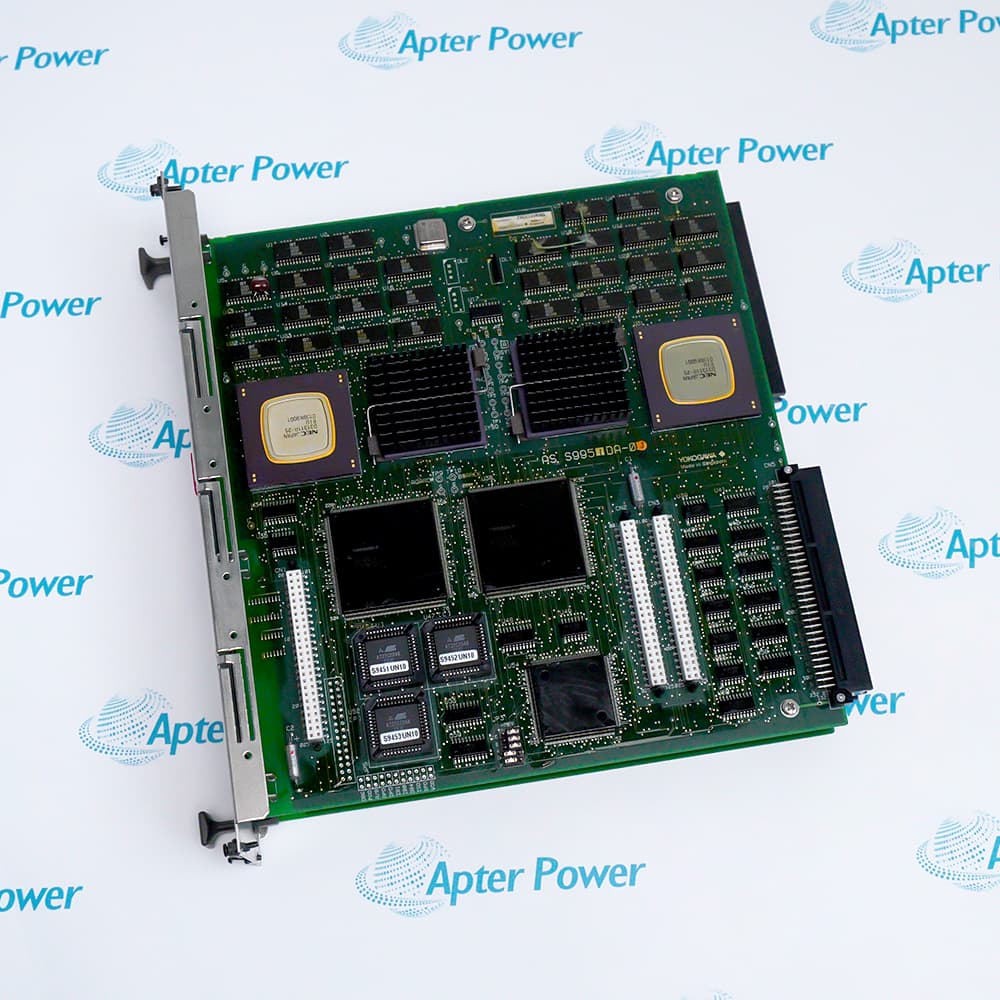
The CP333D S3 serves as the primary processor module in a CENTUM VP FCS rack, delivering deterministic real-time control for all connected I/O modules and control strategies. It continuously executes complex regulatory control algorithms, sequential logic, and batch processing functions at 400 MHz while maintaining sub-millisecond response times for critical control loops. Seamless operation is standard with the CP333D S3, and when deployed in a Duplex LFCD configuration, it enables automatic failover to a backup processor in the event of a primary CPU failure. The CP333D S3 incorporates significant enhancements over previous processor designs, including expanded memory capacity and optimized Vnet/Vnet IP network compatibility.
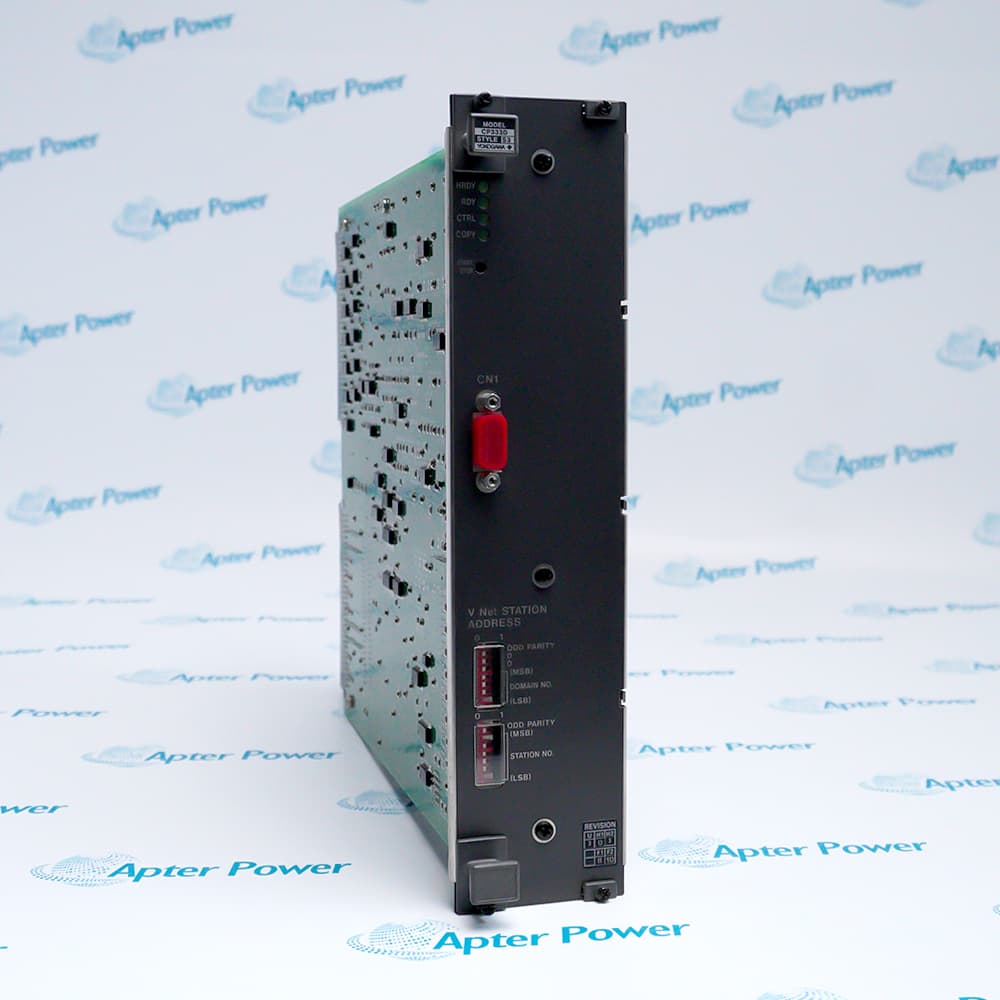
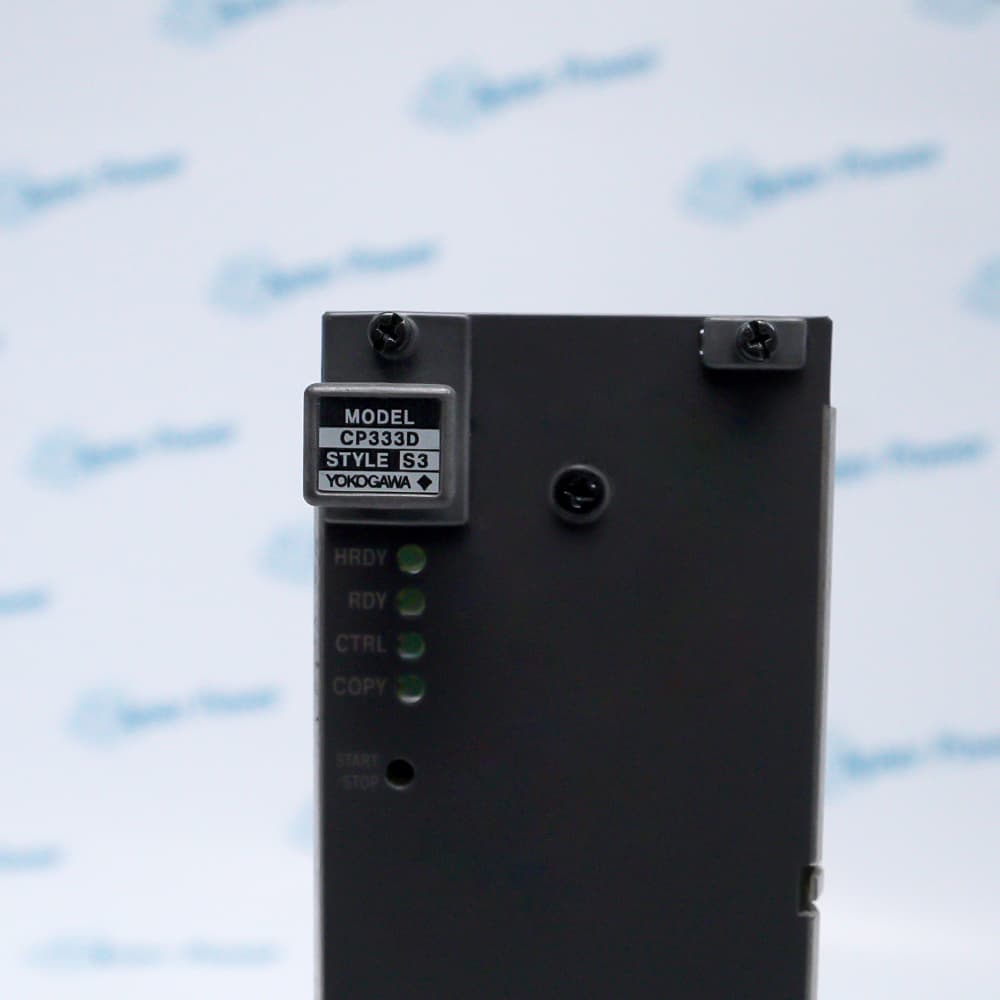
The CP333D S3 provides essential computing functions central to the entire Field Control Station, serving as a critical component of the control path that directly impacts the proper, normal operation of the overall automation system. One or two CP333D S3 processor modules are utilized per FCS depending on the desired redundancy level. The CP333D S3 occupies a dedicated processor slot in the LFCD node unit and is identified by Style 3 hardware designation with LED indicators for HRDY, RDY, CTRL, and COPY status monitoring.
For Dual Redundant Processor applications, the CENTUM VP System requires a second CP333D S3 processor module installed in the redundant configuration. Beyond standard single processor operation, the redundant setup performs automatic switchover using the internal duplexing circuitry. The CP333D S3 dual processor configuration executes failover through dedicated redundancy logic that continuously monitors the health of both CPUs. If the system detects that the primary CP333D S3 is no longer providing stable control output or experiences a fault condition, it will automatically transfer control to the secondary CP333D S3 and update the system status accordingly.
The CP333D S3 Yokogawa Processor card may still be available for purchase and support from Apter Power beyond End-Of-Life (EOL) by the manufacturer (OEM).
Yokogawa CP333D S3 Processor card Manuals,Datasheets,Link
Important Notice: Other accessories, manuals, cables, calibration data, software, etc. are not included with this equipment unless listed in the above stock item description. All prices are shown in USD.
Yokogawa CP333D S3 Processor card Specs
General
- Manufacturer Yokogawa
- Model CP333D S3
- Condition New Original ready stock
- Product Family CP333D,CP334D,CP401
Important Notice: Other accessories, manuals, cables, calibration data, software, etc. are not included with this equipment unless listed in the above stock item description. All prices are shown in USD.
- Complex Control Logic: Utilizes a 32-bit RISC microprocessor (400 MHz) to handle demanding computational tasks and manage up to 16 I/O slots per rack.
- High-Availability Redundancy: Often deployed in dual-redundant (duplex) configurations. In this setup, a second processor remains in synchronized hot-standby mode to take over seamlessly if the primary module fails.
- Mission-Critical Process Control: Used as the primary controller in large-scale plants (e.g., oil and gas, chemical, power generation) where system failure could result in significant safety risks or financial loss.
- Error Correction Code (ECC) Memory: Actively detects and corrects data corruption within the 256 MB of RAM to prevent system crashes and ensure stable operations.
- Diagnostic Monitoring: Features dedicated status lamps (HRDY, RDY, CTRL) for real-time hardware and control status diagnostics, facilitating rapid troubleshooting.
- Environmental Resilience: Built to operate in industrial conditions with a temperature range of 0 to 50°C and non-condensing humidity levels up to 95%.
- Installation Restrictions: According to Yokogawa's hardware manuals, these products are generally classified as Class A for industrial use and are not designed for life-critical applications like nuclear power equipment or aviation without additional safety systems.
- Cybersecurity: Yokogawa maintains ISASecure certificates for its products, which align with IEC 62443-4-1 and IEC 62443-4-2 for industrial automation security.
- Functional Safety: While the CP333D is a DCS processor, it can be integrated with safety instrumented systems like ProSafe-RS, which are certified up to SIL3 by TÜV.
- Communications: Often carries the Wurldtech Achilles Communications Certification to ensure network resilience against cyber threats.
- Manufacturing Standards: Dimensions and tolerances typically follow JEM 1459 standards.