Ask our team:
  • Phone: +86 181 0690 9650
  • E-Mail sales1@apterpower.com
How We Verify Your Order
Before dispatch, we confirm the exact model, revision, condition, inspection requirements and shipping documents for your order.
See a real on-site verification case >>
  • Lifecycle status

    Active / Available from OEM
    Apter Power verifies VM1*D S9210AQ-03 markings, condition and marshalling evidence before dispatch.

VM1*D S9210AQ-03

/ 4.9
1001 reviews | Need a Specific Revision?
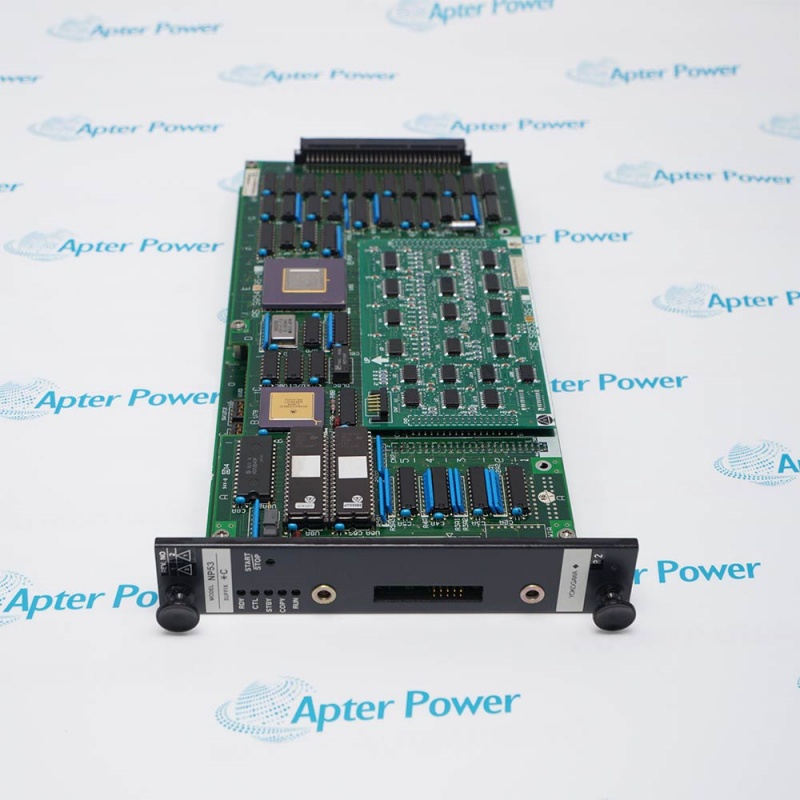
VM1*D S9210AQ-03 is a 16-point Yokogawa analog input card for legacy CENTUM and µXL process measurements.
In Stock
Ships by Saturday, November 14
Fast Shipping Available
Get a quick price for VM1*D S9210AQ-03
Quantity
*E-mail
Company
*Mobile
*Content
Upload (gif, jpg, jpeg, png, bmp, doc, docx, xls, xlsx, ppt, pdf, csv)

Technical specifications for VM1*D S9210AQ-03

  • Manufacturer:
    Yokogawa
  • Part Number:
    VM1*D S9210AQ-03
  • Product Family:
    Yokogawa Centum XL
  • Product Type:
    16-Point Analog Input Card
  • Stock:
    1
  • Analog Inputs:
    16
  • Documented Marshalling Nest:
    X015
  • Compatible Legacy Systems:
    CENTUM and µXL
  • Signal Type:
    Analog process input
  • System Context:
    Legacy CENTUM and µXL
  • Typical Use:
    Pressure, flow, level and temperature
  • Weight:
    0.4 kg
  • Estimated shipping dimensions:
    3.5x36x17.6cm
  • Tariff Code:
    Please confirm the destination before shipping
  • Country of origin:
    Japan
  • Place of shipment:
    Xiamen,Fujian,China
By purchasing this item, you agree to the Terms & Conditions, ApterPower is not an authorized distributor for listed manufacturers or tradenames and therefore the manufacturer's warranty does not apply. All our products come with ApterPower's 1-year warranty.

More Information

Overview Manuals Signal Quality Scaling Diagnosis Marshalling Integration Product Applications

Features:

  • Sixteen analog inputs: collects multiple process measurements for legacy control applications.
  • X015 marshalling: uses the documented nest for organised field-signal connection.
  • Analog measurement interface: transfers field-loop measurements into the established DCS input path.
VM1*D S9210AQ-03 serves applications where multiple analog measurements must remain aligned with an established Yokogawa database.

Its sixteen channels can feed operator displays, alarms, historical trends and control functions through the documented marshalling path.

A useful selection review combines the complete marking with the X015 nest, signal ranges, scaling and loop-power arrangement.

Apter Power supports Yokogawa VM1*D S9210AQ-03 16-Point Analog Input Card enquiries with technical-document review, responsive quotation and application-focused sourcing assistance.
Yokogawa VM1*D S9210AQ-03 16-Point Analog Input Card Manuals,Datasheets,Link
Important Notice: These Apter Power links support product discovery, technical reference and quotation assistance; final suitability depends on the installed system configuration.
  • Zero value: check loop power and continuity.
  • Fluctuation: review shielding, grounding and transmitter stability.
  • Raw signal: compare measured current with the DCS value.
  • Grouping: shared failures can indicate a common path.
  • Range: database engineering units must match transmitter span.
  • Bias: consistent high or low values often indicate scaling mismatch.
  • Alarms: review limits after any range change.
  • Proof: use known signals to verify corrected channels.
  • Nest: the documented marshalling interface is X015.
  • Channel alignment: keep the field terminal, X015 marshalling point and DCS database channel aligned.
  • Supply: grouped signal loss can indicate a shared loop-power path.
  • Shielding: preserve the documented grounding path through the cabinet cable route.
  • Sixteen-point analog input acquisition in legacy CENTUM XL and µXL control systems.
  • Field-instrument measurements routed through the installed terminal-block and signal-conditioning arrangement.
  • Process indication and historical recording using conditioned analog values from the VM1 input path.
  • Configured alarm functions using the analog values assigned to the documented VM1 channels.
Description
Legacy Yokogawa control systems use VM1*D S9210AQ-03 to bring sixteen analog process measurements into display, alarm and control functions.

Loop power, engineering scaling and the X015 marshalling relationship determine whether VM1*D S9210AQ-03 presents a trustworthy process value.

Retaining the X015 channel map and configured engineering range for VM1*D S9210AQ-03 helps preserve continuity between field measurement and operator display.
Alternative Names
VM1D S9210AQ-03 VM1 D S9210AQ-03 S9210AQ-03 Yokogawa VM1*D Yokogawa S9210AQ-03 VM1 16-point analog input Centum XL VM1 card VM1 multipoint analog input
Technical notes
VM1*D S9210AQ-03 is a 16-point Yokogawa analog input card documented with the X015 marshalling nest. A correct physical installation can still show an incorrect process value when loop power, scaling, shielding or channel assignment differs from the project database, making the signal schedule as important as the card label.
Exceptional Service

Our Mission

  • 100% Satisfaction

    We believe expertise is priceless. With over 20 years of experience, and top engineers on staff, we can help you solve or avoid problems that threaten your business.
  • Trust Guaranteed

    Not only do we have a vast inventory, our team makes sure every piece of equipment is in working condition. Your purchases are also backed by our Warranty.
  • Expertise

    Time is money, especially when your equipment is down. We work quickly to get your equipment on its way so you can get it back up and running.

FAQS

The following is a list of questions commonly asked by our customers. Please contact us if you have a question about our process that is not answered below.
Why does a VM1*D S9210AQ-03 channel remain at zero?
Check loop power, polarity, terminal continuity and transmitter output. An open loop or missing supply can produce a zero reading.
What can cause a VM1*D S9210AQ-03 analog value to fluctuate?
Loose wiring, poor shielding, ground-loop noise or an unstable transmitter can make the value wander.
Why can all VM1*D S9210AQ-03 readings be consistently high or low?
The engineering range or signal scaling may not match transmitter calibration. Compare the database range and raw input.
What can cause several VM1*D S9210AQ-03 analog channels to fail together?
Inspect the shared loop supply, X015 marshalling connection and common cable path.
How should VM1*D S9210AQ-03 be verified after replacement?
Apply known signals and confirm the DCS value, alarm limits and trend response match the project range.
Why can a VM1*D S9210AQ-03 reading recover when the transmitter is disconnected and a simulator is connected?
A stable simulated value points toward the field loop, transmitter, shielding or grounding rather than the input card. Comparing loop power and transmitter calibration helps narrow the next service step.